


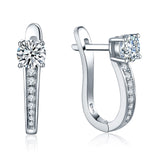
Sensitive ears don't mean you can't wear earrings. They mean you need the right earrings — specifically, the right backing. Most earring advice for sensitive ears stops at "choose hypoallergenic" without explaining what that word actually means, why certain metals cause reactions, or why the back of the earring matters as much as the front. This guide gives you the real answers so you can shop with confidence instead of buying the same earrings that hurt and returning them again.
The combination that works: a flat back closure (less skin contact) with a genuinely nickel-free metal (925 sterling or titanium). Here's the science behind why, and exactly what to look for on a label.

Why Sensitive Ears React: The Nickel Connection
The overwhelming majority of "sensitive ear" reactions are nickel contact dermatitis — an allergic reaction to nickel ions that leach from the metal into your skin when the metal gets warm and slightly moist. It's not a fragile condition or a quirk. It's one of the most common contact allergies in the world, affecting roughly 17% of women and about 3% of men according to the American Academy of Dermatology.
Symptoms appear where the metal touches skin: redness, itching, a rash, or a bump that looks like a small blister. It can develop the first time you wear an earring or after years of wearing similar jewelry with no problem — nickel allergies can develop after repeated exposure. Once you have one, it tends to stick.
A smaller group of reactions aren't nickel at all. If you react to every metal including confirmed-nickel-free options, you may have a sensitivity to:
- Cobalt — sometimes used in metal alloys, often cross-reacts with nickel
- Gold — less common, but gold allergy does exist
- The earring back mechanism — sometimes it's the plastic friction back, not the metal
- Irritant contact dermatitis — not an allergy, but a physical irritation from a sharp back poking or rough metal rubbing the skin
If you've switched to confirmed-nickel-free metals and still react, see a dermatologist for patch testing — it identifies your specific triggers and rules out other causes. For most people, though, nickel is the answer, and eliminating it solves the problem.
How Flat Backs Help Sensitive Ears
Here's the mechanical reality: a butterfly back earring has more metal parts than a flat back. There's the post, the two wings of the clutch, and the spring mechanism. All of that sits pressed against the back of your lobe, warming up against your skin, for as long as you wear the earring. More metal touching more skin means more potential nickel exposure.
A flat back earring replaces all of that with a single small flat disc — usually 3–5mm in diameter. The disc has a fraction of the surface area of a butterfly clutch. Less metal touching your skin means less nickel leaching into your lobe, even if both the butterfly and the flat back are made from the same metal.
There's a second benefit: a flat disc distributes the small amount of pressure it does create evenly across its surface. A butterfly clutch concentrates pressure at two raised points. Concentrated pressure on already-irritated skin makes reactions worse. Distributed pressure from a smooth flat disc doesn't.
This is why professional piercers use flat backs for all initial piercings — not just because they look cleaner, but because they're physically kinder to skin. The Association of Professional Piercers (APP) recommends internally-threaded or threadless flat backs as the standard for all ear placements, especially cartilage.

Material Guide for Sensitive Ears
"Hypoallergenic" is a marketing term with no legal or scientific definition. A brand can label any earring hypoallergenic regardless of what it's made from. What matters is the actual metal composition — specifically whether it contains nickel and in what quantity. For tested picks, see our best hypoallergenic jewelry brands guide.
| Material | Nickel Content | Sensitive Ear Rating | Price | Key Pros / Cons |
|---|---|---|---|---|
| Implant-grade titanium (ASTM F136) | Zero | Excellent — best choice | $$$ | Lightest weight; anodized color options; APP's #1 for fresh piercings; no tarnish |
| Implant-grade steel (ASTM F138) | Trace (bound in alloy) | Very good | $$ | Heavier than titanium; widely tolerated by nickel-sensitized wearers; good for healed piercings |
| 925 sterling silver | None (if properly sourced) | Good for healed piercings | $$ | Nickel-free when genuinely 925; can tarnish; not recommended for fresh piercings; AJLuxe flat-back studs are 925 |
| 14k / 18k solid gold | None (at 14k+) | Excellent | $$$$ | Best long-term wear; 10k gold can include more alloy metals — stay 14k or above; expensive |
| Gold-plated over 925 sterling | None (base is 925) | Good for healed piercings | $$ | Fine for healed piercings; plating wears over time exposing sterling base; avoid in fresh piercings |
| "Surgical steel" (unspecified) | Potentially 8–10% | Unreliable — avoid | $ | No consistent standard; some grades contain significant nickel; always ask for ASTM F138 spec if buying steel |
The pattern: the more specific the metal specification (ASTM F136, ASTM F138, "925" hallmark, "14k" or "18k" stamp), the more confident you can be. Vague terms like "surgical steel," "hypoallergenic alloy," or "silver-tone" tell you nothing useful about nickel content.
What to Look for on the Label
Before buying, check for these specifics. If the product description doesn't include them, that's a red flag.
"925 sterling silver" or "S925" hallmark. Sterling silver is 92.5% pure silver and 7.5% other metals — typically copper for strength. Properly sourced 925 sterling does not use nickel as the alloying metal, making it nickel-free. The "925" stamp or "S925" hallmark is the confirmation. "Silver-tone," "silver-plated," or "silver-colored" without "925" tells you nothing — it could be nickel-heavy brass with a coating.
"Nickel-free" with a metal spec. "Nickel-free" is useful when it comes with the actual metal name. "Nickel-free 925 sterling silver" or "nickel-free titanium" is meaningful. "Nickel-free hypoallergenic" with no further detail is not — you still don't know what the metal is.
ASTM F136 or ASTM F138. These are the American Society for Testing and Materials specifications for implant-grade titanium and implant-grade steel respectively. Seeing these on a product description means the metal meets a tested, consistent standard — not just a marketing label.
What to avoid:
- "Surgical steel" with no ASTM spec — the term covers multiple grades with very different nickel contents
- "Hypoallergenic" alone — legally meaningless in jewelry
- "Silver-colored" or "silver-tone" — often nickel or nickel-containing brass
- "Alloy" with no further description — almost always a red flag
- Mystery metals on very cheap earrings (under $5) — likely brass or copper base
Gauge and Post Length for Sensitive Ears
For most people with sensitive ears wearing standard lobe piercings, the right numbers are 18g and 6mm. Here's what those mean and why they matter for irritation.
| Measurement | Recommended | Why It Matters for Sensitive Ears |
|---|---|---|
| Gauge (post thickness) | 18g (1.0mm) for standard lobes; 16g (1.2mm) for cartilage | Correct gauge = clean passage through the piercing channel. Too thin = movement and friction inside the channel. Too thick = pressure and micro-tearing. |
| Post length (healed lobe) | 6mm | Snug fit reduces earring movement. Movement = friction = irritation. A correctly sized 6mm post for a healed lobe barely moves. |
| Post length (fresh or thicker lobe) | 8mm | Extra length accommodates swelling and thicker tissue without pressing the flat disc into the skin before healing is complete. |
Post length matters more than most people realize for sensitive ears. A 6mm post that's the right length for a healed lobe fits so snugly that the earring barely wobbles. Movement is friction; friction on already-sensitive skin causes inflammation. Get the length right and you remove an irritation source entirely.
How to Clean Flat Back Earrings for Sensitive Ears
Cleaning matters most in the first year after a new piercing, but even healed piercings benefit from regular care — especially for people with nickel sensitivity, where any buildup of sweat, soap, or debris on the metal can increase irritation.
Use sterile saline solution. A 0.9% sodium chloride wound wash (like NeilMed Wound Wash) is the APP's recommended cleaning method for piercings. Spray it on, let it sit for a moment, and rinse or pat dry. That's it. Nothing more elaborate is needed.
Do not use alcohol. Isopropyl alcohol kills bacteria but also kills the skin cells trying to heal. It dries out the piercing channel and can cause cracking and irritation that looks like an allergic reaction but isn't.
Do not use hydrogen peroxide. Same problem — it's too harsh for piercing tissue and can delay healing and cause bleaching of the surrounding skin.
Dry thoroughly after cleaning. Moisture trapped against metal accelerates nickel leaching. After cleaning or showering, pat the area dry with a clean paper towel (reusable towels can harbor bacteria). Let it air-dry for a minute before putting the earring back against the skin.
Clean the earring itself. Wipe the post and flat disc with saline or a damp cloth regularly. For 925 sterling, a dry soft cloth polish keeps the surface smooth and tarnish-free — both tarnish and surface roughness can increase skin irritation.
AJLuxe's Flat Back Studs for Sensitive Ears
Our flat back stud earrings are 925 sterling silver with a push-pin flat disc back, 18g post, priced at $32. Here's what that means in plain terms:
- 925 sterling silver — nickel-free, hallmarked material. Not "silver-tone," not "silver-colored metal." Stamped 925.
- Flat disc back — the back sits flush against your lobe. No butterfly wings pressing into skin overnight, no raised pressure points.
- 18g post — the right gauge for standard lobe piercings. Passes cleanly through a standard piercing without stretching or wobbling.
- $32 — mid-range price for genuine 925 sterling. Not the cheapest option, but a fraction of solid gold prices for the same nickel-free result.
These are designed for healed lobe piercings. If you have a fresh piercing, wait until it's fully healed before switching to push-pin closures — internally threaded or threadless styles are the better choice while healing is underway. Our hypoallergenic earrings for piercing guide covers exactly which materials professional piercers recommend at each stage.
Browse the full sensitive ear earrings collection — all styles curated for low-irritation wear in nickel-free materials.
More in the Flat Back Series
- Flat Back Earrings: The Complete Guide — all three closure types, all gauge sizes, all materials explained
- Flat Back Cartilage Earrings — helix, tragus, forward helix, and conch placement guide
- Best Flat Back Earrings — top picks by style, gauge, and budget
- Sensitive Ear Earrings Collection — shop all nickel-free, low-irritation styles
Related reading: Best earrings for sensitive ears.
Related reading: Hypoallergenic Flat Back Stud Earrings: The Complete Buyer's Guide (2026).
Related reading: How to Remove Flat Back Earrings (Screw-Back and Push-Back).
Push-Pin, Screw, and Threadless: The 3 Types of Flat Back Earring Backings
Flat back earrings use one of three backing mechanisms — push-pin (friction), screw/threaded, and threadless (press-fit) — and which one you get changes how secure the earring is and how much twisting motion it puts on your skin, independent of what metal it's made from. The "flat back" name refers to the flat disc shape common to all three; the mechanism is what's different underneath.
| Backing Type | How It Works | Security | Best For |
|---|---|---|---|
| Push-pin (friction) | The post slides through the lobe and the flat disc friction-fits onto the end — no threading, no twisting | Good for everyday wear; can loosen with heavy tugging | Healed piercings, easy on/off, everyday studs — this is the AJLuxe flat back stud mechanism |
| Screw / threaded | The disc has an internal thread that screws onto a threaded post | Most secure of the three — won't slide off during sleep, workouts, or hair-brushing | Active wearers, sleeping in earrings, higher-value studs you don't want to lose |
| Threadless (press-fit) | A small bent pin on the disc presses into a hollow post with tension, no rotation needed | Very secure; lowest profile of the three | Fresh piercings — the twisting motion of a screw back can irritate healing tissue, which is why threadless is the professional-piercer standard for new placements |
For sensitive ears specifically, the mechanism matters most in two situations: if a piercing is still healing, threadless removes the twisting motion that a screw back requires, so there's less mechanical irritation on tissue that's already inflamed. If you're past healing and just want studs that stay put through a workout or a night's sleep, screw backs hold more securely than push-pin — the tradeoff is they're slower to change. Push-pin remains the easiest for daily wear and is what most flat back studs, including AJLuxe's, use by default.
Frequently Asked Questions
- Are flat back earrings better for sensitive ears?
- Yes, in two ways. First, the flat disc back has a smaller surface area than a butterfly clutch, so less metal touches your skin — meaning less potential nickel exposure. Second, the flat disc distributes pressure evenly rather than concentrating it at raised points, which reduces physical irritation even before factoring in material. Use a flat back with a nickel-free metal and you've addressed both main causes of sensitive-ear reactions.
- What metal is best for sensitive ears?
- Implant-grade titanium (ASTM F136) is the gold standard — zero nickel, lightest weight, used by professional piercers for initial piercings. For healed piercings, 925 sterling silver and 14k+ solid gold are both excellent. Avoid unspecified "surgical steel" and any metal labeled "silver-tone" or "hypoallergenic alloy" without further specification.
- Can I wear sterling silver if I have sensitive ears?
- Yes, for healed piercings — provided it's genuine 925 sterling silver, not silver-plated or silver-colored base metal. Sterling silver is 92.5% silver alloyed with copper, not nickel, so properly sourced 925 sterling is nickel-free. Look for the "925" or "S925" hallmark stamp. Avoid it for fresh piercings (titanium is better there) and keep the earring clean and dry to prevent tarnish buildup against skin.
- How do I know if I'm allergic to earring backs?
- If your ears itch, redden, crust, or develop a rash specifically where the earring back touches your skin — not the front — you're likely reacting to the back material. Nickel contact dermatitis from butterfly backs is extremely common. Switch to a flat back in confirmed-nickel-free metal (titanium or 925 sterling) and see if symptoms clear. If they persist across all metals, see a dermatologist for patch testing to identify your specific trigger.
- Is "hypoallergenic" on earring labels meaningful?
- No. "Hypoallergenic" is an unregulated marketing term with no legal definition in jewelry. Any brand can use it regardless of the metal. It tells you nothing about nickel content. Look for specific metal names with specifications instead: "925 sterling silver," "implant-grade titanium ASTM F136," or "14k gold." Those give you something real to evaluate.
- What does "nickel-free" mean on earring labels?
- "Nickel-free" is more meaningful than "hypoallergenic" but only when paired with the actual metal name. "Nickel-free 925 sterling silver" is useful information — the metal is named and you can verify it. "Nickel-free" alone with no metal specified still tells you nothing about what the earring is made of. Always get the full material name.
- Why do my ears only react to cheap earrings?
- Cheap earrings are almost always made from brass or copper-base alloys with nickel plating or nickel-containing alloy. The plating wears off quickly, exposing more nickel to your skin. Higher-quality earrings use genuinely nickel-free metals throughout — sterling silver, titanium, solid gold — so there's nothing to react to. The price difference isn't just about aesthetics; it's the actual metal composition.
- Can flat back earrings cause irritation bumps?
- They're less likely to cause irritation bumps than butterfly backs, but they can if the post length is wrong (too long = excess movement) or the material contains nickel. An irritation bump (not a keloid) is typically caused by pressure, movement, or irritating metal touching healing tissue. Flat backs minimize all three when sized and materially matched correctly.
- How do I clean earrings for sensitive ears?
- Use sterile saline solution (0.9% sodium chloride wound wash) — spray on, let sit briefly, rinse or pat dry. Dry thoroughly afterward because moisture trapped against metal increases nickel leaching. Don't use alcohol or hydrogen peroxide — both are too harsh and can cause irritation that mimics an allergic reaction. For the earring itself, a dry soft cloth wipe removes buildup from the disc and post.
- Can I wear flat back earrings overnight with sensitive ears?
- Yes — this is one of the main reasons to switch to flat backs. The flat disc creates no pressure point against the skin, so sleeping on your side causes no irritation. Use 925 sterling or titanium for overnight wear. Clean and dry the earrings and the piercing site before bed, and you're set. See our full guide on best earrings to sleep in.
- Do flat back earrings come in cartilage sizes for sensitive ears?
- Yes. Cartilage piercings (helix, tragus, forward helix, conch) typically use 16g (1.2mm) flat back earrings rather than the 18g standard for lobes. Implant-grade titanium is the top recommendation for cartilage placements because cartilage heals more slowly than lobe tissue, extending the window where material sensitivity matters most.
- How long until sensitive ear reactions clear up after switching to flat backs?
- Minor irritation from nickel exposure typically clears within a few days to two weeks once you've removed the offending metal. Clean the area with sterile saline and let it breathe. If the reaction is severe, blistering, or spreading, see a doctor — a short course of topical corticosteroid cream may be needed to settle it down before you reintroduce earrings.
The Bottom Line on Flat Back Earrings for Sensitive Ears
Sensitive ears are almost always a nickel problem. The solution is straightforward: remove the nickel (925 sterling, titanium, or 14k+ gold) and reduce the metal surface touching your skin (flat back instead of butterfly clutch). Do both and most reactions resolve on their own.
The flat back earring is the right closure for sensitive ears not because it's trendy in piercing studios, but because it's the lowest-irritation design available — less contact, less pressure, less nickel exposure. Pair it with a properly labeled nickel-free metal and you've done everything you can do before you even put the earring in.
If you've been avoiding earrings because everything you try makes your ears hurt, start here: AJLuxe flat back stud earrings in 925 sterling silver, $32, with a flat disc back that disappears against your lobe. Or browse the full sensitive ear earrings collection — curated for nickel-free, low-irritation wear.
Written by the AJLuxe team — specialists in personalized sterling silver jewelry. Last updated: June 2026. Medical information referenced from the American Academy of Dermatology. Piercing standards from the Association of Professional Piercers.
Toutes les marques, noms de marque et noms de produits tiers sont la propriété de leurs détenteurs respectifs. AJLuxe n’est affilié à aucune marque tierce citée dans cet article, ni approuvé ou sponsorisé par celle-ci. Les noms de marque sont utilisés uniquement à des fins de comparaison factuelle, et les descriptions de matériaux reflètent les spécifications produit publiées par chaque marque au moment de la rédaction.
You Might Also Like
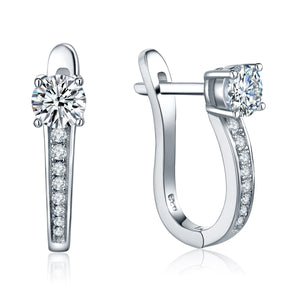


The piece they're describing → Boucles d'oreilles créoles en moissanite pour femme — Argent sterling 925, taille brillant, hypoallergéniques
Personalize Yours


