


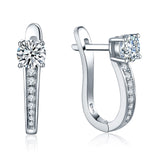
Quick answer: Flat back earrings are more comfortable, safer for sensitive ears, and the only option for cartilage piercings and sleeping on your side. Butterfly backs are fine for occasional daytime wear with healed lobes — the problems start when you wear them all day, every day, or try to sleep in them.
TL;DR — Flat Back vs Butterfly Back
- Sleeping: Flat back wins — no pressure point, no sharp edges digging in.
- Sensitive ears: Flat back wins — less nickel contact, less irritation risk.
- Cartilage piercings: Flat back only — butterfly backs snag and slow healing.
- Everyday wear: Flat back wins — more secure, doesn't accumulate as much bacteria.
- Casual daytime wear: Butterfly backs are fine if you're not sleeping in them.
- Professional standard: Every reputable piercing studio uses flat backs, not butterfly clutches.

Most earring problems — soreness, snagging, irritation — trace back to the backing, not the front. You can spend $100 on a beautiful stud earring and still end up with a red, irritated ear if the back isn't right. The good news: once you understand the difference between flat backs and butterfly backs, the choice is straightforward.
This guide breaks down how each backing works, where each one wins, and when it's worth making the switch. We'll cover sleeping, sensitive ears, cartilage, hygiene, and everything in between.
What's in this guide
- What is a butterfly back earring?
- What is a flat back earring?
- Full comparison: flat back vs butterfly back
- Sleeping with earrings: flat back wins
- Sensitive ears: flat back wins
- Cartilage piercings: flat back only
- When butterfly backs are fine
- How to switch from butterfly to flat back
- Price comparison
- Frequently asked questions
What Is a Butterfly Back Earring?
A butterfly back (also called a butterfly clutch, friction back, or push back) is the most common earring back sold in fashion and costume jewelry. It's a small metal piece with two curved "wings" that grip the earring post when you push it on. Viewed from behind, the wings give it a shape that vaguely resembles a butterfly — hence the name.
Not what you were looking for? If you searched "butterfly earrings" hoping to find earrings shaped like a butterfly rather than this backing hardware, see AJLuxe's earrings with butterflies guide instead — it covers the actual butterfly-motif styles, prices, and meaning.
Butterfly backs are so common because they're cheap to manufacture and easy to use. You push the post through your lobe and slide the clutch on — no threading, no twisting. That simplicity made them the default for decades of mass-market earrings.
The downside is that "cheap and simple" comes with real trade-offs. The wings protrude behind your ear, the metal is often nickel-plated, and the grip can loosen over time. These problems are minor for occasional daytime wear, but they add up fast if you wear earrings every day or sleep in them.
What Is a Flat Back Earring?
A flat back earring (also called a labret stud) has a smooth, flat disc that sits flush against the back of your ear instead of a protruding clutch. The disc is typically 3–6mm across and sits perfectly flat against the skin. Nothing protrudes, nothing snags, nothing digs in.
There are a few types of flat back closure systems:
- Threadless (press-fit): The front decorative piece has a bent pin that clicks into the hollow post. No threading. Easiest to change fronts.
- Internally threaded: The threads are inside the post, so you screw the front piece in. Smoother for healing piercings since there's no exposed threading to snag tissue.
- Push-pin (screwback): A hybrid — you push the post in and the back disc screws on for extra security.
All three variations share the same key feature: the back is flat. That's the point. Professional piercers at APP-certified studios use flat backs for all initial piercings because they're safer, more comfortable, and easier on healing tissue.
Flat Back vs Butterfly Back: Full Comparison
| Feature | Flat Back | Butterfly Back |
|---|---|---|
| Comfort (daily wear) | Excellent — flat disc doesn't press into skin | Fair — wings can create pressure point |
| Sleeping comfort | Very good — no sharp edges | Poor — wings dig into skin when lying on side |
| Sensitive ears | Better — less metal contact surface | Worse — nickel-plated wings contact skin |
| Cartilage use | Safe and recommended | Not safe — snagging risk, poor healing |
| Snagging on hair/pillows | Minimal — nothing protrudes | High — wings catch on everything |
| Bacteria/hygiene | Easier to clean flat surface | Wings trap skin oils and dead cells |
| Security | Very secure — disc can't loosen accidentally | Moderate — clutch can loosen over time |
| Ease of use | Learning curve for threadless systems | Very easy — just push on |
| Professional piercer recommendation | Yes — industry standard | No — not recommended for any piercing |
| Price | Slightly higher ($15–$40) | Lower ($2–$15) |
Quick Price Comparison
| Backing Type | Typical Price Range | Lifespan | Best for |
|---|---|---|---|
| Butterfly back (fashion) | $2–$15 | 1–3 years | Casual daytime earrings |
| Butterfly back (sterling silver) | $10–$25 | 3–10 years | Better metal, same issues |
| Flat back (threadless, titanium) | $15–$35 | 10+ years | Sensitive ears, healing piercings |
| Flat back (925 sterling silver) | $20–$40 | Lifetime | Everyday wear, all ear types |

Sleeping: Flat Back Wins
This is where the difference is most obvious. If you sleep on your side, a butterfly back presses its raised wings directly into the skin behind your ear. That point of pressure over hours creates soreness, redness, and sometimes a bump that people mistake for an infection.
Flat backs eliminate this completely. The smooth disc sits flush with no raised edges. There's nothing to press in, nothing to dig into your pillow. Side sleepers who switch to flat backs typically notice the difference the first night. If a dedicated flat-back isn't a fit for you, see our hypoallergenic earrings for sleeping guide for a lower-cost, secure everyday alternative.
For a full guide on wearing earrings to bed safely, see our articles on can you sleep with earrings in and the best earrings to sleep in. The short answer: if you're going to sleep in earrings regularly, flat backs are the only comfortable option.
Sensitive Ears: Flat Back Wins
Butterfly backs have a hidden problem: the wings are often made from nickel-plated metal, even when the post and front are sterling silver or gold. The wings sit in direct contact with the thin skin behind your ear for hours. If you're sensitive to nickel, that's enough to trigger contact dermatitis — redness, itching, and swelling.
Flat backs reduce the problem in two ways. First, a disc has far less surface area than two curved wings, meaning less metal touching your skin. Second, quality flat back earrings — including our 925 sterling silver flat back studs — use nickel-free materials throughout, including the back disc. No hidden nickel hiding in the clutch.
The American Academy of Dermatology notes that nickel is the most common cause of contact dermatitis in jewelry. Choosing earrings with minimal nickel contact — including nickel-free backs — is the most effective prevention.
For earrings specifically designed for reactive ears, our sensitive ear earrings collection uses 925 sterling silver throughout, including the back.
Cartilage Piercings: Flat Back Only
If you have a helix, tragus, conch, or any other cartilage piercing, butterfly backs aren't just uncomfortable — they're genuinely problematic. Cartilage is stiffer than lobe tissue and heals more slowly. Any snagging on hair, clothing, or bedding during that healing period can cause micro-tears, prolong healing, or lead to irritation bumps.
Butterfly wings snag constantly. They catch on hair, hoodies, towels, and scarves. Every snag on a healing cartilage piercing is a small setback. Flat backs have no protruding parts and don't catch on anything.
Beyond snagging, butterfly backs also apply uneven pressure on cartilage, which is already prone to pressure-related complications. Flat backs distribute the minimal contact evenly across the smooth disc. This is why APP-member studios use flat backs — and only flat backs — for all cartilage piercings, from the initial needle to long-term wear. For more on cartilage earring options, see our guide to flat back cartilage earrings.
When Butterfly Backs Are Fine
Butterfly backs get a lot of criticism, and most of it is deserved for everyday wear. But there are situations where they're perfectly acceptable.
They work fine for casual daytime wear with healed lobes. If you're putting in a pair of earrings for a few hours and taking them out before bed, butterfly backs cause no real problems. The snagging risk is lower when you're aware of it, and the nickel contact over a short period isn't enough to cause issues for most people.
They're also reasonable for fashion jewelry you wear occasionally. That pair of statement earrings you wear twice a year doesn't need a premium flat back system. The butterfly clutch works fine for infrequent, aware wear.
The real issue is that butterfly backs are marketed and sold as universal backings for all situations — and they're not. They're a budget solution that works for a narrow set of use cases. Understanding that lets you make the right call for your specific situation.
A Push-Back Pick for the Daytime-Wear Case Above
If casual daytime wear on healed lobes is your situation, AJLuxe's CZ stud earrings use exactly this friction-back format — a coiled-wire push back, not a flat disc — on a 925 sterling silver, rhodium-plated, nickel-free post. Not a sleep or cartilage pick (see above); a straightforward daytime stud in 5 sizes, 3mm to 7mm.
Making the Switch: How to Replace Butterfly Backs with Flat Backs
Switching from butterfly backs to flat backs is simpler than it sounds, but you need to know a few things before you buy.
Step 1: Check your post gauge. Most standard earrings use a 20G (0.8mm) or 18G (1.0mm) post. Cartilage piercings are often 16G (1.2mm). You need a flat back with the same gauge as your current earring post, or you'll have a loose or tight fit. When in doubt, measure or bring your earring to a piercing studio for sizing help.
Step 2: Match the post length. Flat back posts come in different lengths — typically 6mm, 8mm, and 10mm. You want the post to come through your piercing with just enough length for the back disc to seat comfortably (usually 1–2mm of clearance). Too long and the post wobbles; too short and the disc presses uncomfortably into your lobe.
Step 3: Choose your closure system. Threadless systems are the easiest to switch fronts on. Internally threaded are more secure and better for healing. Push-pin is a good middle ground for healed piercings.
Step 4: Buy from a reputable source. Cheap flat backs defeat the purpose — a low-quality metal disc with nickel plating is no better than a butterfly back for sensitive ears. Look for implant-grade titanium, 14K gold, or 925 sterling silver. Our flat back earrings guide covers what to look for in detail.
For a ready-to-wear option, our flat back stud earrings in 925 sterling silver ($32) are threadless, nickel-free, and sized for standard lobe piercings. Also see our full best flat back earrings roundup for more picks.
AJLuxe Pick: Flat Back Studs for Everyday Wear
Our flat back stud earrings are made from 925 sterling silver throughout — post, front, and flat disc back. No hidden nickel, no butterfly clutch. $32 and designed for all-day comfort, including sleep. Also available in our sensitive ear earrings collection.
If you've lost the back rather than trying to choose between styles, our earring backs replacement guide covers exactly how to replace it.
A back fastened too tight against the lobe is also one of the most common causes of earring pain; see our why earrings hurt guide for the other three causes and how to fix each.
Frequently Asked Questions
Are flat backs better than butterfly backs?
For most situations, yes. Flat backs are more comfortable for daily wear, better for sleeping, safer for sensitive ears, and the only option for cartilage piercings. Butterfly backs are fine for occasional daytime wear with healed lobe piercings — the problems start when you wear them all day or sleep in them.
Can I put a flat back on any earring?
Only if the earring post is compatible. The flat back needs to match the post's gauge (thickness) exactly — typically 20G or 18G for standard studs. You can't mix a flat back designed for a 16G post onto a 20G post. Measure your gauge first or ask a piercer to check.
Why do butterfly backs irritate my ears?
Three common reasons: the butterfly wings press a pressure point into the skin during wear; the wings are often nickel-plated even when the post is sterling silver, causing nickel contact dermatitis; and the small gap inside the wings traps skin oils, dead skin, and moisture, which can host bacteria. Switching to a quality flat back with nickel-free materials usually solves all three.
How do I replace a butterfly back with a flat back?
Match the gauge of your existing earring post (usually 20G or 18G). Choose a flat back in the same gauge and a post length that gives you 1–2mm of clearance through your lobe. Threadless flat backs are the easiest to install — the bent pin in the front piece clicks into the hollow post. Internally threaded require screwing the front on, but are very secure. See our flat back earrings guide for full instructions.
Are flat backs more comfortable for sleeping?
Yes — significantly. Butterfly wings protrude behind the ear and create a pressure point when you lie on your side. Flat backs sit flush with no raised edges. Side sleepers who switch report noticing the difference on the first night. See our best earrings to sleep in guide for more.
Can I use butterfly back earrings in a cartilage piercing?
No, and most professional piercers strongly advise against it. Butterfly wings snag on hair, clothing, and bedding constantly. Any snagging on cartilage — which heals much more slowly than lobes — causes micro-tears and prolongs healing. Flat backs are the only recommended backing for any cartilage piercing, healed or healing.
Do flat back earrings fall out more easily?
No — they're actually more secure. A butterfly clutch can loosen over time as the spring tension in the wings wears out. A flat disc has no moving parts to wear out. Threadless flat backs are held in by a tension mechanism that doesn't degrade with wear. Internally threaded flat backs screw on, making them extremely secure.
Are flat back earrings good for sensitive ears?
Yes. Two reasons: less metal surface touching your skin (disc vs. two curved wings), and quality flat backs are made from hypoallergenic materials throughout — including the back. Many butterfly backs use nickel-plated clutches even when the visible front is sterling silver or gold. Look for flat backs in 925 sterling silver, implant-grade titanium, or 14K gold. Our flat back earrings for sensitive ears guide covers the best options.
How do I know what gauge my earring is?
Standard lobe piercings are usually 20G (0.8mm) or 18G (1.0mm). Cartilage is often 16G (1.2mm). If you're unsure, bring your earring to an APP-certified piercing studio — they'll measure it in seconds at no charge. Buying the wrong gauge is the most common mistake when switching to flat backs.
What's the difference between a flat back and a labret stud?
They're the same thing. "Labret stud" is the piercing-industry term for a straight post with a flat disc back and a removable front piece. "Flat back earring" is the more consumer-friendly name for the same design. Both describe any earring where the back is a smooth flat disc.
Do butterfly backs harbor bacteria?
More than flat backs, yes. The gap between the butterfly wings and the post is a small enclosed space that collects skin oils, dead skin cells, and moisture. It's hard to clean thoroughly and easy to forget. The flat surface of a disc back is much simpler to wipe clean. This is especially relevant for cartilage piercings or any piercing that's still healing.
Final Thoughts
The choice between flat back and butterfly back earrings comes down to how and when you wear them. For daily wear, sleeping, sensitive ears, or any cartilage piercing, flat backs are the clear answer — they're more comfortable, more hygienic, more secure, and the professional standard for a reason. Butterfly backs aren't bad; they're just oversold as universal when they only work well in a narrow set of situations.
If you're ready to make the switch, start with a quality flat back stud in 925 sterling silver or implant-grade titanium. Our flat back stud earrings ($32) are a good starting point — 925 sterling silver throughout, nickel-free, and sized for standard lobe piercings. For more options, browse our sensitive ear earrings collection.
For more reading, see our guides on flat back earrings, flat back earrings for sensitive ears, flat back cartilage earrings, best flat back earrings, and can you sleep with earrings in.
Written by the AJLuxe team — specialists in personalized sterling silver jewelry. Last updated: June 2026.
Toutes les marques, noms de marque et noms de produits tiers sont la propriété de leurs détenteurs respectifs. AJLuxe n’est affilié à aucune marque tierce citée dans cet article, ni approuvé ou sponsorisé par celle-ci. Les noms de marque sont utilisés uniquement à des fins de comparaison factuelle, et les descriptions de matériaux reflètent les spécifications produit publiées par chaque marque au moment de la rédaction.
You Might Also Like
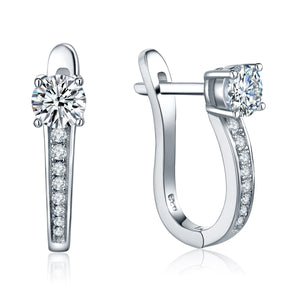
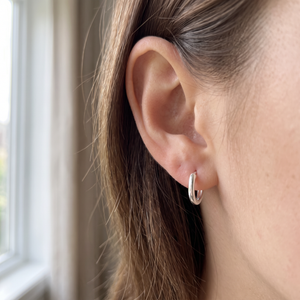
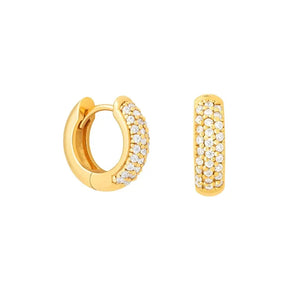
The piece they're describing → Boucles d'oreilles créoles en moissanite pour femme — Argent sterling 925, taille brillant, hypoallergéniques
Personalize Yours


