


Does Gold Filled Jewelry Tarnish?
No, not under normal wear — that's the short version of does gold filled jewelry tarnish. The gold layer on gold filled jewelry is mechanically bonded to a brass core with heat and pressure, not electroplated, so it's dramatically more resistant to tarnish than gold plated pieces. It isn't tarnish-proof, though: chlorine, sulfide fumes, high-acid sweat, and even off-gassing from certain storage materials can still cause discoloration in specific situations. With normal care, most gold filled jewelry holds its finish for 10 to 30 years.
If you're asking does gold filled jewelry tarnish before buying a piece, the honest answer is: rarely, and only under specific conditions — which puts it in a completely different category from the gold plated jewelry most people have already dealt with disappointment over. Gold filled construction uses a thick, mechanically bonded layer of real gold rather than a microscopically thin electroplated coating, and that difference in construction is the entire reason gold filled resists tarnish so much better.
This guide covers the actual chemistry of why gold filled resists tarnish, the specific situations where it can still happen, an honest comparison against solid gold, gold vermeil, and gold plated, and what AJLuxe does differently since we don't carry gold filled pieces ourselves.
In This Guide
- What Gold Filled Actually Means
- Does Gold Filled Jewelry Tarnish?
- The Situations Where It Can Still Tarnish
- How Gold Filled Compares: Solid Gold vs. Vermeil vs. Plated
- How Long Gold Filled Jewelry Actually Lasts
- Nickel Content and Allergy Considerations
- How to Care for Gold Filled Jewelry
- Why AJLuxe Doesn't Sell Gold Filled — and What We Recommend Instead
- Frequently Asked Questions
- Final Thoughts
What Gold Filled Actually Means
"Gold filled" is a specific, legally regulated term in the U.S. — not a marketing phrase. To be labeled gold filled, a piece must have a layer of real karat gold (usually 12K or 14K) equal to at least 5% of the item's total metal weight, mechanically bonded to a base metal core — almost always brass — using heat and pressure. That bonding process is the key detail competitors gloss over: it fuses the gold to the base metal at a molecular level, rather than depositing a thin surface coating the way electroplating does.
Compare that to gold plated jewelry, where a thin layer of gold (often measured in fractions of a micron) is deposited onto a base metal through electroplating — an electric current-driven chemical process with no mechanical bonding. The gold sits on top rather than being fused to the surface, which is exactly why it wears through so much faster.
The practical result: gold filled jewelry carries up to 100 times more actual gold content than a comparable gold plated piece. That's not a marketing exaggeration — it's the direct consequence of the minimum 5%-by-weight legal standard versus plating's typically much thinner deposit. For a broader look at how the trade classifies gold jewelry by karat and construction, Jewelers of America's gold jewelry buying guide is a useful independent reference.
Does Gold Filled Jewelry Tarnish?
Under normal daily wear — showering occasionally, light exercise, typical skin contact — gold filled jewelry usually does not tarnish. The thick, bonded gold layer acts as a genuine barrier between your skin and the brass core underneath, and gold itself is one of the most tarnish-resistant metals that exists. This is the core reason gold filled has become the default choice for permanent jewelry and daily-wear pieces that need to survive years without babying.
But "usually doesn't tarnish" isn't the same as "cannot tarnish," and pretending otherwise is where a lot of gold filled marketing oversells the product. The gold layer is thick relative to plating, but it isn't infinite, and the brass core underneath is chemically reactive if it's ever exposed.
The Situations Where It Can Still Tarnish
Three real causes show up consistently across jeweler guides and documented cases:
- Chlorine and saltwater exposure. Pool chemicals and ocean salt react aggressively with the gold alloy and can accelerate wear at the bonded seam — the same weak point on any layered-metal jewelry. Repeated exposure is worse than a single dip.
- High skin acidity and sweat. Some people's body chemistry is simply more reactive. A brass-allergy-style reaction between perspiration and the brass core can cause visible darkening within days of heavy wear, even on jewelry that's otherwise held up fine for other wearers.
- Storage off-gassing — the cause most guides skip entirely. This is a genuine gap in most gold filled content online: synthetic packaging materials — dyed fabric pouches, treated wooden spools, certain plastics — can off-gas compounds that react with the gold surface over weeks or months, even if the piece is never worn. There are documented cases of gold filled pieces darkening in storage alone. The fix is simple: store in an airtight bag or a plain anti-tarnish pouch, away from rubber bands, dyed fabric, and humidity.
Fire damage and heavily polluted air (industrial sulfide fumes) can also cause tarnish, but these are edge cases most buyers will never encounter.

How Gold Filled Compares: Solid Gold vs. Vermeil vs. Plated
Every gold jewelry category makes tradeoffs between gold content, durability, and price. Here's the honest side-by-side:
| Type | Composition | Gold Content | Typical Lifespan | Price Range | Tarnish Resistance |
|---|---|---|---|---|---|
| Solid Gold | Gold alloy throughout, no base metal core | 41.7%–99.9% (10K–24K) | Lifetime / heirloom | $$$$ ($300+) | Excellent — doesn't tarnish |
| Gold Filled | Karat gold layer bonded (heat + pressure) to brass core | Min. 5% of total weight | 10–30 years | $$ ($40–$150) | Very good — rare exceptions |
| Gold Vermeil | Gold layer (min. 2.5 microns) over 925 sterling silver | Thin but on precious base | 1–5 years | $–$$ ($25–$100) | Good — silver base tarnishes gently, not green |
| Gold Plated | Thin electroplated gold over brass/copper base | Fraction of a micron | 1–3 years | $ ($15–$50) | Lower — wears through fastest |
The pattern is straightforward: more gold, mechanically bonded rather than electroplated, on a more stable base metal, generally means longer life and better tarnish resistance — and it costs more. Gold filled sits in the middle of that spectrum: more durable than plating or vermeil, less expensive than solid gold. If you're weighing gold filled against a thinner-plated piece you already own, Finematter's breakdown of gold vermeil and what happens as gold layers wear off is a useful independent comparison point for the layered-metal categories in the table above.
How Long Gold Filled Jewelry Actually Lasts
Most jewelers and gold filled specialty brands put realistic daily-wear lifespan at 10 to 30 years — a claim borne out by the material's legal minimum gold content and bonding process. That's a wide range, and where a specific piece lands within it depends on a few real variables:
- Body chemistry: higher-acidity sweat wears down any metal finish faster, gold filled included.
- Water exposure: chlorinated pools, hot tubs, and long hot showers accelerate wear at the bonded seam.
- Wear frequency: daily wear vs. occasional wear makes an obvious difference in cumulative friction.
- Care habits: regular gentle cleaning and dry storage extend life; leaving pieces tangled in a drawer or worn into the shower shortens it.
By comparison, gold plated jewelry — including most fast-fashion and budget jewelry — typically shows base metal within 1 to 3 years of regular wear, simply because there's so much less gold there to begin with.
Nickel Content and Allergy Considerations

This is a gap in a lot of the existing content on gold filled jewelry: most guides mention "hypoallergenic" without explaining why, or ignore nickel specifically in favor of vague "sensitive skin" language.
Here's the more precise picture. The outer gold surface of a gold filled piece is genuine karat gold, which does not contain nickel and is safe for the vast majority of people with metal sensitivities. The risk sits underneath: the brass core can contain trace nickel, and once the gold layer wears thin at high-friction points — clasps, ring shanks, earring posts — skin can come into direct contact with that base metal. Nickel allergy is common: the American Academy of Dermatology estimates more than 18% of people in North America react to nickel, and their guidance for anyone with a known sensitivity is to stick with surgical-grade stainless steel, 18–24 karat gold, or pure sterling silver rather than base-metal-core jewelry, plated or filled.
Practically: if you don't have a diagnosed metal allergy, gold filled is a safe daily-wear choice for years. If you do, a worn gold filled piece years into its life is a more realistic allergy risk than a fresh one — worth keeping in mind for rings and earring posts specifically, which see the most friction.
Shop the honest alternative: if you'd rather not deal with brass-core uncertainty at all, our Double Heart Necklace — 18K Gold Plated is built on a 925 sterling silver base, which is nickel-free by design, not just by degree of wear.
How to Care for Gold Filled Jewelry
Good habits extend gold filled jewelry toward the long end of its 10–30 year range:
- Remove before water exposure that matters: pools, hot tubs, and long hot showers. Quick handwashing is generally fine if you dry the piece after.
- Apply products first, jewelry last: perfume, lotion, and hairspray all contain compounds that can react with the gold alloy over repeated exposure.
- Wipe down after wear: a soft, dry cloth removes sweat and oils before they have time to sit against the metal.
- Store in an airtight bag or anti-tarnish pouch: this addresses the storage off-gassing risk directly — avoid dyed fabric pouches, treated wood, and rubber bands.
- Clean gently when needed: mild soap, lukewarm water, and a soft cloth. Skip ultrasonic cleaners and abrasive polishing cloths, which can wear down even a thick bonded gold layer over repeated use.
Why AJLuxe Doesn't Sell Gold Filled — and What We Recommend Instead
We'll be straightforward here: AJLuxe doesn't carry gold filled jewelry. Our collection is built on 18K gold plating over 925 sterling silver instead. That's a real tradeoff, not a workaround — our plating won't outlast a well-cared-for gold filled piece over ten or twenty years of daily wear, and we're not going to claim otherwise.
What sterling silver gives you that a brass core doesn't is a nickel-free base by default, not just while the surface finish holds. If the plating eventually wears at a high-friction point, what's underneath is hypoallergenic sterling silver — not a base metal that may or may not react with your skin. We think that's a fair tradeoff at a lower price point, and we'd rather tell you that plainly than dress plating up as something with gold-filled-level longevity.
For most people buying a piece for regular — not necessarily daily-for-decades — wear, that combination covers the actual use case without the higher price tag gold filled or solid gold commands. Shop 18K gold plated → Also see Solid Gold vs Gold Filled vs Gold Plated for the full three-way comparison.
Keep Reading
Related reading: How to clean gold filled jewelry.
Related reading: Does Swarovski Jewelry Tarnish? The Real Answer (2026).
Related reading: Does Gorjana Jewelry Tarnish? The Real Answer (2026).
Related reading: Does James Avery Jewelry Tarnish? The Real Answer (2026).
Related reading: Does eNewton Tarnish? The Honest Answer (2026).
Related reading: Does Alex and Ani Tarnish? The Honest Answer (2026).
Frequently Asked Questions
Does gold filled jewelry tarnish?
Under normal daily wear, gold filled jewelry usually does not tarnish. The gold layer is mechanically bonded to the base metal with heat and pressure, so it's dramatically more resistant to fading and tarnish than gold plated jewelry. That said, it isn't tarnish-proof — exposure to chlorine, sulfide fumes, polluted air, or fire damage can still cause discoloration in rare cases, and off-gassing from synthetic packaging materials during storage has caused some reported cases of darkening even without wear.
What is gold filled jewelry made of?
Gold filled jewelry consists of a solid layer of real gold — legally required to be at least 5% of the total metal weight (1/20th gold by weight) — mechanically bonded under heat and pressure to a base metal core, almost always brass. This is different from gold plated jewelry, where a microscopically thin layer of gold is electroplated onto the base metal with no mechanical bonding.
How long does gold filled jewelry last?
With normal daily wear and reasonable care, gold filled jewelry typically lasts 10 to 30 years, and some pieces last even longer. This is a direct result of the thick, bonded gold layer — it holds up to 100 times more gold content than typical gold plated pieces, which usually only last 1 to 3 years before the plating wears through.
Does gold filled jewelry turn your skin green?
High-quality gold filled jewelry does not normally turn skin green. Green discoloration happens when a base metal (often brass or copper) reacts with moisture, sweat, or skincare product residue, causing oxidation. Because the gold layer on gold filled pieces is thick and continuous, skin contact with the brass core is much less likely than with thin gold plated pieces, where the base metal is exposed quickly.
Can gold filled jewelry cause a nickel allergy reaction?
Gold filled jewelry is generally considered safe for most people with metal sensitivities, since the outer surface is genuine gold, not nickel. However, the brass core beneath the gold layer can sometimes contain trace nickel, and once that gold layer wears thin at friction points (clasps, ring shanks), sensitive skin can react to the metal underneath. If you have a diagnosed nickel allergy, the American Academy of Dermatology recommends sticking to jewelry made from surgical-grade stainless steel, 18-24 karat gold, or pure sterling silver.
Is gold filled jewelry worth the money compared to gold plated?
For everyday, long-term wear, most people find gold filled jewelry a better value than gold plated, because the thicker gold layer means it doesn't need replacing every year or two. But it's still a base-metal product, not solid gold — the core is brass, and a worn edge or bent prong can eventually expose that base metal. Gold plated jewelry costs less upfront and is a reasonable choice for pieces you don't plan to wear daily for years, or for trend pieces you'll replace anyway.
Can you shower or swim with gold filled jewelry?
Occasional water contact (handwashing, light rain) is generally fine if you dry the piece promptly. But chlorinated pool water and salt water are two of the fastest ways to degrade any gold finish, gold filled included — both react aggressively with the gold alloy and can accelerate wear at the bonded seam. Most care guides recommend removing gold filled jewelry before swimming, hot tubs, and long hot showers.
How is gold filled different from gold vermeil?
The main difference is the base metal and how the two categories are legally defined. Gold vermeil requires a sterling silver base with a minimum 2.5 micron gold layer; gold filled requires a brass (or similar base metal) core with gold equal to at least 5% of total weight, bonded via heat and pressure rather than electroplating. Gold filled generally carries more gold by weight and lasts longer under daily wear, but vermeil's silver base is hypoallergenic in a way a brass gold-filled core isn't guaranteed to be once the surface wears through.
Why doesn't AJLuxe sell gold filled jewelry?
We build our collection around 18K gold plating over 925 sterling silver instead of gold filled. It's an honest tradeoff: our plating won't outlast a gold filled piece over a decade of daily wear, but the sterling silver base underneath is nickel-free and hypoallergenic by design, at a lower price point than gold filled typically commands. We'd rather be upfront about that tradeoff than market plating as something it isn't.
Does storing gold filled jewelry cause tarnish even without wearing it?
Yes, and this is a commonly overlooked cause. Synthetic packaging materials — dyed fabric pouches, treated wood spools, some plastics — can off-gas compounds that react with the gold surface over weeks or months of storage, even if the piece is never worn. Storing gold filled jewelry in an airtight bag or a plain anti-tarnish pouch, away from rubber bands and humidity, avoids this.
Final Thoughts
So, does gold filled jewelry tarnish? Rarely, and mostly under conditions you can control — chlorine, high-acid sweat, or careless storage. The mechanically bonded gold layer is the real difference-maker versus gold plated jewelry, and it's why gold filled has earned its reputation as a genuinely durable, mid-price option that can realistically last 10 to 30 years. For the full honest picture, including how it compares as an everyday buy and whether it holds any investment value, see our complete is gold-filled jewelry worth it review. And if you are comparing it to plain gold plating, our guide on is gold plated jewelry real gold covers exactly how thick that layer is and what it is bonded to.
If gold filled isn't available to you, or you'd rather have a hypoallergenic base guaranteed by design rather than by an intact gold layer, 18K gold plating over 925 sterling silver is the honest alternative — less gold by weight, a shorter typical lifespan, but a nickel-free foundation the whole way through. Our Double Heart Necklace — 18K Gold Plated is a good example of that approach at an accessible price point.
Written by the AJLuxe team — specialists in personalized sterling silver jewelry. Last updated: July 2026.
Shop the look: our Double Heart Necklace — 18K Gold Plated pairs two layered heart pendants on a 925 sterling silver base with 18K gold plating — hypoallergenic, nickel-free, and priced at $24.99.
Toutes les marques, noms de marque et noms de produits tiers sont la propriété de leurs détenteurs respectifs. AJLuxe n’est affilié à aucune marque tierce citée dans cet article, ni approuvé ou sponsorisé par celle-ci. Les noms de marque sont utilisés uniquement à des fins de comparaison factuelle, et les descriptions de matériaux reflètent les spécifications produit publiées par chaque marque au moment de la rédaction.
You Might Also Like


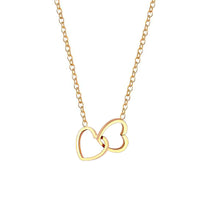
The piece they're describing → Collier Double Cœur pour Femme — Plaqué Or 18 carats, Pendentif Cœur Superposé
Personalize Yours


