

- Elongating shapes (oval, marquise, pear, emerald-cut) create a vertical line that visually slims a fuller finger — round and cushion cuts don't.
- Band width matters more than most sizing charts admit: a 1.5-2mm thin band reads slimmer than a 4mm+ statement band, even in the identical ring size.
- Measure at the end of the day, when fingers are most swollen — a ring that fits perfectly at 8am can pinch by 6pm.
- Wider bands need roughly a half-size up from a thin band on the same finger, since more metal touches more skin.
- Adjustable open-band rings solve the daily size fluctuation problem outright, and thin stacking rings (1.5-2mm each) create a similar slimming effect with more flexibility than one fixed statement piece.
- The same elongating-shape logic works in reverse for short fingers — just keep the scale proportioned, don't size up for "presence."
If you've ever bought a ring that looked great on the display card and then pinched, bulged, or just looked "off" once it was actually on your hand, the problem usually isn't your fingers — it's the shape and width of the ring. Fuller fingers photograph and wear differently than the model's hand in a product photo, and most ring-buying guides don't say anything useful about it beyond "choose what you like." This guide covers the ring shapes and band widths that actually slim visually, real sizing advice that accounts for how much fingers swell during the day, and specific styles to avoid — plus a short section for the opposite problem, short fingers, since the styling logic is closely related.

What Ring Shapes Make Fingers Look Slimmer?
Rings with vertical, elongating stone shapes — marquise, oval, pear, and emerald-cut — make fingers look slimmer because the eye follows the long axis of the stone up the finger instead of across it. This is a basic proportion principle stylists and jewelers cite constantly for bridal and cocktail rings alike: a shape that's longer than it is wide creates a line, and a line reads as length rather than width.
Marquise
The most elongating shape available. Its pointed ends draw the eye straight up the finger, which is why marquise-cut engagement rings are consistently recommended for this exact concern.
Oval
Slightly softer than marquise but still strongly vertical. Ovals are the more versatile everyday choice — less dramatic, easier to layer into a stack, and flattering on nearly every hand shape.
Pear
A teardrop shape that elongates similarly to marquise while reading a little more classic. Works especially well as a single statement piece rather than in a stack.
Emerald-cut
A rectangular step-cut that creates a clean vertical line without a pointed tip. Reads more modern and architectural than marquise or pear.
What to skip: round and cushion-cut stones add width without any elongating line, and a halo setting (a ring of small stones circling the center stone) compounds that by widening the visual footprint even further. That doesn't mean round stones are off-limits — a smaller round stone on a thin band is fine — but a large round stone is the shape working against you here, not for you.

What Ring Size Is Right for Fat Fingers?
There's no separate "size" for fuller fingers — the right size is whatever fits snugly but comfortably when you measure at the end of the day, when fingers are at their most swollen from heat, salt intake, and general activity. A ring measured first thing in the morning can run a half-size too small by evening, which is the single most common reason a "correctly sized" ring ends up feeling tight.
The adjustment that does matter and gets skipped by most generic sizing charts: band width changes the effective fit. A wider band (4mm+) touches significantly more skin surface than a thin band (1.5-2mm), so the same finger typically needs to size up roughly half a size in a wide band compared to a thin one to feel equally comfortable. If you're between sizes, size up rather than down, and if you're ordering a wide statement band, add that half-size buffer on top of your usual measurement.
For the full at-home measuring method (string, printable sizer, or an existing ring you already own), see our ring size guide or use the interactive ring size calculator.
Best Ring Styles for Plus-Size Fingers
Thin bands, open or adjustable designs, and elongating stone shapes are the most flattering and comfortable combination for fuller fingers. A few specific styles worth reaching for:
- Thin stacking rings (1.5-2mm each) — two or three slim bands stacked together create a similar slimming line to one wider statement ring, with the flexibility to wear one, two, or all three depending on the day. Our dainty gold-plated stacking rings are built at this thin gauge specifically for that effect.
- Adjustable open-band rings — a band with an open gap at the back flexes slightly to fit a range of sizes, which sidesteps the swelling problem outright instead of forcing you to pick one fixed size. Our minimalist adjustable ring and open-band stacking ring both use this construction.
- Single elongating solitaire — one oval or marquise stone on a thin band, worn alone, is the simplest version of this whole principle and works well for a first ring on a fuller finger.
- Asymmetric or negative-space bands — designs with a visible gap or cutout in the band break up the metal's continuous line, which reads as slimmer than a solid unbroken band of the same width.
For a broader look at ring construction and which shapes suit which occasions, our types of rings guide covers the full range, and if you're building a stack rather than choosing one ring, how to stack rings covers proportion and order in more depth.
Ring Styles to Avoid
| Style | Why It Works Against You | Better Alternative |
|---|---|---|
| Wide flat bands (5mm+) | Adds visible width with no elongating line | Thin band, 1.5-2mm |
| Large round or cushion-cut center stone | Width without length — the opposite of the slimming effect | Oval, marquise, or pear |
| Dense halo settings | Ring of small stones widens the visual footprint further | Single elongating solitaire |
| Fixed-size chunky statement rings | Can't accommodate daily swelling; risks pinching by evening | Adjustable open-band ring |
What About Rings for Short Fingers?
The best ring style for short fingers uses the same elongating logic as fuller fingers — oval, marquise, and pear-shaped stones lengthen the visual line of a short finger the same way they slim a wider one, since both are proportion problems solved by the same vertical shapes. The difference is scale, not shape: keep the stone and band sized proportionately to the finger rather than sizing up for more "presence." An oversized stone on a short finger tends to read as covering the entire finger rather than elongating it, which has the opposite of the intended effect.
A thin band with a modestly sized oval or marquise stone, or a slim stacking ring worn slightly toward the base of the finger rather than centered, both create length without overwhelming a smaller hand. It's a low-search, closely related question to the fuller-finger case above, which is why it's worth a section here rather than its own separate guide.
Frequently Asked Questions
What rings make fingers look slimmer?
Rings with vertical, elongating stone shapes — marquise, oval, pear, and emerald-cut — make fingers look slimmer because the eye follows the long axis of the stone up the finger instead of across it. Pairing an elongating shape with a thin band (1.5-2mm) reinforces the effect; a wide band paired with the same stone shape cancels most of the slimming benefit.
What ring size is good for chubby fingers?
There's no separate "size" for fuller fingers — the right size is whatever fits snugly but comfortably when you measure at the end of the day, when fingers are at their most swollen from heat and activity. The one adjustment that does matter: a wider band needs to go up roughly half a size compared to a thin band on the same finger, since more metal surface touches the skin.
What rings are suitable for plus-size fingers?
Thin bands (1.5-2mm), open or adjustable band designs, and rings with elongating stone shapes (oval, marquise, emerald-cut) are the most flattering and comfortable options. Adjustable open-band rings are especially practical since finger size fluctuates several sizes over a day with temperature and salt intake, and a fixed-size thick band can't accommodate that swing.
What shape looks best on chubby fingers?
Oval and marquise are the two most consistently flattering shapes because their length-to-width ratio creates the strongest vertical line. Round and cushion-cut stones read as the least slimming since they add width without adding any elongating line, and clustered halo settings compound that by widening the visual footprint even further.
What ring style looks best on short fingers?
The same elongating logic applies in reverse: oval, marquise, and pear-shaped stones lengthen the visual line of a short finger just as they slim a fuller one. The difference is scale — keep the stone and band proportioned to the finger rather than sizing up for more "presence," since an oversized stone on a short finger reads as covering the whole finger rather than elongating it.
Final Thoughts
The best rings for fat fingers aren't about avoiding certain fingers or hiding them — they're about picking a shape and band width that work with how light and line actually read on a hand. Elongating stone shapes, thin bands, and adjustable or stacking construction cover almost every version of this problem, from an everyday ring you want to feel comfortable in all day to a statement piece you actually want to photograph well. Start thin, start elongated, and size for the end of the day rather than the morning.
Shop the AJLuxe Dainty Gold-Plated Stacking Rings — thin 1.5-2mm bands built for the exact elongating, comfortable fit this guide covers.
Shop Dainty Stacking RingsShop This Guide
- Dainty Gold-Plated Stacking Rings — thin 1.5-2mm bands, 18K gold plated, sold to stack or wear solo
- Open-Band Stacking Ring — adjustable open-back construction, sterling silver
- Minimalist Adjustable Ring — flexes to fit a range of sizes
Last updated: August 2026
Toutes les marques, noms de marque et noms de produits tiers sont la propriété de leurs détenteurs respectifs. AJLuxe n’est affilié à aucune marque tierce citée dans cet article, ni approuvé ou sponsorisé par celle-ci. Les noms de marque sont utilisés uniquement à des fins de comparaison factuelle, et les descriptions de matériaux reflètent les spécifications produit publiées par chaque marque au moment de la rédaction.
You Might Also Like
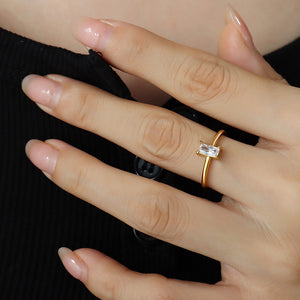

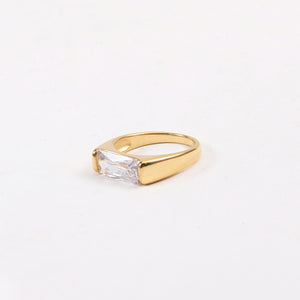
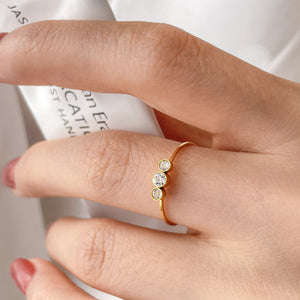
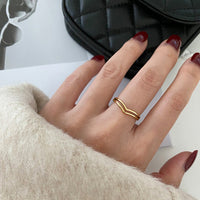
The piece they're describing → Bagues fines empilables pour femme — Plaqué or 18 carats, ensemble à bande fine, minimaliste
Personalize Yours


