


Most necklace-styling advice assumes the open zone is your front -- the neckline. A backless dress flips that. The collarbone and throat are often fully covered (many backless dresses have a modest, even high, front -- halter, crew, or bateau), while the real skin is exposed down your spine. A normal 16-18 inch pendant necklace, styled the usual way, does nothing back there. It just sits at the front of a dress that isn't asking for front jewelry.
That's a genuinely different problem from every other neckline-styling question. It's not about which pendant length suits a V-neck or a scoop -- it's about whether you're putting jewelry on the back of your body at all, and if so, how a necklace even works when it's not hanging down your chest.
What Kind of Necklace Works With a Backless Dress?
A backdrop necklace -- also called a back necklace -- is the piece made for this. It's worn in reverse: the clasp closes at the front of your neck as usual, but the chain length hangs down your open back instead of your chest. Lariat and Y-style necklaces suit this best because many close with a slide or loop rather than a clasp at all, so there's no fastening to fuss with behind your own back.
The alternative is simpler: leave the back completely bare and skip the necklace, or wear a normal front necklace if the dress front genuinely calls for one (a plunge or cowl front, for instance). Both are legitimate choices. What doesn't work is trying to do both at once -- a front necklace and a back drape compete for attention and clutter a dress that's designed to have one clean focal point.
How to Wear a Necklace Down Your Back
To wear a necklace down your back, clasp it at the front of your neck as normal, then let the length fall down your spine instead of across your chest -- most people find it easiest to put the necklace on backward from the start rather than spinning it around after closing it. You want the drop to land somewhere between your shoulder blades and the top of the dress's back opening, not further down where it can swing loose against skin with nothing to rest against.
Chain length matters more here than in front-facing styling. A necklace that reads as a normal mid-length chain in front (18-20 inches) will barely clear your shoulder blades from behind, because your neck circumference eats into the drop. For a visible back drape, look for a longer chain -- 24-30 inches -- or a piece marketed specifically as a backdrop or lariat style, which is usually cut with this in mind. A small pendant or charm at the end reads as an intentional detail; a bare chain with nothing at the tip can look like you forgot to finish putting it on.

The 2:1:1 Rule for a Backless Dress
The 2:1:1 rule is a general jewelry-balancing principle: for every 2 bold pieces, wear 1 neutral piece and leave 1 area completely bare. On a backless dress, it plays out like this: a draped back necklace (bold) plus statement earrings (bold) plus a simple ring (neutral) plus a bare front throat (bare zone) -- the dress itself hands you that bare zone, since most backless silhouettes keep the front modest by design.
If your dress is one of the styles where the front is also open (a plunge neckline paired with a low back, for example), the rule still applies -- you just relocate the "bare zone" to the back instead and let a front pendant lead, or you drop the necklace question entirely and let earrings and the dress do the work. The point isn't which specific zone stays bare, it's that only one area gets to be the loud one.
What Do People Wear With Backless Dresses?
Beyond the necklace question, the two things people plan around most for a backless dress are the bra situation and the earrings. A low-back or backless bra style (or an adhesive/stick-on option, depending on how low the back sits) usually comes first, since a regular bra strap will show. From there, statement drop or chandelier earrings are the strongest accessory choice -- with the back exposed and the front often kept simple, the earrings and the open back become the two visual anchors of the look, so this is the neckline family where it's worth reaching for your boldest pair rather than something small.
Bracelets and rings stay in a supporting role. A single ring or a thin stacked set is plenty; a bulky cuff or heavy bracelet stack competes with the shoulders and back for attention rather than adding to them. Anklets are occasionally worn with backless dresses in warm-weather or beach-formal settings, but they're a personal-preference add, not a core part of the styling formula the way earrings and back placement are.
Front-Focused or Back-Focused: How to Decide
Whether to put jewelry on the front, the back, or neither comes down to reading the dress's actual cut, not a fixed rule:
High or modest front, open back (halter necklines, crew-neck backless dresses, most wedding-guest and evening styles): this is the classic case for a backdrop necklace. The front is already covered, so a back-draped chain gives the look a focal point it wouldn't otherwise have.
Low front and low back (plunge or cowl front paired with an open back): pick one zone, not both. A delicate front pendant sized for the plunge is usually the cleaner choice, since a front necklace also does double duty holding the eye at chest height rather than letting two open zones split attention.
Halter with a tie or strap detail at the back: the halter strap itself already draws a line down your neck, so skip a separate front necklace and either add a short back drape below the tie or leave the back bare and let earrings lead.
Crisscross or strappy open back: a fine chain can be woven along the straps instead of hanging separately, but this only works with delicate, adjustable pieces -- don't force a fixed-length necklace to follow a strap pattern it wasn't made for.
What's the Necklace Trend Right Now?
The current shift is less about a new necklace shape and more about where the necklace goes. Backdrop necklaces exist as their own named product category specifically because backless silhouettes keep showing up season after season in wedding-guest and evening-wear collections -- when a dress style stays popular, the accessory built for it does too. Lariat and Y-style necklaces are the pieces best suited to this reverse-wearing technique, since most close with a slide or loop rather than a clasp, which is why they get reworn as back pieces without any extra thought. For the more common front-facing case -- a backless dress with a modest front -- layered fine chains and single-pendant necklaces remain the steady, reliable default rather than anything trend-driven.
Quick Reference: Dress Back Style vs. Necklace Approach
| Dress Style | Necklace Approach | Chain Length |
|---|---|---|
| High/modest front, open back | Backdrop necklace, front bare | 24-30 inches |
| Halter with open back | Short back drape below the tie, or none | 18-22 inches |
| Low front and low back | Front pendant only, back bare | 16-18 inches |
| Crisscross/strappy open back | Fine chain along the straps (delicate pieces only) | Adjustable |
| Very low, deep-V back | Skip the necklace, let earrings lead | -- |
Frequently Asked Questions
What kind of necklace would look good with a backless dress?
A backdrop necklace, worn in reverse so it drapes down your open back instead of your chest, is the piece built for this dress style. Lariat and Y-style necklaces work especially well since many don't need a clasp. If the front of the dress is also low, skip the back drape and wear a front necklace or no necklace instead.
What is the 2:1:1 rule for jewelry?
For every 2 bold or eye-catching jewelry pieces, balance them with 1 neutral piece and leave 1 area completely jewelry-free. On a backless dress: a back-draped necklace (bold) plus statement earrings (bold) plus a simple ring (neutral) plus a bare front throat (bare zone) is a balanced application.
What do people wear with backless dresses?
A low-back or adhesive bra (or none), statement drop or chandelier earrings, a simple ring, and either a back-draped necklace or no necklace at all. Bracelets stay minimal since the shoulders and back are already the focal point.
What is the necklace trend right now?
Placement over shape: backdrop necklaces are their own category because backless dresses keep reappearing in wedding-guest and evening-wear collections, and lariat/Y-style pieces suit reverse-wearing best since they close without a separate clasp. For front-facing looks, layered fine chains and single pendants remain the steady default.
Final Thoughts: Read the Dress, Then Pick One Zone
A backless dress isn't a necklace-length problem the way a neckline is -- it's a placement problem. Read the dress first: if the front is modest and the back is open, that's your invitation to drape a chain down your spine. If the front is also low, keep the necklace conversation up front and let the back stay bare. Either way, don't do both -- one focal point reads as styled, two competing ones read as cluttered.
Our double heart pendant necklace works both ways for this dress family -- worn normally at the front for a halter or high-front backless style, or clasped in reverse so the heart pendant sits as a small, deliberate detail partway down an open back. It's 925 sterling silver with 18K gold plating, so it holds up to being worn in either direction without tarnishing.
For a related structured-neckline problem -- what to do when the front of the dress is covered instead of the back -- see our necklace for a high neck dress guide. For the full neckline-by-neckline breakdown covering V-neck, scoop, crew, turtleneck, off-shoulder, square, halter, and cowl necks, see our jewelry for different necklines guide. For exact chain lengths by pendant size, see our necklace length guide.
Browse our necklaces and earrings -- all in 925 sterling silver with 18K gold or white gold plating.
Written by the AJLuxe team -- specialists in personalized sterling silver jewelry. Last updated: August 2026.
Toutes les marques, noms de marque et noms de produits tiers sont la propriété de leurs détenteurs respectifs. AJLuxe n’est affilié à aucune marque tierce citée dans cet article, ni approuvé ou sponsorisé par celle-ci. Les noms de marque sont utilisés uniquement à des fins de comparaison factuelle, et les descriptions de matériaux reflètent les spécifications produit publiées par chaque marque au moment de la rédaction.
You Might Also Like

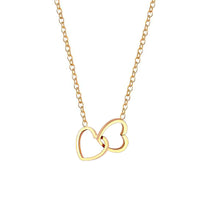
The piece they're describing → Collier Double Cœur pour Femme — Plaqué Or 18 carats, Pendentif Cœur Superposé
Personalize Yours


