


Les boucles d'oreilles à tige sont la base de toute collection de bijoux. Simples, élégantes et infiniment polyvalentes — elles s'associent à tout, d'un jean décontracté à une robe de soirée. Mais « boucle d'oreille à tige » recouvre une gamme étonnamment large de styles, de matériaux et de fermoirs. Voici le guide complet.
Que Sont les Boucles d'Oreilles à Tige ?
Les boucles d'oreilles à tige sont des boucles d'oreilles qui reposent directement contre le lobe de l'oreille, sans chaîne, anneau ni élément pendant — juste une partie décorative frontale et une tige qui traverse le perçage. La tige est maintenue à l'arrière par un fermoir, le plus souvent de type papillon, à vis ou à embout plat.
Cette absence d'élément pendant est précisément ce qui distingue une « tige » de toutes les autres catégories de boucles d'oreilles — pendantes, anneaux, créoles fines, boucles à insertion. C'est aussi pourquoi les tiges se perçoivent comme discrètes plutôt que voyantes : rien ne bouge ni ne capte la lumière, hormis la pièce frontale elle-même. C'est pour cette raison que les boucles à tige sont le type de boucle d'oreille le plus universellement porté : confortables, discrètes et adaptées à pratiquement toutes les occasions, d'un perçage récent au bureau en passant par un événement formel.
Types de Boucles d'Oreilles à Tige selon le Style
Il existe huit types principaux de boucles d'oreilles à tige, chacun adapté à des perçages, des budgets et des occasions différents :
1. Tiges Solitaire Classiques
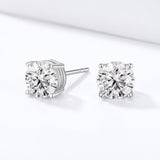
La tige originale — une seule pierre (ou bille métallique) dans un sertissage à griffes ou clos, centrée sur le lobe. La taille brillant rond est la plus populaire, mais les tailles ovale, carrée et coussin sont également courantes. Les tiges solitaire en zircone cubique ou en pierres transparentes sont l'alternative abordable la plus proche des tiges en diamant — le même effet visuel pour une fraction du prix.
2. Tiges en Forme
Cœur, étoile, lune, fleur, feuille, papillon — les tiges en forme ajoutent de la personnalité tout en conservant le profil discret d'une tige classique. Elles fonctionnent particulièrement bien en paires superposées sur les perçages de cartilage (hélix, tragus, conque), où la petite taille se perçoit comme un bijou plutôt que comme du matériel.
3. Tiges Pierre de Naissance
Des tiges arborant la pierre correspondant à chaque mois de naissance — améthyste (février), aigue-marine (mars), émeraude (mai), rubis (juillet), saphir (septembre), etc. Les tiges pierre de naissance sont l'une des catégories de cadeaux les plus populaires car elles sont personnelles sans nécessiter de gravure. Pour un usage quotidien, les alternatives en zircone cubique de la couleur adéquate sont plus durables que les pierres naturelles dans de petits sertissages de tige.
4. Tiges en Zircone Cubique (CZ)
Les tiges en zircone cubique offrent un éclat digne du diamant à des prix accessibles. Dans des tailles de 4 mm à 8 mm, une zircone bien taillée sertie dans de l'argent sterling est visuellement indiscernable d'un diamant à distance de conversation. Les tiges en CZ sur argent sterling 925 plaqué or 18K sont la meilleure combinaison d'éclat, de durabilité et de valeur.
5. Tiges à Griffes
Le sertissage à griffes (aussi appelé serti-griffes ou « prong ») maintient la pierre dans un panier surélevé de griffes métalliques. Cela maximise l'entrée de lumière dans la pierre et crée davantage d'éclat. L'inconvénient : les griffes s'accrochent plus facilement aux cheveux et aux vêtements. Les tiges à griffes conviennent mieux à un usage occasionnel ou formel plutôt qu'au quotidien.
6. Tiges à Sertissage Clos
Le sertissage clos entoure entièrement la pierre d'une bande de métal, au ras de la surface. Plus sûr que les sertissages à griffes, il s'accroche moins facilement aux vêtements. Les tiges à sertissage clos ont un profil plus épuré et moderne, idéal pour une activité physique ou pour les zones de perçage sensibles (cartilage) où les griffes sont plus gênantes.
7. Tiges en Grappe
Plusieurs petites pierres disposées selon un motif en grappe — généralement une pierre centrale entourée de pierres plus petites — pour créer l'impression d'une pièce plus grande et plus élaborée. Les tiges en grappe sont visuellement spectaculaires sans le poids ni le coût d'une pierre unique de grande taille.
8. Tiges à Embout Plat (Tiges Sans Vis)
Les tiges à embout plat sont spécialement conçues pour les oreilles sensibles et les perçages récents. La tige se termine par un disque plat (plutôt qu'un mécanisme papillon ou à vis) qui repose à plat contre l'arrière de l'oreille, éliminant la pointe acérée de la tige et le papillon qui peut irriter les tissus en cicatrisation. Ce sont la norme recommandée pour les perçages de cartilage et pour toute personne ayant une sensibilité chronique des oreilles.
Types de Fermoirs pour Boucles d'Oreilles à Tige
| Type de Fermoir | Fonctionnement | Idéal Pour | À Surveiller |
|---|---|---|---|
| Papillon / à pression | Un fermoir en forme de papillon se resserre par pression sur la tige | Usage quotidien standard | Peut irriter les nouveaux perçages ; la pointe de la tige peut égratigner |
| Fermoir à vis | Le papillon se visse sur une tige filetée | Joaillerie fine, activité physique ; le plus sûr | Plus long à mettre et à retirer |
| Embout plat / labret | Disques plats à l'arrière ; la pièce frontale se fixe par pression dans une tige creuse | Oreilles sensibles, nouveaux perçages, cartilage | Nécessite un outil pour changer l'embout ; moins courant |
| Friction / écrou de pression | La tension maintient le papillon sur une tige lisse | Usage quotidien, gamme économique | Moins sûr que le fermoir à vis ; peut se détacher |
Métaux pour Boucles d'Oreilles à Tige — Ce Qu'il Faut Rechercher
Le métal compte davantage pour les boucles d'oreilles que pour presque tout autre type de bijou, car la tige reste à l'intérieur de votre perçage — en contact direct avec la peau et les tissus.
| Métal | Sûr pour les Oreilles Sensibles ? | Remarques |
|---|---|---|
| Argent sterling 925 | ✅ Oui | Hypoallergénique, durable, le métal quotidien le plus sûr |
| Plaqué or 18K sur argent 925 | ✅ Oui | Sûr : cœur en argent, surface en or. Le plaquage s'use sur 1 à 2 ans |
| Acier chirurgical | ✅ Généralement | Bon pour les nouveaux perçages ; contient des traces de nickel (cause rarement des problèmes) |
| Titane | ✅ Le meilleur pour les allergies | Sans nickel, disponible en options couleur or |
| Plaqué or sur laiton | ⚠️ Peut-être | Le laiton contient du zinc et du cuivre ; peut provoquer des réactions à mesure que le plaquage s'use |
| Alliage mystère / « alloy » | ❌ Non | Contient souvent du nickel ; responsable de la plupart des réactions au niveau des oreilles |
Guide des Tailles pour Boucles d'Oreilles à Tige
La taille compte plus pour les tiges que ce que la plupart des gens pensent. La « bonne » taille dépend de la taille de votre lobe, de votre style personnel et de l'occasion.
- 3–4 mm : Très petite — a un aspect subtil, enfantin ou minimaliste. Idéale pour les perçages hauts du cartilage ou comme un élément d'un look superposé sur le lobe. À peine visible à distance.
- 5–6 mm : La taille quotidienne la plus polyvalente. Visible et élégante sans être imposante. La taille « par défaut » pour la plupart des gens.
- 7–8 mm : Plus affirmée pour une tige. Clairement visible, convient aux environnements professionnels. Bonne pour les occasions plus marquantes.
- 9–10 mm et plus : Tige statement audacieuse. Réservée de préférence aux occasions formelles ou à un look mode assumé. Peut sembler lourde sur de petits lobes.
En règle générale : plus votre lobe est grand, plus la tige peut être grande avant de sembler disproportionnée. Une tige de 5 mm sur un petit lobe se perçoit comme un « statement » ; la même tige sur un lobe plus grand se perçoit comme discrète.
Comment Choisir les Bonnes Boucles d'Oreilles à Tige
- Commencez par votre mode de vie : Portez-vous des boucles d'oreilles tous les jours ? Optez pour des tiges à sertissage clos ou à embout plat en argent sterling — durables, confortables, hypoallergéniques. Un usage occasionnel seulement ? Les tiges à griffes, plus éclatantes, ont davantage de sens.
- Tenez compte de la santé de votre perçage : Perçages récents ou irrités → uniquement des tiges à embout plat en argent sterling ou en titane. Perçages complètement cicatrisés → tout métal de haute qualité.
- Associez-les à votre garde-robe : Les métaux argentés complètent les teintes de peau froides et les couleurs bleues/vertes/grises. Les métaux dorés complètent les teintes de peau chaudes et les couleurs terreuses/chaudes.
- Choisissez une taille pour votre lobe : En cas de doute, 5–6 mm est universellement flatteur et polyvalent.
- Pensez à la superposition : Si vous avez plusieurs perçages, planifiez votre collection de tiges comme un ensemble — une tige de 3 mm en haut, une de 5 mm au milieu et une de 7 mm sur le lobe crée un magnifique effet dégradé.
Découvrez toutes nos boucles d'oreilles à tige →
Guides Associés
- Les meilleures boucles d'oreilles à tige pour oreilles sensibles — quels métaux sont réellement sûrs
- Comment porter des boucles d'oreilles à tige — les mettre, les superposer et les entretenir
- Tiges contre anneaux — lequel vous convient le mieux ?
- Guide des boucles d'oreilles à tige en or — ce que « or » signifie réellement
- Guide des boucles d'oreilles à embout plat — ce qu'elles sont et pourquoi elles sont préférables
Questions Fréquentes
- Que sont les boucles d'oreilles à tige ?
- Les boucles d'oreilles à tige reposent directement contre le lobe de l'oreille, sans élément pendant. La tige traverse le perçage et est maintenue par un fermoir à l'arrière. Le type de boucle d'oreille le plus universellement porté — confortable, discret, adapté à toutes les occasions.
- Quelle taille de boucles d'oreilles à tige devrais-je choisir ?
- 5–6 mm est la taille quotidienne la plus polyvalente. 3–4 mm pour le cartilage ou un look minimaliste. 7–10 mm pour les occasions marquantes. Les grands lobes sont mis en valeur avec de grandes tiges ; les petits lobes sont mis en valeur avec 4–6 mm.
- Quelle est la différence entre le fermoir papillon et l'embout plat ?
- Les fermoirs papillon utilisent un clip à pression qui se resserre sur la tige. Les embouts plats ont un disque lisse — sans pointe acérée, sans papillon pouvant s'incruster dans les tissus en cicatrisation. Les embouts plats sont plus hygiéniques et préférables pour les oreilles sensibles et les nouveaux perçages.
- Les boucles d'oreilles à tige conviennent-elles aux nouveaux perçages ?
- Oui — les tiges sont la norme pour les nouveaux perçages. Pour les perçages en cicatrisation en particulier, utilisez des tiges à embout plat en argent sterling ou en titane. Évitez les fermoirs papillon pour les perçages en cicatrisation.
- Quel métal est le meilleur pour les oreilles sensibles ?
- L'argent sterling 925 et l'argent sterling 925 plaqué or 18K sont tous deux hypoallergéniques. Le titane est le meilleur choix pour les allergies sévères au nickel. Évitez les alliages mystères et le plaqué or sur laiton.
- Peut-on dormir avec des boucles d'oreilles à tige ?
- Oui — les tiges sont le type de boucle d'oreille le plus adapté au sommeil. Les embouts plats sont plus confortables pour dormir que les fermoirs papillon.
- Comment superposer des boucles d'oreilles à tige ?
- Graduez les tailles de l'hélix au lobe : 3 mm en haut, 5 mm au second perçage du lobe, 7 mm au premier. Associez les métaux pour la cohérence. Variez les types de pierres pour un intérêt visuel.
La Base de Toute Collection de Boucles d'Oreilles
Toute collection de bijoux commence par une belle paire de tiges. Une fois que vous comprenez les types, les fermoirs, les métaux et les tailles, choisir devient simple : associez le style à votre mode de vie, le métal à la sensibilité de votre oreille, et la taille à votre lobe. Commencez avec une tige en zircone cubique ou pierre de naissance de 5–6 mm en argent sterling 925 — elle s'associe à tout et convient à tout le monde.
Écrit par l'équipe AJLuxe — spécialistes de l'argent sterling 925 et de la joaillerie plaquée or 18K. Dernière mise à jour : juin 2026.
Toutes les marques, noms de marque et noms de produits tiers sont la propriété de leurs détenteurs respectifs. AJLuxe n’est affilié à aucune marque tierce citée dans cet article, ni approuvé ou sponsorisé par celle-ci. Les noms de marque sont utilisés uniquement à des fins de comparaison factuelle, et les descriptions de matériaux reflètent les spécifications produit publiées par chaque marque au moment de la rédaction.
You Might Also Like

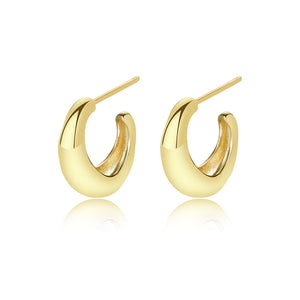
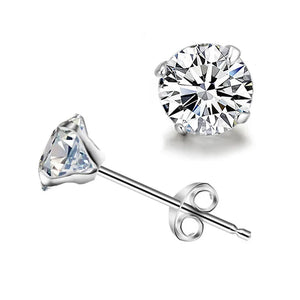
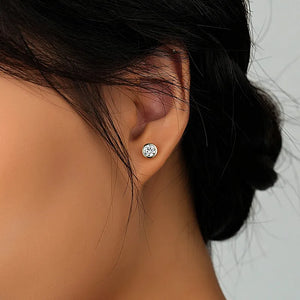
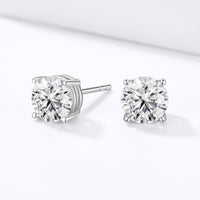
The piece they're describing → Clous d'oreilles ronds CZ pour femmes — Argent sterling 925, hypoallergéniques, prêts à offrir
Personalize Yours


