


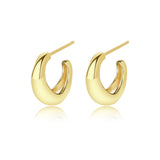
You want gold stud earrings. But what does "gold" actually mean on a pair of $30 earrings versus a $300 pair versus a $3,000 pair? (Prefer silver instead? See our sterling silver ear stud guide.) The difference matters enormously for sensitive ears, longevity, and honest value. Here's everything you need to know.
What "Gold Earrings" Actually Means
| Type | Gold Content | Price Range | Longevity | Sensitive Ear Safe? |
|---|---|---|---|---|
| Solid gold (14K–18K) | 58–75% gold throughout | $200–$2,000+ | Forever — never fades | ✅ Best (yellow gold) |
| Gold-filled | 5% gold by weight bonded to base | $30–$150 | 10–30 years | ✅ Usually safe |
| 18K gold plated over 925 silver | Thin gold layer over silver base | $20–$80 | 1–2 years; replatable | ✅ Safe |
| 18K gold plated over brass | Thin gold layer over brass base | $5–$40 | 3–12 months | ⚠️ May react |
| Gold-tone / gold-colored alloy | No gold — just gold-colored metal | $2–$15 | Weeks to months | ❌ Often not safe |
Solid Gold Stud Earrings — 14K vs 18K
Solid gold earrings are alloyed gold — pure 24K gold is too soft for jewelry, so it's mixed with other metals to add durability:
- 14K gold (58.3% gold): More durable and scratch-resistant than 18K because of higher base metal content. The most common karat for everyday jewelry in the US. Warmer yellow if yellow gold; cooler if white gold.
- 18K gold (75% gold): Richer, warmer yellow color. Less durable than 14K (softer due to higher gold content) but more pure. The standard for fine jewelry in Europe and Asia. Best for sensitive skin — fewer base metals.
For sensitive ears: yellow gold in 14K or 18K is the gold standard (literally). White gold may contain nickel in its alloy — ask your jeweler if you have nickel sensitivity.
18K Gold Plated Over 925 Sterling Silver — The Smart Middle Ground
This is what AJLuxe gold stud earrings are made from: 18K gold plated over a 925 sterling silver base. Here's what that means:
- The post and setting are made from 925 sterling silver — safe, hypoallergenic, nickel-free
- A thin layer of 18K gold (0.5–2.5 microns thick) is electroplated over the silver surface
- The result looks identical to solid gold and is completely safe for sensitive ears
- When the plating eventually wears (typically 1–2 years with daily wear), you're still in contact with hypoallergenic silver — not a reactive base metal
This is the reason "18K gold plated over 925 sterling silver" matters more than just "18K gold plated." The base metal is what contacts your skin as plating wears — and silver is safe. Brass is not.
How Long Does Gold Plating Last on Stud Earrings?
With daily wear and standard care:
- 1–2 years: Typical longevity with daily wear and proper care (removing before swimming, storing correctly)
- 6–12 months: If worn constantly, including swimming and showering
- 2–4 years: With occasional wear and careful maintenance
Gold plating wears at the high-contact points first — the post (which goes through the piercing) and the setting edges. The decorative front face (which sees the least friction) often retains its gold appearance longest.
When plating wears: the earring doesn't become unsafe (on 925 silver base) — it just looks silver instead of gold. Most local jewelers can re-plate earrings for $10–$30, restoring the gold finish.
How to Make Gold Stud Earrings Last Longer
- Remove before swimming and showering: Chlorine and salt water are the biggest enemies of gold plating — they penetrate the gold layer and corrode the base metal underneath
- Apply fragrance and lotion before putting earrings on: Chemicals in beauty products are as corrosive as water
- Store in a soft pouch or compartmented jewelry box: Gold plating scratches; storing earrings loose with other jewelry is a fast path to surface damage
- Clean gently: Pat dry (don't rub) after any moisture contact. A soft cloth is all you need — no abrasive cleaners
- Sleep without them if possible: Friction from pillowcases wears plating faster on contact points
Browse all gold stud earrings →
Related reading: a focused answer on the single best everyday gold stud specifically.
Related reading: how a heart-cut stud stacks up against other stud earring shapes.
Related Guides
- Types of stud earrings — complete guide
- Best stud earrings for sensitive ears
- Gold filled vs gold plated — what's the difference?
- Does gold vermeil tarnish? (and how it compares to plated)
- Gold earrings for women: the complete buying guide
Diamond Gold Stud Earrings vs. CZ: What You're Actually Paying For
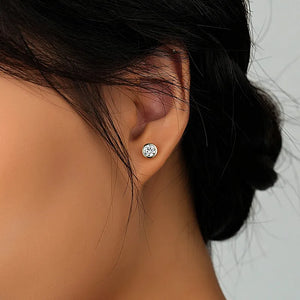
"Diamond gold stud earrings" can mean three very different products at wildly different prices: natural (mined) diamonds set in gold, lab-grown diamonds set in gold, or cubic zirconia (CZ) — a diamond simulant, not a diamond — set in gold or gold-plated metal. Only the first two can legally be labeled "diamond" without a qualifier in the US; a stone marketed as CZ, "diamond-cut," or "diamond-style" is not a diamond, regardless of how the setting is described.
| Stone Type | What It Actually Is | Price for a Stud Pair (~0.25–0.5ct look) | Hardness (Mohs) | Comes Certified? |
|---|---|---|---|---|
| Natural diamond | Mined carbon crystal, formed over billions of years | $300–$1,500+ | 10 (hardest natural material) | Yes — GIA or AGS report |
| Lab-grown diamond | Chemically identical diamond, grown in weeks instead of eons | $150–$600 | 10 | Yes — usually IGI or GIA |
| Cubic zirconia (CZ) | Zirconium dioxide crystal grown to mimic diamond's sparkle | $15–$80 | 8–8.5 | No — sold explicitly as a simulant |
The giveaway is in the listing language, not the sparkle — CZ cut and polished well can look convincingly like a diamond to the naked eye. If a natural or lab-grown diamond is being sold, the listing will name the stone type directly and typically reference a grading lab; the Gemological Institute of America (GIA) is the standard-setting lab for diamond grading and a good reference point for what a genuine certification looks like. If the word "diamond" is qualified — diamond-look, diamond-inspired, diamond-cut — or absent entirely in favor of "sparkle stone" or "brilliant-cut," assume it's CZ or another simulant.
Neither choice is wrong: a natural or lab-grown diamond is an investment piece meant to be reset and passed down; CZ delivers the same visual sparkle for everyday studs you're not worried about losing at the gym or in a hotel sink. Whichever stone you choose, the setting underneath still matters just as much — a stunning diamond loses its shine fast in a setting that irritates your ears or tarnishes within months, so apply the same base-metal scrutiny from this guide to the mounting, not just the stone.
Frequently Asked Questions
- What are the best gold stud earrings?
- For everyday affordable wear: 18K gold-plated over 925 sterling silver — safe for sensitive ears, looks identical to solid gold, lasts 1–2 years. For fine jewelry: 14K or 18K solid gold — lasts indefinitely.
- Why do my gold earrings turn my ears green?
- Reaction between skin acidity and the base metal (copper/brass) showing through worn plating. Not an allergy — a chemical reaction. Switch to gold-plated over 925 sterling silver to eliminate the problem.
- How long do gold plated stud earrings last?
- 18K gold-plated over sterling silver: 1–2 years with daily wear and care. Remove before swimming and showering to extend longevity.
- What karat gold is best for stud earrings?
- Solid gold: 14K for durability, 18K for richest color. Plated: 18K plating gives warmer tone. Base metal (925 silver vs brass) matters far more than plating karat.
Know What You're Buying
The gold stud earring market is full of misleading labeling. Armed with this guide, you can cut through the marketing: check the base metal, understand the difference between plated and filled, and choose what actually fits your budget and lifestyle — not what sounds best on a product listing.
Written by the AJLuxe team — specialists in 925 sterling silver and 18K gold-plated jewelry. Last updated: June 2026.
Toutes les marques, noms de marque et noms de produits tiers sont la propriété de leurs détenteurs respectifs. AJLuxe n’est affilié à aucune marque tierce citée dans cet article, ni approuvé ou sponsorisé par celle-ci. Les noms de marque sont utilisés uniquement à des fins de comparaison factuelle, et les descriptions de matériaux reflètent les spécifications produit publiées par chaque marque au moment de la rédaction.
You Might Also Like
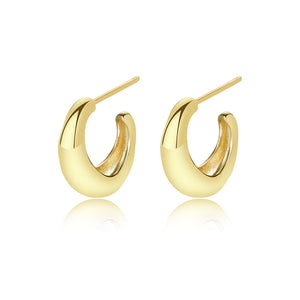
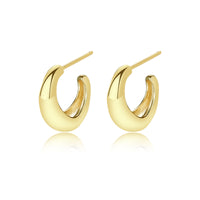
The piece they're describing → Boucles d'oreilles clous en forme de C pour femme — Argent sterling 925, plaqué or 18 carats, légères
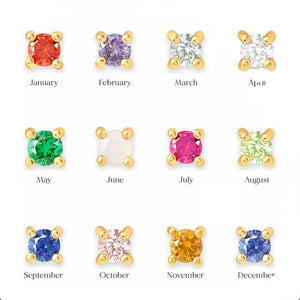
Personalize Yours


