


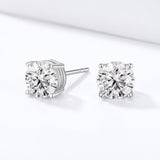
Sensitive ears react to the wrong earring in minutes — redness, itching, swelling, sometimes worse. The good news: the right stud earring eliminates the problem completely. Here's what to look for and what to avoid. If studs aren't your style, our best huggie earrings for sensitive ears guide and complete sensitive-ears earring guide cover other safe options.
Why Ears React to Earrings
Ear reactions to jewelry are almost always caused by two things:
- Nickel allergy: Nickel is the most common metal allergen. An estimated 15–20% of people have some degree of nickel sensitivity — the numbers are higher in women because more have pierced ears and more exposure. Nickel appears in cheap alloys, gold-plated-over-brass pieces (as brass contains copper and zinc alloys often mixed with nickel), and mystery-metal "alloy" earrings.
- Metal migration: Even metals that aren't allergenic can cause reactions if low-quality plating wears off and exposes the base metal underneath. A gold-plated earring that looks fine on day 1 can expose a reactive base metal by month 3.
The solution to both: verify the base metal, not just the surface coating. "18K gold" tells you the surface. "18K gold plated over 925 sterling silver" tells you the whole story — and 925 sterling silver is what matters for sensitive ears.
Best Metals for Sensitive Ears
| Metal | Sensitive Ear Rating | Notes |
|---|---|---|
| 925 sterling silver | ⭐⭐⭐⭐⭐ Excellent | 92.5% silver, 7.5% copper. Nickel-free. Hypoallergenic. The go-to for sensitive ears. |
| 18K gold plated over 925 sterling silver | ⭐⭐⭐⭐⭐ Excellent | Safe gold appearance with silver core. As safe as bare sterling silver. |
| Titanium (implant grade) | ⭐⭐⭐⭐⭐ Best for allergies | Nickel-free, biocompatible, lightweight. Best option for severe nickel allergy. |
| 14K–18K solid gold | ⭐⭐⭐⭐ Very good | Naturally nickel-free if yellow gold. White gold may contain nickel (check with jeweler). |
| Surgical steel (316L) | ⭐⭐⭐ Good | Contains trace nickel (2–3%) but in stable, bound form. Rarely causes reactions. Fine for most sensitive ears. |
| Gold plated over brass | ⭐⭐ Poor | Brass base can contain nickel. As plating wears, reactive base metal contacts skin. |
| Unknown alloy / "metal alloy" | ⭐ Avoid | No disclosure = likely nickel-containing. Causes most earring reactions. |
Butterfly Back vs Flat-Back: Which Is Better for Sensitive Ears?
Flat-back studs are better for sensitive ears — and here's why in detail:
Problems with butterfly backs:
- The butterfly mechanism has a sharp post tip that extends 3–5mm behind the clasp — this tip can scratch the back of the ear or the skin behind the lobe
- Butterfly clasps can press too tightly if over-squeezed, restricting blood flow to the lobe (common cause of swelling)
- The butterfly's grooves and crevices trap bacteria, dead skin, and moisture — this promotes infection in healing piercings
- The butterfly can embed into swollen healing tissue if the earring is pushed too far forward
Why flat-backs are better:
- No sharp post tip behind the ear — the flat disc is smooth and sits flush
- Consistent, gentle pressure rather than a clamp mechanism
- Easier to clean — no grooves or crevices to trap debris
- Comfortable for sleeping without the hard butterfly pressing against the pillow
- Piercers universally recommend flat-backs for cartilage piercings and healing piercings
Stud Earrings for New Piercings
If your piercing is new or recently re-opened, the metal and closure type are even more critical:
- Metal: 925 sterling silver or titanium only — no plated metals until the piercing is fully healed (typically 6 weeks for lobe, 6–12 months for cartilage)
- Closure: flat-back only — butterfly backs in healing piercings increase infection risk
- Size: match your piercing jewelry gauge — most standard lobe piercings are 20 gauge; cartilage is typically 16 or 18 gauge
- Don't rotate the earring — this outdated advice tears healing tissue. Leave it in place.
- Clean twice daily with saline solution (0.9% sodium chloride) — not rubbing alcohol, which is too harsh for healing tissue
What to Avoid
- "Alloy" without base material disclosure: If a listing says "metal alloy" or "alloy" as the only material information, assume it contains nickel and avoid it.
- "Hypoallergenic" without certification: "Hypoallergenic" is a marketing term with no legal standard. Look for 925 sterling silver or titanium stated explicitly.
- Very cheap earrings without material disclosure: Under $5 earrings rarely use safe metals. The base material cost for 925 sterling silver studs is meaningful — price reflects metal quality.
- Re-plated earrings with unknown base: Some sellers re-plate cheap alloy earrings with thin gold or silver. The base metal is what matters for skin contact.
Related Guides
- Types of stud earrings — the complete guide
- Flat-back earrings guide — what they are and why piercers recommend them
- Hypoallergenic jewelry guide — what metals are actually safe
- Gold stud earrings guide — what "gold" actually means for your ears
For more styles beyond studs — hoops, huggies, and birthstone options — see our best hypoallergenic earrings guide.
Related reading: What Is Alloy Jewelry? Metals, Quality, and What to Avoid (2026).
Helix Studs and Gemstone Studs (Ruby, Opal): What's Different
Helix stud earrings — worn in the upper ear cartilage rather than the lobe — need a smaller, flatter design and a harder, more knock-resistant gemstone than a lobe stud, because the helix catches on hair, headphones, hats, and pillows far more often than the lobe does. Getting the size and the stone wrong is why helix studs get lost or chipped more than any other stud placement.
What to Look for in a Helix Stud
- Smaller stud face: 3–4mm is typical for helix, versus 4–6mm+ comfortably worn in the lobe — a smaller profile snags less on hair and headphone bands.
- Flat-back only: the same reasons that make flat-backs better for sensitive ears (no sharp post tip, no butterfly crevice) apply even more to cartilage, which heals slower and is more prone to bumps.
- Correct gauge: most helix piercings run 16–18 gauge, thinner than the 20 gauge standard for lobes — sizing up or down from your piercer's original jewelry can re-irritate the site.
- Secure, low-profile setting: a bezel or flush setting holds a stone more securely against knocks than a raised prong setting, which is easier to catch and bend out of place on cartilage.
Ruby vs. Opal Stud Earrings: Which Stone Fits Which Placement
The two stones behave very differently once they're actually being worn day to day, and that difference matters more for helix placement than for lobes:
| Stone | Hardness | Best For |
|---|---|---|
| Ruby | 9 on the Mohs scale — among the hardest natural gemstones | Everyday wear in any placement, including helix/cartilage, where the stone takes more incidental knocks |
| Opal | 5.5–6.5 on the Mohs scale — notably softer and more porous | Lobe studs worn more gently; avoid water, chemicals, and high-contact placements like helix where chipping risk is higher |
Hardness ratings are on the GIA Mohs-based durability scale gemologists use industry-wide — a useful reference any time you're comparing how two stones will hold up in daily wear, not just for ruby and opal.
Whichever stone you choose, the setting metal still matters as much as the stone: a 925 sterling silver or 18K gold-plated over 925 sterling silver setting keeps the mounting hypoallergenic and nickel-free even on a stone like opal that needs gentler day-to-day care. AJLuxe's stud earrings run $24.99–$79.99, all in these two hypoallergenic base metals — check the listed setting material the same way you'd check the base metal in the table above before you buy.
Frequently Asked Questions
- What stud earrings are best for sensitive ears?
- 925 sterling silver and 18K gold-plated over 925 sterling silver are the safest. Titanium is best for severe nickel allergies. Know the base metal — surface plating alone doesn't protect you once it wears off.
- Why do my ears react to some earrings but not others?
- Almost always nickel allergy — present in cheap alloys and some gold-plated-over-brass pieces. Earrings you can wear are almost certainly made with sterling silver, titanium, or solid gold.
- Are flat-back earrings better for sensitive ears?
- Yes. Flat-backs eliminate the sharp post tip and butterfly mechanism. No bacteria-trapping crevices, comfortable for sleeping, recommended by piercers for sensitive and healing piercings.
- What does 925 sterling silver mean?
- 92.5% pure silver, 7.5% copper. The standard hypoallergenic metal for earrings. Look for '925' or 'S925' stamped on any silver piece.
- Is 18K gold plated safe for sensitive ears?
- Depends on the base: '18K gold plated over 925 sterling silver' is safe. '18K gold plated' without a base metal stated could be over brass, which can react as plating wears.
- Are hypoallergenic earrings actually hypoallergenic?
- 'Hypoallergenic' is a marketing term with no legal standard. Verify the actual metal: '925 sterling silver' or 'titanium' are substantiated. 'Hypoallergenic' alone guarantees nothing.
The Bottom Line
Sensitive ears don't mean you can't wear stud earrings — they mean you need to be more deliberate about metal choice. Get 925 sterling silver or 18K gold-plated sterling silver, choose flat-back closures, and you'll likely never have another earring reaction.
Written by the AJLuxe team — specialists in hypoallergenic sterling silver jewelry. Last updated: June 2026.
Toutes les marques, noms de marque et noms de produits tiers sont la propriété de leurs détenteurs respectifs. AJLuxe n’est affilié à aucune marque tierce citée dans cet article, ni approuvé ou sponsorisé par celle-ci. Les noms de marque sont utilisés uniquement à des fins de comparaison factuelle, et les descriptions de matériaux reflètent les spécifications produit publiées par chaque marque au moment de la rédaction.
You Might Also Like

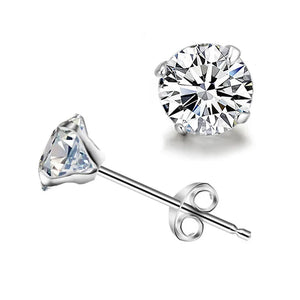
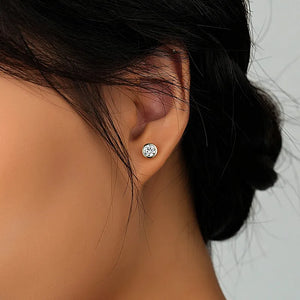
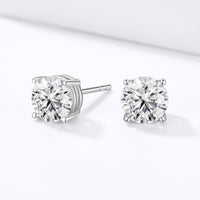
The piece they're describing → Clous d'oreilles ronds CZ pour femmes — Argent sterling 925, hypoallergéniques, prêts à offrir
Personalize Yours


