


TL;DR
- Both are equally hypoallergenic — niobium and titanium are nickel-free, biocompatible refractory metals, and either is a safe choice for sensitive ears or new piercings.
- Titanium is noticeably lighter — titanium's density is about 4.5 grams per cubic centimeter, versus roughly 8.6 for niobium, nearly double the weight.
- Niobium offers richer color — both metals can be anodized, but niobium's oxide layer produces a wider, more saturated color range, including deep blacks, purples, and golds that don't chip or flake.
- Titanium is the more durable, scratch-resistant metal — niobium is softer and more malleable, which makes it easier to hand-form but also more prone to surface scratches over time.
- Niobium price runs slightly higher — niobium is generally a little pricier than titanium because it's harder for jewelers to source and machine at scale, even though the raw ore itself is not dramatically more expensive.
- Neither is what AJLuxe sells — AJLuxe's earrings are 925 sterling silver and 18K gold-plated, an honest fine-jewelry alternative for healed ears, not surgical-grade body jewelry for fresh piercings.
If you've searched niobium vs titanium earrings hoping for a straight answer, you've probably noticed both metals get marketed almost identically: nickel-free, hypoallergenic, safe for sensitive skin. That's technically true of both — but it also means the marketing copy doesn't tell you much about which one is actually right for you. The real differences show up in weight, durability, color options, and price, not in allergy safety. This guide breaks down what niobium and titanium actually are, how they compare side by side, and where an honest 925 sterling silver or 18K gold-plated alternative like AJLuxe's fits in if neither refractory metal is quite what you're after.
Niobium vs Titanium Earrings: Quick Comparison
| Factor | Niobium | Titanium |
|---|---|---|
| Hypoallergenic rating | Excellent — zero nickel, fully biocompatible | Excellent — zero nickel, implant-grade biocompatible |
| Color options | Widest range — vivid blues, purples, golds, deep blacks via anodizing | Good range, but narrower and slightly less saturated than niobium |
| Weight | Heavier — about 8.6 grams per cubic centimeter | Light — about 4.5 grams per cubic centimeter, nearly half niobium's weight |
| Scratch resistance | Softer, scratches more easily | Harder, resists scratching well |
| Typical cost | Around twenty to seventy dollars, often slightly above titanium | Fifteen to sixty dollars and up |
| Best for | Vivid color, hand-formed and artisan designs, statement pieces | Everyday wear, new piercings, cartilage, lightweight comfort |
What Is Niobium, and Why Is It Used in Jewelry?
Niobium is a soft, ductile, grey refractory metal, chemically similar in behavior to titanium and tantalum. It's element number 41 on the periodic table, and outside of jewelry it's mostly used in steel alloys, superconducting magnets, and aerospace components. In jewelry and body piercing, niobium earns its place for two reasons: it's completely nickel-free and biologically inert, and its natural oxide layer can be anodized — meaning an electrical current is used to thicken the layer and bend light, producing color without any dye, paint, or plating that could chip or wear off. Because niobium is softer than titanium, jewelers can hand-form it into wire, jump rings, and delicate curved shapes more easily, which is why it shows up often in handmade and artisan body jewelry.
What Is Titanium, and How Does It Compare?
Titanium is a lightweight, corrosion-resistant transition metal best known for its use in aircraft frames and surgical implants. Implant-grade titanium (typically Ti-6Al-4V ELI, or "grade 23") is the industry standard for initial piercing jewelry because it's biocompatible enough to be surgically implanted in the body. Like niobium, titanium can be anodized to produce color, though the range tends to run slightly narrower and less saturated. Titanium's biggest advantage over niobium is physical: it's harder, more scratch-resistant, and roughly half the weight, which matters most for cartilage piercings, multiple piercings worn together, or anyone who wants jewelry they can forget they're wearing.

Hypoallergenic Comparison: Is One Actually Safer?
This is the question most people are really asking, and the honest answer is no — neither metal has a meaningful safety edge over the other. Both niobium and titanium are:
- 100% nickel-free in their pure or implant-grade forms, so there's no nickel content to trigger a reaction, unlike surgical stainless steel, which still contains ten to fourteen percent nickel bound in its alloy.
- Biologically inert — both form a stable, self-repairing oxide layer on the surface that prevents the base metal from reacting with skin, sweat, or moisture.
- Recommended by piercers for people with diagnosed nickel allergies or extremely reactive skin, and both are commonly used for initial jewelry in fresh piercings.
If your only concern is allergy safety, you genuinely cannot go wrong with either metal. The decision comes down to the practical differences below — weight, durability, color, and price — not hypoallergenic performance.
Weight and Comfort: Why Titanium Feels Lighter
Niobium has a density of about 8.6 grams per cubic centimeter, close to stainless steel. Titanium sits at roughly 4.5 grams per cubic centimeter — nearly half that. In a single small stud, the difference is barely perceptible. But for cartilage piercings, stacked lobes, daith or helix jewelry worn for hours at a time, or anyone with several piercings at once, that weight adds up, and titanium's lighter feel tends to be noticeably more comfortable across a full day of wear. If you're piercing cartilage specifically, which heals slowly and is more sensitive to pressure, titanium's lighter weight is one of the practical reasons piercers often steer toward it over niobium.
Color and Anodizing: Where Niobium Pulls Ahead
This is niobium's signature advantage. Both metals form an oxide layer that can be anodized — run an electrical current through the metal in an electrolyte bath, and the layer thickens in a way that bends light and produces color, the same physical principle behind the iridescent sheen on a soap bubble or an oil slick. Titanium's anodized colors tend toward blues, purples, and golds within a moderate range. Niobium's oxide layer responds to a wider voltage range and produces a noticeably broader, more saturated palette — including deep charcoal-blacks, rich purples, and warm golds that hold their color without chipping, flaking, or fading, since the color lives in the oxide layer itself rather than a coating on top of it. If a vivid, statement-making color is the priority, niobium is generally the stronger choice.

Durability and Scratch Resistance
Titanium is a genuinely hard metal — hard enough that it's difficult to scratch under normal wear, which is one reason it holds up so well as long-term piercing jewelry. Niobium is considerably softer and more malleable. That softness is actually useful for jewelers, since it allows niobium to be hand-formed into wire, jump rings, and curved shapes that would be far harder to work with titanium. But the same softness means niobium surfaces pick up fine scratches more easily over months of daily wear, especially on polished or highly reflective finishes. Neither issue is a safety concern — it's purely cosmetic — but if you want jewelry that stays scratch-free with minimal care, titanium has the edge.
Niobium Price vs Titanium Price: What You're Actually Paying For
Comparing niobium price to titanium price, the gap is modest but real. Niobium typically runs a little more than titanium — often landing around twenty to seventy dollars for finished earrings, versus fifteen to sixty for titanium. That premium isn't because niobium ore itself is dramatically more expensive; it comes down to sourcing and machining. Titanium's use in aerospace and medical implants means there's a well-established, high-volume supply chain and standardized machining processes (like ASTM F136 implant-grade certification) that jewelers can tap into. Niobium jewelry, by contrast, is produced at a smaller scale, often by artisan or specialty piercing brands, which pushes the titanium price advantage in titanium's favor even though the two metals are chemically similar in cost to refine. Anodized pieces in either metal tend to cost more than plain polished ones, since the anodizing process itself adds labor.
Where AJLuxe's Earrings Fit In
To be upfront: AJLuxe doesn't sell niobium or titanium jewelry. Our earrings are crafted in 925 sterling silver and 18K gold-plated over sterling silver — designed for everyday fashion wear on healed ears, not as surgical-grade body jewelry for fresh piercings. If you're actively healing a new piercing or managing a diagnosed nickel allergy, niobium and titanium remain the piercer-recommended choices, and we'd say so even though neither is what we sell.
Where we do fit is the "I want hypoallergenic without body-jewelry hardware" lane. Genuine 925 sterling silver is nickel-free by definition, and it reads as noticeably finer than niobium or titanium once a piercing has fully healed and you're choosing jewelry for how it looks rather than for medical-grade safety during healing. If you like the low-reactivity promise of niobium and titanium but want jewelry that looks like fine jewelry rather than piercing hardware, a flat-back sterling silver or gold-plated stud is the honest middle ground.
Which Should You Choose?
- Choose titanium if: you want the lightest possible daily-wear option, you're piercing cartilage or multiple spots at once, or you want a metal that resists scratching with minimal care.
- Choose niobium if: vivid, saturated color is the priority, you're drawn to hand-formed or artisan designs, or you don't mind a slightly heavier feel and a little more careful handling.
- Choose sterling silver or gold-plated if: your piercings are healed and you want hypoallergenic comfort in jewelry that looks and feels like fine jewelry rather than piercing hardware — this is the AJLuxe lane.
For more on how titanium compares to another common piercing metal, see our titanium vs stainless steel earrings comparison. And if you're wondering whether titanium jewelry truly lives up to its hypoallergenic reputation, we cover that in is titanium jewelry hypoallergenic?
How to Tell What Metal Your Earrings Actually Are
Labels in this category are loosely used. "Titanium," "niobium," and "hypoallergenic" aren't legally regulated terms the way "sterling silver" or "14K gold" are, so it pays to check before you buy:
- Look for a grade or purity marking. Legitimate implant-grade titanium is usually marked "Ti," "G23," or "6AL4V." Genuine niobium is often simply marked "Nb" or "niobium," since there isn't a widely used grading system the way there is for titanium.
- Check the price against the material. A pair of "titanium" or "niobium" studs priced under five dollars is almost certainly a base-metal alloy with a colored coating, not the solid refractory metal.
- Feel the weight. If a piece marketed as niobium feels unusually light, or a piece marketed as titanium feels unusually heavy, it may be mislabeled or plated.
- Watch for discoloration. If jewelry marketed as niobium or titanium turns skin green or causes itching within days, it's very likely a lower-grade alloy or a plated base metal, not the genuine refractory metal.
This matters because the entire hypoallergenic case for both metals rests on getting the genuine material — not a lookalike coating over a cheaper, more reactive base metal underneath.
Caring for Niobium and Titanium Earrings
Both metals are low-maintenance compared to precious metals, but they're not identical to care for:
- Titanium can be rinsed with warm water and mild soap, dried with a soft cloth, and worn in the shower, pool, or ocean without any risk of rust or corrosion.
- Niobium tolerates the same basic soap-and-water cleaning, but anodized pieces should avoid abrasive cleaners or polishing cloths, which can scratch through the thin colored oxide layer and dull the finish. Because niobium is softer, it's also worth avoiding rough contact with other jewelry in storage.
- 925 sterling silver, by comparison, benefits from a dedicated polishing cloth every few weeks and is best kept dry when possible, since silver — unlike niobium or titanium — can tarnish with prolonged air and moisture exposure. It's a small trade-off for the finer, dressier look many people prefer once a piercing is fully healed.
Niobium and Titanium for Different Piercing Types
The "better" metal can also depend on where the piercing sits, not just how sensitive your skin is:
- Cartilage (helix, tragus, conch, daith, rook): Titanium is generally preferred here. Cartilage takes longer to heal than lobes — often six months to a year — and titanium's lighter weight reduces pressure on healing tissue.
- Lobes: Either metal works well once healed, and this is where niobium's color range gets to shine, since lobes tolerate slightly heavier jewelry better than cartilage.
- Fresh or new piercings of any placement: Both niobium and titanium are accepted by professional piercers for initial jewelry, since both are nickel-free and biocompatible, minimizing the chance of a reaction during the healing window.
- Healed piercings, fashion wear: This is where the choice opens up fully — niobium, titanium, sterling silver, and 18K gold-plated pieces are all reasonable options, and the decision comes down to look, budget, and how much you value color versus weight.
Related reading: Tungsten vs Titanium Jewelry: Which Metal Wins in 2026?.
Related reading: How to clean titanium jewelry.
Frequently Asked Questions
Is niobium or titanium better for earrings?
Both are equally hypoallergenic. Titanium is lighter and more scratch-resistant, making it better for everyday and cartilage wear, while niobium offers a wider, more vivid color range and is easier to hand-form into artisan designs.
Is niobium good for earrings?
Yes. Niobium is nickel-free, biocompatible, and widely accepted by professional piercers for sensitive ears and new piercings, though it's softer and scratches more easily than titanium.
Is niobium hypoallergenic?
Yes. Niobium contains no nickel and is biologically inert, making it one of the safest metals available for people with metal allergies or sensitive skin.
Is niobium heavier than titanium?
Yes, significantly. Niobium has a density of about eight point six grams per cubic centimeter, compared to about four point five for titanium — niobium is nearly double the weight.
Can I get an MRI with niobium or titanium earrings?
Both metals are non-ferromagnetic and generally considered MRI-safe, unlike some steel alloys. That said, most imaging centers ask patients to remove all jewelry before an MRI regardless of metal type, so check with your provider beforehand.
Is niobium more expensive than titanium?
Usually, yes, though the gap is modest. Niobium jewelry typically runs slightly above titanium price because it's produced at a smaller scale with less standardized machining, not because the raw metal itself costs dramatically more.
Does niobium scratch easily?
More easily than titanium. Niobium is a softer, more malleable metal, so polished or anodized surfaces can pick up fine scratches over months of wear, while titanium resists scratching much better.
Can niobium be anodized like titanium?
Yes, and niobium's anodized color range is actually wider and more saturated than titanium's, including deep blacks, purples, and golds that come from the oxide layer itself rather than a coating.
Is niobium safe for new piercings?
Yes. Niobium is nickel-free and biocompatible, and it's commonly accepted alongside titanium for initial jewelry in fresh or healing piercings.
What's the safest metal for piercings?
Implant-grade titanium and niobium are generally considered the two safest, most hypoallergenic metals for piercings, since both are completely nickel-free and biologically inert. Either is a reasonable choice for sensitive skin or new piercings.
Does niobium turn skin green?
Genuine niobium does not turn skin green. Greening is a sign of a lower-grade alloy or plated base metal, not authentic niobium.
Is 925 sterling silver a good alternative to niobium or titanium?
For healed piercings, yes. Genuine 925 sterling silver is nickel-free and reads as finer jewelry than either niobium or titanium, though both refractory metals remain the better choice for fresh or actively healing piercings.
Final Thoughts
Niobium and titanium are both excellent, genuinely hypoallergenic choices for earrings, and neither one is "safer" than the other in any meaningful sense — the real decision comes down to weight, durability, color, and price. If you want the lightest, most scratch-resistant option for everyday or cartilage wear, titanium is the stronger pick. If vivid, saturated color and hand-formed artisan design matter more to you than shaving off a few grams, niobium earns its slightly higher price tag. And if what you're really after is hypoallergenic comfort in jewelry that looks like fine jewelry rather than piercing hardware, that's where a nickel-free 925 sterling silver or 18K gold-plated stud comes in — not a replacement for surgical-grade niobium or titanium, but an honest, elevated option for the life your earrings live after the piercing has healed.
Shop This Guide
Looking for a hypoallergenic alternative for healed ears? Our flat-back stud earrings are crafted in nickel-free 925 sterling silver and 18K gold plating — not niobium or titanium, but a genuinely hypoallergenic option for everyday wear once your piercing has healed.
Browse the full hypoallergenic earrings collection for more nickel-free styles.
Want to weigh titanium against another hypoallergenic option? See our titanium vs surgical steel comparison and our deep dive on is titanium jewelry good.
Written by AJLuxe Team. Last updated: July 2026.
Sources: Jewelers of America — Education
Toutes les marques, noms de marque et noms de produits tiers sont la propriété de leurs détenteurs respectifs. AJLuxe n’est affilié à aucune marque tierce citée dans cet article, ni approuvé ou sponsorisé par celle-ci. Les noms de marque sont utilisés uniquement à des fins de comparaison factuelle, et les descriptions de matériaux reflètent les spécifications produit publiées par chaque marque au moment de la rédaction.
You Might Also Like
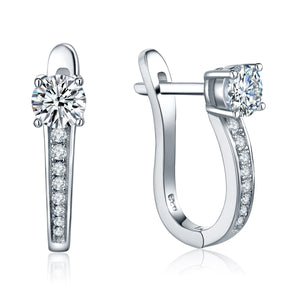
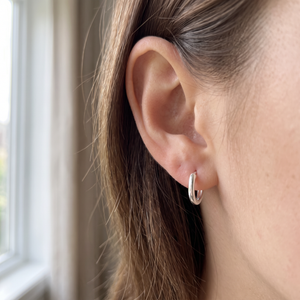
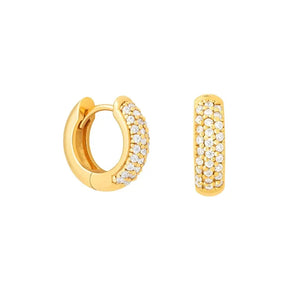
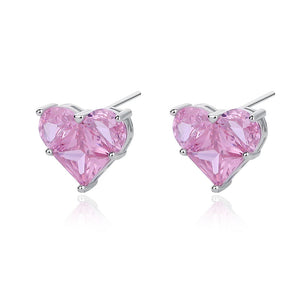
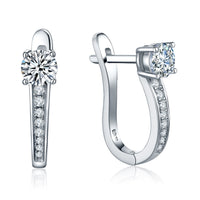
The piece they're describing → Boucles d'oreilles créoles en moissanite pour femme — Argent sterling 925, taille brillant, hypoallergéniques
Personalize Yours


