


- Resin is cast polymer (plastic) that cures at low heat or air-dries. It's inexpensive, easy to color, and common in handmade and costume jewelry.
- Enamel is powdered glass fused to a metal base through multiple high-temperature firings, typically between 1,300°F and 1,650°F.
- Enamel is significantly harder and more scratch-resistant than resin, but resin is far cheaper and faster to produce.
- Resin can yellow, scratch, and feel slightly tacky over time; well-fired enamel keeps its color and shine for decades.
- Neither is a metal — both are coatings or fillings applied to (or cast around) a base material, so "hypoallergenic" depends on what's underneath, not on the resin or enamel itself.
- AJLuxe doesn't currently carry resin or enamel jewelry. If you love the bold color these materials deliver, genuine colored gemstone pieces on a 925 sterling silver base are the closest durable alternative — a different category, not a substitute.
If you're comparing resin vs enamel jewelry, you're really comparing two completely different materials that both happen to deliver bold, glossy color. Resin is a cast polymer — essentially a hardened plastic — poured or brushed into a mold or setting and left to cure. Enamel is powdered glass, melted onto a metal base inside a kiln at temperatures north of 1,300°F. One is a craft-room material anyone can learn in an afternoon; the other is a centuries-old metalworking technique that takes years to master. This guide breaks down what each material actually is, how they compare on durability, cost, and color, how to tell them apart if you're buying secondhand, and where AJLuxe's catalog does (and honestly, doesn't) fit into the picture.
What Is Resin Jewelry?
Resin jewelry is made from a liquid polymer — usually epoxy or UV resin — that's mixed with pigment, poured into a mold or bezel, and left to harden. Epoxy resin cures chemically over 24-72 hours at room temperature; UV resin cures in seconds to minutes under a UV lamp. Because it starts as a liquid, resin is popular for encasing flowers, glitter, tiny charms, or gradient color blends that would be impossible to replicate in metal or glass.
Resin's biggest appeal is accessibility. It requires no kiln, no torch, and no metalworking skill — just a mold, pigment, and a curing method. That's why it dominates the handmade and small-batch jewelry market, from Etsy sellers to craft fairs. The tradeoff is durability: resin is a plastic, and like most plastics, it can scratch, yellow with UV exposure over time, and feel slightly tacky or soft compared to glass or metal.
What Is Enamel Jewelry?
Enamel jewelry starts with powdered glass — colored with metal oxides — that's applied to a metal base (usually copper, silver, or gold) and fired in a kiln. The heat melts the glass powder into a smooth, glossy surface fused permanently to the metal. Most pieces require multiple firings: simple designs typically need three to five firings, while intricate techniques like cloisonné can take eleven to twenty or more passes through the kiln, according to enamel-craft educators.
There are several classic enameling techniques, each producing a distinct look:
- Cloisonné — thin metal wires are soldered onto a base to form compartments ("cloisons"), which are then filled with enamel powder and fired, leaving the wire outlines visible like stained glass.
- Champlevé — depressions are carved directly into thick metal, filled with enamel, then polished flush with the surface.
- Guilloché — a geometric pattern is engraved into metal with a specialized lathe, then layered with translucent enamel that shimmers as light passes through.
- Painted enamel — enamel is applied like paint directly onto a metal surface and fired between layers to build up a pictorial design.
Because enamel is fused glass rather than cast plastic, it holds a harder, glossier finish and resists scratching and fading far better than resin — but it takes real skill, specialized equipment, and repeated kiln firings to produce, which is reflected in the price.
Resin vs Enamel Jewelry: Composition, Durability, Color, and Cost
| Property | Resin Jewelry | Enamel Jewelry |
|---|---|---|
| Composition | Liquid polymer (epoxy or UV resin) cast or poured, then cured | Powdered glass fused to a metal base by kiln firing |
| Process | Mix, pour, cure (air-dry or UV lamp); one to two applications | Apply powder, fire at roughly 1,300-1,650°F; three to twenty-plus firings depending on technique |
| Hardness & durability | Softer plastic surface — scratches, can yellow with UV exposure over years | Glass-hard surface — resists scratching well; can chip on hard impact but color doesn't fade |
| Color & design options | Smooth color blends, gradients, can encase objects (flowers, glitter, charms) | Rich, glass-like color with depth; supports fine techniques like cloisonné and guilloché |
| Typical cost | Low — inexpensive materials, fast production, common in $10-$60 handmade pieces | Higher — mass-produced fashion pieces run roughly $50-$200; handcrafted sterling silver enamel runs $200-$1,000; gold-based designer work $1,000-$5,000+ |
| Best suited for | Statement and costume jewelry, DIY projects, budget-friendly gifts | Heirloom-quality pieces, fine jewelry, designs meant to last generations |
| Care | Avoid prolonged direct sunlight and harsh chemicals; wipe with a soft cloth | Avoid ultrasonic cleaners and steam; hand-wash with lukewarm water and mild soap |
Which Holds Up Better Over Time?
Enamel wins on long-term durability. Because it's fused glass rather than a soft polymer, a well-fired enamel surface resists everyday scratching far better than resin and doesn't discolor with age or UV exposure. Vintage enamel pieces from the early twentieth century still show vivid, unfaded color today, which is part of why signed Art Nouveau enamel jewelry can command thousands of dollars at auction.
Resin's weak point is UV exposure and time. Cheaper resin formulations can gradually yellow, especially in pieces worn outdoors or stored near sunlight, and the surface can develop a faint tackiness or fine scratches from everyday contact with skin, fabric, and other jewelry. Higher-quality UV-cured resins hold up better than budget epoxy blends, but neither matches the hardness of fired glass.
Where resin has the edge: impact resistance. Enamel is glass, and glass can chip or crack under a hard, sharp knock — a dropped ring or a bracelet caught on a doorframe can chip an enamel surface in a way that a slightly springier resin piece might survive intact. Neither material is indestructible; they just fail differently.
Which Costs More: Resin or Enamel?
Resin is almost always the cheaper option, and it's not close. A resin pendant might use a few cents of material and cure overnight with no specialized equipment, which is why handmade resin jewelry frequently sells in the ten-to-sixty-dollar range. Enamel is labor- and equipment-intensive: it requires a kiln, precise temperature control, and — for techniques like cloisonné — hours of wirework before a single firing even happens.
Rough enamel jewelry price tiers, based on industry guidance from jewelry retailers:
- $50-$200 — mass-produced fashion enamel jewelry
- $200-$1,000 — handcrafted sterling silver enamel pieces
- $1,000-$5,000 — gold-based designer enamel work
- $5,000+ — fine gold, master-artisan or antique pieces
Vintage and antique enamel jewelry adds another variable: Victorian mourning rings with enamel work typically run $300-$800, while signed Art Nouveau enamel pieces can fetch $2,000-$10,000 depending on maker and condition.

How to Tell If a Piece Is Resin or Enamel
If you're buying secondhand or vintage and the listing doesn't specify, a few quick checks can help you identify the material:
- The pin test. Gently press a metal pin or fingernail against the surface. On enamel, it glides or "skips" smoothly across the glass-hard finish. On resin, it can feel slightly tacky or grabby, especially on older pieces.
- Temperature feel. Enamel, being fused glass on metal, tends to feel cool to the touch initially and warms slowly. Resin feels closer to room temperature almost immediately, similar to most plastics.
- The tap test. Tap the piece gently against a hard surface. Genuine enamel produces a clear, slightly ringing sound because of the glass-and-metal combination. Resin tends to sound duller and more muted.
- Surface depth and color. Enamel often has a subtle glass-like depth and can show tiny air bubbles or firing marks under magnification. Resin swirls and color blends tend to look smoother and more uniform, especially in gradient or "galaxy" style designs.
- Weight relative to size. Enamel jewelry is built on a solid metal base, so it typically feels heavier for its size than a resin piece, which is often cast around a lightweight core or findings.
Is Resin or Enamel Jewelry Hypoallergenic?
Here's the honest answer: neither resin nor enamel is inherently hypoallergenic or inherently irritating, because neither one is the part of the jewelry that usually causes a reaction. What matters most is the base metal underneath. A resin pendant on a nickel-plated base can absolutely cause a reaction at the clasp or jump rings, while an enamel piece fired onto genuine sterling silver or gold is generally safe for sensitive skin — because it's the metal touching your skin at the contact points, not the resin or enamel surface itself.
If sensitive skin is your main concern, the material to check isn't "resin vs enamel" — it's what's underneath. Look for a stated base metal (925 sterling silver, 18K gold, or surgical-grade stainless steel) and confirm it's nickel-free, regardless of which coating or filling sits on top.
If You Love the Color, Not the Coating: The AJLuxe Alternative
To be upfront: AJLuxe doesn't currently carry resin or enamel jewelry. Our catalog is built around genuine 925 sterling silver, 18K gold plating, and cubic zirconia or natural gemstones — a fundamentally different material category, not a resin or enamel substitute. We're not going to pretend otherwise.
What we can offer is the thing a lot of people are actually chasing when they search for resin or enamel jewelry: saturated, eye-catching color that doesn't fade. Genuine colored gemstones deliver that same visual punch — deep pink tourmaline, vivid emerald green, sapphire blue — set on a 925 sterling silver base that won't yellow, chip, or soften over time the way resin can. It's a different material with a different price point and a different reason to buy it, but if color is what drew you to resin or enamel in the first place, a real gemstone piece is worth a look for something meant to last well beyond a season.
Our Pink Tourmaline Infinity Necklace is a good example — a genuine pink tourmaline gemstone set in 925 sterling silver, delivering the kind of rich, saturated color people love about enamel work, without the firing process or the fragility of a glass coating. Browse the full gemstone necklace collection for more colorways if pink isn't your shade.

Which Should You Choose?
The right answer depends on what you're optimizing for:
- Choose resin if you want affordable, colorful, design-flexible jewelry — especially handmade or custom pieces, gradient color effects, or jewelry that encases flowers, glitter, or small objects. Just know it can scratch or yellow with heavy wear and UV exposure over the years.
- Choose enamel if you want a harder, longer-lasting glossy finish and don't mind paying more for the labor and skill involved. Enamel is the better pick for heirloom pieces or anything meant to be worn and passed down.
- Choose a genuine gemstone-and-metal piece if durability and everyday wearability matter more than either coating, and you're comfortable with a different look and price point than costume resin or enamel jewelry.
Shop AJLuxe White Enamel Gold Hoop Earrings
A white fired-enamel inlay set in an 18K gold plated huggie hoop, over a 925 sterling silver base -- hinged snap closure, sold as a pair.
Shop the White Enamel Hoop Earrings →Frequently Asked Questions
Is resin or enamel jewelry more durable?
Enamel is generally more durable for everyday wear because it's fused glass on metal, which resists scratching and doesn't fade or yellow. Resin is a softer plastic and can scratch, yellow with UV exposure, or feel slightly tacky over years of wear, though it holds up fine for occasional or statement pieces.
Is resin jewelry cheaper than enamel jewelry?
Yes, almost always. Resin requires no kiln or specialized equipment and cures quickly, so handmade resin pieces commonly sell for ten to sixty dollars. Enamel requires multiple kiln firings and skilled labor, so even mass-produced enamel fashion jewelry typically starts around fifty dollars and rises well into the thousands for fine gold or antique pieces.
Can you make resin jewelry at home?
Yes. Resin jewelry making is a popular home craft because it only requires resin, pigment, a mold or bezel, and a curing method (room-temperature curing for epoxy resin, or a UV lamp for UV resin). Enamel jewelry, by contrast, requires a kiln capable of reaching over one thousand three hundred degrees Fahrenheit, which makes it far less accessible as a home hobby.
Does resin jewelry turn yellow over time?
Lower-quality or older resin can yellow with prolonged UV exposure, similar to how some plastics discolor in sunlight over years. Higher-quality UV-stable resins resist yellowing much longer, but no resin is completely immune to it the way glass-fused enamel is.
Is enamel jewelry the same as vitreous enamel?
Yes, when people say "enamel jewelry" in the traditional sense, they usually mean vitreous enamel — powdered glass fused to a metal base at high heat. Some modern "enamel look" costume jewelry actually uses a colored resin or lacquer coating instead of true fired glass, so it's worth asking or checking closely if authenticity matters to you.
Can enamel jewelry be repaired if it chips?
In many cases, yes. A skilled enamelist can re-fire and refill a chipped area, though matching the original color and finish exactly can be difficult, especially on older or antique pieces. Resin repairs are generally easier and cheaper, since a new layer of resin can often be poured or brushed over a damaged area without special equipment.
Is resin jewelry safe to wear every day?
Resin jewelry is generally safe for everyday wear, but because it's a softer material, it's more prone to picking up scratches from constant contact with skin, clothing, and other jewelry compared to glass-hard enamel or solid metal pieces. It's a fine choice for daily wear as long as you're comfortable with gradual surface wear over time.
How do you clean resin or enamel jewelry?
For both materials, stick to lukewarm water, a mild soap, and a soft cloth, and avoid ultrasonic cleaners and steam cleaning, which can damage the surface or loosen an enamel-to-metal bond. Dry each piece fully before storing to avoid trapped moisture.
Does AJLuxe sell resin or enamel jewelry?
No, not currently. AJLuxe's catalog is built around 925 sterling silver, 18K gold-plated pieces, and cubic zirconia or genuine gemstones. If you're drawn to the bold color of resin or enamel jewelry, a colored gemstone piece like our pink tourmaline necklace offers a similarly vivid look in a different, more durable material category.
Which is more valuable, resin or enamel jewelry?
Enamel jewelry is typically far more valuable, both because of the labor-intensive firing process behind it and because well-made enamel work — especially vintage or antique pieces from recognized makers — can appreciate as a collectible. Resin jewelry is generally valued for its design and craftsmanship rather than material worth, since the resin itself is inexpensive.
Can you wear resin or enamel jewelry in water?
Neither is ideal for regular water exposure. Resin can be weakened or clouded by prolonged water and chemical contact (chlorine and saltwater are especially harsh), and enamel-to-metal bonds can be stressed by repeated wet-dry cycles over time, even though the enamel surface itself is water-resistant. For swimming or showering, it's safest to remove either type of jewelry.
Final Thoughts
Resin and enamel jewelry solve the same problem — bold, saturated color — in two completely different ways. Resin gets you there fast and cheap, with more flexibility for creative, handmade designs, at the cost of long-term durability. Enamel gets you a harder, longer-lasting glossy finish through a slow, skilled, and more expensive process. Neither is "better" outright; it depends on whether you're buying a fun, affordable statement piece or an heirloom-quality one meant to last decades.
If what you're really after is durable, fade-resistant color rather than either specific material, a genuine gemstone piece on a real 925 sterling silver or 18K gold-plated base is worth considering as a third option — different from both resin and enamel, but built to hold its color and shape through years of daily wear.
Curious how other jewelry materials stack up? See our guides on sterling silver vs stainless steel, solid gold vs gold-filled, and what is gold vermeil for more material comparisons.
Shop This Guide
Love bold color that won't fade or chip? Get the same vivid pop as resin or enamel jewelry in a durable, genuine gemstone-and-sterling-silver piece.
Shop the Pink Tourmaline NecklaceWritten by the AJLuxe Team. Last updated: July 2026.
Sources: KC Enamels — Vitreous Enamel vs Resin, Jewels & Chains — What Is Enamel Jewelry?
Toutes les marques, noms de marque et noms de produits tiers sont la propriété de leurs détenteurs respectifs. AJLuxe n’est affilié à aucune marque tierce citée dans cet article, ni approuvé ou sponsorisé par celle-ci. Les noms de marque sont utilisés uniquement à des fins de comparaison factuelle, et les descriptions de matériaux reflètent les spécifications produit publiées par chaque marque au moment de la rédaction.
You Might Also Like

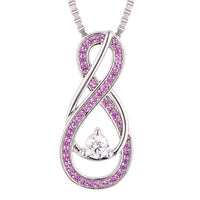
The piece they're describing → Collier infini en tourmaline rose pour femme — Argent sterling 925, pierre précieuse véritable
Personalize Yours


