


Last updated: June 2026
When you're deciding between moonstone vs labradorite, the choice comes down to the kind of optical magic you want on your wrist or neck. Both stones shimmer in ways that look almost supernatural, but they do it through completely different mechanisms — and that difference shapes everything from price to durability to how they look in sunlight. Whether you're buying a gift or treating yourself, this guide breaks down exactly what sets these two mystical gems apart.

Moonstone vs labradorite: moonstone is a feldspar gem with a floating blue-white glow called adularescence, rated 6–6.5 on the Mohs scale, best for delicate or romantic jewelry. Labradorite is also a feldspar with vivid rainbow-colored flash called labradorescence, rated 6–6.5, and suits bold statement pieces. Moonstone costs more per carat; labradorite offers strong visual impact at lower prices.
Moonstone vs Labradorite: Key Differences at a Glance
| Property | Moonstone | Labradorite |
|---|---|---|
| Appearance | Translucent with soft blue-white inner glow | Dark gray base with vivid multi-color flash |
| Price Range | $10–$200+ per carat (quality-dependent) | $5–$40 per carat |
| Hardness/Durability | 6–6.5 Mohs, prone to cleavage | 6–6.5 Mohs, slightly more chip-resistant |
| Lifespan | Years with careful wear; avoid impact | Long-lasting with basic care |
| Best For | Delicate rings, pendants, romantic styles | Statement pendants, bold rings, boho styles |
| Sparkle/Effect | Adularescence — soft floating blue-white sheen | Labradorescence — strong blue, green, gold flash |
| Origin | Sri Lanka, India, Madagascar | Canada (Labrador), Finland, Madagascar |
| Care Requirements | Avoid heat, chemicals, ultrasonic cleaners | Mild soap and water; avoid harsh chemicals |
| Overall Value | High for romantic, ethereal aesthetics | High value — bold look at affordable price |
Shop Moonstone and Crystal Charm Necklaces at AJLuxe — Shop at AJLuxe →
What Is Moonstone?
Moonstone belongs to the feldspar mineral group, specifically the orthoclase variety. Its defining feature is adularescence — a billowing, cloud-like glow that seems to float beneath the surface of the stone. This optical effect happens because moonstone is made of alternating layers of two types of feldspar (orthoclase and albite) that scatter light between them. The result looks like moonlight caught inside the gem.
The finest moonstones come from Sri Lanka, where GIA notes the most coveted specimens display a blue shimmer on a colorless body. India produces moonstones with colorful adularescence in orange, brown, and green hues. Madagascar has become a significant source in recent decades.
Moonstone rates 6–6.5 on the Mohs hardness scale and has two directions of perfect cleavage, which means it can split if struck at the wrong angle. This makes setting choice critical — bezels and protective settings work better than prong styles that leave the stone exposed.
People have prized moonstone for thousands of years. Ancient Romans believed it formed from solidified moonbeams. In Hindu tradition, moonstone is a sacred gem associated with the moon god Chandra. Today, it remains June's birthstone alongside alexandrite and pearl. Its meaning centers on intuition, femininity, and new beginnings — making it a popular choice for anniversary and engagement jewelry.
What Is Labradorite?
Labradorite is a plagioclase feldspar first discovered in Labrador, Canada, in the 1770s — which is how it got its name. Its signature optical effect, labradorescence, creates bold flashes of blue, green, gold, orange, and sometimes red or purple across the stone's surface. Unlike moonstone's soft inner glow, labradorescence plays on the surface and shifts dramatically as you change the viewing angle.
The phenomenon happens because labradorite contains thin layers of alternating composition that create interference patterns when light waves bounce between them. The colors you see depend on the thickness of those layers. According to the Jewelers of America gemstone guide, this type of structural color is similar to what gives peacock feathers their iridescence.
Top-quality labradorite with rich, full-spectrum flash is sometimes called "spectrolite," a term most commonly used for high-saturation Finnish material. A rare transparent blue variety from Madagascar goes by "rainbow moonstone," which creates confusion — it's technically labradorite, not moonstone, though it displays a similar adularescence.
Labradorite rates 6–6.5 on Mohs but tends to be slightly less prone to cleavage than moonstone in practical wear. Its base color ranges from pale gray to dark charcoal or even black, making the color flash pop with high contrast. The stone carries associations with magic, transformation, and psychic protection in crystal healing traditions.
Moonstone vs Labradorite: Which Looks Better in Jewelry?
The answer depends entirely on your personal style. Moonstone's soft adularescence works beautifully in delicate, minimal settings — a simple bezel pendant, a thin band ring, or small drop earrings. The glow reads as ethereal and romantic. It pairs well with white gold and silver, which complement its cool, pale tones. It also suits rose gold for a warmer, more bohemian feel.
Labradorite's bold flash makes it a natural focal point. A labradorite cabochon set in a wide silver ring or a large pendant commands attention in a way that moonstone doesn't. The dark body color means it photographs dramatically and looks particularly striking under natural light, where the color shifts become most vivid.
If you're choosing a piece for everyday wear, moonstone's subtlety means it layers well with other jewelry without competing. Labradorite tends to be the centerpiece of any outfit. For formal occasions, both work — moonstone reads refined and classic, while labradorite reads artistic and bold. If you're shopping for someone with a maximalist style, labradorite is the safer bet. For someone who prefers quiet elegance, moonstone wins.
You can also explore how these stones work in our guide to crystal jewelry styles or find inspiration in our birthstone jewelry guide if you're matching to a birth month.
Price Comparison: Moonstone vs Labradorite
Moonstone costs significantly more than labradorite, especially at the top end. According to gem market data tracked in 2025, high-quality blue-sheen moonstone from Sri Lanka sells for $100–$250 per carat in the retail market. Mid-grade stones with good adularescence but some inclusions run $20–$80 per carat. Lower-grade moonstone with minimal sheen can be found for under $10 per carat, but these lack the characteristic glow that makes the stone worth buying.
Labradorite is much more affordable. Most labradorite cabochons used in jewelry retail for $5–$40 per carat, with spectrolite (the high-grade Finnish variety) reaching $50–$100 per carat. Because labradorite is widely available and comes in large pieces, finished labradorite jewelry pieces typically cost $30–$200, making it accessible at almost every price point.
For budget-conscious buyers, labradorite delivers exceptional visual impact per dollar spent. A large, flashy labradorite pendant can cost half what a small moonstone pendant costs, while making a stronger visual statement. If the goal is the best-looking stone for the money, labradorite wins clearly.
That said, fine moonstone holds its value better and is more sought-after by collectors. If you're buying jewelry as an investment or heirloom piece, moonstone's rarity at the high end gives it an edge.
Durability and Everyday Wearability
Both stones rate 6–6.5 on the Mohs scale, which puts them below quartz (7) and well below sapphire (9) or diamond (10). This means both can scratch from everyday dust (which contains quartz particles) and both need some care in daily wear. That said, there are meaningful differences in how they hold up.
Moonstone has two directions of perfect cleavage, meaning impact or pressure from the wrong angle can cause it to split cleanly. This makes moonstone rings risky for people who work with their hands. Pendants and earrings are safer formats. Always choose protective settings like bezels over prong settings, which leave the stone's edges vulnerable.
Labradorite is also cleavage-prone but slightly tougher in practice because its crystal structure makes cleavage less likely to propagate under normal wear. Larger labradorite pieces are actually less fragile than small, thin moonstone cabochons.
Care tips for both stones:
- Clean with mild dish soap and lukewarm water, using a soft brush
- Dry thoroughly before storing
- Avoid ultrasonic cleaners — the vibration can cause internal fractures
- Keep away from household chemicals, bleach, and perfume
- Store separately to prevent scratching from harder gems
- Remove before swimming, exercising, or heavy housework
With proper care, both stones last for years in jewelry. Neither is as durable as topaz, sapphire, or diamond, but both are perfectly suitable for pendants, earrings, and occasional-wear rings.
Related reading: Labradorite buying guide.
Frequently Asked Questions
Is moonstone or labradorite more valuable?
Moonstone is generally more valuable per carat, especially at the high end. Fine blue-sheen moonstone from Sri Lanka can retail for $100–$250 per carat, while even top-grade labradorite rarely exceeds $100 per carat. The price difference reflects moonstone's rarity at the quality end. However, labradorite offers exceptional visual impact at a fraction of the cost, so it delivers better value for most jewelry buyers.
Can you wear moonstone every day?
You can, but it requires care. Moonstone rates 6–6.5 on the Mohs scale and has perfect cleavage in two directions, which makes it vulnerable to impact and scratching. It works best in protected settings like bezels rather than prong styles. Daily wear is fine for pendants and earrings, but moonstone rings need extra attention — remove them before physical work, exercise, or any activity that risks knocking the stone.
What is the difference between adularescence and labradorescence?
Adularescence is the soft, floating blue-white glow seen in moonstone. It happens because light scatters between alternating layers of feldspar inside the stone, creating a billowing light effect that appears to move beneath the surface. Labradorescence is the strong, color-shifting flash seen in labradorite. It occurs through interference of light waves between thin compositional layers, producing vivid colors — blue, green, gold, orange — that change with viewing angle. Adularescence is soft and internal; labradorescence is bold and surface-active.
Is rainbow moonstone the same as labradorite?
"Rainbow moonstone" is technically a white labradorite, not a true moonstone. It's a transparent to translucent variety of labradorite from Madagascar that displays adularescence similar to moonstone, which is why the trade name stuck. True moonstones are orthoclase feldspar, while rainbow moonstone is plagioclase feldspar. The visual effect looks similar, but they're mineralogically different. If you're shopping for a specific gem, check whether the seller means orthoclase moonstone or labradorite.
Which stone is better for a ring — moonstone or labradorite?
Labradorite is slightly better suited for everyday rings because it's marginally less prone to splitting than moonstone. But both stones rate only 6–6.5 on the Mohs scale, so neither is ideal for rings worn daily with no protection. If you want either stone in a ring, choose a bezel or halo setting that shields the edges, avoid wearing it during physical work, and inspect the setting regularly for damage. Pendants and earrings are safer formats for both gems.
What does moonstone symbolize?
Moonstone has been linked to the moon, intuition, and femininity across many cultures for thousands of years. Ancient Romans associated it with the moon goddess Diana and believed it brought good fortune to travelers. In Hindu tradition, it's considered sacred and connected to the lunar deity. Today, moonstone is often given as a gift for new beginnings, emotional balance, and enhanced intuition. It's also the birthstone for June, making it a meaningful choice for people born that month.
What does labradorite symbolize?
Labradorite is associated with magic, transformation, and psychic protection in crystal healing traditions. Its dramatic color shift is often linked to the idea of seeing hidden truths or revealing the unseen — making it popular with people drawn to mystical or metaphysical practices. Inuit legend holds that labradorite fell from the Aurora Borealis, trapped in stone. Whether or not you follow crystal healing, labradorite's visual drama gives it an air of mystery that makes the symbolism feel fitting.
How can you tell real moonstone from fake?
Real moonstone shows adularescence — a soft blue-white glow that moves as you tilt the stone, appearing to float below the surface. It should feel cool to the touch (glass warms up faster), and a loupe will reveal natural inclusions like centipede-shaped stress fractures or tiny mineral inclusions. Glass and synthetic imitations often show uniform, static color without the moving light effect. If you're uncertain, request a gem certificate from a GIA-accredited lab or buy from a reputable jeweler who discloses the gem's origin.
Does labradorite change color in different lighting?
Yes — that's its defining characteristic. Labradorescence causes the stone to display different colors depending on the light source and viewing angle. Under natural daylight, you may see vivid blues and greens. Under artificial indoor light, the flash may appear more golden or orange. The colors can shift dramatically as you move the stone even a few degrees. This makes labradorite one of the most dynamic-looking gems available at its price point, and it's why the stone looks so different in photos taken under different conditions.
Can moonstone and labradorite be used together in jewelry?
Yes, and the pairing can be striking. Moonstone's soft blue-white glow and labradorite's bold color flash create a complementary contrast — subtle meets dramatic. Both stones share the feldspar family and similar care needs, which makes them practical to combine in multi-stone pieces. The color palettes also harmonize well since both lean into cool blue-green tones. A necklace or bracelet mixing the two stones works especially well in bohemian or celestial-themed designs.
Final Thoughts
Both moonstone and labradorite are exceptional gems that offer something rare: natural light effects you can't replicate with color alone. Moonstone wins if you want soft, romantic elegance and don't mind paying more for refined quality. Labradorite wins if you want bold, head-turning color shift at an accessible price. Either way, you're getting a stone with genuine visual magic — the kind that makes people stop and ask what you're wearing.
If you're ready to wear one of these stones, explore AJLuxe's collection of crystal and stone charm necklaces — including moonstone and labradorite options crafted in quality settings that protect the stone while letting it shine. Shop Moonstone and Crystal Charm Necklaces at AJLuxe →
Toutes les marques, noms de marque et noms de produits tiers sont la propriété de leurs détenteurs respectifs. AJLuxe n’est affilié à aucune marque tierce citée dans cet article, ni approuvé ou sponsorisé par celle-ci. Les noms de marque sont utilisés uniquement à des fins de comparaison factuelle, et les descriptions de matériaux reflètent les spécifications produit publiées par chaque marque au moment de la rédaction.
You Might Also Like
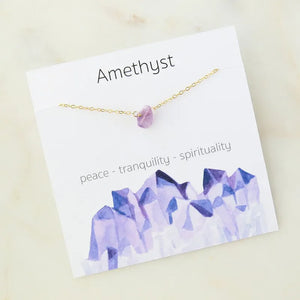
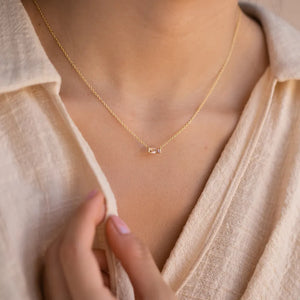

The piece they're describing → Collier pendentif en pierre pour femme – Plaqué or 18 carats, pendentifs en pierres précieuses naturelles
Personalize Yours


