


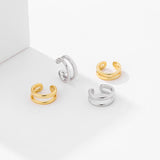
Not having pierced ears doesn't mean you can't wear cartilage jewelry. Ear cuffs exist specifically to give you the helix-piercing look without any needle. No healing, no infection risk, no permanent commitment. Just slide one on and you're done.
This guide focuses on the practical side: which styles hold best on unpierced ears, how to keep them secure, and what to look for in an ear cuff if sensitive skin is a concern.
How Ear Cuffs Work Without Piercing
An ear cuff has a small gap between its two ends. You slide that gap over the outer edge of your ear — the helix — and gently squeeze until it grips. The cartilage holds the cuff in place through friction. No adhesive, no clip mechanism, just the right amount of pressure.
The key difference from clip-on earrings: clip-ons grip the earlobe. Ear cuffs grip the cartilage rim higher up on the ear. That's why they look like real helix piercings from the outside — they're sitting in exactly the same position a piercing would occupy.
Best Ear Cuff Styles for Non-Pierced Ears
Not every ear cuff style is equally secure. Some need a pierced lobe for a secondary attachment point. Here's what works best on completely unpierced ears.
| Style | Works Without Piercing | Security Level | Best For |
|---|---|---|---|
| Single wrap-around | ✅ Yes | High | Everyday, beginners |
| Double-band cuff | ✅ Yes | Very high | Active days, all-day wear |
| Helix crawler | ✅ Yes | Medium-high | Statement, evenings |
| Chain-linked (cuff + drop) | ⚠️ Partial — chain needs lobe hole | Varies | Pierced lobes only |
| Open wire / constellation | ✅ Yes | Low-medium | Stationary occasions only |
Best starting point for unpierced ears: a simple single wrap-around ear cuff in sterling silver. It's the easiest to adjust, the most secure once positioned correctly, and the most versatile to style.
How to Keep an Ear Cuff On (Without Piercing)
The number one reason ear cuffs fall off unpierced ears is wrong placement. Follow these steps and yours will stay put all day.
- Find the thickest part of your outer helix. Run your finger along the outer rim. There's a section — roughly a third of the way up — that's noticeably thicker. That's where to place your cuff.
- Open the gap slightly before putting it on. You want just enough opening to slide over the rim, not so much that the cuff is floppy.
- Slide it over the outer rim of your ear, not the top. The cuff should sit on the outer edge, facing forward.
- Squeeze the ends toward each other gently until you feel a light, secure grip. No pressure = slips; too much pressure = uncomfortable.
- Shake test. Give your head a few quick tilts side to side. If the cuff shifts, tighten it slightly.
Ear Cuff Materials for Sensitive Skin
Cartilage skin can be more reactive than earlobe skin because it's thinner and has less blood flow. If you have sensitive skin or metal allergies, material choice matters.
Safe options: 925 sterling silver, 18K gold plated over 925 sterling, surgical-grade stainless steel, titanium. All are nickel-free or low-nickel.
Avoid: brass-based metals (often sold as "gold tone" without a quality marker), mystery alloys with no material disclosure. Brass contains zinc and copper, both of which can irritate cartilage skin.
AJLuxe's sterling silver ear cuffs are 925-stamped and nickel-free — safe for sensitive skin and reactive cartilage.
How to Style an Ear Cuff When Your Ears Aren't Pierced
No lobe earrings? No problem. Here are approaches that work beautifully on completely unpierced ears.
Solo Helix Statement
Wear one ear cuff on the helix of a single ear. Leave both lobes bare. The asymmetric minimalism reads as intentional and polished — not incomplete.
Double-Ear Cuff Stack
Wear two cuffs on the same ear — one high, one slightly lower on the helix. Two small sterling silver cuffs create a stacked look that mimics multiple piercings convincingly.
Ear Cuff + Non-Piercing Lobe Clip
Pair your helix ear cuff with a non-piercing lobe clip at the bottom of the same ear. This creates a full-ear curated look that looks pieced together over time.
Related reading: Hypoallergenic Ear Piercing Jewelry: What Actually Works (2026).
Related reading: Types of stud earrings.
Related reading: Earring Piercing Near Me: How to Find a Safe, Reputable Piercer (2026).
Related reading: Should i get my ears pierced.
Related reading: Best Earrings for Newly Pierced Ears (2026): What Actually Helps Healing.
Already Pierced? What Real Helix Piercing Jewelry Looks Like (vs. a Cuff)
Helix piercing jewelry is fixed jewelry inserted through an actual hole in the cartilage — typically a labret stud, a seamless hoop, or a small curved barbell — and it's a different product category from the ear cuffs covered above, which grip the same spot on the ear with no hole at all. If you're trying to decide between the two, or you already have a healed helix piercing and want to know what fits it, here's how they actually compare.
| Ear Cuff | Real Helix Piercing Jewelry | |
|---|---|---|
| Commitment | None — on and off anytime | Permanent hole once healed |
| Getting it | Buy and wear immediately | Needle piercing by a studio, then a healing period |
| Typical jewelry style | Wrap-around, double-band, or crawler cuff | Labret stud, seamless hoop, or curved barbell |
| Sizing | One-size, adjustable by squeezing | Fixed gauge and post length set by the piercer |
| Changing your mind | Instant — take it off | Hole can partially or fully close if left empty too long |
Cartilage takes considerably longer to heal than a standard earlobe piercing, and initial jewelry usually stays in for months before it's safe to size down or swap styles — the Association of Professional Piercers covers realistic healing timelines and aftercare if you're weighing whether to get pierced at all. That longer healing window is exactly what makes a cuff worth trying first: it lets you test whether you actually like helix-level ear jewelry before committing to a piercing appointment and a months-long healing process.
If you decide to go the piercing route, look for an initial stud in implant-grade titanium or 14K solid gold — these are the materials most studios use for fresh piercings because they're the least reactive in an open wound. Once fully healed, a wider range of finishes becomes safe to wear, which is where a nickel-free material like 925 sterling silver (AJLuxe's ear cuffs, for comparison, are 925 sterling silver with 18K gold plating) becomes a reasonable choice — just not for the piercing's first several months.
Frequently Asked Questions
- Can ear cuffs stay on without piercing?
- Yes — ear cuffs are designed to stay on without piercing. They grip the outer helix cartilage rim through gentle pressure. Placed correctly on the thickest part of your outer ear rim, a well-fitted ear cuff will stay put all day.
- Will an ear cuff fall off easily?
- Not if it's placed correctly. The most common reason ear cuffs fall off is wrong placement — too thin a section of cartilage, or a gap that's too wide. Position the cuff on the thickest part of your helix and adjust the tension. A double-band cuff is the most secure for active days.
- Do I need pierced ears for an ear cuff?
- No. Wrap-around, double-band, and crawler ear cuffs require no piercing. Chain-linked styles that connect to a lobe earring do need a lobe piercing for the lower attachment point — but the cuff portion sits without a hole.
- What ear cuff is best for non-pierced ears?
- Single wrap-around and double-band cuffs are the most secure options for non-pierced ears. Start with a sterling silver wrap cuff — it's forgiving to put on and suits any outfit.
- Are ear cuffs safe for sensitive skin?
- Yes, if you choose 925 sterling silver or 18K gold plated over sterling — both hypoallergenic and nickel-free. Avoid brass-based cuffs, which can irritate cartilage skin.
- Can you sleep in an ear cuff?
- Not recommended. Sleeping with an ear cuff can push it into your cartilage as you roll over and bend it out of shape. Take it off before bed.
- How do you size an ear cuff for non-pierced ears?
- Most are adjustable. Squeeze tighter if it slips, ease it open if it pinches. The right fit feels like light, even pressure you can quickly forget.
- Can I wear an ear cuff every day?
- Yes — sterling silver and gold-plated cuffs are durable enough for daily wear. Remove before swimming or sleeping. Wipe clean occasionally with a soft cloth.
Ready to Try an Ear Cuff?
Ear cuffs are the most commitment-free way to update your jewelry look. No piercing, no pain, no long-term decision — just slide one on and see how you like it. Our sterling silver ear cuff is adjustable, nickel-free, and designed specifically for the outer helix. Browse the full ear cuff earrings collection to compare every style in stock. Check our complete ear cuff guide for everything about types, styling, and materials, or see step-by-step instructions in our how to wear an ear cuff guide.
Written by the AJLuxe team — specialists in 925 sterling silver and 18K gold-plated jewelry. Last updated: June 2026.
Toutes les marques, noms de marque et noms de produits tiers sont la propriété de leurs détenteurs respectifs. AJLuxe n’est affilié à aucune marque tierce citée dans cet article, ni approuvé ou sponsorisé par celle-ci. Les noms de marque sont utilisés uniquement à des fins de comparaison factuelle, et les descriptions de matériaux reflètent les spécifications produit publiées par chaque marque au moment de la rédaction.
You Might Also Like
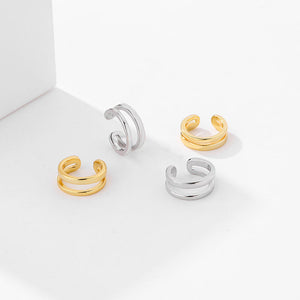
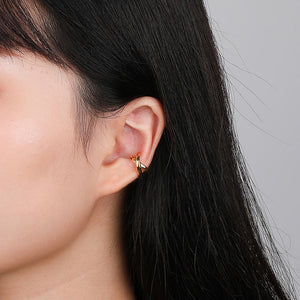
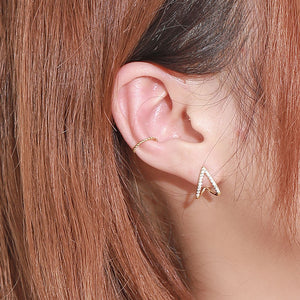
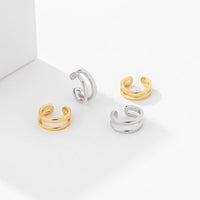
The piece they're describing → Boucles d'oreilles manchette pour femmes — Argent sterling 925, pas besoin de perçage, plaqué or
Personalize Yours


