


- David Yurman (founded 1980, New York) is defined by the twisted-cable design introduced in 1983 — sterling silver cable wire finished with 14K–18K gold end caps, often set with a gemstone or pearl.
- John Hardy (founded 1975, Bali) is defined by hand-fabricated Classic Chain links and the Naga dragon motif, made by Balinese silversmiths in sterling silver and 18K gold.
- Both brands sit in the same "accessible designer" tier — retail runs roughly $300–$3,000+ per piece — well below Cartier or Van Cleef, but well above fast-fashion jewelry.
- Neither brand uses plated metal on their core lines: cable and chain pieces are solid sterling silver, often combined with solid 14K–18K gold, not gold-plated base metal.
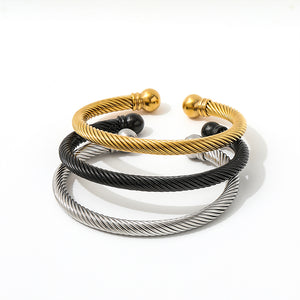
- AJLuxe's cable-texture and twisted-metal pieces recreate the same design language — a twisted cable cuff, twisted rings, twisted cuff earrings — in 925 sterling silver with 18K gold plating, priced $25–$45 instead of hundreds or thousands.
"David Yurman vs. John Hardy" is one of the most common comparisons in accessible designer jewelry, and for good reason — both brands built their identity around a single, instantly recognizable metalwork technique rather than logos or gemstone size. David Yurman turned a twisted cable wire into a signature; John Hardy turned Balinese hand-chain-weaving and dragon carving into one. Neither is an ultra-luxury house in the Cartier or Van Cleef sense, but both charge real designer prices — hundreds to low thousands of dollars — for pieces that are, at the core, sterling silver worked into a distinctive texture. This guide compares what each brand's design signature actually is, what it costs at retail, and closes with honest picks for getting a similar cable-twist or chain-link look in 925 sterling silver with 18K gold plating, for a fraction of the price.
David Yurman's Cable Design Signature
David Yurman's identity is built almost entirely around one design element: the twisted cable.
- The Cable Collection (1983). David and Sybil Yurman introduced the twisted-cable bracelet in 1983, taking industrial cable wire and reworking it into a fine-jewelry silhouette — a helix pattern of intertwined metal strands.
- Sterling silver core, gold accents. Classic Cable pieces are solid sterling silver twisted into the cable pattern, finished with 14K or 18K gold domed end caps — a deliberate two-tone look that became the brand's visual signature, distinct from solid-gold houses.
- The Cable Classic bracelet. The open-cuff bracelet with a hinged clasp and gold ball or gemstone ends is the single most recognized David Yurman piece, worn by both men and women and sold in multiple cable-thickness widths.
- Expansion into other lines. The cable motif extends into rings, earrings, and the Chatelaine and Albion collections, plus pavé-diamond versions where the cable itself is diamond-set rather than plain metal.
The result is a design language that reads as "twisted metal, not smooth metal" — a texture-first approach that's become shorthand in the jewelry world for a specific, identifiable American-designer look.
John Hardy's Bali-Inspired Chain-Link and Naga Design Signature
John Hardy's identity is rooted in place and process as much as any single motif: hand-fabrication by artisans in Bali, Indonesia.
- Founded in Bali, 1975. Canadian designer John Hardy established his workshop in Bali and built the brand around traditional Balinese silversmithing techniques passed down through generations of local artisans.
- Classic Chain. The brand's most recognized silhouette is its woven chain-link bracelet and necklace collection, with a textured, interlocking link pattern inspired by traditional Balinese textile weaving and temple stonework — hand-fabricated rather than machine-cast.
- The Naga (dragon) motif. John Hardy's Naga and Legends Cobra collections wrap a carved, scaled dragon or snake body around a bracelet or ring, often finished with gemstone eyes — a design rooted in Balinese mythology rather than a Western luxury-house crest.
- Sterling silver and 18K gold, hand-worked. Like David Yurman, John Hardy combines sterling silver with 18K gold, but the brand's story leans harder on artisan hand-fabrication and sustainable sourcing (including a solar-powered "Bamboo" workshop in Bali) as part of its value proposition.
Where David Yurman's cable reads as a single repeatable motif, John Hardy's chain-link and Naga pieces read as more sculptural and craft-forward — the texture itself tells a story about where and how it was made.
Price-Tier Comparison: David Yurman vs. John Hardy vs. Affordable Alternatives
Both brands sit in the same general "accessible designer" price tier — well above costume jewelry, well below hard-luxury houses — but individual pieces vary widely by metal content and gemstones. Here's an honest, category-level comparison.
| Piece Style | David Yurman Retail (approx.) | John Hardy Retail (approx.) | Materials | Affordable Alternative |
|---|---|---|---|---|
| Signature cable/chain cuff bracelet | $350–$695 (sterling silver, gold accents) | $395–$895 (sterling silver Classic Chain) | Solid sterling silver + 14K–18K gold | $25–$37 gold-plated cable cuff |
| Cable/chain bracelet with gold + diamonds | $1,200–$3,500+ | $1,500–$4,000+ | 18K gold, pavé diamonds | $28–$40 gold-plated CZ chain bracelet |
| Twisted or link ring | $250–$550 | $295–$650 | Sterling silver, gold accent | $27–$45 twisted band or twisted CZ ring |
| Cable or chain-link earrings | $225–$495 | $250–$525 | Sterling silver, gold accent | $26 twisted cuff earrings |
| Naga/dragon motif ring or bracelet | — | $495–$3,000+ (gemstone eyes) | Sterling silver, 18K gold, gemstones | Not directly replicated in this catalog |
That's roughly a 90–95% price difference for the core cable and chain-link textures. Affordable alternatives aren't trying to replicate either brand's hand-fabrication, trademarked design names, or solid-gold construction — they're built to give you a similar twisted-metal or link-chain texture at a price where daily wear doesn't feel like a risk.
Get a Similar Cable/Twisted Look for Less
You can't buy an actual David Yurman cable or John Hardy Classic Chain piece for under $300 — that's not how solid sterling silver and hand-fabrication pricing works. What you can do is find pieces that borrow the same twisted-cable or link-chain texture in 925 sterling silver with 18K gold plating. Here's where AJLuxe's catalog gets closest.
1. Cable Chain Cuff Bracelet — Closest Cable Classic Match
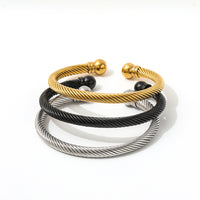
AJLuxe's Cable Chain Cuff Bracelet is the most direct comparison in this guide to David Yurman's original Cable Classic bracelet: an open-cuff design with a visibly twisted cable texture, in 925 sterling silver with 18K gold plating, adjustable for fit. It won't have the weight or hinge mechanism of a solid-silver Yurman cuff, but the silhouette — twisted metal, open cuff, gold-tone finish — is the closest visual match available at $36.99.
2. CZ Chain Bracelet — Classic Chain-Link Alternative
For John Hardy's woven Classic Chain look, AJLuxe's CZ Chain Bracelet uses an interlocking S-chain link structure with cubic zirconia accents, in 18K gold plating over a base you can wear daily — a link-forward texture that echoes the Classic Chain's woven, sculptural feel without the artisan hand-fabrication price.
3. Twisted Band Ring — Cable Ring Alternative
The Twisted Band Ring uses a double-parallel twisted-line design in 925 sterling silver, available in gold or silver tone — the same "twisted metal, not smooth metal" texture that defines both David Yurman's cable rings and John Hardy's twisted-rope styles, at $44.99 instead of $250+.
4. Twisted CZ Ring — Cable-with-Pavé Alternative
For the pavé-diamond version of the cable motif, AJLuxe's Twisted CZ Ring pairs a twisted gold-plated band with cubic zirconia accents — the same "twisted cable plus stones" combination David Yurman charges $1,000+ for, reworked in accessible materials.
5. Twisted Cuff Earrings — Matching the Set
AJLuxe's Twisted Cuff Earrings extend the twisted-metal texture to a no-piercing-needed ear cuff in 925 sterling silver with 18K gold plating — an easy way to complete a cable-inspired stack without committing to pierced earrings.
Material and Quality Honesty: What You're Actually Buying
This is the section most brand comparisons skip, and it's the most important one for setting expectations correctly.
What David Yurman and John Hardy Actually Use
Both brands' core collections are built from solid sterling silver — not silver-plated base metal — worked into their signature cable or chain-link texture, then finished with solid 14K or 18K gold accents (end caps, clasps, or full gold-plated sections) rather than a thin plating layer over the whole piece. John Hardy pieces are additionally hand-fabricated by artisans in Bali using traditional casting and carving techniques, which is a meaningful part of both the cost and the craft story. Higher-tier pieces from both brands add pavé diamonds or colored gemstones, pushing retail well into four figures.
What Affordable Alternatives Use
Affordable cable- and chain-inspired jewelry, including AJLuxe's picks above, is built on 925 sterling silver with 18K gold electroplating — a thin gold layer measured in microns over a solid silver base, machine-formed rather than hand-fabricated. Sterling silver is naturally hypoallergenic for most people and gives real weight to the piece, unlike hollow base-metal costume jewelry sold under similar "cable bracelet" search terms. With daily wear and basic care (avoiding water, perfume, and friction), expect the gold plating to hold its finish for roughly 1–3 years before it shows thinning — not the decades a solid-gold-accented Yurman or Hardy piece is built to last.
The Honest Trade-Off
You're not buying a lower-quality David Yurman or John Hardy piece — you're buying a different product category that borrows the twisted-cable or chain-link texture. If you want a piece built to be worn for decades and passed down, solid sterling silver with real gold accents is the only path there, and that's exactly what both designer brands sell. If you want to try the twisted-metal aesthetic across a few pieces, or want something you can wear daily without worrying about losing an expensive cuff, a plated alternative is the more rational choice for most people.
David Yurman or John Hardy: Which Fits Your Style?
Neither brand is "better" outright — they're built around different design philosophies, and the right pick depends on the look you're after.
- Choose the David Yurman aesthetic if you want a clean, repeatable twisted-cable motif that reads as classic American designer jewelry — good for someone who wants one recognizable signature piece worn often.
- Choose the John Hardy aesthetic if you're drawn to more sculptural, craft-forward pieces with a design story rooted in a specific place and hand-fabrication technique — good for someone who values the "made by artisans" narrative alongside the texture.
- Both work well mixed with plainer pieces. Because both design languages are texture-heavy (twisted cable or woven chain), they pair best with simple stud earrings, thin chains, or plain bands rather than other statement pieces.
- Neither is "cheap" at retail — both are genuine designer-tier investments, so if you're testing whether the twisted-cable or chain-link look works for you before committing to a $300+ piece, an affordable alternative is a reasonable way to try the aesthetic first.
How to Style Cable and Twisted-Chain Jewelry
- Let the texture be the statement. Both design languages are built around metalwork texture, not gemstone size — pair a cable cuff or twisted ring with plain studs or a thin chain rather than another heavily textured piece.
- Match metal tones. If your cable cuff has gold plating, keep other jewelry in the same warm gold tone rather than mixing silver and gold, which reads as less intentional.
- Stack twisted rings in odd numbers. A single twisted band reads as understated; two or three stacked twisted rings on the same hand reads closer to how these design houses actually merchandise the look.
- Wear the cuff solo on that wrist. An open cable cuff is meant to be the focal piece on its wrist — save the layered-bracelet stack for the other arm.
- Rotate for occasions. Because plated alternatives cost a fraction of the real thing, it's realistic to own a couple of pieces and switch based on outfit, rather than wearing one investment cuff for everything.

Frequently Asked Questions
Is John Hardy considered high-end jewelry?
Yes, John Hardy is a genuine designer-tier jewelry brand, priced roughly $200–$3,000+ per piece, built on solid sterling silver and 18K gold hand-fabricated by artisans in Bali. It sits below hard-luxury houses like Cartier or Van Cleef & Arpels, but well above fashion or costume jewelry — the same accessible-designer tier as David Yurman.
What level of luxury is David Yurman?
David Yurman is an accessible-luxury or "bridge" designer brand, not an ultra-luxury house — retail runs roughly $250–$3,500+ depending on the piece, using solid sterling silver combined with 14K or 18K gold rather than solid gold throughout. It's positioned above department-store fashion jewelry but below hard-luxury houses like Cartier or Tiffany & Co.
Are John Hardy bracelets good quality?
Yes. John Hardy's Classic Chain and Naga bracelets are made from solid sterling silver (often combined with 18K gold) and hand-fabricated by Balinese artisans using traditional techniques, which is genuine, durable craftsmanship — not plated or cast base metal.
What is David Yurman compared to?
David Yurman is most often compared to John Hardy, as both are accessible American/Bali-based designer brands known for a signature metalwork texture (twisted cable vs. woven chain) rather than logo-driven design. It's sometimes also compared to Tiffany & Co. for its position as widely available "designer gift" jewelry, though Tiffany sits at a somewhat higher luxury tier.
What is the actual difference between David Yurman and John Hardy?
The core difference is design language and origin: David Yurman (New York, 1980) is defined by its twisted-cable motif introduced in 1983, while John Hardy (Bali, 1975) is defined by hand-fabricated woven chain links and its dragon-motif Naga collection made by Balinese artisans. Both use sterling silver combined with 18K gold at similar price points.
Which is more expensive, David Yurman or John Hardy?
They're closely matched at retail — both brands' core bracelets typically run $350–$900, with gold-and-diamond pieces from either brand climbing into the low thousands. Neither is consistently cheaper across the board; pricing depends more on the specific collection and gemstone content than the brand name.
Do David Yurman and John Hardy jewelry pieces use real gold?
Yes, on their core collections. Both brands combine solid sterling silver with genuine 14K or 18K gold accents (end caps, clasps, or gold-plated sections), not costume-grade plated base metal. This is different from affordable "inspired by" alternatives, which use 925 sterling silver with a thin 18K gold electroplating layer over the whole piece.
Can you get a cable bracelet like David Yurman's for less?
Yes — pieces that recreate the twisted-cable texture in 925 sterling silver with 18K gold plating, like AJLuxe's Cable Chain Cuff Bracelet, capture the same open-cuff, twisted-metal silhouette for around $37 instead of $350–$700, though without the solid-silver weight or hand-finished hinge of the original.
Is John Hardy jewelry handmade?
Yes. John Hardy's signature pieces, including the Classic Chain and Naga collections, are hand-fabricated by artisans at the brand's workshop in Bali, Indonesia, using traditional Balinese silversmithing and casting techniques — a meaningful part of both the brand's story and its pricing.
Does David Yurman jewelry tarnish?
Solid sterling silver, including David Yurman's cable pieces, can naturally tarnish over time with air exposure, though it's typically more resistant than plated jewelry and can be polished to restore shine. Gold-plated alternatives on a sterling silver base are more prone to visible finish loss over 1–3 years of regular wear, since the gold layer is thin rather than solid.
Final Thoughts
David Yurman and John Hardy earned their reputations the same way — by turning a specific metalwork technique into a design signature, rather than leaning on logos. Yurman's twisted cable and Hardy's hand-woven chain and Naga carving are genuinely well-made, built from solid sterling silver with real gold accents, and priced accordingly at $250 to several thousand dollars a piece. If you want that exact craftsmanship and are ready to invest in it, both brands deliver on what they charge for. If you simply want to try the twisted-cable or chain-link aesthetic without a four-figure commitment, an honest plated alternative — like AJLuxe's cable cuff, twisted rings, and chain bracelet — captures the same texture-first design language in accessible materials you don't have to insure.
Browse AJLuxe's bracelet collection for more cable, chain, and twisted-metal styles, or shop the picks above to start building your own textured-jewelry stack.
Shop This Guide
The Cable Chain Cuff Bracelet — an open-cuff twisted-cable design in 925 sterling silver with 18K gold plating, inspired by the classic cable bracelet silhouette.
Shop the Cable Chain Cuff BraceletWritten by the AJLuxe Team. Last updated: August 2026. This guide is independent and not affiliated with, endorsed by, or sponsored by David Yurman Enterprises LLC or John Hardy Global Ltd. Metal and plating durability guidance informed by the Jewelers of America materials standards.
Toutes les marques, noms de marque et noms de produits tiers sont la propriété de leurs détenteurs respectifs. AJLuxe n’est affilié à aucune marque tierce citée dans cet article, ni approuvé ou sponsorisé par celle-ci. Les noms de marque sont utilisés uniquement à des fins de comparaison factuelle, et les descriptions de matériaux reflètent les spécifications produit publiées par chaque marque au moment de la rédaction.
You Might Also Like
The piece they're describing → Bracelet Manchette Femme Chaîne Câble — Plaqué Or 18 Carats, Ouvert, Ajustable
Personalize Yours


