


Aragonite meaning starts with a contradiction: this is one of the most common minerals on Earth — it builds pearls, coral reefs, and seashells — yet most people have never heard its name. In crystal healing circles, aragonite carries a reputation as the "stabilizer," a stone that grounds scattered energy and steadies emotional turbulence. Geologically, it's calcium carbonate (CaCO₃), the same chemical formula as calcite, but grown in a different crystal lattice that gives it a completely different look, feel, and behavior. If you've ever seen a starburst-shaped crystal cluster called a "sputnik," you've already met aragonite. This guide covers what aragonite actually is, what the meaning behind it claims, how it differs from calcite, and what you need to know before buying it as jewelry.
What Is Aragonite? The Science Behind the Stone
Aragonite is a carbonate mineral made of calcium carbonate (CaCO₃) — the same compound found in calcite and the rarer mineral vaterite. What separates aragonite is its crystal system: it forms in an orthorhombic structure, while calcite forms in a trigonal one. That structural difference is why aragonite crystals grow as long, needle-like (acicular) shapes instead of calcite's blocky, rhombohedral chunks.
The mineral takes its name from Molina de Aragón in Spain, where German mineralogist Abraham Gottlob Werner first formally described it in 1797. Today it's mined in Morocco, Mexico, Spain, Austria, Namibia, Italy, the UK, and the United States. Aragonite sits at 3.5 to 4 on the Mohs hardness scale — soft enough to scratch with a knife, which matters a lot once you start thinking about wearing it.
Here's the part most crystal sites skip entirely: aragonite is the less thermodynamically stable of the two main calcium carbonate forms. Over geologic time, aragonite slowly converts into calcite, not the other way around. Heat speeds this up — at around 400°C, aragonite will spontaneously transform into calcite even without added pressure. That's why ancient fossil shells, which started life as aragonite, are often found today as calcite.
Aragonite Meaning and Metaphysical Properties
Aragonite's meaning centers on stability, truth, and grounded perception. Crystal healing traditions describe it as a stone that takes scattered, anxious energy and gives it somewhere to go — shaking out mental clutter the way its branching crystal structure radiates outward from a single point.
- Grounding and stability: Aragonite is associated with the root chakra and, in many traditions, the "Earth Star" chakra believed to sit just below the feet. Both are tied to a sense of physical safety and being anchored.
- Emotional release: Practitioners use aragonite to work through anger, anxiety, and emotional fatigue, framing it as a stone that helps process feelings rather than suppress them.
- Patience and focus: Because aragonite is linked to Capricorn — an earth sign associated with ambition and discipline — it's often recommended for people who run hot, overachieve, or struggle to slow down.
- Truth and clarity: Several sources connect aragonite to honest self-perception, framing it as a stone for seeing situations (and yourself) clearly rather than through anxiety or wishful thinking.
These are metaphysical traditions, not clinical claims. Aragonite is not a substitute for medical or mental health care — think of it as a focus object for intention-setting, the same way someone might use a worry stone or a meditation cushion.
Sputnik Clusters: Aragonite's Signature Formation
The single most distinctive thing about aragonite is the "sputnik" cluster — a spiky, symmetrical starburst of crystals radiating from a central point, named for its resemblance to the 1957 Soviet satellite. Nothing else in the mineral world looks quite like it.
Sputnik clusters form because of aragonite's orthorhombic crystal system. Needle-like crystals nucleate at a central point inside an open cavity — usually in limestone — and grow outward in every direction as calcium and carbonate ions deposit onto the crystal surfaces. Because the cavity gives the crystals open space in all directions, the growth pattern radiates symmetrically instead of stacking in one plane, producing the star shape collectors prize.
Most sputnik specimens on the market come from Morocco and carry a golden-brown to amber color from trace iron content. Calcite, by contrast, almost never forms this way — its trigonal structure favors blocky, scalenohedral, or rhombohedral shapes, not radiating needles. If you see a star-cluster crystal labeled "calcite," it's very likely mislabeled aragonite.
Aragonite Color Varieties
Pure aragonite is colorless, but trace minerals during formation produce a wide color range. Each color has picked up its own folk associations in crystal healing circles, though the underlying mineral is identical.
| Color | Typical Cause | Common Source | Folk Association |
|---|---|---|---|
| Golden-brown / amber (Sputnik) | Trace iron oxide | Morocco | Grounding, stability |
| White / colorless | Pure CaCO₃ | Worldwide | Clarity, purity |
| Blue | Trace copper or cobalt | China | Calm communication |
| Pink | Trace manganese | Peru, Spain | Emotional softness |
| Red | Iron oxide inclusions | Spain, Morocco | Vitality, root chakra |
| Green | Trace nickel or chromium | Various | Heart-centered grounding |
None of these color names refer to different minerals — they're all aragonite, just colored by whatever trace elements were present in the surrounding water when the crystal formed.
Aragonite vs. Calcite: How to Tell Them Apart
Aragonite and calcite share the exact same chemical formula, which is exactly why people confuse them. They are polymorphs — identical in composition, different in structure — much like diamond and graphite are both pure carbon. Here's how to actually tell them apart.
| Property | Aragonite | Calcite |
|---|---|---|
| Crystal system | Orthorhombic | Trigonal |
| Typical crystal shape | Long, needle-like (acicular) | Blocky, rhombohedral ("dog-tooth") |
| Mohs hardness | 3.5–4 | 3 |
| Thermodynamic stability | Less stable — converts to calcite over time | More stable, far more abundant |
| Sputnik star clusters | Yes — signature formation | No |
| Double refraction | Weaker | Strong (objects appear doubled through clear pieces) |
In massive, non-crystalline form, even geologists sometimes need lab testing to separate the two with certainty. But once you know to look for the needle-shaped clusters versus blocky chunks, you can usually tell them apart by eye.
Zodiac and Chakra Pairing
Aragonite is most commonly paired with the zodiac sign Capricorn, the disciplined, ambitious earth sign that runs from late December into January. The pairing makes intuitive sense within crystal tradition: Capricorn energy is driven and goal-oriented, and aragonite's grounding reputation is meant to keep that drive from tipping into burnout or rigidity.
Chakra-wise, aragonite is tied primarily to the root chakra, located at the base of the spine and associated with safety, stability, and basic security. Some traditions also connect it to the Earth Star chakra, an energy point believed to sit just beneath the feet, used in grounding and anchoring practices. Together, these associations explain why aragonite shows up so often in meditation and grounding rituals rather than in stones associated with higher chakras like the crown or third eye.
How to Use and Cleanse Aragonite
Most people work with aragonite in one of three ways: wearing it, holding it during meditation, or placing it in a space.
- Wear it: Necklaces and earrings let you keep aragonite close to the body throughout the day without the friction risk a ring or bracelet faces.
- Meditate with it: Hold a smooth piece or sit near a sputnik cluster while focusing on grounding, especially during anxious or overstimulated moments.
- Place it: Many people set a cluster on a desk, nightstand, or meditation space as a stabilizing focal point.
Because aragonite is soft and reacts with acid, cleansing needs a gentle touch:
- Do: Wipe with a soft, dry or barely damp cloth. Charge in indirect sunlight or moonlight for an hour or two. Cleanse with sound (singing bowl or bell) or by setting it near selenite.
- Don't: Use ultrasonic or steam cleaners — the vibration and heat can fracture aragonite's delicate needle structure. Don't soak it in vinegar, lemon juice, or any acidic solution; aragonite dissolves in acid. Don't leave it in direct, prolonged sunlight, which can fade some colored varieties over time.
Aragonite Jewelry Buying Guide
Here's the honest answer most retailers won't give you: at 3.5–4 on the Mohs scale, aragonite is too soft for daily-wear rings or bracelets. It scratches easily and can chip or fracture with regular knocks against hard surfaces — exactly the kind of contact a ring takes dozens of times a day.
That doesn't mean you should skip aragonite jewelry. It means you should be deliberate about the setting:
- Best for: Pendant necklaces and stud or drop earrings, where the stone stays largely protected from impact.
- Avoid: Rings and bangle bracelets, where the stone takes constant contact.
- Setting matters: A bezel setting (metal wrapping the stone's edge) protects aragonite far better than a prong setting that leaves edges exposed.
- Metal pairing: 925 sterling silver is a popular, durable, hypoallergenic choice for aragonite settings — it won't react with the stone and holds up well over years of wear.
- Cleaning at home: Stick to a soft cloth and mild soap and water. Never use jewelry-cleaning dips that contain ammonia or acid.
If you want the grounding meaning of aragonite without the durability tradeoff, a charm or pendant style — where the stone is set but not load-bearing — gives you the symbolism with far less risk of damage.
Shop This Guide
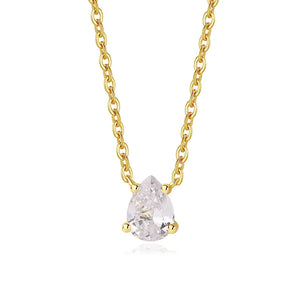
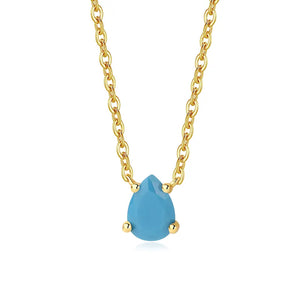
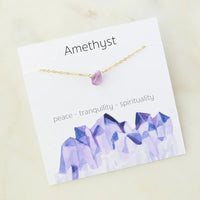
Want a grounding stone you can wear every day without the durability worry? Our Elemental Stone Charms Necklace pairs natural gemstones with a 925 sterling silver chain — hypoallergenic, built for daily wear, and designed to carry meaning without the fragility concerns raw aragonite brings.
Shop the Elemental Stone Charms NecklaceRelated reading: Jewelry With Opals: The Complete Buying Guide (2026).
Related reading: Necklace for a Man: The Complete Buying Guide (2026).
Related reading: Best Friend Necklaces for Three (2026): The Complete Buying Guide.
Related reading: Best Friend Necklaces for Adults: A 2026 Buying Guide.
Related reading: Best Stretch Cord for Bracelets: The Complete Buying Guide (2026).
Related reading: Best Stretch String for Bracelets (2026): The Complete Buying Guide.
Related reading: Bracelet with Birthstones: The Complete Buying Guide (2026).
Frequently Asked Questions About Aragonite
What does aragonite mean spiritually?
Aragonite's spiritual meaning centers on stability, grounding, and emotional balance. Crystal healing traditions associate it with the root chakra and use it to release anxiety, anger, and scattered energy. It's considered a stone for staying anchored during periods of stress or change, rather than one tied to higher spiritual states like intuition or psychic awareness.
What is a sputnik aragonite cluster?
A sputnik cluster is aragonite's signature starburst formation, where needle-like crystals radiate outward from a central point in a symmetrical, spiky pattern. It's named for its resemblance to the 1957 Soviet Sputnik satellite. Most commercial sputnik specimens come from Morocco and show a golden-brown color from trace iron content.
Is aragonite the same as calcite?
No, but they're closely related. Aragonite and calcite are both calcium carbonate (CaCO₃) and share the exact same chemical formula, but they crystallize in different structures — aragonite is orthorhombic and calcite is trigonal. This makes them polymorphs: chemically identical, structurally different, similar to how diamond and graphite are both pure carbon.
Does aragonite turn into calcite?
Yes. Aragonite is the less thermodynamically stable of the two minerals, and over geologic time it slowly converts into calcite. Heat accelerates this process significantly — around 400°C, aragonite spontaneously transforms into calcite even without added pressure. This is why many ancient fossil shells, originally aragonite, are now found as calcite.
Is aragonite good for jewelry?
Aragonite works well in jewelry that avoids regular impact, like necklaces and earrings, but it's a poor choice for rings or bracelets. At 3.5–4 on the Mohs hardness scale, it's soft enough to scratch or chip from everyday contact. A bezel setting, which wraps protective metal around the stone's edge, helps extend its life in any piece you choose to wear.
What chakra is aragonite associated with?
Aragonite is primarily linked to the root chakra, located at the base of the spine and associated with safety, stability, and security. Some traditions also connect it to the Earth Star chakra, an energy point believed to sit beneath the feet that supports grounding and connection to the earth.
What zodiac sign is aragonite for?
Aragonite is most commonly paired with Capricorn, the ambitious, disciplined earth sign. The pairing reflects aragonite's grounding reputation, which is thought to help Capricorn's drive and ambition stay balanced rather than tipping into burnout or rigidity.
Can aragonite get wet?
Brief contact with plain water is generally fine, but aragonite should not be soaked or exposed to acidic liquids. The mineral dissolves in acids like vinegar or lemon juice, and prolonged water exposure can weaken its structure over time. Dry it promptly with a soft cloth after any contact with moisture.
Where does aragonite come from?
Aragonite is mined in Morocco, Mexico, Spain, Austria, Namibia, Italy, the United Kingdom, and the United States. The mineral was first formally described in 1797 near Molina de Aragón, Spain, which gave the stone its name. Most sputnik star clusters sold today are sourced from Morocco.
What colors does aragonite come in?
Pure aragonite is colorless, but trace minerals produce a wide color range, including golden-brown (the classic Moroccan sputnik color from iron oxide), white, blue, pink, red, and green. The color comes from trace elements present during formation, not from a different underlying mineral — all of these are still chemically the same aragonite.
Is aragonite rare?
No, aragonite is actually one of the most common minerals on Earth — it forms the structure of most mollusk shells, coral skeletons, and the nacre layer inside pearls. What's relatively uncommon is well-formed crystal specimens, especially dramatic sputnik clusters, which require specific cave or cavity conditions to develop their signature star shape.
How do you charge aragonite?
Aragonite is typically charged with moonlight rather than sunlight, since prolonged sun exposure can fade some colored varieties (especially blue and pink aragonite). Leave it on a windowsill overnight during a full moon, or place it on a selenite charging plate for a few hours. Avoid saltwater or dry-salt cleansing methods — aragonite is a calcium carbonate mineral and can be etched by prolonged contact with salt or other acidic substances.
Where should I place aragonite in my home?
In crystal placement practice, aragonite is commonly kept in shared spaces — living rooms, kitchens, or entryways — because its grounding, stabilizing associations are considered most useful for easing tension in spaces where people spend time together. It's also placed on a desk or workspace for its associations with patience and steady focus. There's no fixed rule here; this reflects common practice, not a requirement.
Is aragonite a precious stone?
No — aragonite is a semi-precious mineral, not a precious stone. The traditional "precious" category (diamond, ruby, sapphire, emerald) is a 19th-century marketing distinction based on rarity and hardness, not a mineralogical one. Aragonite is chemically identical to calcite (both are calcium carbonate, just with different crystal structures) — common and affordable, and valued in the crystal and mineral-collecting world more for its unusual sputnik cluster formations than for rarity.
Final Thoughts
Aragonite earns its "stabilizer" reputation honestly — between its grounding root-chakra associations and its real geological role inside pearls, coral, and shells, it's a stone with both a story and a chemistry lesson built in. Just go in with realistic expectations about durability: this is a necklace-and-earring stone, not a ring stone, and a little care goes a long way toward keeping it intact.
If aragonite's grounding meaning resonates with you but you want a piece built for daily wear, our Elemental Stone Charms Necklace in 925 sterling silver gives you the symbolism in a setting designed to last.
Written by the AJLuxe team — specialists in personalized sterling silver jewelry. Last updated: July 2026.
Sources: Wikipedia — Aragonite, GIA — Gemological Institute of America, Jewelers of America.
Toutes les marques, noms de marque et noms de produits tiers sont la propriété de leurs détenteurs respectifs. AJLuxe n’est affilié à aucune marque tierce citée dans cet article, ni approuvé ou sponsorisé par celle-ci. Les noms de marque sont utilisés uniquement à des fins de comparaison factuelle, et les descriptions de matériaux reflètent les spécifications produit publiées par chaque marque au moment de la rédaction.
You Might Also Like
The piece they're describing → Collier pendentif en pierre pour femme – Plaqué or 18 carats, pendentifs en pierres précieuses naturelles
Personalize Yours


