


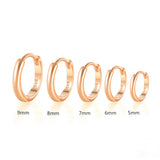
- 14K rose gold = about 58.3% gold, with roughly 38 to 42% copper (plus a small amount of silver and zinc). More copper means a more saturated, vivid pink.
- 18K rose gold = 75% gold, with roughly 21 to 25% copper. Less copper means a softer, more muted, peach-toned pink.
- 14K is harder and more scratch-resistant; 18K has more pure gold and a higher resale/melt value but is slightly softer.
- 14K's extra copper can be more likely to trigger a reaction for people with copper sensitivities; 18K's higher gold content generally makes it the gentler option for sensitive skin.
- 18K solid rose gold typically costs more than 14K, purely because it contains more actual gold by weight.
- AJLuxe's rose gold pieces are 18K gold plated over 925 sterling silver, not solid karat gold, so the plating layer's color and thickness matter more than the 14K/18K purity question does for a plated piece.
If you've been comparing 14K vs 18K rose gold, the confusing part is that purity affects rose gold differently than it affects yellow or white gold. With yellow and white gold, a higher karat mostly changes durability and price. With rose gold, karat purity also changes the color itself, because rose gold's pink tone comes from copper in the alloy, and 14K and 18K contain very different amounts of it. This guide breaks down the exact composition difference, which one actually looks "more pink," durability and hardness, price, hypoallergenic considerations, and how this compares to AJLuxe's own 18K gold-plated rose gold jewelry.
14K vs 18K Rose Gold: Composition Comparison
| Property | 14K Rose Gold | 18K Rose Gold |
|---|---|---|
| Pure gold content | 58.3% | 75% |
| Copper content | Roughly 38 to 42% | Roughly 21 to 25% |
| Color / tone | Deeper, more vivid pink | Softer, more muted, peach-pink blush |
| Mohs hardness (approx.) | 3 to 3.5, harder | 2.5 to 3, softer |
| Scratch resistance | Higher, better for daily wear | Lower, shows fine scratches sooner |
| Price (same design, solid gold) | Lower, less gold by weight | Higher, roughly 20 to 30% more |
| Resale / melt value | Lower, less pure gold content | Higher, more pure gold content |
| Hypoallergenic considerations | More copper, slightly higher chance of a reaction for copper-sensitive skin | Less copper, generally gentler for sensitive skin |
| Typical stamp | 14K, 585 | 18K, 750 |
Why Copper Content Changes Rose Gold's Color
Pure gold is yellow, not pink. Rose gold gets its signature blush color entirely from copper mixed into the alloy, so the amount of copper directly controls how pink a piece looks. 18K rose gold is 75% pure gold and roughly 21 to 25% copper (plus trace silver and zinc), while 14K rose gold is only 58.3% pure gold and roughly 38 to 42% copper. That's a meaningfully larger share of copper in the 14K alloy, and copper's reddish tone is what pushes the color from a subtle peach toward a bolder, more saturated pink.
This is the part of the 14K vs 18K comparison that surprises people: with rose gold, the lower-karat option isn't just "less pure," it's also visibly pinker. If two rings sit side by side, the 14K piece will typically read as the more obviously "rose" or "pink" one, while the 18K piece looks closer to a warm, blushed gold. Neither color is more "correct": some buyers want the bold pink look and specifically shop for 14K, while others want the subtler, higher-purity 18K tone.
Durability and Hardness: Which Holds Up Better?
14K rose gold is harder and more scratch-resistant than 18K rose gold, because it contains a larger share of alloy metal (mostly copper) relative to soft, pure gold. On the Mohs hardness scale, 14K gold generally measures around 3 to 3.5, while 18K gold measures closer to 2.5 to 3. The same pattern that makes 14K plain gold more durable than 18K plain gold holds true for the rose gold versions of each.
In practical terms, a 14K rose gold ring worn every day, bumped against countertops, keys, and gym equipment, will accumulate visible scratches more slowly than an 18K rose gold ring in the same design. 18K's higher pure-gold content makes it more malleable, which is part of why it can look more luxurious and take a finer polish, but that same softness means it shows fine surface scratches sooner under daily wear. Neither metal is fragile, and both can last decades with normal care, but if scratch resistance is the deciding factor, 14K has a real durability edge.
Price Difference: Why 18K Costs More
18K rose gold costs more than 14K rose gold in the same design because it contains more actual gold by weight, and gold is the far more expensive component of the alloy. Since 18K is 75% gold versus 14K's 58.3% gold, a solid 18K piece typically runs roughly 20 to 30% more than the identical 14K design, with the exact gap moving with the daily spot price of gold.
That price gap is specific to solid karat-gold jewelry. Gold-plated jewelry works differently: the plating is a thin layer of gold (commonly labeled by the karat of that layer, such as 18K gold plated) applied over a base metal or sterling silver core. Because so little actual gold is used in a plated piece regardless of the plating's karat label, the karat purity of the plating has a much smaller effect on price than it does with solid gold. This is why AJLuxe's 18K gold-plated rose gold pieces sit in the same affordable range as its sterling silver pieces, rather than commanding a solid-gold price.
Hypoallergenic Considerations: 14K vs 18K Rose Gold
18K rose gold is generally the gentler option for sensitive skin because it contains less copper, while 14K rose gold's higher copper content makes it slightly more likely to trigger a reaction in people with a copper sensitivity. Neither alloy typically contains nickel, which is the metal most commonly responsible for jewelry-related allergic reactions, so both 14K and 18K rose gold are considered reasonably hypoallergenic choices compared to nickel-containing alloys.
That said, anyone who has previously reacted to copper (a less common but real sensitivity) may notice more irritation from 14K rose gold than from 18K, simply because there's more copper in contact with the skin. If you know your skin reacts to copper specifically, 18K rose gold, or a rose gold plating over a hypoallergenic base like nickel-free sterling silver, is the safer starting point.
How This Compares to AJLuxe's 18K Gold-Plated Rose Gold Jewelry
Everything above describes solid 14K and 18K rose gold, where the entire piece is a karat-gold alloy all the way through. AJLuxe's rose gold pieces work differently: they're genuine 925 sterling silver with an 18K gold-plated rose gold finish, not solid rose gold. That means the piece has sterling silver's strength and structure underneath, with a thin layer of rose gold plating on top for the color.
Practically, that changes which comparison actually matters. With solid gold, the 14K vs 18K choice is about how much copper is mixed all the way through the metal. With a plated piece, the relevant factors are the thickness and quality of the plating layer and the strength of the base metal underneath, since the plating is what determines color and the sterling silver core is what determines how the piece holds up structurally over years of wear. AJLuxe's nickel-free 925 sterling silver base gives the rose gold plated pieces the daily-wear durability of sterling, while the 18K gold plating delivers the warm rose gold color at a fraction of the cost of solid 14K or 18K rose gold.

Which Should You Buy: 14K or 18K Rose Gold?
If you want the boldest, most saturated pink color and the toughest metal for daily wear, and you're comfortable with a slightly lower resale value, 14K rose gold is the better fit. It's also generally the more budget-friendly option in solid gold. If you want a subtler, more muted blush tone, a higher pure-gold content, and better resale/melt value, and you can accept a small step down in scratch resistance, 18K rose gold is the better choice.
If you're not shopping for solid karat gold at all, and you just want the rose gold look without the solid-gold price tag, an 18K gold-plated rose gold piece over sterling silver, like AJLuxe's, gives you the color and the sterling silver's daily-wear durability without needing to choose between 14K and 18K in the first place.
Keep Reading
- 14K vs 18K Gold: Which Is Right for You?
- Is Rose Gold Real Gold?
- Does Rose Gold Tarnish?
- Is Rose Gold Hypoallergenic?
- Yellow Gold vs Rose Gold: Which Should You Choose?
Shop This Guide
Shop AJLuxe's 18K gold-plated rose gold jewelry over genuine 925 sterling silver
Shop Our Rose Gold Huggie EarringsFrequently Asked Questions
Which is more pink, 14K or 18K rose gold?
14K rose gold is more pink. It contains a larger share of copper (roughly 38 to 42%) than 18K rose gold (roughly 21 to 25%), and copper is what gives rose gold its color, so more copper means a more vivid, saturated pink. 18K rose gold has a softer, more muted, peach-toned blush by comparison.
Is 14K or 18K rose gold more durable?
14K rose gold is more durable. It has a higher proportion of alloy metal relative to soft pure gold, which raises its hardness on the Mohs scale to roughly 3 to 3.5, compared to about 2.5 to 3 for 18K. That makes 14K more scratch-resistant for daily wear like rings and bracelets.
Is 18K rose gold worth more than 14K rose gold?
Yes, in solid gold form. 18K contains 75% pure gold versus 14K's 58.3%, so it has a higher resale and melt value gram for gram, and typically costs roughly 20 to 30% more in retail jewelry of the same design.
Does 14K or 18K rose gold tarnish?
Both can develop a light surface change over time because of the copper in the alloy, though true tarnishing is much less pronounced than with sterling silver. 14K, with more copper, is somewhat more prone to this than 18K. Occasional polishing with a soft jewelry cloth keeps either looking bright.
Which rose gold is more hypoallergenic, 14K or 18K?
18K rose gold is generally gentler for sensitive skin because it contains less copper. Neither typically contains nickel, the most common jewelry allergen, but someone with a specific copper sensitivity may notice more irritation from 14K's higher copper content.
What is AJLuxe's rose gold jewelry made of?
AJLuxe's rose gold pieces are genuine 925 sterling silver with an 18K gold-plated rose gold finish, not solid 14K or 18K karat gold. The sterling silver base provides daily-wear durability, while the gold plating delivers the rose gold color at a more affordable price than solid rose gold.
Why does rose gold purity affect color more than yellow or white gold?
Because rose gold's pink tone comes specifically from copper in the alloy. With yellow or white gold, changing the karat mostly changes hardness and price, not the color family. With rose gold, changing the karat also changes how much copper is present, and copper content is what determines how pink or muted the color looks.
Can you tell 14K and 18K rose gold apart just by looking?
Often, yes, when placed side by side. 14K typically looks noticeably pinker and more saturated, while 18K looks softer and more peach-toned. On their own, without a comparison piece next to them, the difference can be harder to spot by eye alone, which is why checking the hallmark stamp (14K or 18K) is the reliable way to confirm purity.
Is 14K or 18K rose gold better for an engagement ring?
It depends on priorities. 14K's added hardness makes it a practical choice for a ring worn every single day, since it resists scratches better over years of wear. 18K offers a higher gold content, a subtler color, and typically a higher resale value, which some buyers prioritize for a piece meant to be an investment as well as jewelry.
Does 14K vs 18K rose gold matter for gold-plated jewelry?
Less than it does for solid gold. In plated jewelry, the karat label describes the thin gold layer on the surface, not the whole piece, so the base metal underneath (often sterling silver) has more influence on durability than the plating's karat does. Plating thickness and the quality of the base metal matter more than choosing between a 14K or 18K plating label.
Final Thoughts
14K and 18K rose gold are both genuine rose gold, but the copper content that gives rose gold its color also drives most of the practical differences between them. 14K's extra copper makes it more vividly pink and more scratch-resistant, while 18K's higher gold content makes it more valuable, more subtly colored, and a touch softer. If you're shopping AJLuxe's catalog specifically, remember the pieces are 18K gold-plated rose gold over genuine 925 sterling silver rather than solid karat gold, so you get the rose gold look and sterling silver's daily-wear strength without paying a solid-gold price.
Toutes les marques, noms de marque et noms de produits tiers sont la propriété de leurs détenteurs respectifs. AJLuxe n’est affilié à aucune marque tierce citée dans cet article, ni approuvé ou sponsorisé par celle-ci. Les noms de marque sont utilisés uniquement à des fins de comparaison factuelle, et les descriptions de matériaux reflètent les spécifications produit publiées par chaque marque au moment de la rédaction.
You Might Also Like
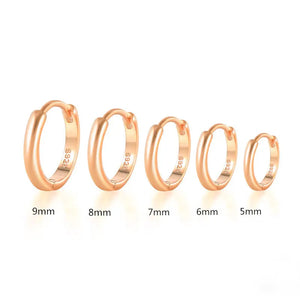
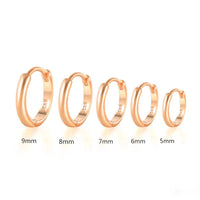
The piece they're describing → Boucles d'oreilles Huggie pour femmes en or rose — Argent sterling 925, Plaqué or rose, Hypoallergéniques
Personalize Yours


