Beautiful & Elegant!
This is stunning! The craftsmanship is amazing, and it feels very special to wear.


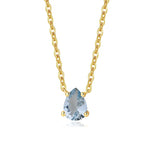


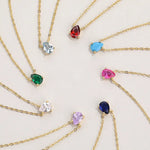
This aquamarine necklace features a soft blue-green teardrop stone pendant in 18K gold over 925 sterling silver. Aquamarine is March's birthstone — named for the color of seawater, it reads clean and calm in a way that works for everyday wear year-round, not just in the birth month. Whether you're searching for gold aquamarine necklace or aquamarine sterling silver necklace, this piece covers both.
Aquamarine (Mohs 7.5–8) is one of the more durable birthstones for daily wear. It's harder than amethyst and most other colored stones in this price range, which means less risk of scratching from regular use. The blue-green color is naturally even without needing heat treatment in most cases — what you see is the stone's actual color.
Our aquamarine necklace uses a lab-created or natural aquamarine stone (noted in product details) set in 925 sterling silver. The teardrop pendant maximizes the blue saturation visible from the front. Gold aquamarine necklace pairing is a classic color combination — the warm metal plays cleanly against the cool stone.
| Detail | Spec |
|---|---|
| Metal Base | 925 Sterling Silver |
| Plating | Sterling Silver |
| Hypoallergenic | Yes — Nickel-Free |
| Finish | High-Polish, Tarnish-Resistant |
| Occasion | March Birthday Gift, Everyday Wear, Gift |
| Price | $35 — Free shipping available |
Aquamarine sits between teal and sky blue — it works with whites, navy, light grey, and ocean-tone palettes. Avoid heavily saturated blues that compete with the stone; instead lean into the contrast with warm-tone outfits (rust, gold, mustard) that make the aquamarine pop.
The teardrop pendant looks best at 16–18" where the stone catches light easily. Pair with gold hoops or simple gold studs to stay in the same metal family. The aquamarine sterling silver necklace reads cooler — pair it with silver accessories for a cohesive look.
Aquamarine necklaces photograph particularly well near water, in natural light, or against light backgrounds. The stone's color has a depth that reads differently in different lighting conditions — a good everyday piece.
Good care habits extend your plating significantly. Remove the piece before the gym, pool, or shower. Sweat, chlorine, and lotions are the main causes of premature wear.
Store it flat in a dry pouch or the original box. When cleaning, use a soft dry cloth — no abrasives, no ultrasonic cleaners, no chemical dips. With this routine, 18K plating over 925 sterling silver holds up well for 1–3 years of daily wear.
If you notice dullness, a jewelry polishing cloth brings it back quickly. Avoid chemical cleaners — they strip plating faster than regular wear does.
Yes. It's crafted from 925 sterling silver with Sterling Silver plating — completely nickel-free and safe for sensitive skin, including freshly pierced piercings.
It's 925 sterling silver with rhodium plating. The gold layer gives you the look and feel of fine jewelry at a fraction of the cost. With proper care, the plating lasts 1–3 years of daily wear.
With proper care, no. Keep it dry, avoid perfume and chlorine, and store in a dry pouch. Sterling silver can tarnish if exposed to air and moisture, but the plating layer significantly slows this.
Remove it before showering, swimming, or exercising. Water and chlorine accelerate plating wear. For occasional splashes, dry it immediately and you'll be fine.
Aquamarine is the birthstone for March. The name comes from the Latin 'aqua marina,' meaning seawater — a reference to its blue-green color. It's a variety of beryl, the same mineral family as emerald, but in a different color range.
Our aquamarine pendant necklace uses either natural aquamarine or lab-created aquamarine — the product details specify which. Both are genuine aquamarine in terms of mineral composition. Lab-created stones offer more color consistency; natural stones may have slight inclusions that add character.
Both are accepted March birthstones (aquamarine is primary). Aquamarine is typically softer in hue — blue-green versus blue topaz's bolder, sometimes electric blue. Aquamarine is also slightly rarer and carries more historical prestige. At this price point, both options offer great value; choose based on the recipient's color preference.
🚚 Shipping
| Free Standard | 3–4 business days via USPS. Always free. |
| Express | 1–3 business days via USPS/UPS. Select at checkout. |
| Same-day dispatch | Order before 12:00 PM PST Mon–Fri and it ships today. |
↩️ Returns & Exchanges
| 30-day returns | Full refund if you're not 100% happy — no questions asked. |
| Free exchanges | Wrong size or initial? We'll swap it at no cost. |
| Prepaid label | Email info@ajluxe.com and we send the label to you. |
💳 Refunds
| Processed in 5–7 days | Once we receive the item, your refund is issued within 5–7 business days. |
| Back to original payment | No store credit, no hidden conditions. |
✨ Care Instructions
| 💧 Water | Remove before swimming, showering, or washing hands. Water is the #1 cause of premature tarnish on gold-plated jewelry. |
| 🌸 Chemicals | Put jewelry on after applying perfume, lotion, and hairspray — not before. Chemicals break down the plating layer over time. |
| 🧽 Cleaning | Wipe gently with a soft dry cloth after each wear to remove skin oils. Never use silver polish, ultrasonic cleaners, or abrasive cloths. |
| 📦 Storage | Store in the included gift box or a soft pouch, away from direct sunlight and humidity. Keep pieces separate to avoid scratches. |
| ⏰ Daily wear | Remove before sleep, gym, and housework. With proper care, 18K gold plating over 925 sterling silver lasts 2–4 years of daily wear. |
Questions? Email info@ajluxe.com — we're happy to help.
A piece she can wear, love, and trust every day.
Safe for sensitive skin, made for all-day comfort.
Tarnish-resistant finish that keeps its shine over time.
Beautifully packaged and ready to give, no extra work needed.
Durable enough for daily wear, special enough for meaningful moments.
This product is part of these collections: