Aquamarine is March's birthstone, and its name says everything about its color: aqua marina, Latin for "water of the sea." The stone ranges from pale sky blue to vivid teal blue-green, evoking the cl…
Aquamarine is March's birthstone, and its name says everything about its color: aqua marina, Latin for "water of the sea." The stone ranges from pale sky blue to vivid teal blue-green, evoking the clearest Caribbean water or the crisp blue of a spring sky. For March birthdays — when winter is breaking and the natural world is transitioning toward spring — aquamarine captures that moment of atmospheric change with remarkable precision. It is a stone that feels like possibility and movement, perfectly suited to the month it represents.
New to aquamarine? Read our complete Aquamarine meaning guide to learn the stone's symbolism, healing properties, and how to choose a quality piece before you buy.
Aquamarine belongs to the beryl mineral family, which also includes emerald, morganite, and heliodor. This family connection is significant: aquamarine shares emerald's crystal structure and basic chemistry but is far more durable in practice. While most emeralds are heavily included and require oiling treatments to maintain their appearance, aquamarine typically forms with excellent natural clarity and no treatment requirements beyond standard heat treatment to remove yellow tones (a universally accepted practice). The result is a stone that is both visually stunning and genuinely wearable every day.
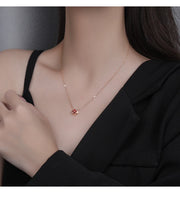
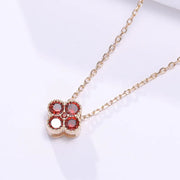
AJLuxe March birthstone jewelry features aquamarine set in 925 sterling silver — a pairing that amplifies the stone's ocean-blue beauty. Silver's cool, bright tone mirrors the water-like quality of aquamarine rather than competing with it. Our March collection includes pendant necklaces and earrings designed to be worn year-round, not just in spring. Whether you are shopping for a March birthday, a spring gift, or simply a stone whose color matches the ocean you love, aquamarine is one of the most versatile and universally flattering colored gemstones available.
| Property | Details |
|---|---|
| Hardness | 7.5–8 Mohs (excellent — more durable than most colored gemstones) |
| Color Range | Pale sky blue to deep teal blue-green; "Santa Maria" deep blue = most prized |
| Meaning | Courage, clarity, calm; traditionally a sailor's lucky stone for safe sea travel |
| Primary Origins | Brazil (most commercial), Pakistan (finest deep blue), Mozambique, Nigeria, Madagascar |
| Care Difficulty | Low — excellent durability; avoid prolonged heat (lightens color); safe for most cleaning |
Aquamarine's color is its defining feature, and the most important consideration when choosing a piece is which shade of blue best suits the recipient. Pale, almost colorless aquamarine has a delicate, ethereal quality — it reads as subtle and refined. Medium blue aquamarine is the classic "ocean blue" that most people picture when they think of the stone, and it is the most popular commercially. Deep "Santa Maria" blue aquamarine — named after the Santa Maria de Itabira mine in Brazil where the finest specimens originate — commands premium prices for its saturated, vivid color that approaches sapphire territory without sapphire's price tag.
At 7.5–8 Mohs, aquamarine is one of the most durable colored gemstones you can choose for everyday jewelry. It outperforms amethyst (Mohs 7), tourmaline (7–7.5), and garnet (6.5–7.5) in scratch resistance. For anyone who wants a colored stone necklace or earrings they can wear daily without worry, aquamarine is an outstanding choice. Sterling silver settings complement aquamarine's blue-green tones most naturally — the coolness of silver echoes the coolness of the stone. For March birthday gift-giving, a simple oval or pear-cut aquamarine pendant is the most universally flattering design choice, as the elongated shape enhances the stone's color depth.
March birthdays arrive during one of the most energetically optimistic times of year — the transition from winter to spring. Aquamarine mirrors this perfectly: it carries a sense of clarity and fresh beginning. A March birthday gift of aquamarine jewelry is not just a birthstone choice; it is a visual representation of the new season beginning. For the recipient who is hard to shop for, aquamarine has the advantage of being both personally meaningful (their birthstone) and universally aesthetic (the ocean-blue color works with almost any wardrobe).
Aquamarine pairs particularly well with sterling silver, making AJLuxe's 925 silver collection a natural fit for March gifts. For someone who already has aquamarine jewelry, consider earrings if they have a pendant, or a pendant if they have earrings — the blue tone is versatile enough to be worn together. For a layered gift, aquamarine pairs beautifully with clear quartz or blue topaz in a necklace stack: the three stones occupy a complementary blue-to-white range that reads as intentional and polished. Aquamarine also makes an excellent gift for a March Pisces (February 19 – March 20) or Aries (March 21 – April 19) birthday, as the stone's oceanic associations connect with Pisces's water sign energy.
No. Aquamarine and blue topaz are completely different minerals that happen to share blue color ranges. Aquamarine is beryl (beryllium aluminum silicate), rating Mohs 7.5–8, typically occurring in a natural blue-green color that is then heat-treated to remove yellow tones. Blue topaz is aluminum fluorosilicate, rating Mohs 8, and is almost universally irradiated and heat-treated to achieve its blue color — naturally occurring blue topaz is extremely rare and pale. They look similar in some shades but differ in their optical properties, refractive index, crystal structure, and luster. In jewelry, aquamarine is generally considered more prestigious and commands higher prices per carat than blue topaz of similar size and quality.
The most prized aquamarine color is "Santa Maria blue" — a deep, vivid, slightly greenish blue with strong saturation and no visible grey or pale undertones. This color grade is named after the Santa Maria de Itabira mine in Minas Gerais, Brazil, where it was first recognized. Comparable deep blue aquamarine from Pakistan and Mozambique is sometimes called "Santa Maria Africana" or simply "top blue." For everyday jewelry wear, medium blue aquamarine offers the best combination of visual impact and value — deep enough to read clearly as a colored stone while remaining accessible in price. Very pale aquamarine is beautiful in a delicate, understated way but can appear nearly colorless in some lighting conditions.
Yes. Aquamarine and emerald are both members of the beryl mineral family. The pure form of beryl is colorless (goshenite); trace elements produce each color variety. Chromium and vanadium produce emerald's green. Iron in a different oxidation state produces aquamarine's blue-green. Other beryl varieties include morganite (pink, colored by manganese), heliodor (yellow, colored by iron), and red beryl (extremely rare). Despite their family relationship, aquamarine and emerald behave very differently as jewelry stones — aquamarine is typically clear and durable, while emerald is usually heavily included and requires oil treatment to maintain its appearance.
Yes, aquamarine handles water well. At Mohs 7.5–8 with no special treatments that water can dissolve or dislodge, aquamarine is one of the safer gemstones for occasional water exposure. Short contact with water — washing hands, light rain — is completely fine. For swimming, particularly in chlorinated pools or salt water, it is better practice to remove jewelry regardless of the stone, as both chlorine and salt can damage metal settings over time even when the stone itself is unaffected. Aquamarine's name ("sea water") reflects its historical association with sailors and ocean travel — and its physical durability in water environments supports that symbolism practically.
Aquamarine has been carried as a protective talisman by sailors and seafarers for centuries across multiple cultures. Ancient Roman sailors believed aquamarine guaranteed a safe voyage and carved mermaids or Neptune's trident into aquamarine stones as amulets. Greek sailors called it the "treasure of mermaids" and kept aquamarine pieces aboard ships. The stone was thought to calm waves, protect against sea monsters, and ensure calm weather during crossing. Medieval sailors believed aquamarine could predict weather changes — if the stone's color deepened, storms were coming. Whether or not you believe in talismans, aquamarine's ocean-blue color creates a beautiful symbolic connection to water, travel, and safe passage that remains relevant for March birthday gifts today.
Generally, no. Fine sapphire — particularly Kashmir, Burma, or Ceylon blue sapphire — commands significantly higher prices per carat than aquamarine of equivalent size. A top-quality 1-carat unheated Kashmir sapphire can fetch $5,000–$50,000, while a comparable 1-carat "Santa Maria" aquamarine might sell for $50–$300. However, very large, high-quality aquamarine stones can reach substantial prices — the largest gem-quality aquamarines ever found rival the size of any sapphire. For everyday jewelry, aquamarine delivers a vivid blue color that approaches the beauty of fine sapphire at a fraction of the cost, making it one of the best value propositions in colored gemstones.
Aquamarine is the primary modern birthstone for March. It was officially adopted as March's birthstone by the American National Retail Jewelers Association in 1912 and has been universally recognized since then. The traditional birthstone for March was bloodstone (a dark green jasper with red specks), which remains an alternative birthstone for March in some lists. However, aquamarine is the overwhelmingly dominant choice for March birthstone jewelry today, with bloodstone rarely seen in modern birthstone collections. Aquamarine is also associated with the Pisces zodiac sign (February 19 – March 20) and appears on many zodiac stone lists.
No. At Mohs 7.5–8, aquamarine is harder than most everyday materials and significantly harder than common abrasives that jewelry encounters. It will not be scratched by fingernails (Mohs 2.5), coins (Mohs 3.5), or typical household surfaces. It can be scratched by quartz-containing materials (Mohs 7) over time and by harder gemstones like sapphire (Mohs 9) or diamond (Mohs 10). For practical purposes, aquamarine in a pendant or earrings is one of the most scratch-resistant colored gemstone choices available — more durable than amethyst, garnet, turquoise, opal, or tourmaline. Store it separately from harder stones to prevent scratching, and clean with a soft cloth to remove abrasive particles before polishing.