November has two birthstones: citrine (the traditional choice) and yellow topaz (the modern alternative). Both are warm, golden-yellow gemstones that mirror the season's signature color palette — the…
November has two birthstones: citrine (the traditional choice) and yellow topaz (the modern alternative). Both are warm, golden-yellow gemstones that mirror the season's signature color palette — the amber light of November afternoons, the last warm tones of autumn foliage before winter arrives, the harvest gold of Thanksgiving tables. No birthstone month is as seasonally literal as November: the yellow-to-orange warmth of both citrine and topaz is the visual language of the season itself.
New to citrine? Read our complete Citrine meaning guide to learn the stone's symbolism, healing properties, and how to choose a quality piece before you buy.
Citrine is a variety of quartz colored by iron impurities — the same mineral family as amethyst, with which it shares an interesting relationship. When amethyst is heated above approximately 300°C, it changes color permanently from purple to yellow-orange, becoming citrine. This transformation happens naturally underground in some deposits (natural citrine, which is rarer and pale yellow to gold in color) and is replicated industrially on a wide scale (heat-treated amethyst, which produces the more common golden-orange and deep amber citrine seen in most commercial jewelry). The warm golden-orange "Madeira citrine" — named after the color of Madeira wine — is one of the most popular commercial citrine colors and almost always heat-treated amethyst. This is not a deception; it is universally disclosed in the gem trade and the resulting stone is genuinely beautiful regardless of its origin as treated amethyst.
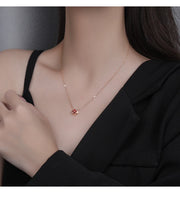
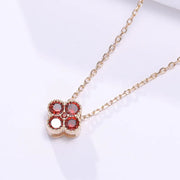
AJLuxe November birthstone jewelry brings citrine's warm golden energy to 925 sterling silver settings. Our November collection features yellow-to-amber citrine pieces designed for everyday wear — the seasonal warmth of the stone makes it one of the most wearable and versatile colored stones in the cooler months. Whether you are shopping for a November birthday, a Thanksgiving gift, or simply someone who loves autumn's warm color palette, citrine jewelry delivers that energy in a durable, beautiful, and accessible form.
| Property | Details |
|---|---|
| Citrine Hardness | 7 Mohs (quartz — safe for daily wear; no special care required) |
| Yellow Topaz Hardness | 8 Mohs (excellent hardness, but note: perfect cleavage — avoid direct hard knocks) |
| Color Range | Pale lemon yellow → warm golden → deep amber-orange (Madeira) → brownish orange |
| Meaning | Abundance, warmth, joy, prosperity; the "merchant's stone" of the crystal healing tradition |
| Care Difficulty | Citrine: low. Yellow topaz: low for hardness, but protect from knocks (cleavage risk). |
Citrine's warm color range gives you genuine style choices within the single birthstone. Pale lemon citrine reads as bright, modern, and fresh — it works beautifully in minimalist silver settings and photographs with a clean luminosity. Warm golden citrine is the most classic choice — it sits in the center of the amber range and is visually warm without being heavy. Deep Madeira citrine — the darkest, most saturated range — is dramatic and rich, with an almost whiskey-like quality that photographs beautifully in yellow gold settings. For a November birthday gift, Madeira citrine in gold-plated sterling makes a genuinely luxurious-looking piece at accessible prices.
At Mohs 7, citrine is the same hardness as amethyst and slightly harder than glass — suitable for daily wear in pendants and earrings with no special care requirements. Unlike some colored stones (emerald, opal, pearl), citrine requires no special storage conditions, no humidity management, and no protection from household chemicals. A simple wipe with a soft cloth and occasional soap-and-water cleaning is all it needs. For someone looking for a low-maintenance daily-wear colored stone with beautiful autumn color, citrine is one of the best choices available across all birthstone months.
November birthdays arrive in the pre-holiday season — a transitional time between autumn's end and winter's beginning, bookended by Thanksgiving and the approach of December. Citrine jewelry sits perfectly in this seasonal context: its warm amber-to-gold tones evoke harvest, gratitude, and the gathering warmth of the season. A citrine pendant or earrings in sterling silver makes a personal, seasonally resonant November birthday gift that does not feel like a pre-holiday placeholder.
For a Scorpio birthday (before November 21), citrine's association with transformation and personal power resonates with Scorpio's themes of depth and change. For a Sagittarius birthday (from November 22), citrine's optimism and abundance energy connects with Sagittarius's expansive, enthusiastic worldview. For milestone November birthdays, Madeira citrine — with its deeper, richer amber — makes a more substantial-looking gift than pale citrine while remaining within accessible price ranges. For a layered gift that tells the full November story, combine a citrine pendant with a brief explanation of citrine's amethyst relationship — many people find the heat-transformation story fascinating, and it adds depth to the gift.
Chemically, yes — both are quartz (silicon dioxide), identical in composition and crystal structure. The difference is color: amethyst is purple (from iron in one oxidation state plus natural irradiation); citrine is yellow-to-orange (from iron in a different oxidation state). When amethyst is heated above approximately 300–400°C, its iron shifts oxidation state and the color changes permanently from purple to yellow-orange, producing what is sold as citrine. Most commercial citrine on the market today is heat-treated amethyst; natural citrine (which forms yellow from geological heating underground) is rarer and typically pale yellow. Ametrine is the bicolor variety — half amethyst, half citrine — that occurs in a single crystal where partial natural heating created the transition.
Most commercial citrine is heat-treated amethyst because natural citrine deposits are relatively limited and natural citrine tends to be pale yellow rather than the vivid golden-orange that consumers prefer. Amethyst, by contrast, is one of the most abundant and affordable colored gemstones in the world — particularly from Brazil's extensive deposits. By heat-treating pale or low-quality amethyst, manufacturers can produce large quantities of vivid golden-to-amber citrine at low cost. The treatment is stable and permanent — treated citrine does not revert to purple. It is universally disclosed in the gem trade and entirely accepted. The resulting stone is beautiful regardless of its origin, and the color it produces (particularly Madeira orange) is prized in its own right.
Madeira citrine refers to the deepest, most saturated orange-to-amber range of citrine color — a rich, warm tone comparable to the color of Madeira wine (the fortified Portuguese wine after which it is named). Madeira citrine shows a deep golden-orange with brownish undertones that gives it a warmth and richness that paler citrine lacks. It is one of the most prized commercial citrine colors and commands higher prices than pale lemon citrine. Most Madeira citrine is heat-treated amethyst that was heated at higher temperatures or from specific deposits that produce the deeper amber range. In yellow gold settings, Madeira citrine creates a uniformly warm, luxurious aesthetic that reads as high-quality even at accessible price points.
Yes — citrine is one of the most practical colored stones for everyday wear. At Mohs 7 (quartz), it is harder than glass and resistant to most household surface scratching. It has no cleavage planes (unlike topaz), making it chip-resistant. Its heat treatment (where applicable) is fully stable and does not deteriorate with regular wear. Citrine is not sensitive to acids, chemicals, or humidity changes the way opal, pearl, or emerald are. For pendants and earrings, citrine requires only regular soft-cloth cleaning. For rings, citrine is a reasonable choice for casual wear, though harder gems (sapphire, tourmaline) are more scratch-resistant over time. No other November birthstone alternative matches citrine's combination of beauty, practicality, and accessibility.
Citrine carries powerful associations with abundance, joy, and prosperity. In crystal healing and metaphysical traditions, citrine is called the "merchant's stone" or the "success stone" — it is traditionally kept in cash registers and wallets to attract financial abundance. The warm yellow-to-orange color connects it to solar energy, positivity, and personal power. In November's context, citrine aligns with harvest season energy — the gathering of abundance, gratitude at Thanksgiving, and the warm light of the season's end. Unlike many crystals believed to absorb negative energy (requiring regular cleansing), citrine is said in crystal lore to transmute negative energy directly into positive — one of the few stones considered "self-cleansing" in metaphysical belief systems.
No. Yellow topaz and citrine are completely different minerals that share yellow color. Citrine is quartz (silicon dioxide, Mohs 7). Yellow topaz is aluminum fluorosilicate (Al₂SiO₄(F,OH)₂, Mohs 8). Despite looking similar in some color ranges, they have different refractive indices, densities, and crystal structures. They behave differently as jewelry stones: topaz's Mohs 8 hardness is an advantage, but its perfect cleavage (an internal structural plane where the crystal breaks cleanly) makes it chip-prone in a way citrine is not. In daylight, skilled gemologists can often distinguish them by their optical properties; under normal retail conditions, they look very similar to untrained observers.
Imperial topaz is the rarest and most valuable variety of topaz — a warm orange-to-orange-pink color found primarily in the Ouro Preto region of Minas Gerais, Brazil. The name reflects both the quality (imperial = finest) and the historical association with the Russian royal family in the 18th and 19th centuries, who prized pink topaz. Imperial topaz differs from "yellow topaz" (which is common and affordable) and "blue topaz" (which is almost always colorless topaz irradiated to blue) by its naturally occurring orange-to-pink color, rarity, and significant premium price. Genuine natural imperial topaz at fine quality can cost hundreds to thousands per carat. "Yellow topaz" sold as November birthstone jewelry is typically the more common, more affordable yellow-to-golden variety rather than true imperial topaz.
Yes. Citrine is the gemological name for yellow-to-orange quartz. All citrine is quartz, and all yellow/orange gem-quality quartz is citrine. Smoky quartz (grey-brown), rose quartz (pink), amethyst (purple), prasiolite (green), and citrine (yellow-orange) are all quartz varieties differentiated by color. "Yellow quartz" is sometimes used as a generic descriptor, but in the gem trade, gem-quality yellow quartz is always called citrine. The name "citrine" comes from the French citrin (lemon-colored), which was applied to the gemstone in the 14th century for its lemon-yellow natural color — before heat treatment was used to produce the deeper golden and amber ranges now more common in commercial citrine.