


Last updated: June 2026
When you hold a deep red garnet next to a fine ruby, it's almost impossible to tell them apart with the naked eye. That's the garnet vs ruby dilemma that trips up even experienced jewelry shoppers. Both stones flash vivid crimson, both look spectacular in gold settings, and both carry centuries of symbolic meaning. Yet they differ dramatically in price, hardness, rarity, and chemical makeup. This guide breaks down every key difference so you can make a confident choice.

Quick answer: Garnet vs ruby: garnet is a silicate mineral family that comes in many colors (most commonly deep red), while ruby is a corundum gemstone colored by chromium. Rubies score 9 on the Mohs hardness scale and command premium prices — often $500–$5,000+ per carat for fine specimens — whereas garnets typically sell for $5–$150 per carat. For everyday red gemstone jewelry without a luxury price tag, garnet is the practical choice.
Garnet vs Ruby: Key Differences at a Glance
| Property | Garnet | Ruby | Verdict |
|---|---|---|---|
| Appearance / Color | Deep red to brownish-red, sometimes orange-red; typically less saturated | Vivid pure red to pinkish-red; "pigeon blood" red is the most prized | Ruby wins for pure red saturation |
| Price Range | $5–$150 per carat; fine specimens up to $500/ct | $500–$5,000+ per carat; Burmese ruby can exceed $10,000/ct | Garnet wins on value |
| Hardness (Mohs) | 6.5–7.5 | 9.0 | Ruby wins for scratch resistance |
| Durability | Good; may scratch over years of daily wear | Excellent; second only to diamond and moissanite | Ruby wins for longevity |
| Rarity | Common; found on every continent | Rare; fine quality extremely scarce | Ruby is rarer |
| Best For | Budget-conscious buyers, January birthstone, everyday pieces | Engagement rings, heirlooms, July birthstone, investment pieces | Depends on budget and intent |
| Sparkle / Effect | Vitreous to resinous luster; some andradite garnet shows dispersion | Strong vitreous luster; can show asterism (star effect) | Ruby edges ahead for luster |
| Origin / Formation | Metamorphic and igneous rocks; major sources: India, Africa, USA | Metamorphic marble; top sources: Myanmar, Mozambique, Thailand | Both ethically sourceable |
| Overall Value | High value for money; accessible luxury | Premium investment; holds or appreciates in value | Garnet for budgets; ruby for legacy |
Shop Garnet and Ruby Birthstone Necklaces at AJLuxe — Shop Our Red Garnet Pendant Necklace → →
Ready to shop? Browse all garnet necklaces and birthstone jewelry in 925 sterling silver — every piece hypoallergenic, gift-ready, and backed by our 30-day returns.
What Is Garnet?
Garnet isn't a single mineral — it's a family of silicate minerals that share a similar crystal structure but vary widely in chemistry and color. The most familiar variety is almandine garnet, which shows the classic deep red hue most people picture. Other species include pyrope (blood red), spessartite (orange-red), tsavorite (green), and demantoid (brilliant green with fire that rivals diamond).
According to the Gemological Institute of America (GIA), garnet has been used in jewelry since the Bronze Age. Ancient Egyptians inlaid garnet into gold jewelry; Roman soldiers wore signet rings set with garnet. The name comes from the Latin granatum, meaning pomegranate seed — a nod to the stone's red color and rounded crystal habit.
Garnet forms in metamorphic and igneous environments where high heat and pressure alter existing minerals. It's found on every continent, with major commercial deposits in India, Brazil, Madagascar, and Tanzania. This widespread availability keeps prices reasonable, making garnet accessible to a broad range of jewelry buyers. Red garnet is January's birthstone, and it carries strong associations with love, loyalty, and regeneration. On the Mohs scale, garnet sits at 6.5–7.5 — solid enough for earrings and pendants, though rings see more wear risk over time.
What Is Ruby?
Ruby is the red variety of corundum, an aluminum oxide mineral. Its vivid color comes from trace amounts of chromium replacing aluminum atoms in the crystal lattice. The more chromium, the more saturated and intense the red. The finest rubies show what the gem trade calls "pigeon blood" red — a pure, slightly bluish red with exceptional saturation and no visible secondary hues.
The Jewelers of America ranks ruby among the four "precious" gemstones alongside diamond, emerald, and sapphire (blue corundum). That status reflects both rarity and cultural value: fine ruby commands higher prices per carat than nearly any other colored stone. A 5-carat unheated Burmese ruby sold at auction in 2015 for over $1.1 million per carat — a record for any colored gemstone at the time.
Ruby forms in metamorphic marble deposits and some basalt rocks. Myanmar (Burma) has historically produced the most prized stones; Mozambique now rivals Burma for output and quality. Thailand, Sri Lanka, and Vietnam are also significant sources. Ruby is July's birthstone, symbolizing passion, protection, and prosperity. With a Mohs hardness of 9 — second only to diamond and moissanite — ruby handles daily wear with ease. Most commercial rubies are heat-treated to improve color and clarity, a standard practice fully disclosed by reputable dealers.
Garnet vs Ruby: Appearance and Color
This is where shoppers get confused most often. Both stones can look nearly identical in low light. Under daylight or a gemological loupe, the differences become clearer.
Garnet typically shows a warmer, slightly brownish-red with an orange undertone. Hold it under incandescent light and you'll often see reddish-orange flashes. The color is rich but rarely reaches the pure, glowing red of a top-grade ruby. Almandine garnets can appear almost purplish-red in certain lights, while pyrope garnets lean toward a darker, blood-red.
Ruby's signature trait is its "fluorescence" under UV light — chrome causes it to glow brightly red, a property garnet does not share. Under natural daylight, a quality ruby appears intensely saturated with a pure red that almost seems to light up from within. This fluorescent glow is one of the easiest ways gemologists distinguish the two without lab equipment. Ruby also tends to show stronger color zoning, with lighter and darker red bands visible under magnification. Garnet typically looks more uniform in color distribution.
If you're buying online, request photos in multiple lighting conditions. A gem that looks ruby-red in one photo but brownish in another is almost certainly garnet.
Price Comparison: Garnet vs Ruby
Price is the starkest difference between these two stones. Garnet is one of the most affordable red gemstones available, with commercial-grade stones running $5–$50 per carat and fine specimens reaching $100–$500 per carat for clean, vivid material. A garnet pendant necklace typically costs $30–$300 depending on carat weight and metal quality.
Ruby pricing starts where garnet ends. A 1-carat commercial ruby with visible inclusions and heat treatment might sell for $300–$800. A fine, unheated 1-carat Burmese ruby with excellent color can fetch $3,000–$10,000 or more. Jewelry set with fine ruby — say a 2-carat ruby pendant in 18k gold — can run $5,000–$25,000 at retail. The price gap widens significantly with carat size: ruby prices scale exponentially, while garnet scales more linearly.
Lab-grown rubies are a middle-ground option. They carry the same chemical structure as natural ruby but cost 80–90% less — typically $20–$100 per carat. They're an excellent choice if you want genuine corundum hardness and color without the precious stone price tag.
Which Is Better for Jewelry?
For everyday earrings and pendants, both stones perform well. Garnet at 6.5–7.5 Mohs handles routine wear without much risk of chipping, though it will pick up surface scratches over years of daily use. Ruby at Mohs 9 holds its polish far longer and resists abrasion from everyday dust and skin contact.
For rings — especially engagement rings or pieces worn every day — ruby's superior hardness gives it a clear advantage. Garnet rings are beautiful but better suited for occasional wear rather than constant contact with hard surfaces. If you choose garnet in a ring, a bezel setting (which protects the stone's edges) is smarter than a prong setting.
Both stones clean up well with warm soapy water and a soft brush. Ultrasonic cleaners are generally safe for ruby but should be avoided for garnets with fractures or inclusions. Neither stone should be stored loose with diamonds, which can scratch them.
Spiritual Meaning and Healing Properties
Both garnet and ruby carry powerful symbolic traditions across cultures.
Garnet has been associated with protection, vitality, and grounding energy for thousands of years. Many traditions link it to the root chakra — the energy center associated with stability and physical strength. Warriors historically wore garnet into battle believing it would protect them and strengthen their courage. Today, crystal enthusiasts use garnet to support motivation, passion, and emotional balance.
Ruby's spiritual symbolism centers on passion, life force, and abundance. In Hindu tradition, ruby (called "ratnaraj," meaning king of gemstones) was considered the most precious of all stones and placed on altars as an offering. Medieval Europeans believed ruby protected its wearer from plague and danger. In modern metaphysical practice, ruby is linked to the heart chakra and used to amplify love, confidence, and zest for life.
If you're drawn to red gemstone jewelry for its energetic properties, garnet suits grounding and protection intentions while ruby aligns with passion and heart-centered work. Want to explore more? See our guides on healing crystals for beginners and birthstone necklace meanings for deeper context.
For the full story on ruby's history, symbolism, and significance, read our complete ruby meaning guide.
Related reading: Dopamine dressing jewelry guide.
Related reading: The 10 Rarest Gemstones in the World (2026).
Frequently Asked Questions
Can you tell garnet from ruby without lab equipment?
Yes, with a few simple tests. Shine a UV flashlight at the stone — ruby glows bright red due to chromium fluorescence, while garnet shows little to no glow. Hold the stone under bright daylight: ruby appears pure red, while garnet often shows a brownish or orange undertone. A strong jeweler's loupe can reveal color zoning and crystal inclusions that differ between the two species. If you're still unsure, a gemologist with a refractometer can definitively separate them in minutes.
Is garnet a fake ruby?
No — garnet is a completely different mineral species, not an imitation. Red garnets are natural gemstones with their own distinct chemistry, properties, and value. They're not marketed as rubies by reputable sellers. The confusion arises because both stones share similar red color, but garnet has its own legitimate identity as a prized and beautiful gemstone in its own right.
Which stone is the January birthstone?
Garnet is the traditional and modern birthstone for January. It's been the official January birthstone for centuries, recognized by major gemological organizations including the American Gem Society. Ruby, by contrast, is July's birthstone. If you're buying a January birthday gift, garnet is the correct and meaningful choice.
Are lab-grown rubies real rubies?
Yes. Lab-grown rubies are chemically and physically identical to natural rubies — both are corundum (aluminum oxide) colored by chromium. The FTC requires sellers to disclose when a ruby is lab-grown, but the stone itself is genuine corundum. Lab rubies cost significantly less than natural rubies and are a practical option if you want ruby's hardness and color without the natural-stone price premium.
How much does a real ruby necklace cost?
Prices vary widely based on ruby quality and metal type. A small ruby pendant with a 0.25–0.5 carat natural heat-treated ruby in sterling silver typically costs $150–$600. A 1-carat fine ruby in 14k gold runs $1,500–$5,000+. Unheated Burmese rubies command the highest premiums. Lab-grown ruby necklaces offer ruby's look and hardness at a fraction of the cost — often $100–$400 for comparable carat weight.
Is garnet cheaper than ruby?
Yes, substantially. Garnet typically sells for $5–$150 per carat at retail, while even modest quality natural rubies start at $300–$500 per carat and fine specimens can exceed $5,000 per carat. That means garnet can cost 10–100 times less than comparable-looking ruby. For shoppers who want deep red gemstone jewelry without a luxury budget, garnet delivers exceptional visual impact per dollar spent.
Which red gemstone is best for an engagement ring?
Ruby is the better choice for an engagement ring. With a Mohs hardness of 9, ruby withstands daily wear far better than garnet (6.5–7.5 Mohs). Engagement rings endure constant contact with surfaces, water, and other materials, so durability matters enormously. If budget is a concern, a lab-grown ruby or a garnet in a protective bezel setting are reasonable alternatives to a fine natural ruby.
Do garnets and rubies come in colors other than red?
Garnet certainly does — it occurs in orange (spessartite), green (tsavorite and demantoid), yellow, pink, and even colorless varieties. The red form is most common, but garnet is one of the most color-diverse gemstone families. Ruby, by definition, is always red: the red variety of corundum. Other corundum colors are classified as sapphire, so "blue ruby" or "green ruby" are misnomers — those would be sapphires.
How do you care for garnet jewelry?
Clean garnet jewelry with warm water, mild dish soap, and a soft toothbrush. Rinse thoroughly and dry with a soft cloth. Avoid ultrasonic cleaners if your stone has visible inclusions or fractures — vibration can worsen existing cracks. Store garnet pieces separately from diamonds and hard gemstones to prevent scratching. Remove garnet rings before activities like gardening, exercise, or cleaning with harsh chemicals to extend the stone's life.
Is ruby rarer than garnet?
Yes, significantly. Garnet is one of the most abundant gemstone minerals on Earth, found on every continent in large commercial quantities. Fine quality ruby — especially unheated, gem-grade material from Myanmar — is among the rarest gemstones in the world. The GIA notes that fine rubies are rarer than diamonds of comparable quality. This rarity directly drives ruby's much higher market price compared to garnet.
Final Thoughts
The garnet vs ruby choice comes down to your priorities. If you want deep red color with strong symbolism and an accessible price, garnet delivers beautifully — it's a genuine gemstone with centuries of history, not a lesser substitute. If you want the hardest, rarest, most prestigious red stone available with long-term value, ruby is in a class of its own. Either way, a well-crafted piece in quality metal will turn heads. Ready to find yours? Shop Garnet and Ruby Birthstone Necklaces at AJLuxe →
All third-party trademarks, brand names and product names are the property of their respective owners. AJLuxe is not affiliated with, endorsed by, sponsored by, or otherwise connected to any third-party brand referenced in this article. Brand names are used solely for accurate comparative reference, and material descriptions reflect each brand's own published product specifications at the time of writing.
You Might Also Like
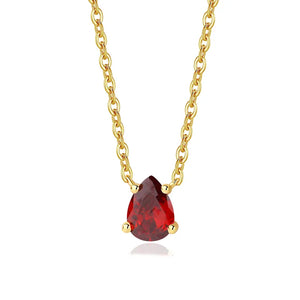

The piece they're describing → Garnet Pendant Necklace for Women — Red Garnet Teardrop, 925 Sterling Silver
Personalize Yours


