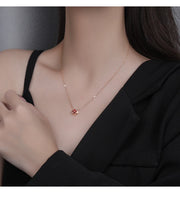
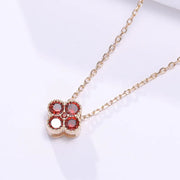
Amethyst is February's birthstone and one of the most universally beloved gemstones in the world. Its color range — from pale lilac to deep Siberian purple — makes it immediately recognizable, and it…
Amethyst is February's birthstone and one of the most universally beloved gemstones in the world. Its color range — from pale lilac to deep Siberian purple — makes it immediately recognizable, and its rich history spans ancient Greece, medieval Europe, and the royal courts of both East and West. The word amethyst comes from the ancient Greek amethystos, meaning "not intoxicated" — the Greeks believed that drinking wine from an amethyst vessel would prevent drunkenness. Whether or not you believe in its powers, amethyst's color is undeniably captivating.
New to amethyst? Read our complete Amethyst meaning guide to learn the stone's symbolism, healing properties, and how to choose a quality piece before you buy.
Amethyst is a variety of quartz, which makes it one of the most abundant colored gemstones on earth — and consequently one of the most accessible at every price point. Before large deposits were discovered in Brazil in the 19th century, amethyst was considered as precious as ruby and sapphire, worn exclusively by royalty and clergy. Today, its availability makes it the ideal birthstone: you can own genuinely beautiful amethyst without a significant budget. The finest amethyst comes from Zambia and Uruguay, where deposits yield deep, saturated purple with outstanding clarity.
AJLuxe February birthstone jewelry features amethyst set in 925 sterling silver — a pairing that heightens the purple tones beautifully. The cool white of silver complements purple the way few other metals can. Our February collection includes pendant necklaces and earrings designed for everyday wear. At Mohs 7, amethyst is durable enough for regular use in non-ring jewelry. Whether you are born in February, celebrating a Valentine's Day birthday, or simply drawn to amethyst's calming purple energy, these pieces are designed to be worn and noticed.
| Property | Details |
|---|---|
| Hardness | 7 Mohs (quartz — good for daily wear in pendants and earrings) |
| Color Range | Pale lilac to deep Siberian purple; red-purple and blue-purple variations |
| Meaning | Clarity, peace, sobriety, protection, wisdom |
| Primary Origins | Brazil (largest volume), Uruguay (deepest purple), Zambia, South Korea |
| Care Difficulty | Low to moderate — avoid prolonged direct sunlight (fades color); safe for everyday wear |
Amethyst's greatest strength as a jewelry stone is its versatility. The color purple reads as both regal and romantic, both spiritual and fashion-forward depending on how it is set. For a February birthday gift, the question is usually not whether amethyst is right but which shade of amethyst suits the recipient best. Pale lilac amethyst is soft and feminine, working beautifully with rose gold or silver. Deep Siberian purple amethyst is dramatic and saturated — it makes a statement in a simple solitaire pendant. Medium purple with reddish undertones (sometimes called "Uruguayan amethyst") is the most classic choice and flatters the widest range of skin tones.
Setting matters for amethyst. Sterling silver is the traditional match and the most popular — it heightens the coolness of purple tones. Yellow gold or gold-plated sterling creates a warmer, more vintage feel that some amethyst wearers prefer. Avoid heavy prong settings that cover too much of the stone; amethyst's beauty lies in how light moves through it, and open bezels or minimal prong work let that translucency show. For everyday wear, a simple bezel-set amethyst pendant or small drop earrings are the most practical choice — they maximize beauty while minimizing the risk of catching on fabric or clothing.
February birthdays have a natural overlap with Valentine's Day, and amethyst plays beautifully into that calendar. Unlike red roses or heart-shaped diamonds (which read as clearly romantic), amethyst occupies a warmer, more personal space. Purple is associated with love and royalty without being exclusively romantic — it works as a gift for a mother, sister, best friend, or partner without sending the wrong message. This versatility makes amethyst one of the most gift-safe colored gemstones available.
For a Valentine's Day birthday specifically, consider amethyst layered with rose quartz or clear quartz — the February birthstone combined with the "love stone" and the clarity stone makes a meaningful trio. A simple amethyst pendant necklace is the most universally wearable option. For someone who already has amethyst jewelry, upgrade the size or setting — a larger faceted pear or oval amethyst in a pendant makes a noticeable difference over a small round stone. Sterling silver amethyst earrings (studs or drops) are an ideal companion gift alongside a pendant for a complete February birthday set.
Amethyst's purple color comes from iron impurities within the quartz crystal lattice, combined with natural irradiation during the stone's formation. The depth of purple depends on the concentration of iron and the specific type of irradiation the stone received over millions of years. Stones from Zambia and certain Uruguayan deposits tend toward deep, saturated purple because their geological conditions concentrated iron at higher levels. Brazilian amethyst, which accounts for most commercial supply, ranges from pale lavender to medium purple. Heat treatment is also a factor — amethyst turns yellow-to-orange when heated (becoming citrine), and some lighter amethyst is left as-is while deeper stones are selectively heat-treated for consistency.
Yes, prolonged exposure to direct sunlight can cause amethyst to fade over time. The iron-based color centers that give amethyst its purple hue are sensitive to UV radiation and heat. A single day in sunlight will not ruin your amethyst piece, but years of daily sun exposure — such as wearing an amethyst ring while driving with your hand on a sun-lit steering wheel — can gradually lighten the color from deep purple toward pale lavender. The fix is simple: take off amethyst jewelry before spending extended time in direct sun, and store it away from windows. Under normal indoor and shaded outdoor wear, amethyst holds its color reliably.
Yes. Amethyst is the purple variety of quartz (silicon dioxide). All amethyst is quartz, but not all purple quartz is necessarily high-quality amethyst — the term "amethyst" specifically refers to purple quartz with sufficient saturation and clarity to be used as a gemstone. Ametrine is a bicolor variety where amethyst (purple) and citrine (yellow) occur in the same stone — half and half — and it is also quartz. Rose quartz is the pink variety. Smoky quartz is grey-brown. Clear quartz is colorless. Amethyst's relationship to citrine is particularly interesting: they are chemically identical, and the only difference is the iron oxidation state that produces purple versus yellow color.
Both amethyst and rose quartz are varieties of quartz, but they differ in color, cause of color, and crystalline structure. Amethyst is purple, colored by iron impurities and natural irradiation. Rose quartz is pink, colored by microscopic inclusions of a pink fibrous mineral called dumortierite (or sometimes titanium and iron at trace levels). Amethyst typically forms as large, well-formed crystals with good clarity — suitable for faceting. Rose quartz usually forms in massive form without distinct crystal structure, and is commonly translucent rather than transparent. For jewelry, amethyst facets brilliantly and shows strong color when cut. Rose quartz is often cut as cabochons (domed, non-faceted) to showcase its soft, milky translucency.
Yes, in pendants and earrings. At Mohs 7, amethyst is harder than most everyday abrasives — including household dust, which rates around Mohs 7 as well. For pendants and earrings that do not take direct impacts, amethyst is entirely safe for daily wear. For amethyst rings, note that quartz can accumulate surface scratches over years from household dust particles, gradually reducing its polish. If you wear an amethyst ring daily, expect to have it professionally re-polished every few years to restore its brilliance. For non-ring jewelry, amethyst requires only simple soft-cloth cleaning and storage away from direct sunlight.
In crystal healing traditions, amethyst is associated primarily with the crown chakra (Sahasrara) — the energy center located at the top of the head, associated with higher consciousness, spiritual connection, and mental clarity. Purple is universally the crown chakra color. Amethyst is also associated with the third eye chakra (Ajna), located between the eyebrows, which governs intuition and insight. Wearing amethyst as a pendant near the throat and chest, or as earrings near the head, is believed by crystal practitioners to enhance meditation, promote calm focus, and support spiritual awareness. Whether or not you subscribe to crystal healing beliefs, amethyst's calming purple color has a well-documented psychological association with calm and wisdom.
Amethyst does not show color change in the way alexandrite does (green-to-red shift between daylight and incandescent light). However, amethyst's purple can read differently depending on light source. Under daylight or fluorescent light, amethyst shows more blue-purple. Under incandescent or warm LED light, the same stone may appear more red-purple. This lighting-based shift is subtle — not a true color change, just the visual effect of different light spectra on a purple stone. More dramatically, amethyst undergoes permanent color change when heated above 300–400°C, turning yellow-orange (citrine) or green (prasiolite). This is intentional when done in gem processing, not accidental under normal wear.
Yes — and it is arguably a better Valentine's gift than red roses or diamonds for many relationships. Amethyst's purple color reads as romantic without being exclusively proposal-adjacent (the way diamonds can feel). It is personal because it is the February birthstone, meaning the gift has direct relevance to the recipient if they were born in February. Purple is associated with love, royalty, and deep friendship in color psychology. An amethyst pendant in sterling silver is a meaningful, lasting gift — unlike flowers, it is worn and remembered. For Valentine's Day birthdays specifically (a common scenario in February), amethyst jewelry bridges the birthday and Valentine's occasion elegantly without conflating the two.