


When comparing amethyst vs purple sapphire, most people expect a simple answer — but these two purple gemstones differ in almost every important way. From price and hardness to color depth and rarity, understanding the gap between them helps you pick the right stone for your jewelry. Whether you're buying a daily-wear piece or a once-in-a-lifetime ring, this guide breaks down exactly what sets these two gems apart as of June 2026.
Amethyst vs purple sapphire: amethyst is a quartz variety rated 7 on the Mohs scale, typically priced at $5–$30 per carat, with a soft violet-to-deep-purple hue that fades in prolonged sunlight. Purple sapphire is a corundum variety rated 9 on the Mohs scale, priced at $200–$2,000+ per carat, with a vivid, stable purple color that withstands everyday wear and heat far better than amethyst.

Amethyst vs Purple Sapphire: Key Differences at a Glance
| Property | Amethyst | Purple Sapphire |
|---|---|---|
| Appearance | Light lavender to deep violet; vitreous luster | Rich, vivid purple; adamantine luster with strong sparkle |
| Price Range | $5–$30 per carat (faceted gem quality) | $200–$2,000+ per carat |
| Hardness/Durability | 7 Mohs — scratches from dust over time | 9 Mohs — second hardest natural gem after diamond |
| Lifespan | Good with care; color fades in direct sun | Excellent; color stable across decades |
| Best For | Casual wear, crystal healing, budget jewelry | Engagement rings, heirloom pieces, fine jewelry |
| Sparkle/Effect | Moderate brilliance; glassy, smooth shine | High brilliance; strong light dispersion |
| Origin | Brazil, Uruguay, Zambia, South Korea | Sri Lanka, Madagascar, Tanzania, Myanmar |
| Care Requirements | Avoid prolonged sun, ultrasonic cleaners | Low maintenance; safe with most cleaning methods |
| Overall Value | Outstanding value for the price | Premium investment gem with long-term value |
Shop Crystal and Gemstone Charm Necklaces at AJLuxe — Shop Our Amethyst Pendant Necklace → →
Ready to shop? Browse all amethyst necklaces and birthstone jewelry in 925 sterling silver — every piece hypoallergenic, gift-ready, and backed by our 30-day returns.
What Is Amethyst?
Amethyst is a purple variety of quartz (SiO₂) that gets its color from iron impurities and natural irradiation within the crystal lattice. It sits at 7 on the Mohs hardness scale, making it durable enough for most jewelry but not quite as tough as the hardest gemstones. Amethyst is one of the most widely recognized purple gemstones in the world, and the Gemological Institute of America (GIA) classifies it as a Type II gemstone, meaning eye-visible inclusions are common and expected.
The finest amethysts come from Zambia and Brazil, where deposits produce deep "Siberian"-grade stones with a rich purple-to-red secondary hue. Uruguay yields slightly smaller but intensely saturated specimens. Most commercial amethyst on the market today is medium to medium-dark in tone, ranging from soft lavender to deep grape.
Throughout history, amethyst has carried strong spiritual associations. Ancient Greeks believed it prevented intoxication — the name comes from the Greek word "amethystos," meaning "not drunken." Today, crystal healers associate amethyst with calm, clarity, and emotional balance. It's February's birthstone, making it a popular gift choice for people born in that month.
One practical concern: amethyst can fade with extended exposure to direct sunlight. This doesn't mean you can't wear it outdoors, but storing it in sunlight or wearing it at the beach daily for years may cause the color to shift toward a lighter, washed-out tone. For casual daily wear with reasonable care, amethyst holds up well and remains one of the best-value purple gems available.
What Is Purple Sapphire?
Purple sapphire is a color variety of corundum (Al₂O₃), the same mineral family as ruby and blue sapphire. It scores 9 on the Mohs hardness scale — just one step below diamond — which makes it one of the most durable gemstones you can set in jewelry. Purple sapphires get their color from a combination of chromium (which produces red in rubies) and titanium (which produces blue in sapphires) trace elements, resulting in a stable, vivid purple that doesn't fade.
The Jewelers of America notes that sapphires of all colors rank among the most durable choices for everyday fine jewelry, and purple sapphires are no exception. The finest specimens come from Sri Lanka (Ceylon), where the stones tend to show a clean, bright purple with excellent transparency. Madagascar and Tanzania also produce quality purple sapphires at slightly lower price points.
Because purple sapphires sit between ruby and blue sapphire on the color spectrum, their exact hue depends on the ratio of chromium to titanium. A stone with more chromium will lean pinkish-purple, while more titanium shifts it toward violet-blue. The most prized purple sapphires display a pure, medium-to-dark purple with minimal gray masking.
Purple sapphire is significantly rarer than blue sapphire, which keeps prices elevated. According to industry reports, purple sapphire represents less than 5% of all sapphire production globally. That rarity, combined with outstanding durability, makes purple sapphire a genuine investment-grade gem for collectors and fine jewelry buyers.
Amethyst vs Purple Sapphire: Which Looks Better in Jewelry?
In jewelry settings, these two stones create very different visual effects. Amethyst has a glassy, even sparkle with a softer glow — it looks beautiful in silver or white gold settings where the cool metal tone echoes the stone's purple tones. The color tends to look best in larger carat weights, as small amethysts can appear washed out. If you're shopping for a pendant, drop earrings, or a cocktail ring, amethyst delivers maximum visual impact at a low price point. Check out our guide to crystal healing properties for more on how amethyst fits into a gemstone jewelry wardrobe.
Purple sapphire punches harder in terms of brilliance. The higher refractive index of corundum (1.76–1.78 vs quartz's 1.54–1.55) means light bends more sharply through the stone, creating a brighter, livelier sparkle. A well-cut purple sapphire in a halo engagement ring or three-stone setting looks exceptional under any lighting condition. The color also photographs more vividly, which matters for modern buyers who'll be sharing the piece on social media.
For everyday casual jewelry, amethyst wins on wearability and price. For fine jewelry you'll keep for decades or pass down, purple sapphire wins on brilliance, durability, and lasting beauty.
Price Comparison: Amethyst vs Purple Sapphire
The price gap between these two gems is dramatic. Commercial-grade faceted amethyst typically runs $5–$30 per carat, with top-quality "deep Siberian" amethyst reaching $40–$50 per carat in rare cases. A 1-carat amethyst pendant can retail for as little as $25–$100 in a silver setting, making it accessible for almost any budget.
Purple sapphire is a different category entirely. Mid-quality purple sapphires (good clarity, medium saturation) start at $200–$500 per carat. Premium stones with vivid color and eye-clean clarity can hit $1,000–$2,000 per carat, and certified exceptional specimens from Sri Lanka with accompanying GIA or AGL reports can exceed $3,000 per carat. A 1-carat purple sapphire set in 14k gold could realistically retail for $1,500–$5,000 depending on quality and brand.
That said, purple sapphire holds its value better over time. Like blue sapphires, purple sapphires have shown consistent demand in the secondary market, while amethyst — despite its beauty — is too abundant to appreciate in value. If you're thinking about resale or inheritance value, purple sapphire is the stronger financial choice. If you want maximum beauty per dollar spent today, amethyst is unbeatable.
An important note: beware of synthetic amethyst and synthetic sapphire in the market. Both can be produced in labs and are often sold without clear disclosure. Always ask for a gem grading report from GIA or an equivalent lab for any significant purchase. Our article on how to tell if your jewelry is real covers hallmark checking tips that apply to gem verification too.
Durability and Everyday Wearability
Durability is one of the most practical factors when choosing a gemstone for jewelry you'll wear regularly. Here's how each stone holds up in real-world conditions.
Amethyst (Mohs 7): Household dust contains quartz particles that sit at 7 on the Mohs scale. This means amethyst can pick up micro-scratches from everyday contact with dust, which dulls the surface over years. Avoid storing amethyst pieces loose with harder stones like sapphires or diamonds. Clean with mild soap and a soft brush — avoid ultrasonic cleaners, which can crack inclusions, and steam cleaners. Store away from direct sunlight to prevent color fade.
Purple Sapphire (Mohs 9): Only diamonds (Mohs 10) and moissanite (Mohs 9.25) are harder than sapphire. Purple sapphires resist scratching from virtually every everyday material. They're safe in ultrasonic cleaners (for included stones, check with your jeweler first) and can handle light steam cleaning. The color doesn't react to heat or light under normal wearing conditions. This makes purple sapphire ideal for engagement rings, bracelets, and other pieces that take daily physical contact.
Both stones benefit from gentle cleaning every few weeks if worn regularly. A soft toothbrush, warm water, and a drop of dish soap will keep either gem looking its best without risk of damage.
Related reading: Blue Sapphire Necklace: Real vs. Created Stone Guide (2026).
What Other Purple Gemstones Are There Besides Amethyst and Sapphire?
Beyond amethyst and purple sapphire, the purple gemstone family includes tanzanite, purple tourmaline, purple spinel, iolite, kunzite, charoite, sugilite, and purple fluorite — each a different mineral with its own hardness, rarity, and price tier, which is why "purple stone" describes a color, not a single gem type. If you're shopping by color alone, here's how the wider purple gemstone family compares (2026):
| Gemstone | Mineral Family | Mohs Hardness | Notable Trait |
|---|---|---|---|
| Tanzanite | Zoisite | 6–7 | Mined only near Mt. Kilimanjaro, Tanzania; shifts between blue, purple, and burgundy depending on the angle it's viewed from |
| Purple Tourmaline | Tourmaline (elbaite) | 7–7.5 | Durable enough for daily wear; often shows subtle pink or violet zoning within the same stone |
| Purple Spinel | Spinel | 8 | Almost always natural and untreated; a harder-wearing, less-hyped alternative to sapphire |
| Iolite | Cordierite | 7–7.5 | Nicknamed "water sapphire"; strongly pleochroic, appearing blue-violet or clear depending on the angle |
| Kunzite | Spodumene | 6.5–7 | Soft pastel lilac-pink; like amethyst, it can fade with prolonged sun exposure |
| Charoite | Charoite (silicate) | 5–6 | Swirling lavender-and-black pattern; found in only one deposit in Russia, always cut as cabochons, not faceted |
| Sugilite | Sugilite (silicate) | 5.5–6.5 | Opaque, saturated grape-purple; popular in beaded and cabochon jewelry rather than faceted stones |
| Purple Fluorite | Fluorite | 4 | Very soft and easily scratched or chipped; best reserved for pendants and earrings that avoid daily friction, not rings |
Where do amethyst and purple sapphire fit into that lineup? They're the two most practical choices for wearable jewelry: amethyst (Mohs 7) is the most widely available and affordable purple stone on the market, while purple sapphire (Mohs 9) is the most durable and valuable. Everything else in the family trades off one of those two strengths — tanzanite, kunzite, charoite, sugilite, and fluorite are all softer than amethyst and need more careful wear, while purple spinel and tourmaline are durable but far less common in mainstream jewelry, so they tend to cost more and be harder to source consistently in finished pieces.
AJLuxe's purple gemstone pieces are set in 925 sterling silver with 18K gold plating (never sold as solid gold), priced from $24.99–$79.99, and made hypoallergenic for sensitive ears and skin — which is exactly why amethyst, rather than a rarer or softer purple stone, is the one we build our everyday collection around.
Frequently Asked Questions
Is amethyst or purple sapphire more valuable?
Purple sapphire is significantly more valuable than amethyst in terms of price per carat and long-term market value. While amethyst is affordable and widely available at $5–$30 per carat, purple sapphire commands $200–$2,000+ per carat due to its rarity, hardness, and exceptional color stability. For investment purposes, purple sapphire holds its value far better over time. Amethyst, despite its beauty, is too abundant to appreciate in value the way sapphires do.
Can amethyst be mistaken for purple sapphire?
To the naked eye, a deeply saturated amethyst can look similar to a purple sapphire, especially in low lighting. However, a gemologist can distinguish them instantly using a refractometer — amethyst has a refractive index of 1.54–1.55, while sapphire reads 1.76–1.78. The brilliance and sparkle of sapphire is also noticeably higher under direct light. If you're buying a gem marketed as purple sapphire at an amethyst-level price, request a GIA or AGL certificate to confirm the identification.
Which stone is better for an engagement ring?
Purple sapphire is the better choice for an engagement ring due to its Mohs 9 hardness, which means it can withstand daily wear for decades without scratching or losing its polish. Amethyst at Mohs 7 is more prone to surface abrasion over years of constant contact. Many couples choose purple sapphire as a unique, colorful alternative to diamonds — it offers the same durability at a fraction of the cost of a comparably sized diamond. If budget is a primary concern, a bezel-set amethyst in a protective setting can work for an engagement ring with careful maintenance.
Does amethyst fade over time?
Yes, amethyst can fade with prolonged exposure to direct sunlight or strong artificial UV light. The iron-based color centers in quartz are photosensitive, and extended exposure over months or years can shift the color from deep purple to a pale lavender or even yellow-brown in extreme cases. This doesn't mean amethyst is unsuitable for everyday wear — ordinary indoor light and short outdoor exposure won't cause noticeable fading. The key is to avoid leaving amethyst jewelry in a sunny windowsill or wearing it at the beach daily for years without care.
What's the difference between purple sapphire and violet sapphire?
The terms are often used interchangeably, but gemologists distinguish them by hue angle. Purple sapphire leans toward red-purple on the color wheel (with chromium contributing warmth), while violet sapphire leans toward blue-purple (with more titanium influence). In practice, the boundary is subjective and varies by lab and trader. GIA uses "purple" for stones with a dominant purple hue and secondary red or blue, while some traders call any purple-to-violet corundum a "violet sapphire." For buyers, the distinction matters less than the stone's actual color appearance in person under natural light.
Is synthetic amethyst or synthetic sapphire a good substitute?
Synthetic versions of both stones exist and are chemically identical to their natural counterparts — they're not fakes, just lab-grown. Synthetic amethyst is extremely affordable and visually indistinguishable from natural amethyst to the naked eye. Synthetic purple sapphire offers the same Mohs 9 hardness as natural sapphire at a dramatically lower price (often $20–$80 per carat). If you want the look and durability of purple sapphire without the premium price, lab-grown sapphire is a legitimate, ethical choice. Always confirm whether a stone is natural or synthetic before purchasing, as this affects value significantly.
Which stone has better spiritual or healing properties?
Amethyst has a much richer tradition in crystal healing and spiritual practice than purple sapphire. Crystal healers associate amethyst with calm, intuition, protection from negative energy, and support during meditation. It's one of the most widely used stones in energy work. Purple sapphire, while associated with wisdom and spiritual insight in some traditions, doesn't carry the same depth of crystal healing lore. If spiritual properties are important to you, amethyst is the stronger choice — though it's worth noting that these properties are based on cultural tradition rather than scientific evidence.
How do I know if my purple stone is amethyst or sapphire?
The most reliable way is to have it tested by a certified gemologist using a refractometer or spectroscope. At home, you can do a basic scratch test — amethyst (Mohs 7) will scratch easily with a steel file (Mohs 6.5), while sapphire (Mohs 9) will not. You can also check brilliance: hold the stone under a single light source and observe the sparkle. Sapphire produces a brighter, livelier sparkle than amethyst. For any significant purchase or insurance valuation, always get a written report from GIA, AGL, or another accredited gem lab.
Can you wear amethyst and purple sapphire together?
Yes, but store them separately. When worn together in a combination piece or as separate items in the same jewelry box, the sapphire's hardness (Mohs 9) can scratch the amethyst surface (Mohs 7) over time. Use individual pouches or compartmentalized jewelry boxes to keep them from touching during storage. When worn simultaneously on the body — for example, an amethyst necklace and a sapphire ring — there's no issue, as they won't contact each other during normal movement.
Which purple stone is rarer?
Purple sapphire is considerably rarer than amethyst. Amethyst is one of the most abundant purple gemstones on Earth, with massive deposits in Brazil, Uruguay, and Zambia supplying the global market. Purple sapphire represents less than 5% of all sapphire production, and fine-quality specimens with vivid, pure purple color and good clarity are rare even within the sapphire category. This rarity is a key driver of purple sapphire's higher price and stronger long-term value compared to amethyst.
Final Thoughts
Both amethyst and purple sapphire are beautiful purple stones, but they serve different buyers. If you want an affordable, spiritually meaningful gem with a soft, romantic color for casual or semi-formal jewelry, amethyst is an outstanding choice that delivers real beauty without breaking your budget. If you're investing in fine jewelry — an engagement ring, an anniversary gift, or a piece you'll hand down someday — purple sapphire's superior hardness, vivid color stability, and rarity make it worth the premium.
Ready to wear a purple gemstone right now? Browse our Crystal and Gemstone Charm Necklaces at AJLuxe — designed for everyday wear with the quality to last.
All third-party trademarks, brand names and product names are the property of their respective owners. AJLuxe is not affiliated with, endorsed by, sponsored by, or otherwise connected to any third-party brand referenced in this article. Brand names are used solely for accurate comparative reference, and material descriptions reflect each brand's own published product specifications at the time of writing.
You Might Also Like
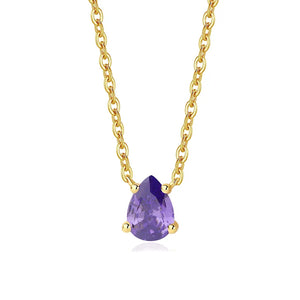
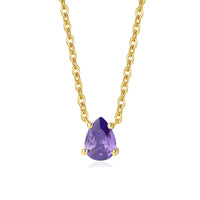
The piece they're describing → Amethyst Pendant Necklace for Women — Teardrop Amethyst Stone, 925 Sterling Silver
Personalize Yours


