


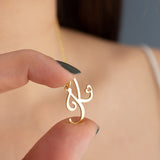
Jewelry meanings evolve — diamonds mean engagement, pearls mean classic sophistication, charm bracelets mean personal milestones. What does a tennis necklace mean? The answer is more nuanced than most guides will tell you, because the tennis necklace's symbolism is rooted in its specific history rather than ancient gem lore.
The Origin: Why the Name Carries Meaning
The tennis necklace's meaning starts with Chris Evert and the 1987 US Open. During her match, her diamond bracelet snapped and fell onto the court. She stopped play — pausing a major professional tennis match — to search for it. Officials halted the match until the bracelet was recovered.
That moment communicated something powerful: this piece of jewelry was worth stopping everything for. The media's "tennis bracelet" nickname attached an association with that level of worth to the style. The necklace, sharing the same design language, carries that same cultural imprint.
This is different from a birthstone's meaning or a crystal's healing property. The tennis necklace's meaning is entirely cultural — rooted in one specific, well-documented moment that became part of jewelry history.
What a Tennis Necklace Symbolizes Today
Quiet confidence
Unlike a statement pendant or an oversized gem, the tennis necklace's continuous unbroken line of stones doesn't try to make a single dramatic point. It's consistently brilliant, not loudly so. The person who wears it isn't competing — they've already arrived. That reads as confidence.
Accessible luxury
The rise of high-quality CZ tennis necklaces has shifted the piece's symbolism. It's no longer exclusively for people who can spend $10,000 on a diamond strand. A $35 CZ tennis necklace in 18K gold plated sterling silver delivers the same visual language of elegance. The democratization of the look has only made it more culturally widespread — and arguably more meaningful, because it's now something anyone can choose to wear.
Celebration without occasion
Most jewelry has an implied occasion — engagement rings, graduation gifts, anniversary pieces. Tennis necklaces don't. You can buy one for yourself on a random Tuesday. You can give one for a birthday, a promotion, a breakup, or just because. This occasion-neutrality is part of what makes it so pervasive.
Tennis Necklace as a Gift: What It Communicates
When you give someone a tennis necklace, the subtext is layered:
- "I know your taste." Tennis necklaces are specific. Not a generic pendant or a charm. Choosing one signals attention.
- "You deserve something brilliant." The continuous sparkle isn't subtle. You're telling someone they warrant something that catches light everywhere they go.
- "This is for every day, not just for special occasions." Unlike heavy statement jewelry, a tennis necklace is designed to be worn constantly. You're giving a daily object, not a display piece.
Best occasions to give a tennis necklace:
- Birthdays (especially milestone birthdays — 30th, 40th, 50th)
- Promotions or professional achievements
- Graduations
- Mother's Day
- Anniversaries
- Self-gifting after a major life moment
Does a Tennis Necklace Have a Romantic Meaning?
Unlike a heart necklace or a promise ring, tennis necklaces carry no inherent romantic meaning. They don't signal relationship status, commitment level, or romantic intent. You can give one to a friend, a mother, a colleague, or a romantic partner equally without ambiguity.
This makes them universally safe as gifts — unlike pieces that could imply more than you intend.
Left Side vs Right Side: Does It Matter for Necklaces?
Necklaces, unlike rings or anklets, don't carry left/right symbolism in any established cultural tradition. The tennis necklace sits at the center of the neckline — it's symmetrical by design. Where it "sits" is determined by your neckline, not by intention.
If you're thinking of the left-versus-right symbolism that exists for anklets or rings, it doesn't apply to necklaces. Wear your tennis necklace however it sits comfortably.
Thinking about the bracelet version of this symbol instead? Our best tennis bracelets guide covers stone type, setting, and sizing so you can buy with confidence.
Related reading: What does a tennis bracelet mean.
Related reading: Name necklace gifts.
Frequently Asked Questions
What does a tennis necklace symbolize?
Quiet confidence, accessible elegance, and the cultural association with something worth stopping everything for — rooted in Chris Evert's 1987 US Open moment.
Is a tennis necklace a romantic gift?
Not inherently. No romantic-specific meaning attached — you can give one to a friend, mother, colleague, or partner equally without implying commitment or relationship status.
What occasions is it appropriate for?
A tennis necklace is appropriate for virtually any positive occasion, including birthdays, graduations, promotions, Mother's Day, and self-gifting. No "wrong" occasion exists for a tennis necklace.
Does the number of stones have meaning?
No, the number of stones in a tennis necklace is determined by stone size and necklace length, not by any symbolic intention. The meaning is in the continuous unbroken line, not a specific stone count.
Final Thoughts
A tennis necklace carries a quieter meaning than most symbolic jewelry, valued more for its versatile elegance than for any fixed occasion or sentiment. It doesn't shout about a milestone or carry ancient lore. It says: this person chose something brilliant for every day. That's a statement — just a subtle one.
What is a tennis necklace? → | Shop tennis necklaces →
Toutes les marques, noms de marque et noms de produits tiers sont la propriété de leurs détenteurs respectifs. AJLuxe n’est affilié à aucune marque tierce citée dans cet article, ni approuvé ou sponsorisé par celle-ci. Les noms de marque sont utilisés uniquement à des fins de comparaison factuelle, et les descriptions de matériaux reflètent les spécifications produit publiées par chaque marque au moment de la rédaction.
You Might Also Like


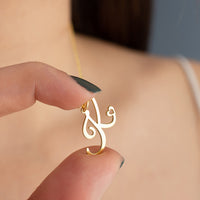
The piece they're describing → Collier Cœur Initial pour Femme — Plaqué Or 18 Carats, Lettre Personnalisée + Pendentif Cœur
Personalize Yours


