

The most common question about tennis necklaces: "Can I just get the CZ version, or do I really need a diamond?" The honest answer depends entirely on what you want from the piece. Here's the comparison no one gives you straight.
How They Look: The Difference Is Smaller Than You Think
Side by side, high-quality CZ and natural diamond stones look nearly identical to the naked eye under normal lighting. Both produce brilliant white light, both catch light from across a room, both read as "sparkling stones."
The differences become visible in specific conditions:
- Under a loupe or magnification: Diamond has natural inclusions (tiny imperfections) that CZ doesn't. CZ looks "too perfect" under magnification.
- In candlelight or dim lighting: Diamond produces more "fire" (colored light refraction). CZ produces more "brilliance" (white light) — actually brighter in many conditions but less colorful.
- Over time: Diamond stays the same. CZ may develop a slight haze after years of daily wear.
For anyone who isn't holding a loupe to your necklace, the visual difference in the first year of wear is negligible.
Durability: The Real Difference
| Factor | Natural Diamond | Lab-Grown Diamond | Cubic Zirconia (CZ) |
|---|---|---|---|
| Mohs hardness | 10 | 10 | 8–8.5 |
| Scratch resistance | Scratch-proof | Scratch-proof | Scratches slowly over years |
| Lifespan (daily wear) | Decades/forever | Decades/forever | 3–7 years before hazing |
| Water resistance | Fine in water | Fine in water | Remove before swimming |
| Chemical resistance | Very high | Very high | Moderate — avoid chlorine |
The 8–8.5 Mohs hardness of CZ is actually still very hard — harder than most everyday materials that would come into contact with it. The haziness that develops over time comes from micro-scratches accumulating from dust, fabric, and small particles, not from a single dramatic scratch.
With proper care (removing before exercise, swimming, and sleeping), a quality CZ tennis necklace can look brilliant for 5+ years.
Price Reality
| Type | Typical Price | Cost per year (5-yr wear) |
|---|---|---|
| CZ, gold plated sterling | $30–$80 | $6–$16/year |
| Moissanite, sterling or gold | $200–$800 | $40–$160/year |
| Lab-grown diamond, 14K gold | $500–$2,000 | $100–$400/year |
| Natural diamond, 14K–18K gold | $2,000–$30,000+ | Potentially retains or gains value |
When you frame it as cost-per-year, CZ is remarkably efficient. You can buy five CZ tennis necklaces over 25 years for less than the cost of one entry-level diamond version — and always have something that looks freshly brilliant.
Who Should Buy CZ vs Diamond
Buy CZ if:
- You follow jewelry trends and update your pieces every few years
- You want the tennis necklace look without spending more than $100
- You're buying your first tennis necklace and aren't sure how much you'll wear it
- You want multiple pieces in different metals (yellow gold, silver, rose gold) without breaking the bank
- You're buying for a teenager or someone who will probably lose or damage it
Buy diamond (lab-grown or natural) if:
- You want something to pass down as an heirloom
- You wear the same pieces every day for decades without replacing them
- You're marking a major life milestone (milestone birthday, major achievement)
- You swim, exercise, or shower while wearing jewelry and don't want to think about it
How to Find a High-Quality CZ Tennis Necklace
Not all CZ is equal. What to look for:
- AAA or 5A grade CZ: The clearest, most diamond-like grade. Avoid ungraded or "A" grade CZ — it yellows faster.
- 925 sterling silver base: Not brass. Brass turns your skin green and the plating wears off much faster. Sterling silver is hypoallergenic and the gold plating lasts significantly longer over it.
- Prong settings over glue: Glued CZ stones fall out. Prong-set stones stay secure for years of daily wear.
- 18K gold plating over 14K: Thicker gold layer means longer-lasting color before any replating is needed.
AJLuxe's tennis-style necklaces use AAA-grade CZ in prong settings over 18K gold plated 925 sterling silver — the combination that gives you the longest lifespan in the CZ category.
If you're weighing the same diamond-vs-simulant decision for a bracelet instead of a necklace, the buying criteria are nearly identical — see our best tennis bracelets buying guide for the full breakdown by stone, setting, and clasp.
Frequently Asked Questions
Can you tell the difference between CZ and diamond?
To the naked eye under normal conditions: nearly impossible. Differences show under magnification, in specific candlelight, and after years of wear when CZ develops hazing. For the first few years, most people can't tell.
How long does a CZ tennis necklace last?
3–7 years with proper care (removing before swimming, showering, exercise). The plating may need refreshing after 2–3 years of heavy daily wear.
Is CZ the same as diamond?
No — CZ is zirconium dioxide, diamonds are carbon. They share visual properties but are completely different materials. CZ isn't a "fake diamond" — it's a distinct lab-created crystal.
Should I buy lab-grown diamond or CZ?
Lab-grown if you want it to look perfect in 20 years (hardness 10, permanent). CZ if you follow trends, are budget-conscious, or aren't sure of long-term wear. The $500+ gap is real — be honest about your intent.
Does CZ turn skin green?
Stones don't — the base metal does. Brass settings oxidize and transfer green. Sterling silver (925) doesn't. Always check the base metal before buying any CZ jewelry.
Final Thoughts
There's no universally "right" answer between CZ and diamond. There's only the right answer for what you're trying to do with the piece. Trend piece you'll love for a few years? CZ in gold plated sterling is the efficient, smart buy. Forever heirloom? Lab-grown diamond makes the investment worthwhile.
Most people's honest answer is CZ — and there's nothing wrong with that. The piece will look brilliant, you'll reach for it constantly, and you'll have $2,000 left over for literally anything else.
Full tennis necklace guide → | Shop CZ tennis necklaces from $32 →
Toutes les marques, noms de marque et noms de produits tiers sont la propriété de leurs détenteurs respectifs. AJLuxe n’est affilié à aucune marque tierce citée dans cet article, ni approuvé ou sponsorisé par celle-ci. Les noms de marque sont utilisés uniquement à des fins de comparaison factuelle, et les descriptions de matériaux reflètent les spécifications produit publiées par chaque marque au moment de la rédaction.
You Might Also Like
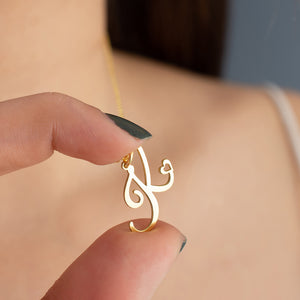
The piece they're describing → Collier Cœur Initial pour Femme — Plaqué Or 18 Carats, Lettre Personnalisée + Pendentif Cœur
Personalize Yours


