


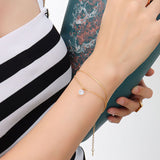

Whether you're building a first stack from scratch or adding to one you already wear daily, the same handful of principles apply regardless of budget or metal choice. A good bracelet stack looks effortless but rarely happens by accident — the difference between a stack that reads as styled and one that reads as cluttered comes down to a handful of specific choices about width, texture, and metal tone. This guide covers what actually makes bracelets "stackable" versus not, how many to wear, and real options for building a stack without buying a pre-matched designer set.
What Makes a Bracelet "Stackable"?
Any bracelet can technically go on a wrist with others, but a genuinely stackable piece is usually thinner, more flexible, and simpler than a standalone statement bracelet — designed to sit alongside other pieces without each one fighting for visual attention. Chain bracelets, thin bangles, and adjustable cord or elastic pieces stack more naturally than one large cuff or a heavy charm bracelet, which tend to work better worn alone or as the single anchor piece in a stack rather than one of several.
The Real Rules for Stacking Bracelets
Vary the width. A stack of identical-width bangles reads flat and repetitive; mixing a thin chain, a medium bangle, and one slightly wider cuff creates visual rhythm. Keep metal tone consistent, or commit fully to mixing it. A stray silver piece in an otherwise all-gold stack usually reads as a mistake rather than a style choice — either match tones throughout or deliberately alternate them in a pattern (every other piece, for example) so the mix looks intentional. Don't overload one wrist. Beyond about 5–6 pieces, most stacks stop reading as curated and start reading as cluttered, and the added weight and clinking can genuinely get in the way of typing, writing, or other hand-heavy tasks.
What to Combine
| Piece type | Role in the stack | How many |
|---|---|---|
| Thin chain bracelet | Base layer, adds subtle movement | 1–2 |
| Bangle (fixed or elastic) | Structure, a bit of visual weight | 1–2 |
| CZ or stone-accent bracelet | Focal point, catches light | 1 |
| Cuff (open-band) | Anchor piece, widest element | 0–1 |
A common, easy-to-replicate combination: one thin chain, one plain bangle, and one CZ-accent piece — three pieces, three distinct textures, one consistent metal tone. That formula scales up or down without needing to buy a pre-matched designer stacking set, which tend to be priced at a premium specifically for the "already coordinated" convenience.
Mixing Bracelet Materials
Metal-only stacks are the most straightforward to coordinate, but adding one beaded or fabric-cord piece into an otherwise metal stack can add texture without breaking the overall look — as long as it doesn't clash in color. A neutral or metallic-bead bracelet blends more easily into a metal stack than a brightly colored one, which tends to pull focus away from the rest of the pieces rather than complementing them.
Fit and Comfort
Stacked bracelets need slightly looser individual fits than a single bracelet worn alone, since multiple pieces need room to shift and settle against each other without pinching skin between them. Adjustable and elastic pieces are especially useful in a stack for exactly this reason — they can flex to accommodate the other bracelets sharing the wrist, where a rigid fixed-size bangle can't adjust at all. If you're building a stack from scratch, starting with one or two adjustable pieces and adding fixed-size bangles around them tends to fit more comfortably than an all-rigid combination.
Caring for a Bracelet Stack
Multiple pieces worn together means more friction and contact between them than a single bracelet gets, which can accelerate wear on plated finishes over time — pieces that constantly rub against each other are more likely to show thinning plating first at the contact points. Taking the full stack off before showering, swimming, or sleeping matters more than it does for a single bracelet, since moisture trapped between stacked pieces takes longer to dry and can accelerate tarnish on silver components specifically. Wiping each piece down with a soft cloth after wear, rather than storing them still tangled together, also reduces the surface scratching that comes from pieces knocking against each other in a jewelry box.
Building a Stack on a Budget
A common mistake is buying an expensive single "statement" bracelet and then struggling to find affordable pieces that coordinate with it — starting instead with a few lower-cost, simple pieces in one consistent metal tone gives more flexibility to add or swap pieces later without the whole stack needing to match one expensive anchor. Adjustable and elastic pieces are particularly good budget starting points since they typically cost less than fixed-size bangles while still working reliably in a mixed stack.
Building a Stack With AJLuxe Pieces
AJLuxe's CZ Chain Bracelet (an adjustable S-chain with cubic zirconia accents) works well as a focal piece, paired with the Gold Elastic Bangle as a stretch-fit structural layer — both in 18K gold-plated sterling silver, so the metal tone matches automatically. If rings are part of your stacking plan too, the Stacking Rings Set extends the same coordinated-gold look from wrist to hand in one purchase.
When to Wear a Stack vs. One Piece
A full stack reads more casual and everyday than a single statement bracelet, which tends to suit dressier or more formal occasions where one piece is meant to draw focused attention. For work settings with a lot of typing or hands-on tasks, a smaller 2–3 piece stack of thinner, quieter pieces avoids the noise and movement of a fuller stack while still giving some layered texture. Job interviews and formal presentations are a good example of where scaling back to one or two quiet pieces, rather than a full stack, keeps attention on you rather than on the sound of bracelets clinking against a desk or keyboard.
Stackable Bracelets: Common Questions
- Are stacked bracelets still in style?
- Yes — bracelet stacking has been a consistent, low-turnover trend for several years now rather than a fast-cycling fad, and it remains one of the most common ways people build a personal jewelry "signature" look.
- What are the rules for stacking bracelets?
- Vary the width and texture of each piece, keep metal tones consistent (or mix them in a clearly deliberate pattern), and stop before the stack gets heavy or cluttered enough to interfere with hand movement — most stacks work best at 3–5 pieces.
- What are the best designer stacking bracelets?
- Several fine-jewelry brands sell pre-matched stacking sets designed to coordinate out of the box, but building your own stack from individually chosen pieces — mixing a chain, a bangle, and an accent bracelet — achieves the same coordinated look without paying a designer-set premium.
- What are stacked bracelets called?
- "Stacking bracelets" or a "bracelet stack" are the standard terms — there's no separate formal name beyond describing the styling approach itself.
- How many bracelets should I stack?
- Most stacks read as intentional rather than cluttered at 3–5 pieces; beyond 5–6, the look tends to shift from "styled" to "busy," and the added weight can genuinely interfere with hand movement.
- Can I mix gold and silver in a bracelet stack?
- Yes, as a deliberate choice — alternating metal tones in a clear pattern reads as intentional two-tone styling, while one stray piece of a different tone in an otherwise single-tone stack usually reads as an accident instead.
- Do stacking bracelets tangle?
- Thin chains can tangle with each other, especially with repeated wrist movement, more than bangles or cuffs will — choosing at least one rigid piece (a bangle or cuff) in the mix reduces how much the flexible chain pieces shift and knot against each other.
- What bracelets are best for everyday stacking?
- Adjustable chain and elastic bangle styles hold up best to daily wear and repeated on/off, since they don't require a specific fixed wrist size and flex naturally with hand and wrist movement throughout the day.
- Should stacking bracelets be the same width?
- No — varying width is one of the main things that makes a stack read as intentional rather than repetitive. A mix of thin, medium, and one wider piece creates more visual interest than several identical-width bracelets worn together.
Final Thoughts
A good bracelet stack comes down to varying width and texture while keeping metal tone under control — not buying a specific pre-matched set. AJLuxe's CZ Chain Bracelet and Gold Elastic Bangle pair naturally as a starting stack, both 18K gold-plated and priced $24.99–$79.99.
Last updated: September 2026. Written by the AJLuxe team — specialists in personalized sterling silver jewelry.
Toutes les marques, noms de marque et noms de produits tiers sont la propriété de leurs détenteurs respectifs. AJLuxe n’est affilié à aucune marque tierce citée dans cet article, ni approuvé ou sponsorisé par celle-ci. Les noms de marque sont utilisés uniquement à des fins de comparaison factuelle, et les descriptions de matériaux reflètent les spécifications produit publiées par chaque marque au moment de la rédaction.
You Might Also Like
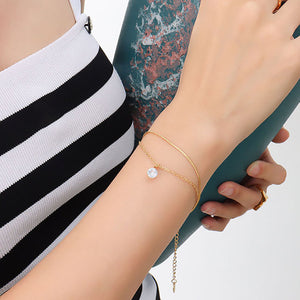
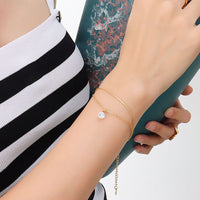
The piece they're describing → Bracelet Chaîne CZ pour Femme — Plaqué Or 18 Carats, Chaîne Serpent avec Zircon Cubique, Réglable
Personalize Yours


