


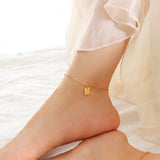
Our take: no, jewelry is generally not a good financial investment — and that's especially true for fashion jewelry in AJLuxe's own $24.99–$79.99 range. Retail markups erase 30% or more of a piece's value the moment you leave the store, resale rarely returns more than half of what you paid, and gold-plated jewelry specifically carries almost no melt value because the gold layer is only a few microns thick. Even genuine gold and diamonds — which can be legitimate assets in bullion or certified-stone form — underperform simpler, cheaper ways to invest in those exact materials once you buy them as finished jewelry. We sell jewelry because it's beautiful, personal, and a great gift — not because we think it's where you should park your savings, and we think it's more honest to say so plainly than to let the "jewelry as investment" myth do our marketing for us.
- Most retail jewelry loses roughly 30% or more of its value the instant you buy it, purely from the markup between wholesale materials/labor and retail price — before any wear or market movement.
- Used diamonds typically resell for 20%–60% of their original retail price; secondary-market buyers price jewelry closer to raw melt/commodity value (often just 5%–30% of the retail appraisal), not the sentimental or design value you paid for.
- Physical gold has been a genuinely strong asset over the last 10–20 years — but that's gold bullion and ETFs, priced on spot, not gold jewelry. A finished piece adds retail markup on top of the metal, and that markup doesn't come back when you sell.
- Natural diamond prices have fallen roughly 30% since their 2021 peak, and lab-grown diamond prices have collapsed 80%+ over the same window — both real markets, both real downside risk for anyone counting on appreciation.
- AJLuxe's own jewelry is 925 sterling silver with 18K gold plating (a coating typically 0.5–2.5 microns thick). The silver content in a typical few-gram piece is worth a few dollars at melt price at most, and the gold layer is too thin for any refiner to economically recover — so by design, this category of jewelry was never built to be resold as an asset.
What "Investment" Actually Means Here
Before answering "is jewelry a good investment," it's worth being precise about what that question is really asking: will this purchase be worth more than you paid for it, in cash, if you needed to sell it later? That's a much narrower bar than "will it hold sentimental value" or "is it well made" — both of which can be true of a piece that is, financially, a bad investment. A lot of jewelry marketing blurs this line on purpose, because "investment piece" sounds like a justification for spending more. We think the honest answer depends entirely on what you're buying and how it's priced, so we're going to separate those cases out rather than give one blanket yes or no.
The Retail-to-Resale Gap Is the Real Story
The single biggest reason jewelry underperforms as an investment has nothing to do with gold prices or diamond markets — it's the markup built into the first sale. Most retail jewelry carries enough margin over its actual material and labor cost that it loses roughly 30% of its value the moment you walk out the door, before you've worn it once. On the resale side, dealers and secondary buyers aren't paying for the brand story, the setting, or the craftsmanship you originally paid for; they're pricing close to the raw commodity value of the metal and stones. That's why a formal insurance appraisal — which estimates the cost to replace a piece at full retail — can run 50%–100% above the original purchase price, while an actual cash offer from a buyer often comes in at just 5%–30% of that same appraisal figure. Those two numbers, appraisal and resale, are answering completely different questions, and confusing them is where most of the "jewelry is a great investment" myth comes from.
Used diamonds specifically tend to resell for 20%–60% of their original retail price, with only large, GIA-certified, high-clarity stones from recognizable cutting reliably landing at the top of that range. Everything below that — which is most jewelry, including virtually everything at AJLuxe's price point — sits much closer to melt value than to what you paid.
How Gold and Diamonds Actually Perform — and Why That's Not the Same as "Jewelry"
This is the distinction we think gets lost most often. Physical gold, held as bullion, coins, or an ETF, has genuinely been a strong asset: gold averaged around $604 an ounce in 2006 and around $1,251 an ounce in 2016, versus roughly $4,150 an ounce as of late July 2026. That's about a 587% gain over 20 years (roughly 10% annualized) and about a 232% gain over the last 10 years (roughly 13% annualized) — genuinely competitive with, and at times ahead of, the S&P 500's long-run dividend-inclusive return of roughly 11% a year since 1971. Gold tends to do especially well during high inflation and negative real interest rates, which is a real, well-documented pattern, not a sales pitch.
But none of that is an argument for buying gold jewelry. Bullion and ETFs are priced at or near spot, trade in liquid markets, and carry no design markup to erase — you're buying the metal, full stop. A finished piece of gold jewelry adds retail markup, labor, and design cost on top of that same metal, and none of that comes back when you resell. If someone wants gold as an asset, buying the metal directly is a more efficient way to do it than buying a ring.
Diamonds tell a more sobering version of the same story, and the timing has been rough. Natural 1-carat diamond prices have fallen roughly 30% from their 2021 peak, driven largely by the rise of lab-grown alternatives and inventory oversupply. Lab-grown diamond prices have fared far worse, down more than 80% since their earlier highs as production capacity scaled up faster than demand. Both are real, liquid, trackable markets — and both have shown that "diamonds are forever" says nothing about their price. A diamond bought as jewelry is subject to all of this market risk on top of the retail-to-resale gap above.
Where AJLuxe's Own Jewelry Actually Fits
We think it's more useful — and more honest — to be specific about our own catalog rather than talk about "jewelry" as one big category. AJLuxe pieces are 925 sterling silver, often finished with an 18K gold plating layer, priced $24.99–$79.99. At current silver prices (around $59 an ounce as of this writing), the actual silver in a typical few-gram piece is worth a few dollars at melt value — a small fraction of the retail price, because most of what you're paying for is design, plating, and craftsmanship, not raw metal weight. The gold plating is even more clearly not an asset: that layer is typically 0.5 to 2.5 microns thick, so thin that no refiner will pay to recover it — the extraction cost exceeds the gold's value. That's simply how gold-plated jewelry works, at any price point or brand, not a shortcoming specific to us.
We say this plainly rather than defensively: AJLuxe jewelry was designed and priced to be worn and enjoyed — for self-expression, everyday styling, and gifting — not to be resold at a profit. We'd rather tell you that directly than let "jewelry as investment" language quietly imply something about a $35 necklace that isn't true.
Where the "Jewelry as Investment" Case Is Genuinely Fair
An honest opinion has to hold up the other side, and here it's a real one — not every corner of this category behaves the way we've described above.
- Investment-grade, certified diamonds can hold value better than average. Large, GIA-certified, high-clarity natural diamonds in classic (not overly trendy) settings are the segment of the diamond market most likely to retain meaningful resale value, precisely because they're the easiest to verify and the most liquid within the resale trade.
- Solid, high-karat gold and platinum have real melt value that scales with weight. Unlike a plated layer, 18K+ solid gold or platinum jewelry contains enough precious metal by weight that its melt value is a meaningful floor under the price, even if the design markup above that floor is still lost on resale.
- Heritage luxury brands have functioning secondary markets. Pieces from houses like Cartier, Tiffany & Co., Van Cleef & Arpels, and similar names can retain a real premium over melt value because there's active collector and resale demand for the brand and design itself, not just the materials — a dynamic that simply doesn't exist yet for most jewelry, including ours.
- Physical gold as an asset class has real, recent tailwinds. As shown above, gold has been one of the stronger asset classes of the last two decades, and macro conditions (inflation, rate uncertainty) have kept that trend going into 2026. If someone's goal is genuinely gold-as-an-asset, that's a legitimate strategy — it's just better executed through bullion, coins, or an ETF than through a finished piece of jewelry.
- There's a real tax complication even on the "good" cases. The IRS treats precious metals and gemstones as collectibles, taxed at up to a 28% long-term capital gains rate — higher than the top rate on most stocks — which eats further into any jewelry-as-investment case even when the piece itself does appreciate.
None of that changes our answer for the category AJLuxe actually sells in, but it's a real, defensible position for a different kind of purchase — large certified stones, solid high-karat metal, or heritage brands — bought from people who understand that market well.
Our Verdict
Is jewelry a good investment? For the vast majority of jewelry, including everything AJLuxe sells, no — retail markups, thin or nonexistent melt value, and real market risk in gold and diamond prices all work against it as a way to grow money. The exceptions are narrow and specific: large certified diamonds, solid high-karat gold or platinum by weight, and heritage brands with active resale markets. If you want gold as a financial asset, buy gold. If you want jewelry, buy it for what it actually is — something beautiful to wear, a way to express yourself, or a gift that means something — and we think that's a completely good enough reason on its own.
Frequently Asked Questions
What if I invested $10,000 in gold 20 years ago?
Gold averaged around $604 an ounce in 2006 and is trading around $4,150 an ounce as of late July 2026 — a gain of roughly 587%, or about 10% annualized. $10,000 in physical gold or a gold ETF in 2006 would be worth roughly $68,000–$69,000 today. That figure is for gold bullion/ETF exposure priced on spot, not for gold jewelry, which adds retail markup that doesn't track the metal price the same way.
What if you invested $1,000 in gold 10 years ago?
Gold averaged around $1,251 an ounce in 2016 versus roughly $4,150 an ounce today — a gain of about 232%, or roughly 13% annualized. $1,000 invested in gold bullion or an ETF in 2016 would be worth around $3,300 today. Again, this reflects the metal itself, not a piece of gold jewelry bought at retail.
What jewelry holds its value?
The jewelry most likely to hold value is large, GIA-certified natural diamonds in classic settings; solid 18K+ gold or platinum, where the precious-metal weight sets a real melt-value floor; and pieces from heritage luxury brands with active secondary markets. Fashion and costume jewelry — including most jewelry at AJLuxe's price point — is not built or priced to hold resale value; it's priced for wear and design, not resale.
What jewelry will increase in value?
Appreciation is the exception, not the rule, even within fine jewelry. Rare, investment-grade gemstones and certified diamonds with strong documentation and provenance can gain value over time, and some discontinued or vintage designer pieces develop collector demand. Most jewelry, including ours, is not designed with appreciation in mind and shouldn't be bought expecting it. (For a look at one long-running fine jewelry brand's real resale and materials story, see our Effy Jewelry review.)
Is gold-plated jewelry a good investment?
No. Gold plating is typically only 0.5 to 2.5 microns thick — too thin for any refiner to profitably recover the gold, so gold-plated jewelry (including AJLuxe's own 18K gold-plated pieces) carries essentially no melt or resale value tied to its gold content. It's worth buying to wear and enjoy, not as a store of value.
We make jewelry to wear and love — not to flip
Shop Everyday JewelryRelated Reading
Curious how AJLuxe's materials actually hold up? See is 925 sterling silver good quality, will gold-plated jewelry fade, and whether it's worth insuring jewelry at this price point.
AJLuxe Editorial Team. Last updated: July 2026. This is an opinion piece reflecting AJLuxe's editorial position; it is commentary on jewelry as a purchase category, not personalized financial advice. The facts and figures cited are sourced and verifiable. Sources: JM Bullion, historical gold price data; Fortune, current gold price (Jul 2026); Fortune, current silver price (Jul 2026); Empower, "Is Jewelry a Good Investment?"; Beyond4Cs, diamond resale value data; Estate Diamond Jewelry, jewelry depreciation; diamond pricing per Rapaport Diamond Price Index reporting via TheStreet and lab-grown diamond pricing via Draco Diamond, 2020–2026 lab diamond price trend report; IRS collectibles capital gains treatment per Empower; gold-plating thickness and refining economics per APMEX, selling gold-filled/gold-plated jewelry.
Toutes les marques, noms de marque et noms de produits tiers sont la propriété de leurs détenteurs respectifs. AJLuxe n’est affilié à aucune marque tierce citée dans cet article, ni approuvé ou sponsorisé par celle-ci. Les noms de marque sont utilisés uniquement à des fins de comparaison factuelle, et les descriptions de matériaux reflètent les spécifications produit publiées par chaque marque au moment de la rédaction.
You Might Also Like
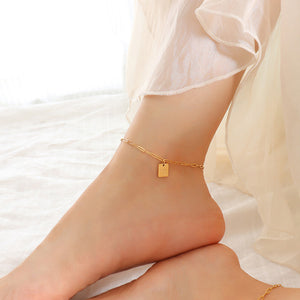

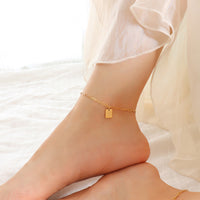
The piece they're describing → Bracelet de cheville porte-bonheur pour femme — Plaqué or 18 carats, pendentif carré, bijoux de plage
Personalize Yours


