


Les boucles d'oreilles huggie sont de petits anneaux conçus pour reposer à plat contre le lobe de l'oreille — elles "enlacent" l'oreille plutôt que de pendre. Elles ont généralement un diamètre intérieur de 8 à 14 mm, une fermeture à charnière à clip, et sont disponibles en calibre 16G (1,2 mm) ou 18G (1,0 mm).
Toutes les huggies sont des anneaux, mais tous les anneaux ne sont pas des huggies. La taille idéale pour la plupart des piercings standard au lobe est de 10 à 12 mm. Pour l'hélix ou le cartilage, de 6 à 10 mm. Attendez au moins 6 semaines après un piercing au lobe (12 semaines pour le cartilage) avant de passer aux huggies.
Les boucles d'oreilles huggie sont passées de la niche au grand public au cours de la dernière décennie pour une raison simple : ce sont les boucles d'oreilles les plus pratiques que l'on puisse posséder. Elles restent en place pendant les entraînements, ne s'accrochent pas aux cheveux ou aux câbles d'écouteurs, se combinent magnifiquement avec d'autres bijoux d'oreille et conviennent aussi bien à une salle de réunion qu'à une plage. Ce guide couvre tout : tailles, calibres, styles, piercings auxquels elles conviennent, comment les mettre et les enlever, et comment en prendre soin.
Boucles d'oreilles Huggie vs. Boucles d'oreilles créoles régulières
Toutes les boucles d'oreilles huggie sont des anneaux, mais tous les anneaux ne sont pas des huggies. La distinction réside dans la taille, l'ajustement et le mécanisme de fermeture :
| Caractéristique | Boucles d'oreilles Huggie | Boucles d'oreilles créoles régulières |
|---|---|---|
| Diamètre intérieur | 8–14mm | 20–60mm+ |
| Largeur du tube / bande | 2–4mm (sensiblement épais) | Généralement fil de 0,5–1,5mm |
| Ajustement | Repose à plat contre le lobe de l'oreille | Pend loin de l'oreille |
| Fermeture | Charnière à clip | À enclenchement ou à loquet |
| Mouvement | Minimal — reste en place | Balance et bouge librement |
| Idéal pour | Usage quotidien, actif, accumulation | Déclaration, occasions habillées |
La section transversale plus épaisse du tube (bande de 2 à 4 mm de large) est ce qui donne aux huggies leur aspect caractéristique : elles sont suffisamment substantielles pour être vues de loin, mais suffisamment petites pour rester à plat. Ce poids visuel est la principale raison pour laquelle elles sont différentes des mini créoles en fil fin, même lorsque les deux ont techniquement le même diamètre intérieur.
Types de boucles d'oreilles Huggie
Huggies simples en or ou en argent
Le style le plus polyvalent — un anneau ovale ou rond lisse en or jaune, or blanc, or rose ou argent. Les huggies simples en argent sterling 925 plaqué or 18K sont la norme d'or au quotidien : hypoallergéniques, durables et visuellement identiques à l'or massif pour une fraction du coût. Ce sont les boucles d'oreilles « que l'on met et que l'on oublie » — on les met le lundi matin et on les enlève le vendredi soir.
Boucles d'oreilles Huggie pavées et en CZ
Des huggies serties de zircones cubiques (CZ) ou de diamants de laboratoire disposés en pavé — de minuscules pierres serties très proches les unes des autres sur la surface de l'anneau. L'effet est un anneau scintillant continu qui capte la lumière dans toutes les directions. Le micro-pavé (très petites pierres dans un serti très serré) donne l'aspect le plus raffiné ; le serti rail CZ (pierres dans une rainure) est plus durable pour les personnes actives.
Boucles d'oreilles Huggie avec perles
L'une des tendances joaillières les plus fortes de 2024-2026 : une petite perle d'eau douce ou de coquillage attachée ou sertie dans une boucle d'oreille huggie. L'association de l'anneau métallique épuré et de la perle organique douce crée un contraste à la fois moderne et intemporel. Les boucles d'oreilles huggie avec perles conviennent aussi bien aux occasions décontractées qu'aux occasions formelles.
Boucles d'oreilles Huggie émaillées
Huggies avec un revêtement en émail coloré — disponibles dans un spectre de couleurs complet. Les huggies en émail sont populaires comme moyen discret d'ajouter de la couleur à une collection de boucles d'oreilles sans porter de boucles d'oreilles perlées ou en pierres précieuses. Elles sont également un choix de cadeau privilégié car les couleurs peuvent être personnalisées pour correspondre au style du destinataire ou à la couleur de sa pierre de naissance.
Huggies Texturées
Huggies martelées, torsadées, perlées ou à finition brossée. La texture ajoute un intérêt visuel sans ajout de pierres – populaire pour une esthétique plus artisanale ou organique. Les huggies en or martelé en particulier sont devenues un incontournable du marché de la joaillerie fine minimaliste.
Huggies à breloques
Une petite breloque (étoile, lune, cœur, œil porte-bonheur, initiale) attachée au bas de l'anneau avec un anneau brisé. La breloque pend juste en dessous du lobe de l'oreille, ajoutant du mouvement tandis que l'anneau reste bien ajusté. Ce style fait le pont entre les huggies classiques et les boucles d'oreilles pendantes.
Huggies ouvertes / fendues
Une huggie en forme de C qui ne se ferme pas complètement — les extrémités ouvertes de l'anneau sont portées à travers le piercing mais l'anneau ne se clipse pas. Ce style a un aspect plus architectural et est populaire dans les créations d'oreilles avant-gardistes. Notez que les huggies ouvertes sont moins sécurisées que les variétés à clip et sont plus adaptées à un port occasionnel qu'à une activité quotidienne.
Tailles et calibres des boucles d'oreilles Huggie expliqués
Diamètre intérieur — Quelle taille convient où
| Diamètre intérieur | Description de l'ajustement | Meilleur emplacement de piercing |
|---|---|---|
| 6–8mm | Très ajusté — près du cartilage | Tragus, hélix, rook, daith |
| 8–10mm | Ajusté — convient à la plupart des cartilages | Hélix, hélix avant, petits lobes |
| 10–12mm | Standard — taille la plus populaire | Piercing standard au lobe |
| 12–14mm | Légèrement ouvert — petit espace visible | Lobes plus grands, piercings inférieurs du lobe |
| 14mm+ | Territoire des mini-anneaux | Transition entre huggie et mini-anneau |
Comment mesurer pour la bonne taille
Utilisez une règle ou un ruban à mesurer souple. Placez-le contre votre lobe d'oreille avec une extrémité au niveau de votre trou de piercing et mesurez jusqu'au bord inférieur de votre lobe. La plupart des gens mesurent 5 à 8 mm. Ajoutez 2 à 4 mm à ce nombre pour obtenir le diamètre intérieur idéal de votre huggie — cela donne à l'anneau juste assez d'espace pour se fermer sans appuyer sur le lobe. Si vous mesurez 6 mm de lobe sous votre piercing, une huggie de 10 mm s'adaptera avec un petit espace visible ; une huggie de 8 mm sera plus serrée.
Calibre de la tige — Ce que signifient 16G et 18G
Le calibre fait référence à l'épaisseur de la tige qui traverse votre piercing. Les boucles d'oreilles huggie standard sont disponibles en deux calibres :
- 16G (1,2 mm de diamètre) : Le calibre standard pour la plupart des boucles d'oreilles huggie et la plupart des piercings de lobe réalisés dans un studio de piercing professionnel. Les tiges 16G s'adaptent confortablement aux piercings qui ont été percés en 16G ou plus.
- 18G (1,0 mm de diamètre) : Légèrement plus fin — le calibre standard pour la plupart des pistolets de piercing utilisés dans les bijouteries de centres commerciaux. Si vos piercings ont été faits avec un pistolet, ils sont probablement en 18G. Une tige 18G s'adapte à tout trou percé en 18G ou plus.
Si une tige 16G vous semble trop serrée ou ne passe pas, votre piercing est en 18G — choisissez des boucles d'oreilles étiquetées 18G. Ne forcez jamais une tige plus grande à travers un piercing.
Largeur de la bande / Épaisseur du tube
Au-delà du diamètre intérieur et du calibre, la largeur de la bande (l'épaisseur de l'anneau de la boucle d'oreille elle-même) modifie considérablement l'aspect général :
- Bande de 1 à 2 mm : Huggie délicate — proche d'un anneau en fil fin mais avec le fermoir à clip. Délicate, minimale.
- Bande de 2 à 3 mm : Huggie classique — suffisamment substantielle pour être clairement « épaisse » mais pas écrasante.
- Bande de 3 à 4 mm : Huggie audacieuse — une pièce visible qui fait sensation. Les pierres pavées serties dans cette largeur ont un aspect particulièrement spectaculaire.
Quels piercings peuvent porter des boucles d'oreilles Huggie ?
Les huggies ne sont pas réservées aux piercings standard du lobe. Avec la bonne taille, elles conviennent à plusieurs emplacements de piercing d'oreille :
- Lobe standard (premier trou) : Diamètre intérieur de 10 à 12 mm. L'utilisation la plus courante.
- Deuxième et troisième piercings de lobe : Diamètre intérieur de 8 à 10 mm — plus on monte sur l'oreille, plus le lobe est petit, donc un anneau plus petit est généralement nécessaire.
- Hélix (bord extérieur du cartilage) : 8 à 10 mm. Un choix populaire pour un look d'oreille personnalisé — une huggie dans le lobe, une dans l'hélix crée un effet "montant" épuré.
- Hélix avant : 6 à 8 mm — c'est un endroit étroit ; une huggie plus petite et plus fine est nécessaire.
- Tragus (petit cartilage au-dessus du lobe de l'oreille) : Diamètre intérieur de 6 à 8 mm. Une huggie de 6 mm bien ajustée dans le tragus donne un look subtil et raffiné.
- Conque, rook, daith : Possible mais le dimensionnement est très individuel — ces piercings varient considérablement en anatomie. Consultez un perceur professionnel pour le dimensionnement.
Quand pouvez-vous passer aux Huggies après un piercing ?
Le timing est important — passer aux huggies trop tôt peut perturber la cicatrisation et causer des complications :
- Piercings au lobe : Minimum 6 semaines avant de changer de bijou. 8 à 12 semaines est plus sûr. Le piercing doit être complètement cicatrisé à l'extérieur et sans douleur avant de le changer.
- Piercings au cartilage (hélix, tragus, conque) : Minimum 12 semaines, souvent plus longtemps — le cartilage cicatrise plus lentement que le tissu du lobe. De nombreux perceurs recommandent d'attendre 6 mois pour une cicatrisation interne complète avant de passer aux huggies dans les zones de cartilage.
Les huggies sont-elles sûres comme bijoux initiaux/de cicatrisation ? Généralement non. La plupart des perceurs professionnels recommandent des clous labrets à dos plat pour les piercings initiaux — ils minimisent le mouvement pendant la cicatrisation. Une fois cicatrisées, les huggies sont un excellent choix.
Comment mettre et retirer les boucles d'oreilles Huggie
Les mettre
- Tenez la huggie avec la charnière vers le haut et la tige pointée vers vous.
- Repérez la petite encoche ou le point de libération sur le côté — appuyez ou pincez doucement pour ouvrir le fermoir.
- Éloignez l'extrémité de la tige de l'anneau jusqu'à ce que l'anneau soit ouvert.
- Enfilez la tige à travers votre piercing de l'avant vers l'arrière.
- Ramenez l'extrémité de la tige vers l'anneau jusqu'à ce qu'elle se clipse solidement. Vous devriez sentir et entendre le claquement.
- Tirez doucement pour confirmer qu'elle est bien verrouillée — si elle s'ouvre facilement, replacez le fermoir.
Les enlever
- Tenez l'anneau avec la charnière vers le haut, le fermoir face à vous.
- Localisez le point de déverrouillage — généralement une petite encoche sur le côté du fermoir, ou une légère dépression que vous pouvez appuyer avec un ongle.
- Appuyez sur le déverrouillage avec un ongle tout en tirant doucement l'extrémité de la tige loin de l'anneau.
- Une fois que l'extrémité de la tige est libre, faites glisser la tige à travers votre piercing de l'arrière vers l'avant.
Dépannage : Le fermoir ne se ferme pas ou ne s'ouvre pas
- Ne se ferme pas (l'extrémité de la tige ne se clipse pas) : Vérifiez que la tige est entièrement insérée dans la douille — elle doit tomber droite, pas de biais. Si le fermoir est lâche à cause de l'usure, un bijoutier peut remodeler l'extrémité de la tige pour créer un ajustement plus serré en quelques minutes.
- Ne s'ouvre pas (le fermoir est bloqué) : L'accumulation de sébum et de produit peut encrasser la charnière. Faites tremper dans de l'eau tiède avec une goutte de savon vaisselle pendant 2 à 3 minutes, puis réessayez. Si le fermoir est réellement grippé, apportez-le à un bijoutier plutôt que de le forcer.
- La tige ne passe pas à travers le piercing : Ne forcez jamais — le calibre peut être plus grand que votre piercing. Essayez une tige 18G au lieu de 16G, ou consultez un perceur si le trou s'est resserré.
Comment assortir les boucles d'oreilles Huggie
Par forme de visage
- Ovale : La forme de visage la plus polyvalente — tout style, taille et métal de huggie convient.
- Carré / Anguleux : Les formes de huggies arrondies (anneaux circulaires standard) adoucissent les angles marqués de la mâchoire. Évitez les styles trop géométriques ou anguleux.
- Long / Rectangulaire : Les huggies plus larges (12–14mm) ajoutent de la largeur horizontale pour équilibrer un visage plus long. Évitez les huggies très petites, qui allongent davantage le visage.
- Rond : À utiliser avec parcimonie ou à associer à un élément pendant sous la huggie pour créer une longueur verticale. Les très petites huggies (8–10mm) conviennent le mieux.
- En forme de cœur : Les huggies de petite à moyenne taille (10–12mm) équilibrent bien un menton plus étroit.
Construire une parure d'oreille
- Deux piercings : Une huggie plus grande (12 mm) dans le premier trou, une huggie plus petite (8-10 mm) ou un clou dans le second — crée un look dégradé naturel.
- Trois piercings : Huggie dans le lobe, petit clou dans le deuxième trou, petit clou plat ou huggie hélix dans le troisième. C'est la formule la plus populaire pour une « oreille organisée ».
- Parure asymétrique : Deux ou trois huggies grimpant sur une oreille, une seule boucle d'oreille statement sur l'autre. Très mode, intentionnellement déséquilibré.
Par occasion
- Quotidien / bureau : Huggie simple en or ou argent (10–12mm, bande de 2mm). Épuré, professionnel, jamais trop habillé.
- Soirée / événements : Huggie pavée ou taille diamant. L'éclat ressort bien sous la lumière artificielle.
- Actif / salle de sport : Petites huggies simples (8–10mm) — elles restent plates, ne s'accrochent pas et survivent aux entraînements sans pendre dans l'équipement.
- Plage / décontracté : Huggie à breloque ou texturée — une pièce de caractère qui fonctionne pieds nus ou en sandales.
Boucles d'oreilles Huggie pour hommes
Les boucles d'oreilles huggie sont de plus en plus portées par les hommes, notamment dans les contextes streetwear, haute couture et décontracté de plage. Les huggies pour hommes ont tendance à être plus petites (8 à 10 mm), en or ou en argent uni, avec une bande plus épaisse (3 à 4 mm) pour un look plus substantiel. L'or jaune uni ou l'argent oxydé sont les choix les plus populaires. Tout style de huggie fonctionne quel que soit le genre - les catégories ne sont pas différentes, seulement la taille et la préférence de style typiques.
Options de métaux pour les boucles d'oreilles Huggie
Parce que les huggies reposent à plat contre la peau et sont souvent portées pendant de longues périodes, le choix du métal est plus important que pour les boucles d'oreilles portées occasionnellement :
- Argent sterling 925 plaqué or 18K : Le meilleur rapport qualité-prix pour les huggies de tous les jours — hypoallergénique, pas de nickel dans la base, aspect or durable, prix abordable.
- Or massif 14K ou 18K : Le choix le plus sûr et le plus durable ; la bonne option si vous souhaitez porter des huggies 24h/24 et 7j/7 pendant des années sans entretien. Point de prix nettement plus élevé.
- Argent sterling 925 : Excellente option hypoallergénique pour l'aspect argent. Nécessite un polissage occasionnel mais résiste bien à l'usage quotidien.
- Titane : Le métal le plus hypoallergénique disponible – moins de 0,6 % des personnes réagissent au titane, contre plus de 20 % pour les alliages contenant du nickel. Le meilleur choix pour toute personne ayant des allergies aux métaux confirmées qui ne peut pas porter d'or ou d'argent sans réaction.
- Acier inoxydable : Durable et abordable, mais contient souvent du nickel – ne convient pas aux peaux sensibles. Courant dans les boucles d'oreilles créoles de style huggies.
Découvrez les créoles huggies en or en argent sterling 925 plaqué or 18 carats, ou la collection complète de bijoux hypoallergéniques pour les options pour oreilles sensibles. Pour une liste d'achat métal par métal, lisez notre guide dédié aux boucles d'oreilles créoles huggies hypoallergéniques.
Les créoles huggies conviennent-elles aux oreilles sensibles ?
Oui, avec le bon métal. Parce que les créoles huggies sont en contact constant avec la peau et que la tige est dans le canal de perçage toute la journée, le choix du métal est plus important pour les huggies que pour les boucles d'oreilles que vous portez occasionnellement.
Environ 20 % des personnes ont un certain degré de sensibilité au nickel. Le nickel se trouve dans de nombreux métaux de base, certaines formulations d'acier inoxydable et les alliages d'or à faible teneur en carats (l'or 10K à 14K peut contenir plus de nickel que l'or 18K). Pour les oreilles sensibles : choisissez l'argent sterling 925, l'argent sterling 925 plaqué or 18 carats, l'or massif 14K ou 18K, ou le titane. Évitez tout ce qui est étiqueté uniquement "ton or", "alliage" ou "acier inoxydable" sans autre spécification.
Comment entretenir les créoles huggies
Parce que les créoles huggies reposent à plat contre la peau, elles accumulent les huiles, le maquillage et les résidus de produits dans la charnière et la surface intérieure plus que les autres types de boucles d'oreilles. Un nettoyage régulier les maintient en bon état et prolonge leur durée de vie :
- Nettoyage hebdomadaire : Trempez dans de l'eau tiède avec une goutte de savon doux pour la vaisselle. Utilisez une brosse à dents à poils souples pour frotter délicatement la zone de la charnière et la surface intérieure. Rincez, puis séchez complètement – faites attention à la cavité de la charnière où l'humidité peut s'accumuler.
- Polissez la surface extérieure avec un chiffon en microfibre ou un chiffon de polissage pour argent après l'avoir porté pour éliminer les empreintes digitales et les huiles cutanées.
- Rangez les fermoirs fermés – fermer l'anneau avant de ranger les huggies protège le mécanisme du fermoir et maintient la forme de l'anneau. Rangez les paires séparément dans des pochettes souples pour éviter les rayures.
- Retirez avant de nager, de prendre une douche et d'appliquer des produits – les mêmes règles que pour tout bijou plaqué or s'appliquent. Le chlore et le shampoing quotidien sont les principales causes d'usure prématurée de la couche d'or.
Pour un nettoyage plus approfondi et l'élimination de la ternissure, notre guide de nettoyage de l'argent sterling contient des instructions complètes étape par étape.
Guide d'achat des créoles huggies
Ce qu'il faut vérifier avant d'acheter :
- Poinçons : "925" ou "S925" = base en argent sterling. "18K" ou "14K" à côté de 925 = argent sterling plaqué or. Pas de poinçon = métal de base non vérifié.
- Spécification de la jauge : Doit être indiquée (16G ou 18G). Si elle n'est pas listée, demandez – c'est important pour l'ajustement.
- Qualité de la charnière : Un bon fermoir de huggie se ferme nettement d'un seul mouvement et tient solidement sous une légère traction. Un fermoir qui vacille ou qui se ferme à moitié est un problème de qualité de fabrication.
- Niveaux de prix : Les huggies fantaisie (moins de 20 $) sont généralement en métal de base ; les huggies semi-précieuses (20 $ – 150 $, argent sterling plaqué or ou argent massif) conviennent à un usage quotidien ; les huggies de haute joaillerie (150 $ et plus) en or massif sont destinées à un port permanent et à être transmises.
- Diamètre intérieur et largeur de bande indiqués : Les vendeurs réputés spécifient les deux. "Petit" et "grand" sans mesures ne sont pas utiles – vous avez besoin de chiffres en mm.
Achetez chez AJLuxe : Créoles huggies micro-pavé CZ en argent sterling — argent sterling 925, halo CZ (49,99 $) · Créoles huggies taillées en diamant — or facetté, argent 925 (38,99 $) · Créoles huggies minimalistes — huggie dorée quotidienne (34,99 $)
Foire aux questions sur les créoles huggies
Que sont les créoles huggies ?
Les créoles huggies sont de petites créoles – généralement de 8 à 14 mm de diamètre intérieur – conçues pour reposer à plat contre le lobe de l'oreille plutôt que de pendre. Elles ont un fermoir à charnière, une bande nettement épaisse (2 à 4 mm) et sont l'un des styles de boucles d'oreilles les plus populaires au quotidien.
Quelle est la jauge des créoles huggies ?
La plupart des créoles huggies sont disponibles en 16G (diamètre de la tige de 1,2 mm) ou 18G (diamètre de la tige de 1,0 mm). Le 16G est la norme pour les piercings réalisés par un perceur professionnel ; le 18G convient aux piercings réalisés avec un pistolet dans la plupart des bijouteries de centres commerciaux. Vérifiez la description du produit avant d'acheter – si la jauge n'est pas indiquée, le vendeur devrait pouvoir vous le dire.
Comment retirer les créoles huggies ?
Trouvez la petite encoche ou le point de libération sur le côté du fermoir de l'anneau. Appuyez dessus avec un ongle tout en tirant doucement l'extrémité de la tige loin de l'anneau. Une fois qu'il s'ouvre, faites glisser la tige à travers votre piercing de l'arrière vers l'avant. Si elle est bloquée, faites-la tremper brièvement dans de l'eau chaude savonneuse pour desserrer toute accumulation de produit dans la charnière.
Quand puis-je passer aux créoles huggies après un piercing ?
Pour les piercings des lobes : après 6 à 8 semaines minimum, une fois que le piercing est cicatrisé extérieurement et sans douleur. Pour les piercings du cartilage (hélix, tragus) : après 12 semaines minimum, idéalement 6 mois pour une cicatrisation interne complète. Changer trop tôt peut irriter les tissus en cours de cicatrisation et retarder le processus.
Peut-on porter des créoles huggies dans un piercing au cartilage ou à l'hélix ?
Oui, avec la bonne taille. Pour les piercings d'hélix, utilisez un diamètre intérieur de 8 à 10 mm. Pour le tragus ou l'hélix antérieur, utilisez 6 à 8 mm. Un perceur professionnel peut mesurer et recommander la taille exacte pour votre anatomie avant votre achat.
Les créoles huggies sont-elles les mêmes que les créoles ?
Toutes les huggies sont des créoles, mais toutes les créoles ne sont pas des huggies. Les huggies sont une sous-catégorie spécifique : petites (8-14 mm), bande épaisse (2-4 mm), fermoir à charnière, conçues pour reposer à plat contre le lobe de l'oreille. Les créoles régulières peuvent être de n'importe quelle taille et ont généralement un profil de fil plus fin avec une fermeture à clic ou à loquet.
Quelle taille de créoles huggies dois-je choisir ?
Pour la plupart des piercings de lobe standard : 10 à 12 mm de diamètre intérieur. Pour le cartilage : 6 à 10 mm selon l'emplacement. Pour mesurer précisément : tenez une règle contre votre lobe d'oreille au niveau du trou de piercing et mesurez jusqu'au bord inférieur de votre lobe, puis ajoutez 2 à 4 mm.
Peut-on dormir avec des créoles huggies ?
Beaucoup de gens le font car les huggies sont plates et ne s'accrochent pas aux oreillers. Cependant, dormir avec des bijoux augmente l'usure de la couche d'or et du mécanisme de fermoir avec le temps. Si vous dormez avec des huggies, nettoyez-les plus fréquemment et vérifiez régulièrement le fermoir.
Comment réparer une créole huggie qui ne se ferme pas ?
Si l'extrémité de la tige ne s'enclenche pas dans le fermoir, vérifiez qu'elle est alignée droite avec la douille (pas en biais). Si le fermoir est lâche, un bijoutier peut remodeler l'extrémité de la tige pour restaurer un enclenchement serré – généralement une réparation rapide et peu coûteuse. Ne continuez pas à porter une huggie dont le fermoir ne se ferme pas complètement – elle tombera.
Les créoles huggies sont-elles bonnes pour les oreilles sensibles ?
Oui, à condition de choisir le bon matériau. L'argent sterling 925 et l'argent sterling plaqué or 18 carats sont hypoallergéniques pour la plupart des gens. Pour toute personne ayant une allergie confirmée au nickel ou une peau très réactive, le titane est l'option la plus sûre avec un taux d'allergie inférieur à 0,6 %. Évitez les huggies en métal de base, en laiton ou en "acier inoxydable" non spécifié.
Parcours d'achat pour oreilles sensibles
Choisir des huggies pour oreilles sensibles ?
Les huggies peuvent être l'un des styles de boucles d'oreilles les plus confortables car elles reposent près de l'oreille, mais la qualité du métal et de la fermeture reste importante.
- Créoles huggies hypoallergéniques — conseils spécifiques pour les huggies pour oreilles sensibles
- Meilleures boucles d'oreilles pour oreilles sensibles — comparaison des métaux et des fermoirs avant d'acheter
- Acheter des créoles huggies — créoles ajustées pour le quotidien
Pour une référence complète sur les boucles d'oreilles – types, tailles, oreilles composées, guide des formes de visage et peaux sensibles – lisez Le guide complet des boucles d'oreilles.
Écrit par Vaishakhi Ajmera — fondatrice et spécialiste en joaillerie chez AJLuxe. Dernière mise à jour : mai 2026.
Toutes les marques, noms de marque et noms de produits tiers sont la propriété de leurs détenteurs respectifs. AJLuxe n’est affilié à aucune marque tierce citée dans cet article, ni approuvé ou sponsorisé par celle-ci. Les noms de marque sont utilisés uniquement à des fins de comparaison factuelle, et les descriptions de matériaux reflètent les spécifications produit publiées par chaque marque au moment de la rédaction.
You Might Also Like
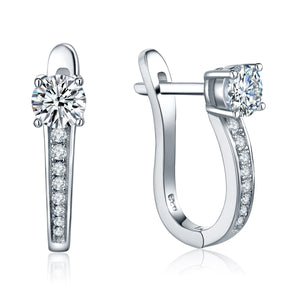
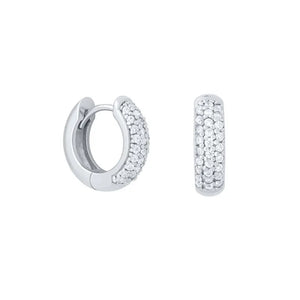
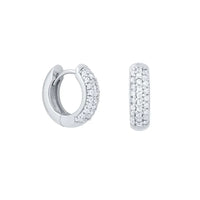
The piece they're describing → Boucles d'oreilles créoles Huggie pour femme, taille diamant — Argent sterling 925, hypoallergéniques
Personalize Yours


