


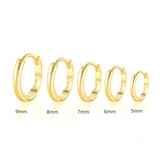
Huggie earrings are a popular choice for sensitive ears because their close fit and secure clasp reduce the movement and friction that can irritate a piercing. But not all huggie earrings are safe for sensitive skin — the style is fine; the metal is where things go wrong. This guide covers exactly what to look for, what to avoid, and why the base metal matters more than any "hypoallergenic" label.
Why Earrings Irritate Sensitive Ears
Nearly all jewelry-related ear reactions come from one source: nickel. Nickel is added as a hardening agent to cheap metal alloys — it's what makes brass-based gold-plated jewelry affordable to manufacture. It's also the most common metal allergen, affecting an estimated 17% of women and 3% of men.
The reaction develops because the earring post sits inside your piercing — direct contact with skin tissue — rather than just resting on the surface. A surface finish that looks gold or silver doesn't protect you if the core metal underneath contains nickel. Once plating wears through (which happens faster in areas of contact, like a post through a piercing), the base metal touches your skin directly.
The result: redness, itching, swelling, or a rash around the piercing hole. This is contact dermatitis from nickel. The solution is not a different earring style — it's a different base metal. See our full guide to hypoallergenic jewelry for the broader picture.
Safe Metals for Sensitive Ears
| Metal | Nickel-free? | Safe for sensitive ears? | Price range |
|---|---|---|---|
| 925 sterling silver | Yes | Yes | $20–$80 |
| 18K gold plated over 925 sterling | Yes | Yes | $20–$80 |
| Solid 14K gold | Yes | Yes | $150–$400 |
| Solid 18K gold | Yes | Yes | $250–$700 |
| Surgical steel (316L) | Yes | Yes for most | $10–$40 |
| Titanium | Yes | Yes — most hypoallergenic option | $20–$80 |
| Gold-plated brass | No | No — causes reactions | $5–$25 |
| White gold (most alloys) | No | No — contains nickel | $100–$600 |
| "Nickel silver" | No — misleading name | No | $5–$20 |
What to Look For When Buying
The product description should name the base metal explicitly. Language to look for:
- Safe: "925 sterling silver," "sterling silver core," "18K gold plated over 925 sterling silver," "solid 14K gold," "surgical steel 316L," "titanium"
- Avoid: "gold-tone," "gold-plated" (no base metal named), "alloy," "zinc alloy," "white metal," "nickel silver," "base metal"
If the listing doesn't name the base metal, assume it's brass and skip it if you have sensitive ears. Brands making earrings specifically for sensitive skin always name the base metal because it's their key differentiator — silence about the base metal is a red flag. See our best hypoallergenic jewelry brands guide for brands that pass this test.
AJLuxe Huggie Earrings: What Makes Them Safe
AJLuxe huggie earrings are made from 925 sterling silver with 18K gold plating. The base metal — sterling silver — is nickel-free, which means the post (the part inside your piercing) is safe even as the plating ages. You're not protected by the gold surface alone; you're protected by a sterling silver core that remains skin-safe indefinitely.
This is the difference between a $25 pair of earrings that's actually safe for sensitive ears and a $10 pair that's plated brass — both look identical. The base metal is invisible, which is why checking the listing details matters so much.
What to Avoid
"Nickel silver" — This is a name for a copper-zinc-nickel alloy with no silver in it. The name is used because the alloy has a silver appearance. It almost always causes reactions in people with metal sensitivity.
White gold huggie earrings — Most white gold jewelry is made by adding nickel to yellow gold to produce a pale color. Unless a white gold piece is specifically labeled "nickel-free" or rhodium-plated over palladium alloy, assume it contains nickel.
"Hypoallergenic" with no metal details — The word "hypoallergenic" has no legal definition in the United States. A brand can label any earring hypoallergenic without meeting any standard. The word alone is not protection.
Very cheap huggie earrings (under $10) — At that price point, sterling silver base metals are not viable for the manufacturer. The base is almost always brass or zinc alloy.
Huggie Earrings and New Piercings
Even if you choose the right metal, timing matters for new piercings. Wait at least 6 weeks after a lobe piercing before switching to huggie earrings. The hinged clasp requires more manipulation than removing a flat-back stud, which can disturb a healing piercing track. For cartilage piercings, wait 12 weeks minimum.
During healing, use flat-back labret studs in implant-grade titanium or solid 14K gold — these are specifically designed to minimize irritation in fresh piercings. Once healed, you can switch to huggie earrings in 925 sterling silver or 18K-plated-over-sterling without issue.
Keeping Sensitive-Ear-Safe Huggie Earrings Clean
A clean earring is a safer earring — product buildup, dead skin cells, and bacteria around the post can cause irritation even with a hypoallergenic metal. Clean your huggie earrings weekly:
- Wipe the post and clasp with a soft cloth dampened with mild soap and warm water.
- Rinse and dry thoroughly — trapped moisture accelerates tarnish on sterling silver.
- Never soak huggie earrings for extended periods; the hinge mechanism can collect water.
- Store in a sealed pouch or jewelry box between wears to slow tarnish.
Remove huggie earrings before swimming in pools or the ocean — chlorine and salt water both accelerate metal wear and can increase irritation risk.
Final Thoughts
The style of huggie earring doesn't determine whether they're safe for sensitive ears — the metal does. Choose 925 sterling silver or 18K gold plated over sterling silver, verify the base metal in the product listing, and avoid anything labeled "gold-tone," "alloy," or "nickel silver." With the right metal, huggie earrings are one of the most comfortable everyday earring styles for people with sensitive piercings.
Shop AJLuxe huggie earrings — all 18K gold plated over 925 sterling silver, nickel-free. Full details on what makes our earrings safe for sensitive ears are in our complete huggie earrings guide.
Frequently Asked Questions
Are huggie earrings good for sensitive ears?
Yes, as long as they're made from the right base metal. Choose 925 sterling silver or 18K gold plated over 925 sterling silver — both are nickel-free. Avoid huggie earrings with a brass base or vague labels like "gold-tone" with no metal specification.
What metal huggie earrings are best for sensitive ears?
925 sterling silver and 18K gold plated over 925 sterling silver are the best options at accessible price points. Both are nickel-free. Surgical steel (316L) and titanium are also safe; titanium is the most hypoallergenic option but less common in huggie styles.
Can I wear huggie earrings if I'm allergic to nickel?
Yes — choose huggie earrings with a 925 sterling silver base. Sterling silver contains no nickel. Avoid "gold-plated" huggie earrings where the base metal isn't specified, as the base is often brass or zinc alloy that may contain nickel.
Why do some earrings irritate my ears even when labeled hypoallergenic?
The term "hypoallergenic" has no legal definition in the US — any brand can use it without meeting any standard. Irritation almost always comes from the base metal (often brass) that's exposed when surface plating wears away. Always verify the actual base metal, not just the label.
Are gold huggie earrings safe for sensitive ears?
Only if they're solid gold or 18K gold plated over a 925 sterling silver base. Many budget gold huggie earrings are plated brass, which exposes the brass once the gold surface wears — causing irritation. The base metal must be nickel-free, not just the surface.
Is 925 sterling silver safe for sensitive ears?
Yes. 925 sterling silver is 92.5% pure silver and 7.5% copper — no nickel. It can tarnish, but the tarnish isn't an allergen and polishes off with a soft cloth. Sterling silver is one of the most recommended metals for sensitive piercings.
What should I avoid in huggie earrings for sensitive ears?
Avoid: brass-base huggie earrings, "gold-tone" or "silver-tone" with no metal specification, "nickel silver" (contains mostly nickel, no silver), "zinc alloy," most white gold alloys, and anything under $10 where the base metal is rarely disclosed.
Can huggie earrings cause a rash around the ear?
A rash or red ring around the piercing hole is almost always a nickel contact allergy from the earring's base metal. The solution is switching to 925 sterling silver or 18K gold plated over sterling silver — not just cleaning the existing earrings.
How do I know if huggie earrings will irritate my ears before buying?
Check the product listing for the base metal. Look for "925 sterling silver," "sterling silver base," or "18K gold plated over sterling silver." If the listing only says "gold-plated," "alloy," or gives no metal details, assume brass base and avoid if you have sensitive ears.
How long can I wear huggie earrings without irritation?
With 925 sterling silver or 18K plated over sterling silver, huggie earrings can be worn all day, every day, including during sleep. Remove before swimming or showering to extend plating life, and wait for piercings to fully heal (6 weeks for lobes, 12 weeks for cartilage) before switching to huggies.
Toutes les marques, noms de marque et noms de produits tiers sont la propriété de leurs détenteurs respectifs. AJLuxe n’est affilié à aucune marque tierce citée dans cet article, ni approuvé ou sponsorisé par celle-ci. Les noms de marque sont utilisés uniquement à des fins de comparaison factuelle, et les descriptions de matériaux reflètent les spécifications produit publiées par chaque marque au moment de la rédaction.
You Might Also Like
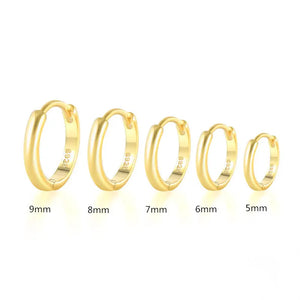
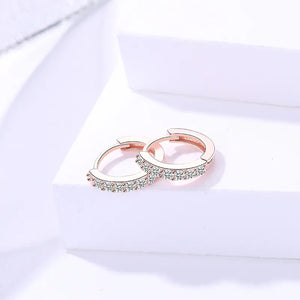

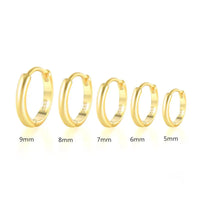
The piece they're describing → Boucles d'oreilles créoles dorées pour femme — Argent sterling 925, plaqué or 18 carats, minimalistes
Personalize Yours


