


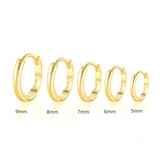
Most huggie earrings open at a small hinge on one side of the hoop: you gently lift the hinged post straight up and away from the fixed side of the hoop, like opening a tiny door, rather than unscrewing or unclasping anything in a straight line. Once you can see and feel that hinge, opening and closing a huggie stops being a guessing game — here's exactly how it works, what to do if one feels stuck or unusually stiff, and when to stop and get help instead of forcing it.
How Huggie Earrings Actually Open
A huggie earring opens at a hinge built into the hoop itself, not through a separate clasp or backing piece. Look closely at the hoop and you'll usually find a thin seam or slightly raised ridge on one side — that's the hinge (see our hinge ring guide for how the same closure works across other hoop styles). The hoop is split into two unequal parts at that point: a short, fixed section that stays attached to the loop, and a longer post section that swings open on the hinge and tucks into a small groove or catch on the other end when closed. That's the entire mechanism — no threading, no screwing, no separate butterfly back involved, even though some generic product spec sheets (including boilerplate on huggie listings across the industry) misdescribe huggies as push-back or butterfly-back style. A true huggie is a one-piece hinged hoop.
How to Open Huggie Earrings, Step by Step
Open a huggie earring by finding the hinge seam, holding the fixed side of the hoop still, and lifting the hinged post straight upward and outward until it releases from its catch. Here's the full sequence:
- Find the seam. Turn the hoop slowly under good light until you spot a thin line or feel a small ridge — that's where the hinge and catch meet. On most huggies this sits toward the back, near where the hoop would touch your earlobe.
- Steady the fixed side. Hold the shorter, fixed part of the hoop firmly between your thumb and forefinger. This is the anchor — it shouldn't move at all while you work the other side.
- Lift the hinged post upward. With your other hand, grip the longer post section near the hinge (not right at the tip) and lift it straight up and slightly outward, following the small arc the hinge is built to move in. You're not prying or twisting — it's a short, controlled lift.
- Let it swing free. Once the post clears the catch, the hinge will swing open on its own. You'll feel it release rather than needing to pull it the rest of the way.
The two mistakes that cause the most frustration are twisting the hoop like a screw-back (huggies don't unscrew) and pulling straight outward on the whole hoop instead of lifting at the hinge specifically. Both put sideways stress on a hinge that's only designed to move in one small arc.
How to Close a Huggie Without Forcing It
Closing a huggie means guiding the same hinged post back down into its catch until you feel — and usually hear — a soft click. Line the post up with the small groove or opening on the fixed side first, then press down gently and evenly rather than jamming it in at an angle. If it doesn't click into place on the first try, back off, re-check the alignment, and try again rather than pressing harder — misalignment, not weak pressure, is almost always why a huggie won't close on the first attempt.
Why a Brand-New Huggie Feels Stiffer Than an Older One
A brand-new huggie's hinge is genuinely stiffer than one you've worn for a few weeks, and that's normal, not a defect. Hinges on any small metal jewelry mechanism loosen slightly with normal use as the moving parts settle against each other — the same reason a new pair of scissors or a new door hinge can feel tighter than a well-used one. Expect a new huggie to take slightly more deliberate pressure to open for the first several wears, and to ease up on its own after that. It's a reason to be patient and precise on your first few tries, not a reason to force it.
The Other Common Style: Continuous "Clicker" Hoops
A smaller share of hoop earrings sold as "huggies" are actually continuous clicker hoops, which flex open at one point along the ring rather than swinging on a distinct visible hinge. If your hoop has no obvious seam or ridge anywhere and instead feels like it flexes slightly all along one side when you press it, you likely have this style rather than a classic hinged huggie — the opening motion is a gentle flex-and-release at that one flexible point instead of a hinge lift. Classic hinged huggies, including AJLuxe's, are the more common style and the one this guide focuses on; if you're not sure which you have, look for that thin seam line first, since it's the clearest way to tell the two apart.
My Huggie Earring Feels Stuck — What Now?
A stuck huggie almost always means the hinge is out of alignment or has picked up buildup, not that it's broken — stop pulling and reset before trying again. Work through this order:
- Stop pulling. Repeated force on a jammed hinge is what actually bends or damages it. If it's not moving after one gentle attempt, pause.
- Clean the hinge. Lotion, product buildup, or dead skin around the hinge is a common reason a normally-easy huggie suddenly feels tight. Wipe the area with a clean, dry cloth, or a cotton swab lightly dampened with rubbing alcohol, then dry it fully.
- Re-check the angle. Look at the hinge again under good light and confirm you're lifting from the correct point, close to the hinge rather than at the very tip of the post — leverage at the wrong spot is a common reason a hinge that isn't actually stuck still feels like it won't budge.
- Try again, gently. With the area clean and the angle confirmed, repeat the lift-and-release motion with light, steady pressure rather than a hard yank.
If it still won't move after cleaning and a careful second attempt, don't keep forcing it — repeated force is how a hinge actually gets bent or broken, turning a temporary stuck moment into a permanent one.
When a Stuck Earring Means It's Time to See a Piercer
If a huggie is stuck in a fresh or still-healing piercing, or removing it is genuinely painful, stop entirely and see a professional piercer rather than continuing to work at it yourself. Swelling, irritation, or tenderness around a newer piercing can make jewelry feel stuck even when the hinge itself is working fine, and pulling on inflamed skin risks real injury to the piercing. A piercer has tools and experience for exactly this situation. This guide covers the mechanical side of opening a hinge on a healed piercing — it isn't medical guidance, and any pain, swelling, redness, or discharge around the piercing site itself is a reason to talk to a piercer or doctor, not a reason to keep pulling.
Choosing Huggies With a Hinge That Won't Fight You
A well-made huggie hinge should open with light, controlled pressure and close with a clean, confident click — not grinding resistance or a loose wobble. Thin, poorly finished plating over a soft base metal is a common reason cheaper huggies develop hinges that stick or wear loose quickly. AJLuxe's minimalist huggie earrings are built on a 925 sterling silver base — real sterling silver, not brass or zinc alloy — with 18K gold plating, and are also available in silver and rose gold, in sizes from 5mm to 8mm. If you're shopping for your next pair, our huggie size guide and best huggie earrings roundup are good next stops.
Shop AJLuxe Silver Micro Pavé CZ Huggie Hoops
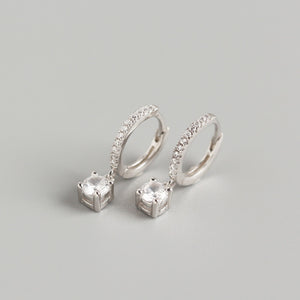
925 sterling silver, rhodium plated, with a row of micro-pavé CZ across the front arc — nickel-free, snap-hinge closure, sits close to the lobe.
Shop the Micro Pavé CZ Huggie Hoops →Shop AJLuxe 18K Gold Huggie Hoop Earrings
A 2.5mm 18K gold plated band in three sizes -- 15mm, 17mm, or 21mm -- with a hinged snap closure, sold as a pair.
Shop the Gold Huggie Hoop Earrings →Shop AJLuxe White Enamel Gold Hoop Earrings
A white fired-enamel inlay set in an 18K gold plated huggie hoop, over a 925 sterling silver base -- hinged snap closure, sold as a pair.
Shop the White Enamel Hoop Earrings →Frequently Asked Questions
How do you open a huggie clasp?
Hold the fixed side of the hoop still and lift the hinged post straight up and slightly outward from its catch, following the small arc built into the hinge. It releases with a light lift rather than a twist or a straight pull.
Why can't I get my huggie hoop earrings through my ear?
This is usually an opening-technique issue rather than a fit issue — people often try to twist the hoop like a screw-back or pull it straight outward instead of lifting specifically at the hinge. Find the seam first, then lift from there rather than pulling on the whole hoop.
How to fix a huggie earring that won't close?
Re-check the alignment before pressing harder — a huggie usually won't close because the post isn't lined up with its catch, not because it needs more force. Back off, line the post up with the small groove on the fixed side, and press down gently and evenly until it clicks.
How do you open huggie hoop earrings for the first time?
The same way as any huggie, just expect it to take slightly more deliberate pressure — new hinges are stiffer before they've been opened and closed a few times. Find the hinge seam, hold the fixed side steady, and lift the post carefully rather than yanking it.
How can I make huggie earrings more secure?
Make sure the post is fully seated in its catch with a clean click every time you close it — a huggie that isn't fully closed is the main reason one comes loose during the day. Choosing a well-made hinge on a solid metal base, rather than thin plating over a soft alloy, also helps it hold its fit over time.
How do you get a stuck huggie earring out?
Stop pulling, clean any buildup off the hinge area with a dry cloth or lightly alcohol-dampened cotton swab, re-check that you're lifting from the correct point near the hinge, then try again with light, steady pressure. If it still won't move, stop rather than forcing it.
Are huggie earrings supposed to fit tightly against the ear?
Yes — huggies are designed to sit snugly against the earlobe, which is where the name comes from, but "snug" means close-fitting, not pinching or painful. If a huggie is genuinely painful to wear, it's likely the wrong size for your ear rather than something to force into a comfortable fit.
Do huggie earrings need a backing?
No — a true hinged huggie is a self-closing, one-piece hoop with no separate backing piece involved, unlike stud earrings. The hinge and catch built into the hoop are the entire closure.
Toutes les marques, noms de marque et noms de produits tiers sont la propriété de leurs détenteurs respectifs. AJLuxe n’est affilié à aucune marque tierce citée dans cet article, ni approuvé ou sponsorisé par celle-ci. Les noms de marque sont utilisés uniquement à des fins de comparaison factuelle, et les descriptions de matériaux reflètent les spécifications produit publiées par chaque marque au moment de la rédaction.
You Might Also Like
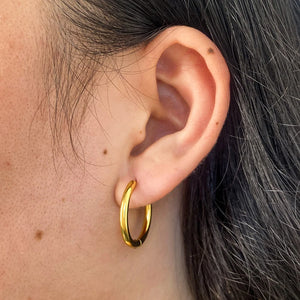
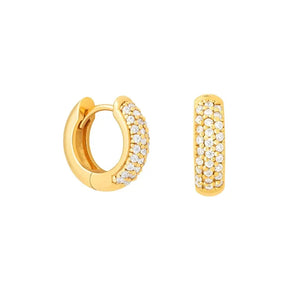
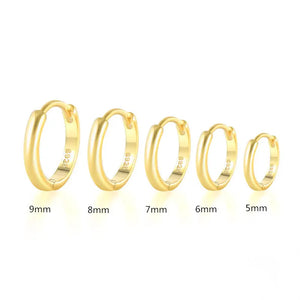
The piece they're describing → Boucles d'oreilles créoles dorées pour femme — Argent sterling 925, plaqué or 18 carats, minimalistes
Personalize Yours


