


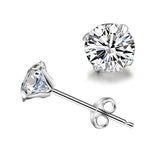
- Cubic zirconia sits at 8 to 8.5 on the Mohs hardness scale, softer than moissanite (9.25) and diamond (10), so it scratches more easily and needs gentler handling.
- Warm water, mild dish soap, and a soft-bristled brush is the safest method; skip ammonia, bleach, and abrasive polishes like toothpaste.
- Dull, cloudy CZ is almost always residue buildup trapped behind the stone, not damage, and a longer soak plus brushing the underside usually restores the sparkle.
- Prong-set CZ tolerates brushing well; bezel and pave settings need gentler, shorter cleaning since trapped moisture and tight metalwork hold onto residue longer.
- Skip home ultrasonic cleaners for pave and bezel-set CZ; a jeweler can safely deep-clean these settings if needed.
Cubic zirconia is one of the most popular diamond alternatives for a reason: it's brilliant, affordable, and holds up well to everyday wear. But CZ isn't diamond, and treating it like one when you clean it is the most common reason a once-sparkly piece starts looking dull, cloudy, or scratched within a year or two. Cubic zirconia is softer than both moissanite and natural diamond, which means it picks up fine surface scratches more easily and needs a gentler cleaning routine than the aggressive methods sometimes recommended for harder stones. The good news is that most "dull CZ" isn't actually damage at all, it's residue buildup from lotion, soap, and everyday oils trapped behind the stone where light needs to pass through for full sparkle. This guide covers the safe way to clean cubic zirconia jewelry at home, how to restore lost sparkle when residue is the culprit, what to avoid, and how care changes depending on whether your piece is prong-set, bezel-set, or pave.
The Safe Way to Clean Cubic Zirconia at Home
Cubic zirconia responds well to a simple, low-risk cleaning method, as long as you keep soak times shorter and the brushing gentler than you might for a harder stone like diamond or moissanite.
- Step 1: Fill a small bowl with warm (not hot) water and add a few drops of mild, ammonia-free dish soap. Avoid dish soaps with added moisturizers or heavy fragrance, which leave their own residue behind.
- Step 2: Soak the piece for 10 to 15 minutes, shorter than the 20-to-30-minute soak often recommended for diamonds, since CZ's softer surface and glued or foil-backed settings in some pieces don't benefit from extended water exposure.
- Step 3: Use a soft-bristled brush, a clean baby toothbrush works well, to gently brush the stone, the underside of the setting, and the metal around it. Use light pressure only; CZ's Mohs hardness of 8 to 8.5 means it scratches more easily than harder gemstones under firm scrubbing.
- Step 4: Rinse thoroughly under warm running water, with the drain covered or a strainer in place so a loose stone can't disappear.
- Step 5: Pat dry immediately with a lint-free cloth. Don't let CZ air-dry with water spots on it, since minerals in tap water can leave a faint film that dulls the surface over time.
This method is safe for sterling silver, gold-plated, and gold vermeil settings, which is how most CZ jewelry is made. Clean pieces you wear daily every one to two weeks, and always after applying lotion, sunscreen, or perfume near the jewelry.

Restoring Lost Sparkle: Why CZ Looks Dull and How to Fix It
If your cubic zirconia jewelry has lost its sparkle, the cause is almost never damage to the stone itself. It's residue, a thin film of soap scum, lotion, oil, or hard-water minerals trapped on the surface or, more often, behind the stone where light needs to travel through for maximum brilliance.
- Behind-the-stone buildup is the #1 cause. CZ is cut to bend and reflect light through the pavilion (the underside of the stone). Even a thin layer of residue there scatters that light instead of letting it bounce back, which reads as dullness even though the facets are perfectly intact.
- The fix: a longer, more targeted soak. Soak for the full 15 minutes, then angle your soft brush to reach directly under the stone and around each prong or the inside edge of a bezel, where buildup collects most.
- Hard water film needs a different fix. If your tap water is hard, rinse with distilled or filtered water as a final step, and dry immediately rather than air-drying, which is what allows mineral spots to form in the first place.
- Genuinely scratched CZ can't be cleaned back to brilliance. If the stone still looks hazy or cloudy after a thorough clean and residue really is removed, fine surface scratches from abrasive cleaning or rough wear are the likely cause, and re-polishing by a jeweler is the only fix at that point.
Most people assume dull CZ means a lower-quality stone or a fading effect, but in the vast majority of cases it's simply cleaning frequency catching up with everyday wear. A thorough clean restores the sparkle in minutes.
Chemicals and Methods to Avoid
Because cubic zirconia is softer than moissanite and diamond, and because so much CZ jewelry uses gold-plated or vermeil settings rather than solid metal, it's more sensitive to harsh chemicals than the cleaning advice you'll find written for diamond jewelry.
- Ammonia-based cleaners: Skip these entirely for CZ, especially on plated or vermeil settings, where ammonia can strip the plating over repeated use and dull the metal's finish faster than it would on solid gold.
- Chlorine bleach and pool or hot tub water: Chlorine pits and weakens plated finishes and can react with the glue sometimes used in foil-backed or pave settings.
- Toothpaste or baking soda: Both are mildly abrasive. On a harder stone like diamond the risk is mostly to the metal, but on CZ's softer surface, repeated use can leave fine scratches on the facets themselves.
- Rubbing alcohol: It can be used sparingly as a quick wipe for fingerprints on solid prong-set pieces, but it's not a substitute for a proper soak-and-brush clean, and it can dry out and dull certain plated finishes with frequent use.
- Vinegar and other acidic cleaners: Acidity can discolor gold-plated and vermeil settings and is unnecessary given how well plain dish soap works.
- Prolonged soaking: Leaving CZ jewelry submerged for hours, or soaking it repeatedly in hot water, can loosen glued-in stones and, on plated settings, accelerate wear of the surface layer.
Are Ultrasonic Cleaners Safe for Cubic Zirconia?
Ultrasonic cleaners are common in jewelry stores and increasingly sold for home use, but they carry real risk for cubic zirconia jewelry that most product listings don't mention.
- Solid, prong-set CZ in well-made solid metal: Generally tolerates occasional ultrasonic cleaning, similar to a solid diamond solitaire.
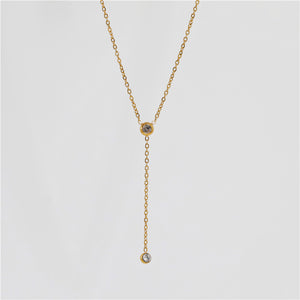
- Bezel-set CZ: Higher risk. Bezel settings can trap moisture and vibration against the stone's girdle, and over repeated cycles this can work the metal rim looser than a prong setting would show. AJLuxe's CZ Y-necklace is a real example of this setting type — its two round stones are both bezel-set, so it belongs in the gentler-clean, skip-the-ultrasonic group above rather than the solid prong-set group.
- Pave and cluster CZ: Avoid ultrasonic cleaners entirely. Many small stones held by thin prongs or glue are the most likely setting type to lose a stone under sustained vibration.
- Gold-plated or vermeil CZ: Skip ultrasonic cleaning regardless of setting type. The vibration and heat generated during a cleaning cycle can accelerate wear on a thin plated layer in a way it wouldn't on solid gold.
If you're not sure which category your piece falls into, the dish soap method above is the safer default, and a jeweler can tell you in under a minute whether a specific piece is a good ultrasonic candidate.
CZ vs. Moissanite vs. Diamond: Hardness and Cleaning Care
Hardness is the main reason CZ, moissanite, and diamond need slightly different cleaning approaches, even though the basic warm-soap-and-brush method works for all three. Here's how they compare:
| Stone | Mohs Hardness | Scratch Risk | Ammonia | Ultrasonic Cleaner | Ideal Soak Time |
|---|---|---|---|---|---|
| Cubic zirconia | 8 – 8.5 | Highest of the three | Avoid, especially on plated settings | Solid prong-set only; skip on pave/bezel/plated | 10–15 minutes |
| Moissanite | 9.25 | Low | Safe in diluted form on solid settings | Generally safe on solid settings | 15–20 minutes |
| Natural diamond | 10 | Lowest of the three | Safe in diluted form on solid settings | Generally safe except pave/halo/fracture-filled | 20–30 minutes |
The pattern: the softer the stone, the gentler and shorter the cleaning session should be, and the more caution you should apply around chemicals and vibration-based cleaning tools. CZ isn't fragile by any means, it holds up fine to years of daily wear, but it does reward a slightly more careful cleaning routine than diamond does.

Care by Setting Type: Prong, Bezel, and Pave
How a CZ stone is set changes how you should clean it just as much as the stone's hardness does. Here's how to adjust your routine by setting type.
- Prong settings: The most forgiving to clean. Prongs leave the stone mostly exposed, so water and soap reach the underside easily during a soak, and a soft brush can get behind the stone without much trouble. This is also the setting type most tolerant of an occasional ultrasonic clean, if solid metal.
- Bezel settings: The metal rim that wraps the stone's edge in a bezel setting also traps moisture and residue against the girdle, so bezel-set CZ benefits from a slightly longer, gentler brush pass right along the metal-to-stone seam, where grime accumulates fastest. Dry these thoroughly, since trapped moisture under a bezel is a common cause of a cloudy-looking edge.
- Pave and cluster settings: Many small stones held by thin prongs mean more crevices for residue to hide in and more risk of a stone loosening under aggressive brushing. Use the lightest touch here, a very soft brush and short, gentle strokes rather than scrubbing, and skip ultrasonic cleaners entirely.
If you're not sure which setting type your piece uses, look at how much metal touches the stone: prongs are small individual claws, a bezel is a continuous metal rim, and pave is a cluster of small stones set closely together with tiny shared prongs.
Storage and Cleaning Frequency
Good storage habits reduce how often you need a deep clean and protect the stone from the scratches that cause permanent dullness rather than temporary residue buildup.
- Store CZ pieces separately from other jewelry, ideally in a soft pouch or a lined compartment, since CZ is harder than most metals and can scratch gold, silver, or plated pieces it comes into contact with, and other harder stones like diamond or moissanite can scratch CZ back.
- Remove CZ jewelry before swimming, showering, or exercising. Chlorine, sweat, and lotion buildup are the fastest routes to a dull, hazy stone.
- Daily-wear pieces (CZ studs, an everyday ring) benefit from a quick wipe with a soft cloth after each wear and a full soak-and-brush clean every one to two weeks.
- Occasional-wear pieces hold their sparkle fine with a clean before and after each wear, since residue has less time to build up.
- Have a jeweler check the setting once a year for daily-wear pieces, especially prong-set rings, to catch a loosening prong before a stone is lost, the same recommendation that applies to diamond and moissanite jewelry.
Shop AJLuxe Moissanite Hoop Earrings
925 sterling silver hoops set with lab-created CZ in a hinge-and-latch closure — nickel-free, unplated, 18.5mm.
Shop the Moissanite Hoop Earrings →Shop the April Birthstone Infinity Necklace
925 sterling silver, left unplated, set with a clear cubic zirconia in an infinity pendant — nickel-free, $59.99.
Shop the April Necklace →Shop the January Garnet Infinity Necklace
925 sterling silver, rhodium plated, set with simulated garnet and a cubic zirconia center stone — nickel-free, 16.5" + 2" extender.
Shop the January Birthstone Necklace →Shop AJLuxe August Birthstone Necklace
925 sterling silver infinity pendant, rhodium-plated, set with disclosed cubic zirconia in peridot green — nickel-free, $59.99.
Shop the August Birthstone Necklace →Shop AJLuxe Baguette Birthstone Charm Necklace
A true baguette-cut CZ pendant in all 12 birth-month colors, 18K gold plated, $27.99.
Shop the Baguette Birthstone Necklace →Shop AJLuxe Silver Micro Pavé CZ Huggie Hoops
925 sterling silver, rhodium plated, with a row of micro-pavé CZ across the front arc — nickel-free, snap-hinge closure, sits close to the lobe.
Shop the Micro Pavé CZ Huggie Hoops →Frequently Asked Questions
How do you safely clean cubic zirconia jewelry at home without damaging the stone or setting?
Soak the piece for 10 to 15 minutes in warm water with a few drops of mild, ammonia-free dish soap, gently brush with a soft-bristled brush, rinse thoroughly, and dry immediately with a lint-free cloth. Keep soak times shorter and pressure lighter than you would for diamond, since CZ is softer.
What is the best method to restore sparkle to dull cubic zirconia that looks cloudy or grimy?
A longer, targeted soak with brushing directly underneath the stone and around the setting almost always restores lost sparkle, since dullness is nearly always residue trapped where light needs to pass through, not damage to the stone.
Which chemicals and household cleaners should you avoid when cleaning cubic zirconia?
Avoid ammonia, chlorine bleach, vinegar, and other acidic cleaners, especially on gold-plated or vermeil settings, where these can strip the plating or discolor the metal over repeated use.
Is it safe to use an ultrasonic cleaner for cubic zirconia jewelry, and what risks does it pose?
Only for solid, prong-set CZ in solid (not plated) metal. Bezel, pave, and gold-plated CZ settings are higher risk, since vibration can loosen thin prongs or accelerate wear on a plated surface.
How does the cleaning process differ for cubic zirconia in prong settings versus bezel settings?
Prong settings are the easiest to clean since the stone is mostly exposed to water and brushing. Bezel settings trap moisture and residue along the metal-to-stone seam and need a gentler, more targeted brush pass plus thorough drying to avoid a cloudy-looking edge.
What cleaning advice for cubic zirconia differs from care for diamonds or moissanite?
CZ is softer (8–8.5 Mohs) than moissanite (9.25) and diamond (10), so it needs shorter soak times, lighter brushing, and more caution around ammonia and ultrasonic cleaners, particularly on gold-plated or vermeil settings common in CZ jewelry.
Should you use toothpaste or baking soda to clean cubic zirconia, and why are they discouraged?
No. Both are mildly abrasive, and because CZ is softer than diamond or moissanite, repeated use can leave fine scratches on the stone's facets, not just on the surrounding metal.
Is warm water and mild dish soap the recommended cleaning solution, and how long should you soak the jewelry?
Yes, a few drops of ammonia-free dish soap in warm water is the safest method. Soak for 10 to 15 minutes, shorter than the 20-to-30-minute soak sometimes recommended for diamond jewelry.
What type of brush is safest to use for scrubbing cubic zirconia without scratching the stone or metal?
A soft-bristled brush, a clean baby toothbrush works well, used with light pressure. Firm scrubbing is more likely to leave fine scratches on CZ than on harder stones.
How often should you clean cubic zirconia jewelry if worn daily versus only for special occasions?
Every one to two weeks for daily-wear pieces, plus a quick wipe after each wear. Occasional-wear pieces only need cleaning before and after each time they're worn, since residue has less time to accumulate.
How should you store cubic zirconia jewelry to prevent scratches and maintain its brilliance over time?
Store CZ pieces separately in a soft pouch or lined compartment. CZ can scratch softer metals and can itself be scratched by harder stones like diamond or moissanite if pieces touch in storage.
Can rubbing alcohol be used to clean cubic zirconia, and is it safer than water-based methods?
It can work as an occasional quick wipe for fingerprints on solid prong-set pieces, but it's not a substitute for a proper soak-and-brush clean and can dry out plated finishes with frequent use.
Why is prolonged soaking in hot water or soapy mixtures potentially harmful to cubic zirconia settings?
Extended or repeated hot soaks can loosen glued-in stones and, on gold-plated or vermeil settings, wear down the thin plated layer faster than a brief warm-water soak would.
When should you take your cubic zirconia jewelry to a professional jeweler for cleaning and inspection instead of cleaning it yourself?
If the stone still looks hazy after a thorough clean, if a prong feels loose, or if you're unsure whether your setting can safely handle an ultrasonic clean, a jeweler can inspect and deep-clean the piece safely, the same recommendation that applies to diamond and moissanite jewelry.
Final Thoughts
Cubic zirconia holds up beautifully to years of daily wear, but it rewards a gentler cleaning routine than diamond or moissanite, its softer 8 to 8.5 Mohs hardness means shorter soaks, lighter brushing, and more caution around ammonia and ultrasonic cleaners, especially on gold-plated and vermeil settings. Most of the time, dull or cloudy CZ isn't damage at all, it's residue trapped behind the stone, and a thorough soak-and-brush clean targeting the underside of the setting restores the sparkle in minutes. Match your routine to the setting type too: prong-set CZ is the most forgiving to clean, while bezel and pave settings need a lighter touch and more attention to drying. Pair regular at-home cleaning with an annual prong check from a jeweler, and your CZ jewelry will keep its brilliance for years. For care guidance on tarnish-prone metals paired with CZ, see our guide to cleaning tarnished jewelry, and if you're comparing CZ care to natural diamond care specifically, our guide on how to clean jewelry with diamonds covers that side in depth.
Shop AJLuxe's sparkling CZ pendant
Shop the Round Brilliant Cut CZ NecklaceShop This Guide
Browse our full necklaces collection for more sterling silver and 18K gold plated CZ pieces built to hold their sparkle with easy, everyday care.
AJLuxe Team. Last updated: July 2026. Source: Jewelers of America, Jewelry Care.
Toutes les marques, noms de marque et noms de produits tiers sont la propriété de leurs détenteurs respectifs. AJLuxe n’est affilié à aucune marque tierce citée dans cet article, ni approuvé ou sponsorisé par celle-ci. Les noms de marque sont utilisés uniquement à des fins de comparaison factuelle, et les descriptions de matériaux reflètent les spécifications produit publiées par chaque marque au moment de la rédaction.
You Might Also Like
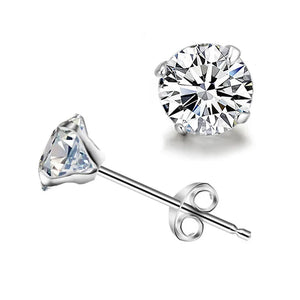
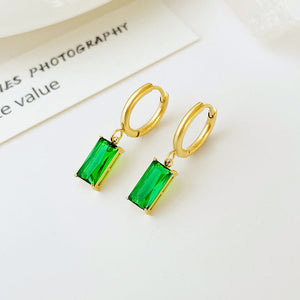
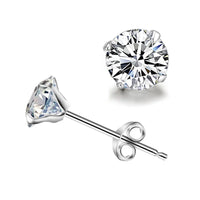
The piece they're describing → Puces d'oreilles en oxyde de zirconium pour femme — Argent sterling 925, oxyde de zirconium, hypoallergéniques
Personalize Yours


