


The five real alternatives to a traditional mined-diamond engagement ring are moissanite, lab-grown diamond, colored gemstone, vintage or heirloom, and non-ring commitment jewelry. Moissanite costs 80–90% less than a mined diamond and is nearly as hard (Mohs 9.25 vs 10). Lab diamonds cost 70–90% less but hold almost no resale value. Colored gemstones (sapphire, emerald, moss agate) offer the most personality per dollar but some need extra care. Vintage and heirloom rings carry sentimental and often better resale value, with the tradeoff of sizing and condition work. Choose based on your top priority — budget, ethics, uniqueness, or durability — not just what looks good in a photo.
The average mined-diamond engagement ring in the US costs somewhere between $3,000 and $7,000. That number scares off a lot of couples before they even start shopping — and it should, because it's not the only option. This guide breaks down every real engagement ring alternative: what it costs, how it holds up day to day, where the stone actually comes from, what it's worth if you ever sell it, and how it looks and wears compared to a traditional diamond. No hedging, no "it depends" — just the actual tradeoffs for each option so you can pick the one that fits your budget, your ethics, and your style.
One thing this guide doesn't cover: band design. If what you actually want is a different-looking band rather than a different stone — stacking sets, wire-wrap, chain-link, or mixed-metal — that's a separate question with its own tradeoffs, covered in our non-traditional wedding rings guide.
Engagement Ring Alternatives Compared
Here's how the five main alternatives stack up against each other and against a traditional mined diamond, across the five factors that actually matter when you're choosing.
| Alternative | Cost vs. Mined Diamond | Durability (Mohs Scale) | Ethical Sourcing | Resale Value | Look & Wear |
|---|---|---|---|---|---|
| Moissanite | 80–90% less. A 1-carat moissanite runs $300–$600 vs. $4,000+ for a comparable mined diamond. | 9.25 — scratch-resistant enough for daily wear, second only to diamond. | Lab-created silicon carbide. No mining, fully traceable, conflict-free by definition. | Low. Moissanite is not a scarcity asset — resale is typically 10–20% of purchase price. | More fire (rainbow flash) than a diamond in direct light. Some people love this, some find it "too sparkly." |
| Lab-grown diamond | 70–90% less. A 1-carat lab diamond averages around $1,000 vs. $4,200+ mined (2026 pricing). | 10 — chemically and physically identical to a mined diamond. | Grown in a lab, no mining footprint. Verify grower certification (IGI or GIA) for a clean paper trail. | Low. Typically 10–30% of retail — new supply keeps growing, so there's no scarcity to prop up resale. | Identical to a mined diamond in every optical and physical way. Indistinguishable without lab equipment. |
| Colored gemstone (sapphire, emerald, moss agate) | Wide range. Sapphire and emerald run comparable to or less than diamond; moss agate and other softer stones cost far less. | Varies: sapphire 9, emerald 7.5–8, moss agate 6.5–7. Softer stones need more careful wear. | Varies by origin — ask for a lab report (GIA) noting treatment and origin; some sapphires and emeralds are heavily treated. | Moderate to high for fine sapphire and emerald with provenance; low for softer, commercial-grade stones. | Color and individuality no diamond has. Every stone is visibly unique, which cuts both ways — no two look identical. |
| Vintage / heirloom | Highly variable — can be far cheaper than new (estate pieces) or more expensive (rare antique cuts, signed pieces). | Depends on age and prior wear. Older prongs and thin bands may need reinforcement before daily wear. | Zero new mining impact — reusing an existing stone and setting is one of the most ethical choices available. | Often the highest of any option, especially for signed or well-documented antique pieces. | Old European cut and rose cut stones have a warmer, softer sparkle diamonds cut today don't replicate. |
| Non-ring commitment jewelry (necklace, bracelet, locket) | Typically the lowest upfront cost of any option — no diamond-equivalent centerpiece required. | Depends on piece and metal; daily-wear jewelry needs the same care as any fine jewelry. | Easiest to source ethically since there's no large center stone driving the choice. | Low to moderate — driven by metal content and brand, not stone rarity. | No ring-finger signaling (may need to explain the gesture), but avoids issues with manual work, sports, or ring-averse partners. |
The pattern that jumps out: nothing beats moissanite or lab diamond on cost, nothing beats vintage on resale and ethics simultaneously, and colored gemstones are the only category where the stone itself becomes part of the personality of the piece.
Moissanite: The Budget-and-Ethics Pick
Moissanite is silicon carbide, grown in a lab, and it's the closest thing to a diamond you can buy for the price. At 9.25 on the Mohs hardness scale, it holds up to daily wear — cooking, typing, gym sessions — nearly as well as a diamond's perfect 10. If you love the sparkle-per-dollar but want earrings rather than a ring, see our best moissanite earrings guide.
The tradeoff is optical, not structural. Moissanite has a higher refractive index than diamond, which means it throws more colored fire (rainbow flashes) in direct light. Some people find this beautiful. Others — particularly if they're used to a diamond's whiter, more subdued sparkle — find it too flashy for daily wear. See it in person before you commit if this matters to you.
Because it's entirely lab-created, there's no mining supply chain to question. It's conflict-free by definition, not by certification. That makes it one of the two most ethically uncomplicated choices on this list, alongside lab-grown diamond.
Lab-Grown Diamond: Same Stone, Different Origin
A lab-grown diamond is chemically, physically, and optically identical to a mined diamond — the only difference is where it was formed. That means it takes the same care, holds the same daily-wear durability, and will not visually "give itself away" the way moissanite's extra fire sometimes does.
The catch is resale. A lab diamond typically retains just 10–30% of its purchase price if sold later, because the supply is not finite — more can always be grown. If resale value matters to you, a lab diamond is not where you'll find it. If wearing a stone that's optically and chemically a real diamond matters more than resale, this is the strongest pick on the list.
Always ask for grading from an independent lab — GIA or IGI — so you know exactly what you're buying, since lab diamonds are graded on the same 4Cs scale as mined stones.
Colored Gemstones: Sapphire, Emerald, and Moss Agate
This is the category with the most personality — and the widest cost range. A fine blue sapphire can rival a diamond's price at the top end, while a moss agate or a smaller-carat sapphire can come in well under it.
Durability varies by stone. Sapphire sits at 9 on the Mohs scale — genuinely daily-wear durable. Emerald drops to 7.5–8, and its structure tends to include natural inclusions that make it more prone to chipping on a hard knock. Moss agate is softer still (6.5–7) and better suited to someone who takes rings off for manual work or sports.
Ask specifically about treatment and origin before buying a colored gemstone. Many commercial sapphires and emeralds are heat-treated or oiled to improve clarity — this is normal and doesn't devalue the stone, but it should be disclosed on a lab report, ideally from GIA.
Vintage and Heirloom Rings
A vintage or heirloom ring is the only alternative on this list where the stone has already been mined — so there's no new environmental or ethical footprint from your purchase. That makes it, alongside lab-created stones, one of the most defensible choices if sourcing is your top concern.
The tradeoffs are practical, not moral. Older settings can have thin, worn prongs that need reinforcement before the ring goes into daily wear. Sizing an antique ring sometimes means the band has to be cut and re-soldered, which can affect delicate filigree work. Budget for a jeweler's inspection and possible resetting before you propose with a piece that's been sitting in a drawer for 40 years.
On resale, well-documented antique and signed pieces (Art Deco, Edwardian, named designers) often hold value better than any new ring — including a mined diamond — because the design itself, not just the stone, carries collector value.
Non-Ring Alternatives: Necklaces, Bracelets, and Lockets
Not everyone wants a ring — jobs that involve manual work, frequent hand-washing, or contact sports make a ring impractical, and some people simply don't want something on their hand permanently. A necklace, bracelet, or locket can carry the same meaning without the daily-wear conflict.
The main adjustment is social, not financial: a ring is an instantly recognized signal of engagement. A necklace or bracelet isn't, so you may find yourself explaining the gesture more than you would with a ring. For couples who don't care about that signal, this is usually the lowest-cost option on the whole list, since there's no diamond-equivalent centerpiece to budget around.
How to Choose: By What Matters Most to You
There's no single "best" alternative — there's the one that matches your actual priority. Here's how to decide based on what you care about most.
Budget-First
Go moissanite or lab-grown diamond. Both cost 70–90% less than a comparable mined diamond and both hold up to daily wear. Moissanite is the cheaper of the two at the same visual size; lab diamond is the choice if you specifically want the stone to test as a real diamond.
Ethics-First
Go moissanite, lab-grown diamond, or vintage/heirloom. All three avoid new mining. Moissanite and lab diamonds are lab-created with no supply chain to question; vintage reuses a stone that's already out of the ground, so there's zero new extraction involved in your purchase.
Uniqueness-First
Go colored gemstone or vintage. A sapphire, emerald, or moss agate ring signals individuality in a way no round-brilliant diamond-look-alike can. Vintage rings add a design era and craftsmanship style you can't order new.
Durability-First
Go lab-grown diamond (Mohs 10) or moissanite (Mohs 9.25) if the ring needs to survive an active daily routine without babying it. Sapphire (Mohs 9) is a strong colored-gemstone option if you want durability with color. Avoid emerald and moss agate for a primary daily-wear stone unless you're prepared to take the ring off for physical work.
Shop the moissanite halo ring: If moissanite is your pick, AJLuxe's Moissanite Halo Ring pairs a brilliant-cut center stone with a sterling silver or 18K white gold halo setting — Buy 2, Save 20% · Buy 3+, Save 30% when you add a matching band or a second colorway.
Shop the Moissanite Halo RingRelated reading: Best Jewelry Stores for Engagement Rings (2026): A Buyer's Comparison Guide.
Related reading: Best Friend Necklaces for Two (2026): Split Pendants vs. Matching Pairs, Compared.
Related reading: Best String for Beaded Bracelets (2026): 6 Types Compared.
Related reading: Best Stretchy String for Bracelets (2026): 6 Types Compared.
Related reading: 6 Best Stretchy Cords for Bracelets (2026), Compared.
Frequently Asked Questions
Is moissanite a good engagement ring alternative?
Yes. Moissanite is 9.25 on the Mohs hardness scale, durable enough for daily wear, and costs 80–90% less than a comparable mined diamond. Its main tradeoff is more colored fire (rainbow flashes) in direct light compared to a diamond's whiter sparkle — see it in person if that matters to you.
What is the most ethical engagement ring alternative?
Lab-grown diamond, moissanite, and vintage/heirloom rings are the three most ethical choices. Lab diamonds and moissanite are lab-created with no mining supply chain. Vintage rings reuse a stone that's already been mined, so there's no new extraction tied to your purchase.
Do lab-grown diamonds hold their value?
No, not well. Lab-grown diamonds typically retain only 10–30% of their purchase price on resale, because supply isn't limited — more can always be grown. If resale value is a priority, a mined diamond or a documented vintage piece holds value better.
Can you tell the difference between moissanite and a diamond?
Most people cannot tell by eye. A jeweler can identify moissanite using a diamond/moissanite tester, since moissanite conducts electricity differently than diamond. Visually, moissanite throws more rainbow-colored fire in direct light, which is the main giveaway to a trained eye.
Are colored gemstone engagement rings durable enough for daily wear?
It depends on the stone. Sapphire (Mohs 9) is durable enough for daily wear. Emerald (Mohs 7.5–8) and moss agate (Mohs 6.5–7) are softer and more prone to chipping on a hard knock, so they suit someone willing to remove the ring for manual work or sports.
Is a vintage engagement ring a good idea?
Yes, with a caveat: have a jeweler inspect the setting before you propose. Older prongs can be worn thin, and antique bands sometimes need reinforcement or resizing before daily wear. Once inspected and serviced, a vintage ring is one of the most ethical and often best-resale-value choices available.
What can you give instead of an engagement ring?
Necklaces, bracelets, and lockets are the most common non-ring alternatives. They work well for people whose jobs or lifestyle make a ring impractical, or who simply prefer not to wear one. The tradeoff is that a ring is instantly recognized as an engagement signal — non-ring jewelry usually isn't, so you may need to explain the gesture more.
How much cheaper is moissanite than a real diamond?
Moissanite typically costs 80–90% less than a comparable mined diamond. A 1-carat moissanite runs roughly $300–$600, while a comparable 1-carat mined diamond averages $4,000 or more, depending on the 4Cs.
Is a lab diamond considered a "real" diamond?
Yes. A lab-grown diamond is chemically, physically, and optically identical to a mined diamond — same carbon crystal structure, same hardness (Mohs 10), same fire and brilliance. The only difference is where it formed: a lab instead of underground. Independent labs like GIA grade lab diamonds on the same 4Cs scale as mined stones.
What's the best engagement ring alternative for someone on a tight budget?
Moissanite offers the lowest cost per carat of visual size while still holding up to daily wear. For an even lower-cost option, a colored gemstone like moss agate or a non-ring piece of commitment jewelry can cost less than a diamond-look-alike centerpiece entirely.
Final Thoughts
There's no wrong answer here — only a mismatch between the ring you buy and the priority that actually matters to you. If cost is the driver, moissanite or lab-grown diamond gets you there without compromising durability. If sourcing is the concern, those two plus vintage cover it. If you want something no one else has, a colored gemstone or an antique piece delivers that in a way a round-brilliant lookalike never will. Match the ring to the priority, not the other way around.
Written by the AJLuxe team — specialists in personalized sterling silver jewelry. Last updated: July 2026. We work directly with moissanite, CZ, and gemstone engagement ring styles daily, from sourcing to setting, which is what this comparison is built on.
Toutes les marques, noms de marque et noms de produits tiers sont la propriété de leurs détenteurs respectifs. AJLuxe n’est affilié à aucune marque tierce citée dans cet article, ni approuvé ou sponsorisé par celle-ci. Les noms de marque sont utilisés uniquement à des fins de comparaison factuelle, et les descriptions de matériaux reflètent les spécifications produit publiées par chaque marque au moment de la rédaction.
You Might Also Like
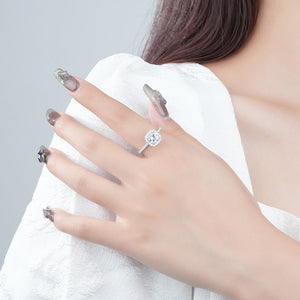
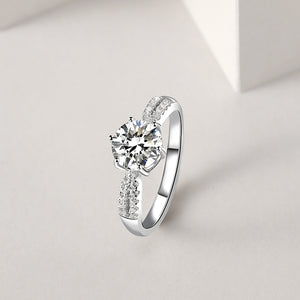
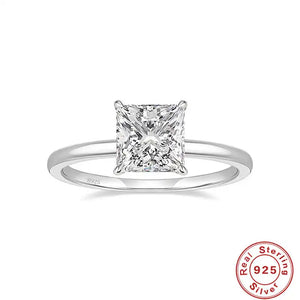
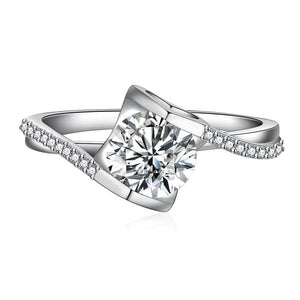
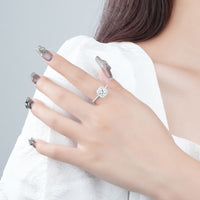
The piece they're describing → Bague auréole de moissanite — Argent sterling, or blanc 18 carats, oxyde de zirconium
Personalize Yours


