


- The ear breaks into three zones for planning purposes: the lobe (soft tissue, fast healing), the outer rim (helix, forward helix, industrial), and the inner cartilage (rook, snug, tragus, conch, daith, orbital).
- Lobe piercings heal in about 6–8 weeks; cartilage piercings take 6–12 months, and snug specifically can run 9–18 months, per the Association of Professional Piercers.
- Fresh cartilage piercings need implant-grade titanium, surgical steel, or solid 14K/18K gold — not sterling silver, which is too soft for an open wound. Once fully healed, sterling silver is fine to swap in.
- There's no scientific evidence a daith piercing treats migraines — the American Migraine Foundation doesn't recommend it and cites infection risk against unproven benefit.
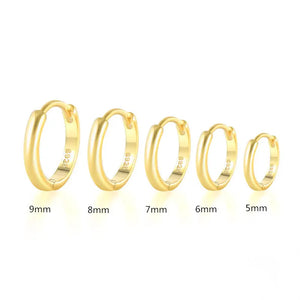
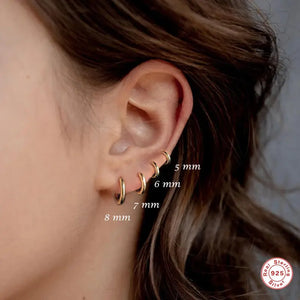
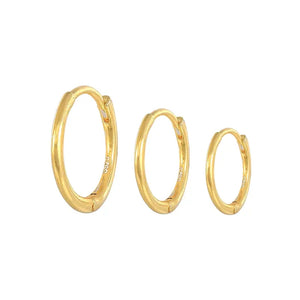
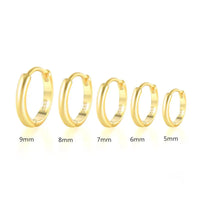
- For healed cartilage or any lobe position, AJLuxe's 925 Sterling Silver Minimalist Huggie Earrings ($34.99) are small and flat enough to work across most placements — not a substitute for titanium as first jewelry in a fresh cartilage piercing.
Most "ear piercing chart" results are either a lobe-only diagram or a dense glossary that defines all 15 placements without saying which ones actually go together on one ear. This guide is built as a real planning map: it groups every placement by where it physically sits — lobe, outer rim, inner cartilage — so you can see spacing and combinations at a glance, plus the one piece most charts skip: which metal is safe for a fresh piercing versus a healed one. For lobe-only depth (spacing between a 2nd and 3rd lobe piercing, gauge, how many you can fit), see our earlobe piercing chart. For a full side-by-side of all 15 placements with pain and healing detail, see types of ear piercings. This page is the zoomed-out map that ties both together.
What Is an Ear Piercing Chart?
An ear piercing chart is a reference that shows where every placement on the ear sits relative to the others, grouped so you can plan a multi-piercing "curated ear" instead of booking placements one at a time with no bigger picture. The ear splits into three practical zones: the lobe (soft, well-supplied tissue that heals fast and tolerates almost any jewelry), the outer rim running from the top of the ear down toward the lobe (helix, forward helix, industrial), and the inner cartilage closer to the ear canal (rook, snug, tragus, conch, daith, orbital). Cartilage in any zone heals slower and hurts more than the lobe because it has far less blood supply — which is also why fresh cartilage jewelry has stricter material rules than a lobe stud does.
| Placement | Ear zone | Pain (1–10) | Healing time | Safe first metal |
|---|---|---|---|---|
| Lobe (1st–4th) | Lobe | 2–4 | ~6–8 weeks | Sterling silver, gold, most metals |
| Helix | Outer rim | 5–6 | ~6–9 months | Titanium, surgical steel, 14K/18K gold |
| Forward helix | Outer rim | 5–7 | ~6–12 months | Titanium, surgical steel, 14K/18K gold |
| Industrial | Outer rim (2 points, 1 bar) | 7–8 | ~6–12 months | Titanium, surgical steel |
| Rook | Inner fold | 6–8 | ~9–12 months | Titanium, surgical steel |
| Snug | Inner rim fold | 7–9 | ~9–18 months | Titanium, surgical steel |
| Tragus | Near ear canal | 5–7 | ~6–12 months | Titanium, surgical steel, 14K/18K gold |
| Conch | Center cartilage | 5–7 | ~6–12 months | Titanium, surgical steel, 14K/18K gold |
| Daith | Innermost fold | 5–7 | ~6–12 months | Titanium, surgical steel |
| Orbital | Any 2 points, 1 ring | 5–7 | ~6–12 months | Titanium, surgical steel |
Pain and healing ranges per the Association of Professional Piercers and consistent with our full types of ear piercings comparison — individual healing varies by person and aftercare.

How the Zones Work for Combining Piercings
The fastest way to plan a multi-piercing ear is by zone, not by picking placements at random — each zone has its own spacing logic. The lobe zone can usually hold two to four piercings on its own timeline, entirely separate from anything happening in cartilage; see our earlobe piercing chart for exact lobe spacing and gauge. The outer rim (helix, forward helix) has more room to add a second or third point without them competing, which is why it's the most common zone for a stacked cartilage look — an industrial simply connects two of those outer-rim points with a single bar, which is why a piercer needs to confirm both points line up before piercing either one. The inner cartilage zone (rook, snug, tragus, conch, daith) is tighter and higher-risk for tension between piercings, so most piercers won't do more than one new inner-cartilage piercing per visit, spacing additional ones across separate appointments once the first has settled.
Fresh vs. Healed: Which Metals Are Safe for Each Placement
The safest first metal for any fresh cartilage piercing — helix, rook, tragus, conch, daith, industrial, snug, orbital, forward helix — is implant-grade titanium, surgical steel (316L), or solid 14K/18K gold, because these materials are highly biocompatible and won't react with an open wound the way a softer or less pure metal can. Sterling silver is fine for a lobe piercing from day one, since lobe tissue is soft and well-healed within weeks, but it's genuinely too soft and slightly porous for fresh cartilage — it can tarnish inside the healing channel and slow things down. Once a cartilage piercing is fully healed, that changes: sterling silver becomes a safe swap-in for styling. AJLuxe's 925 Sterling Silver Minimalist Huggie Earrings ($34.99, 18K gold plated) are small and flat enough to work for most healed cartilage placements as well as any lobe position from the start — they're not a substitute for titanium as first jewelry in a brand-new cartilage piercing, but they're an honest, hypoallergenic option once healing is done.
Which Ear Piercing Hurts the Most?
Snug and industrial are consistently rated the most painful ear placements, both landing at the top of the pain scale in piercer-reported ranges, because they cut through denser cartilage folds or require two precisely aligned points on a single bar. Lobe piercings sit at the opposite end — among the least painful placements on the ear — since lobe tissue is soft and has more nerve padding than cartilage. Individual pain tolerance varies a lot, so treat any pain scale as a general guide, not a guarantee.
What's the 2/3 (or 3/2) Piercing Rule?
The 2/3 rule is a styling guideline, not a spacing or safety rule — it means wearing an intentionally uneven number of earrings on each ear (two on one side, three on the other, for example) to create an asymmetric curated-ear look, rather than matching pairs on both sides. It has nothing to do with how piercings should be physically spaced; our curated ear guide covers the full styling rule with real stacking examples.
What Is a Peekaboo Piercing?
"Peekaboo piercing" is an informal, trend-driven term — not an official placement type — for a piercing positioned so it stays hidden under your hair and only shows when you tuck your hair back. It most often describes what piercers call a hidden helix: an upper-helix cartilage piercing placed so the jewelry sits tucked beneath the cartilage fold, giving a subtle, workplace-friendly look that can be revealed or concealed depending on how you wear your hair.
Does a Daith Piercing Cure Migraines?
No — there's no scientific evidence that a daith piercing treats or prevents migraines. Reported relief comes from anecdotal reports and small surveys without control groups, and no randomized controlled trial has confirmed a real effect. The American Migraine Foundation does not recommend daith piercings as a migraine treatment, pointing to the infection and complication risk of any new cartilage piercing against benefit that's likely a placebo effect rather than a physiological one. If you want a daith piercing for how it looks, that's a completely separate decision from treating migraines, and worth making on its own terms.
Ear Piercing Trends for 2026
The dominant direction for 2026 is a continuation of the curated-ear movement rather than any single breakout placement: subtle, semi-hidden spots like the hidden helix, mixed-metal stacks that combine gold and silver instead of matching metals, and graduated lobe "constellation" clusters of small studs. Cartilage placements are trending toward flatter, lower-profile jewelry (flat-back labrets over traditional studs) for a cleaner look once healed, while lobes remain the easiest zone to keep adding to without a long healing wait between each one.
Frequently Asked Questions
How many ear piercings can you get at once?
Most piercers will do multiple lobe piercings in one visit since lobe tissue heals independently and quickly, but they typically limit new cartilage piercings to one per visit per ear zone — spacing additional cartilage piercings across separate appointments so healing tension doesn't stack up in the same area. There's no universal cap; it comes down to what your piercer judges safe for your specific ear.
Which ear piercing hurts the most?
Snug and industrial piercings are consistently rated the most painful, since both cut through dense cartilage folds — snug across the inner rim, industrial through two points on the outer rim. Lobe piercings are the least painful placement on the ear by a wide margin.
What's the prettiest ear piercing to get?
There's no single correct answer — it depends on the look you're building. A helix or forward helix piercing adds a delicate accent high on the ear with minimal commitment, a daith or rook piercing reads more distinctive and tucked-in, and a full curated-ear combination of lobe plus one or two cartilage points gives the most complete stacked look. Our curated ear guide has ready-made stacking combinations if you want a starting point.
Can you show me a diagram of ear piercings?
The zone table above works as a placement map: lobe piercings sit along the bottom soft tissue, outer-rim piercings (helix, forward helix, industrial) run along the top curve of the ear, and inner-cartilage piercings (rook, snug, tragus, conch, daith, orbital) sit closer to the ear canal in the folds toward the center. For pain and healing detail on all 15 individual placements side by side, see our types of ear piercings guide.
What is a peekaboo piercing?
It's an informal name for a piercing placed so it's hidden by your hair and only visible when you tuck it back — most commonly used to describe a hidden helix piercing, where the jewelry sits tucked beneath the cartilage fold at the top of the ear.
Does a daith piercing help with migraines?
There's no scientific evidence that it does. The American Migraine Foundation does not recommend daith piercings for migraine treatment, since reported relief is anecdotal and likely a placebo effect, while the infection risk of a new cartilage piercing is real.
Can I use a piercing gun for cartilage or does it need a needle?
Cartilage should always be pierced with a single-use sterile needle, never a gun — the Association of Professional Piercers advises against piercing guns for any ear placement, and cartilage is especially prone to trauma and cracking under a gun's blunt force. A trained piercer using a needle is the safer standard for every placement on this chart, lobe included.
What jewelry works for a healed cartilage piercing?
Once a cartilage piercing is fully healed, sterling silver, gold-plated, and gemstone styles are all safe options — the strict fresh-piercing material rules (titanium, surgical steel, solid gold only) apply during healing, not after. A small flat-back stud or huggie hoop, like AJLuxe's 925 Sterling Silver Minimalist Huggie Earrings, works well for most healed cartilage spots.
For piercing safety standards and aftercare guidance, the Association of Professional Piercers is the industry's leading resource. For migraine-specific questions, consult the American Migraine Foundation or your doctor rather than a piercing chart.
Toutes les marques, noms de marque et noms de produits tiers sont la propriété de leurs détenteurs respectifs. AJLuxe n’est affilié à aucune marque tierce citée dans cet article, ni approuvé ou sponsorisé par celle-ci. Les noms de marque sont utilisés uniquement à des fins de comparaison factuelle, et les descriptions de matériaux reflètent les spécifications produit publiées par chaque marque au moment de la rédaction.
You Might Also Like
The piece they're describing → Boucles d'oreilles créoles dorées pour femme — Argent sterling 925, plaqué or 18 carats, minimalistes
Personalize Yours


