


Few symbols carry as much quiet power as the crescent moon. Cultures separated by thousands of miles and thousands of years have all looked up at that sliver of light in the night sky and seen the same thing: something in motion, something becoming. It is never static. It is always on its way to something else. That restless, in-between quality is exactly what makes the crescent moon necklace one of the most meaningful pieces of celestial jewelry you can wear.
This guide unpacks the crescent moon necklace meaning in full — the spiritual significance, the cultural roots, the difference between left- and right-facing crescents, and the styles worth knowing. Whether you are drawn to celestial jewelry for its aesthetic or its symbolism, you will leave with a clear picture of what this ancient symbol stands for.
What the Crescent Moon Represents
The crescent moon is not a complete circle. That is the whole point. Unlike the full moon — which represents wholeness, fulfillment, and peak energy — the crescent exists in a state of becoming. It is potential made visible. At its core, the crescent moon carries five primary meanings that recur across every culture that has used it:
- New beginnings. The waxing crescent appears right after a new moon, announcing that a cycle has restarted. It is the cosmic equivalent of a blank page.
- Change and growth. Because the crescent is always in motion — waxing toward fullness or waning toward darkness — it represents the process of change itself, not just the end result.
- Untapped potential. The crescent holds the promise of what the moon will become. It is power that has not yet been fully expressed.
- Feminine energy. Since ancient times, the moon has been coded as feminine across the world's major spiritual traditions. The crescent, as the moon's most dynamic phase, concentrates that energy.
- Intuition. The moon governs the tides and the inner tides of emotion. Wearing a crescent is often understood as an intention to trust your gut over your logical mind.
For more on how these meanings extend across celestial jewelry broadly, see our celestial jewelry guide and our deeper look at moon necklace meaning.
Crescent vs. Full Moon vs. Waning Moon in Jewelry
All moon phase jewelry draws on lunar symbolism, but each phase carries a distinct energy:
- Waxing crescent: Intention, new beginnings, the early spark of an idea or ambition. This is the moon of people starting something — a new chapter, a new project, a new version of themselves.
- Full moon: Completion, abundance, maximum energy, celebration. Full moon pendants are often chosen to mark a peak moment or to call in more of something already in motion.
- Waning crescent: Release, surrender, the wisdom that comes from letting go. It is the moon of people in endings — healing, closure, intentional clearing.
The crescent (typically shown as a waxing crescent in jewelry) is by far the most popular moon phase to wear, and the reason is simple: most people identify more with beginning than with ending. Growth resonates. Change resonates. The crescent is the moon of possibility, and possibility never goes out of style.
Cultural Significance of the Crescent Moon
The crescent moon has been a sacred symbol across so many cultures that it is genuinely difficult to name a major spiritual tradition that has not used it in some form.
Ancient Greece: Artemis and the Lunar Goddess
In ancient Greek mythology, the crescent moon was the emblem of Artemis, goddess of the hunt, wild places, and women. Artemis was often depicted with a crescent moon crown or brow ornament. She was fierce, independent, protective of women and children, and deeply connected to the natural world. Wearing a crescent in the Greek tradition was an invocation of her energy: strength, autonomy, and protection.
Ancient Rome: Diana
The Romans carried this tradition forward with Diana, their equivalent of Artemis. Diana was the goddess of the moon, the hunt, and childbirth. Crescent-shaped amulets were worn by Roman women for protection in childbirth and as symbols of divine feminine favor. The crescent remained one of the most recognizable symbols of the divine feminine in the ancient Western world.
Islam: The Crescent and Star
The crescent moon paired with a five-pointed star is widely recognized as a symbol of Islam, though its roots predate the religion itself. The Ottoman Empire adopted the crescent and star as its emblem, and from there it became associated with the Muslim world broadly. In Islamic tradition, the crescent marks the beginning of each new lunar month — including Ramadan — and represents the passage of time, divine order, and faith. A crescent-and-star necklace carries these layers of meaning for many wearers: heritage, faith, and the sacred ordering of time.
Hinduism: Shiva's Crescent
In Hindu tradition, the god Shiva — the destroyer and transformer — wears a crescent moon in his hair. Called Chandrakala, this crescent represents Shiva's mastery over time and his role as the governor of the lunar calendar. It also signifies that divine power contains both creation and dissolution. The crescent on Shiva's head is a reminder that transformation — even the kind that involves destruction — is sacred.
Wicca and Pagan Traditions
In Wicca and modern pagan spirituality, the crescent moon is one of the most important symbols in the tradition. It appears in the symbol of the triple goddess and is central to lunar rituals performed on the new and crescent moon. Practitioners often wear crescent pendants as a statement of spiritual path and a connection to the cycles of nature.
The Triple Goddess and the Crescent Moon
Perhaps the richest symbolic layer in crescent moon jewelry comes from the Wiccan and neo-pagan concept of the triple goddess. In this framework, the three phases of the moon map onto three aspects of the divine feminine:
- Waxing crescent = The Maiden. Youth, new beginnings, curiosity, independence, the energy of spring.
- Full moon = The Mother. Nurturing, creation, abundance, the peak of power and fertility.
- Waning crescent = The Crone. Wisdom, endings, transformation, the deep knowledge that comes only from lived experience.
A necklace showing a crescent specifically invokes the Maiden — the phase of potential and new starts. The triple goddess symbol (showing waxing crescent, full circle, waning crescent in a row) celebrates all three aspects together. Many celestial jewelry wearers are drawn to these symbols precisely because they honor the full arc of womanhood rather than freezing it at any single point.
Spiritual Meaning of Wearing a Crescent Moon Necklace
If you are drawn to wearing a crescent moon necklace, the spiritual intention behind it matters as much as the aesthetics. Common reasons people wear crescent moon pendants include:
- Embracing change. The crescent is in motion. Wearing it is an agreement to move with life rather than resist it.
- Trusting intuition. The moon governs the inner emotional world. A crescent necklace can serve as a tactile reminder to listen inward before making decisions.
- Connecting with lunar cycles. Many people who observe moon rituals — setting intentions at the new moon, releasing at the full moon — wear crescent jewelry as a physical anchor for that practice.
- Honoring feminine power. Across its most significant cultural uses, the crescent moon is a symbol of the divine feminine. Wearing it can be an act of honoring that lineage.
- Marking a new beginning. A new job, a move, the end of a relationship, the start of a spiritual practice — a crescent moon necklace is one of the most symbolically apt gifts for someone stepping into a new chapter.
For related symbolism, see our article on sun and moon necklace meaning and star necklace meaning.
Crescent Moon Jewelry Styles
The crescent moon translates beautifully into jewelry because of its clean, graphic shape. Here are the most popular styles and what each one emphasizes:
Single Crescent Pendant
The classic. A simple crescent silhouette on a fine chain. Works for everyday wear and layering. The purity of the shape lets the symbolism speak without distraction. Best in gold vermeil or sterling silver for a clean, elevated look.
Crescent with Star
The most recognizable version globally. The crescent-and-star pairing connects to Islamic tradition and the Ottoman visual legacy. It is also simply one of the most balanced compositions in jewelry design. The star nestled in the curve of the crescent creates a sense of wholeness — even in the dark, there is light.
Crescent with Gemstone
Setting a stone in or beside a crescent moon amplifies the symbolic meaning. The most popular gemstone pairings:
- Amethyst: Purple amethyst deepens the spiritual and intuitive qualities of the crescent. Amethyst is associated with the crown chakra, clarity of mind, and spiritual protection. An amethyst crescent or water-drop pendant is one of the most requested combinations in celestial jewelry.
- Moonstone: The most obvious pairing — moonstone captures actual moonlight in its adularescence (the floating glow inside the stone). A crescent with moonstone doubles down on lunar energy.
- Pearl: Pearls are born from water and associated with the moon in several traditions. A pearl-set crescent carries themes of hidden wisdom and emotional depth.
Crescent Earrings
Crescent moon earrings — particularly small studs or delicate drops — allow for a subtler expression of the same symbolism. They are ideal for people who want the meaning without a large statement piece.
Layered Crescent and Full Moon
Layering a crescent pendant with a full moon pendant on different chain lengths creates a visual narrative of the lunar cycle. This style is popular in the spiritual and witchy aesthetic community because it tells the complete story: beginning, peak, and the implication of return.
Crescent with Evil Eye
Combining the crescent with an evil eye charm merges two powerful protective symbols from different traditions. The evil eye guards against negative energy directed at you; the crescent moon aligns you with feminine power and cosmic cycles. Together, they make a visually striking and symbolically layered piece. See our constellation necklace meaning article for more on layering celestial symbols.
Left-Facing vs. Right-Facing Crescent: Does It Matter?
This question comes up often, and the short answer is: symbolically, yes — practically, the distinction is rarely enforced in mainstream jewelry, and either orientation is considered meaningful.
In Western astrological and spiritual tradition, the left-facing crescent (the C shape, with the opening facing left) is sometimes associated with the waning moon, release, and introspection. The right-facing crescent (the D shape, opening facing right) is associated with the waxing moon, growth, and new beginnings. In Islamic visual culture, the crescent can face either direction and both are equally valid.
The honest reality is that most jewelry wearers choose a crescent based on aesthetics, not orientation. If the distinction matters to you spiritually, a right-facing crescent (waxing, opening to the right) most directly represents new beginnings and growth — which aligns with the most common intention behind wearing crescent jewelry.
Who Wears Crescent Moon Necklaces?
Crescent moon necklaces have moved well beyond a single subculture. Today's wearers fall into several overlapping groups:
- People in transitions. New chapter energy — a graduation, a move, a breakup, the start of a creative project — maps directly onto crescent symbolism. It is one of the most thoughtful gifts for someone beginning something new.
- Spiritual and witchy aesthetic fans. The crescent moon is foundational imagery in neo-pagan and Wiccan aesthetics. People drawn to moon rituals, tarot, crystals, and seasonal observance wear crescent jewelry as part of a coherent spiritual practice.
- Astrology enthusiasts. Anyone who tracks the moon's transits through the zodiac is likely attuned to crescent moon phases. Astrology-interested wearers often choose their moon jewelry based on their own moon sign.
- Fans of celestial and minimalist aesthetics. Even without strong spiritual investment, the crescent moon is one of the cleanest, most timeless shapes in jewelry design. Many wearers are simply drawn to its elegance.
- People connected to Islamic tradition. The crescent holds deep religious and cultural meaning and wearing it is an expression of identity and heritage.
What Gemstone Goes with a Crescent Moon Necklace?
The best gemstone pairings for a crescent moon necklace reinforce its core meanings — intuition, femininity, transformation, and night sky energy:
- Amethyst is the single most popular pairing. Its purple color is associated with the crown chakra, spiritual clarity, and protection — all qualities that amplify the crescent's intuitive symbolism. An amethyst water drop beside a crescent is a visually balanced and spiritually coherent combination.
- Moonstone is the most symbolically direct pairing. It literally carries the moon in its visual effect.
- Labradorite brings iridescent blues and greens that evoke the night sky, and it is associated with transformation and magic — perfect for the crescent's change-focused energy.
- Pearl adds a soft, elegant layer of lunar connection. Both the pearl and the crescent moon have long feminine associations.
- Blue topaz or aquamarine connect the crescent to water and emotional intelligence — the moon governs the tides, after all.
Final Thoughts
The crescent moon necklace meaning is, at its heart, about becoming. Every culture that has used this symbol — from the ancient Greeks honoring Artemis, to Ottoman craftsmen, to modern Wiccan practitioners — has recognized that the crescent moon captures something true about the human experience: we are always in motion, always in the middle of something, always on our way to the next version of ourselves. Wearing a crescent is a quiet commitment to that motion. It says: I am not finished yet, and that is exactly where I want to be.
Explore our amethyst water drop pendant necklace for a celestial piece that pairs beautifully with crescent moon energy.
If you're exploring the full moon cycle and what each phase means in jewelry, read our guide to moon phase jewelry meaning next.
Frequently Asked Questions
What does a crescent moon necklace mean?
A crescent moon necklace represents new beginnings, change, feminine energy, intuition, and spiritual growth. The crescent is the most dynamic moon phase — always in motion between dark and full — making it a symbol of transformation and potential. It draws from ancient traditions including Greek goddess Artemis, Roman Diana, Islamic heritage, and Wiccan spirituality, all of which used the crescent to represent divine feminine power and the cycles of life.
What does the crescent moon symbolize spiritually?
Spiritually, the crescent moon symbolizes the ability to embrace change, trust intuition, and align with natural cycles. In Wicca and pagan traditions, it represents the Maiden aspect of the triple goddess — youth, new beginnings, and untapped potential. It is also associated with the feminine divine, lunar energy, and the inner emotional world. Wearing a crescent can be an intention to stay open, to trust the process of becoming, and to honor the sacred feminine.
What is the difference between a crescent moon and full moon in jewelry?
A crescent moon in jewelry represents new beginnings, change, and potential — the energy of something just starting. A full moon represents completion, abundance, and peak energy — things coming to fruition. The crescent is the most popular choice for people drawn to its dynamic, in-motion quality and themes of growth. A full moon pendant is more often chosen to celebrate or call in a peak moment. Layering both on different chains creates a narrative of the complete lunar cycle.
What does a crescent moon with a star mean?
A crescent moon with a star is one of the most globally recognized symbols, widely associated with Islamic tradition and the Ottoman Empire, which adopted it as its emblem. For many wearers, it represents faith, cultural heritage, and the sacred ordering of time through the lunar calendar. The crescent marks the beginning of each new Islamic month, and the star often represents divine guidance. The pairing is also appreciated aesthetically for its visual balance.
Is a crescent moon necklace good luck?
In many traditions, yes. The crescent moon is considered a protective and auspicious symbol in cultures ranging from ancient Rome — where crescent amulets were worn for protection — to modern spiritual practice. Its association with new beginnings makes it a lucky gift for someone starting something new. While "good luck" is culturally interpreted differently, the crescent is broadly considered a positive, protective, and empowering symbol across the traditions that use it.
What does a crescent moon represent in different cultures?
The crescent moon holds distinct meaning across many cultures: in ancient Greece and Rome, it was the symbol of moon goddesses Artemis and Diana, representing feminine power and protection; in Islamic tradition, it marks the new lunar month and is associated with faith and heritage; in Hinduism, Shiva wears a crescent to represent mastery over time and transformation; in Wicca and pagan spirituality, it represents the Maiden aspect of the triple goddess and is central to lunar ritual practice.
Who should wear a crescent moon necklace?
A crescent moon necklace suits anyone drawn to its symbolism: people going through transitions or starting a new chapter, those with a spiritual or witchy aesthetic, astrology enthusiasts who track lunar cycles, people connected to Islamic cultural heritage, and anyone who simply loves the elegance of celestial jewelry. It makes a particularly meaningful gift for someone beginning something new — a graduation, a move, a creative project, or a personal reinvention.
What gemstone goes with a crescent moon necklace?
Amethyst is the most popular pairing — its purple color is associated with intuition, spiritual clarity, and the crown chakra, all of which deepen the crescent's symbolic meaning. Moonstone is the most symbolically direct choice, as it visually captures lunar light. Labradorite adds iridescent night-sky energy linked to transformation. Pearl connects through shared feminine and lunar associations. Blue topaz and aquamarine link the crescent to the moon's governance of water and emotion.
Toutes les marques, noms de marque et noms de produits tiers sont la propriété de leurs détenteurs respectifs. AJLuxe n’est affilié à aucune marque tierce citée dans cet article, ni approuvé ou sponsorisé par celle-ci. Les noms de marque sont utilisés uniquement à des fins de comparaison factuelle, et les descriptions de matériaux reflètent les spécifications produit publiées par chaque marque au moment de la rédaction.
You Might Also Like
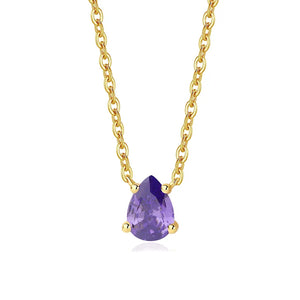

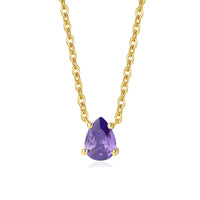
The piece they're describing → Collier pendentif améthyste pour femme — Pierre d'améthyste en forme de goutte, Argent sterling 925
Personalize Yours


