


What Is a Constellation Necklace?
A constellation necklace is a pendant or charm that recreates the actual geometric star pattern of a specific zodiac or celestial constellation as it appears in the night sky. Rather than using an astrological symbol (such as ♓ for Pisces or ♈ for Aries), a constellation necklace places tiny raised dots, engraved points, or small gemstones at the precise relative positions of the brightest stars in that constellation — connected by fine lines or left as an open dotted pattern.
The result is a miniature star map you can wear. When you look closely at a Scorpio constellation necklace, for example, you should be able to trace the same curved tail of stars you would find on an astronomy chart. This fidelity to real star positions is what separates a constellation necklace from a zodiac necklace, and it is the core of its appeal: it feels like carrying a personal piece of the universe.
Constellation jewelry sits firmly within the broader category of celestial jewelry, alongside sun pendants, crescent moons, and star charms. Unlike those symbols, which are universal and not tied to a specific person, a constellation necklace is inherently personal — each of the 12 zodiac constellations belongs to a birth date range, making it one of the most quietly intimate pieces of jewelry you can own or give.
The 12 Zodiac Constellations and Their Meanings
Every zodiac constellation carries centuries of accumulated meaning drawn from mythology, observation of the seasons, and astrological tradition. The table below covers all 12, including the date range, traditional symbol, core meaning, and the key personality trait most associated with each sign.
| Constellation | Dates | Symbol | Core Meaning | Key Trait |
|---|---|---|---|---|
| Aries | Mar 21 – Apr 19 | ♈ | New beginnings, action | Initiative |
| Taurus | Apr 20 – May 20 | ♉ | Groundedness, endurance | Stability |
| Gemini | May 21 – Jun 20 | ♊ | Adaptability, communication | Duality |
| Cancer | Jun 21 – Jul 22 | ♋ | Home, care, emotional depth | Nurturing |
| Leo | Jul 23 – Aug 22 | ♌ | Strength, creativity, pride | Courage |
| Virgo | Aug 23 – Sep 22 | ♍ | Analysis, service, detail | Precision |
| Libra | Sep 23 – Oct 22 | ♎ | Justice, harmony, relationships | Balance |
| Scorpio | Oct 23 – Nov 21 | ♏ | Depth, intensity, rebirth | Transformation |
| Sagittarius | Nov 22 – Dec 21 | ♐ | Exploration, philosophy, optimism | Freedom |
| Capricorn | Dec 22 – Jan 19 | ♑ | Ambition, responsibility, legacy | Discipline |
| Aquarius | Jan 20 – Feb 18 | ♒ | Originality, humanity, vision | Innovation |
| Pisces | Feb 19 – Mar 20 | ♓ | Empathy, dreams, spirituality | Intuition |
These meanings are not arbitrary. Aries opens the astrological year at the spring equinox — its association with initiative reflects a season of fresh starts. Scorpio falls at the midpoint of autumn, a time of decay and regeneration in nature, which anchors its association with transformation and rebirth. Wearing the star pattern of your constellation is, in a quiet way, wearing that meaning against your skin.
Why People Wear Their Birth Constellation
The motivations for wearing a constellation necklace are layered and personal, but three themes come up consistently.
Personal identity. A constellation is tied to your birth date in a way that feels both cosmic and precise. Unlike a name necklace or an initial pendant, a constellation references something that existed in the sky the moment you were born — the actual arrangement of stars your birth sign is named after. For many people, that specificity gives the piece unusual weight.
Astrology connection. Astrology has moved firmly into mainstream culture, and constellation jewelry is one of the most wearable expressions of that interest. A person who identifies strongly with being a Capricorn — disciplined, goal-oriented, patient — may wear their constellation as a daily reminder of those values, much the way someone might carry a meaningful stone or symbol. If you want to deepen the pairing between astrology and crystals, the guide on crystals for your zodiac sign maps each constellation to its ideal gemstone companions.
Feeling connected to the cosmos. There is something quietly grounding about wearing a map of real stars. The stars in Orion or Scorpius are genuinely where a constellation necklace places them — these are not invented arrangements. That fidelity to actual astronomy turns a piece of jewelry into a wearable piece of the sky, and many wearers describe the effect as calming or centering, particularly during stressful periods.
How Constellation Necklaces Are Made
The construction of a constellation necklace is more technically demanding than most jewelry of similar price. The maker must first reference an accurate star chart for the chosen constellation, identifying the positions and relative brightness of the principal stars. The pendant is then designed so that each significant star is represented by a raised dot, a small drilled point, or a tiny gemstone node — all placed at proportional distances from one another to match the real sky geometry.
In sterling silver versions, the dots are typically formed by applying small balls of the same metal (a technique called granulation) or by using a punch tool to create precise raised points. Higher-end pieces use tiny diamonds, moissanite, or colored gemstones at the star nodes, which adds sparkle and a sense of literal luminosity. The constellation lines — the imaginary connectors between stars that help the eye trace the shape — are sometimes engraved as fine lines, though many modern designs omit them entirely and let the dot arrangement speak for itself.
The pendant itself is usually small: 15–25 mm is typical, which keeps the star pattern tight and readable without overwhelming the neckline. The delicacy of the design is part of the appeal — constellation necklaces tend to be pieces you lean in to notice, rather than statement pieces that announce themselves across the room.
Constellation Necklace vs. Zodiac Sign Necklace: What Is the Difference?
This distinction confuses a lot of buyers, and it matters for both meaning and aesthetics.
A zodiac sign necklace uses the traditional astrological symbol for a sign — ♓ for Pisces, ♏ for Scorpio, ♒ for Aquarius, and so on — as the pendant design. These glyphs are ancient shorthand that astrologers have used for centuries, and they carry symbolic weight, but they are not pictures of actual stars. They are abstract representations of the sign's mythology or physical form (♉, for instance, represents the head and horns of the bull).
A constellation necklace, by contrast, maps real stellar geography. If you hold a Pisces constellation necklace next to an astronomy chart of the Pisces constellation, the dots should correspond to actual stars — Eta Piscium, Alrescha, Van Maanen's Star and others — arranged as they are in the sky.
The practical difference: a zodiac necklace is immediately recognizable to anyone who knows astrology (the symbols are culturally familiar), while a constellation necklace is subtler and more personal — only someone who looks closely and knows what they're looking at will recognize your specific star map. Many people prefer the constellation version precisely for this low-key quality: it means something to you without advertising itself to everyone else.
Gifting a Constellation Necklace
A constellation necklace is one of the most universally successful jewelry gifts because it is personal without requiring you to know the recipient's size, style preferences, or metal color in great detail. The only thing you need is their birth date.
How to find someone's constellation. Use the date range table above. Someone born on October 30 is a Scorpio (Oct 23 – Nov 21). Someone born on February 3 is an Aquarius (Jan 20 – Feb 18). The cusp dates (the first and last days of each range) occasionally cause confusion — if your recipient was born on October 22 or 23, double-check against a reliable source, as cusp assignments vary slightly by source.
Personalizing the gift. The most memorable constellation gifts go one step further than simply choosing the right sign. Consider pairing the constellation necklace with the recipient's birthstone — the birthstone jewelry guide covers every month in detail. A Pisces constellation pendant paired with an amethyst drop (February's birthstone, shared with Pisces) creates a cohesive celestial set that feels genuinely considered. Our amethyst water drop pendant necklace works beautifully as a companion piece to any winter or early-spring constellation.
Gifting occasions. Constellation necklaces are particularly well-suited to birthdays (for obvious reasons), graduation gifts (a reminder of identity and direction), and milestone anniversaries. They also make meaningful "just because" gifts for someone going through a major life transition — a new job, a move, a loss — because the star map carries the implicit message that their place in the universe is fixed and singular, regardless of what is changing on the ground.
How to Layer a Constellation Necklace
Constellation necklaces are natural layering pieces. Their small, detailed pendants read as a middle or short layer, and their celestial theme aligns with a wide range of companion pieces.
The classic celestial stack. Pair a constellation pendant (typically 16–18 inches) with a crescent moon necklace at a shorter length (14–16 inches) and a simple fine chain or sun and moon necklace at 20 inches for a longer anchor. The result is a three-layer celestial set that moves cohesively — every piece belongs to the same thematic family without being matchy.
Metal mixing. Sterling silver is the most versatile base for constellation necklaces because the cool tone complements the "night sky" visual language of the design. Gold-plated pieces work equally well if you prefer warmth. You can mix silver and gold tones in a layered stack — contemporary styling has largely moved past the old rule against mixing metals — but keep at least two of your three layers in the same metal family for visual harmony.
Pendant sizing. The key to a layered look that does not feel cluttered is varying pendant sizes. If your constellation necklace has a 20 mm pendant, keep companion pendants either very small (8–12 mm, like a tiny crescent or single star) or distinctly larger (a 35–40 mm open circle or abstract shape). Pendants of similar sizes at similar lengths compete with each other and create visual noise.
Chain weight. Constellation necklaces are typically hung on fine, delicate chains (1–1.5 mm). Match that weight in your other layers or use a slightly chunkier cable chain for the longest layer to provide contrast without overwhelming the small constellation detail.
Frequently Asked Questions
What is a constellation necklace?
A constellation necklace is a pendant that recreates the actual star pattern of a specific zodiac or celestial constellation, placing tiny dots or gemstones at the real relative positions of the brightest stars in that constellation. It differs from a zodiac symbol necklace, which uses an abstract astrological glyph rather than a star map.
What does a constellation necklace mean?
A constellation necklace carries the meaning of the specific constellation it depicts. Wearing your birth constellation is a statement of personal identity, an expression of your connection to astrology, and a reminder of the sky as it appeared when you were born. More broadly, constellation jewelry represents a sense of belonging to something larger than everyday life — the cosmos, cycles of time, and the long human tradition of finding meaning in the stars.
What is my constellation?
Your constellation is determined by your birth date. Locate your birth date in the zodiac date range table above to find your sign. For example, if you were born on July 10, your constellation is Cancer (Jun 21 – Jul 22). If you were born near the start or end of a date range (a "cusp" date), check a reputable astrology source for the precise cutoff for your birth year, as the exact transition day can shift by one day depending on the year.
How is a constellation necklace different from a zodiac necklace?
A zodiac necklace uses the traditional astrological symbol for a sign (such as ♏ for Scorpio or ♉ for Taurus) — an abstract glyph rooted in mythology. A constellation necklace maps the actual geometric positions of the stars in that constellation as they appear in the night sky. The zodiac necklace is more immediately recognizable; the constellation necklace is more subtle, precise, and personally meaningful as a real piece of astronomy.
Can I wear a constellation that is not mine?
Yes. There are no rules about which constellation you can wear. People choose constellations other than their own for many reasons: honoring a loved one by wearing their birth constellation, connecting with the traits of a different sign, or simply preferring the visual shape of a particular star pattern. A Virgo who is drawn to the expansive freedom of Sagittarius may wear both. Jewelry is personal, and meaning is always self-assigned.
Is a constellation necklace a good gift?
Constellation necklaces are among the most reliably well-received jewelry gifts because they are personal (tied to the recipient's birth date) without requiring you to know their size or exact style preferences. They are appropriate for a wide range of occasions — birthdays, graduations, milestones, and as a meaningful everyday gift. The only information you need is the recipient's birthday. Pairing the constellation necklace with a matching birthstone pendant makes the gift feel even more considered.
What metal is best for a constellation necklace?
Sterling silver (925) is the most popular choice for constellation necklaces because its cool, bright tone evokes starlight and the night sky. It is also durable, hypoallergenic when properly finished, and versatile enough to layer with most other jewelry. Gold-plated sterling silver is a good alternative for those who prefer a warmer tone. For everyday wear, look for pieces that are rhodium-plated (adds tarnish resistance) or PVD-coated if gold-plated. Avoid brass base metals if you have sensitive skin.
How do I find the right constellation necklace?
Start with your birth constellation using the date table above. Then consider: pendant size (smaller is more versatile for layering), metal tone (silver for cool/classic, gold for warmth), and whether you want a plain dot-pattern constellation or one with gemstone accents at the star nodes. If you plan to layer, choose a constellation necklace on a 16–18 inch chain so it sits as a middle layer. For gifting, pair it with a birthstone piece for a cohesive set.
Toutes les marques, noms de marque et noms de produits tiers sont la propriété de leurs détenteurs respectifs. AJLuxe n’est affilié à aucune marque tierce citée dans cet article, ni approuvé ou sponsorisé par celle-ci. Les noms de marque sont utilisés uniquement à des fins de comparaison factuelle, et les descriptions de matériaux reflètent les spécifications produit publiées par chaque marque au moment de la rédaction.
You Might Also Like
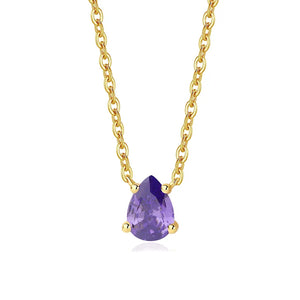

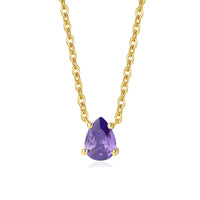
The piece they're describing → Collier pendentif améthyste pour femme — Pierre d'améthyste en forme de goutte, Argent sterling 925
Personalize Yours


