


By AJLuxe Team · Last updated: July 2026
Threader earrings are having a moment — that liquid line of metal or a whisper-thin chain that slips through the piercing and dangles freely on both sides looks effortless in a way a fixed drop never quite manages. But threaders come with a specific set of first-time worries: will they slide out, how long should the tail be, and are they safe for sensitive lobes? This guide answers all of it, compares styles side by side, and points you to the pieces worth buying.
Quick Answer: What Are the Best Threader Earrings?
The best threader earrings are lightweight drop-through styles in a skin-safe metal — 925 sterling silver, solid gold, or 18K gold-plated sterling — with a smooth, kink-free chain or bar that pulls cleanly through a fully healed lobe piercing. Look for a tail of at least 1.5 to 2.5 inches of adjustable slack, a polished (nickel-free) finish for sensitive ears, and a fine gauge post so the earring glides without tugging.

TL;DR — The Short Version
- What they are: An earring where a thin chain or bar threads through the piercing hole and hangs on both the front and back, with no clutch or backing.
- Do they fall out? Rarely, if the tail is long enough and the wire is smooth — friction and the weight of the drop hold them in place. We cover the fixes below.
- Best for: Fully healed lobe piercings. Not for fresh piercings or cartilage.
- Best metal for sensitive ears: Solid gold, platinum, or 925 sterling silver / 18K gold-plated sterling — all nickel-safe options.
- Length that works: A total drop of 1.5 to 3 inches suits most people; longer for a dramatic look.
- Styling: Threaders shine in stacked and multi-piercing looks because they read as delicate movement rather than bulk.
What Is a Threader Earring, Exactly?
A threader earring (also called a "pull-through" or "ear thread") has no traditional post-and-back. Instead, one end is a very fine, rigid needle or bar that you feed through the front of your piercing. You then gently pull the attached chain through until the earring sits where you want it. The result: a sleek line of chain visible on the front of your lobe and a matching length dangling behind, or a bar on the front with the chain trailing behind — depending on the design.
Because there is no clutch, screw, or hook, threaders sit almost flush against the piercing channel. That is exactly why they look so minimal and modern, and also why the two questions everyone asks are "how do I get it in?" and "won't it fall out?" We answer both in detail below, because most thin competitor posts skip straight to product photos without ever explaining the mechanics.
Threader vs. Drop vs. Huggie: How They Differ
People shopping for threaders are often really deciding between three drop-style silhouettes. Here is how they compare on the things that actually matter day to day.
| Feature | Threader Earring | Drop / Dangle Earring | Huggie Hoop |
|---|---|---|---|
| How it stays in | Friction + drop weight (no backing) | Push-back or screw-back post | Hinged snap clasp |
| Adjustable length | Yes — slide to any height | Fixed | Fixed |
| Best piercing | Healed lobe only | Healed lobe | Lobe or lower helix |
| Sleep-in safe | No | No | Usually not |
| Visual weight | Barely-there, liquid line | Defined shape, more presence | Compact, hugs the lobe |
| Stacking friendly | Excellent | Good | Excellent |
If you want the barely-there movement of a threader but prefer a secure backing, a lightweight CZ drop or dangle earring gives you a similar delicate line with the reassurance of a push-back post. That is the pragmatic swap most first-timers land on.
How to Put In a Threader Earring (Step by Step)
This is the section most guides leave out, so we are going slow. It is genuinely easy once you have done it once.
- Start with the needle end. Identify the rigid, straight portion — that is what goes in first, from the front of your lobe.
- Locate your piercing by feel. Rest a fingertip behind the lobe so you can feel the needle come through. Insert gently; never force it. If it does not glide, reposition rather than push.
- Pull, do not shove. Once the tip is through the back, pull the chain through from behind until the earring sits at the height you like.
- Set your drop length. Slide the chain up or down so the front and back tails are balanced (or intentionally uneven, if that is the look).
- Do a gentle tug test. A light downward pull should meet slight resistance. That friction is what keeps it in.
If the needle end ever feels rough or catches, stop — a burr on a cheap post can irritate the piercing channel. A well-finished 925 sterling or gold-plated post should feel glassy-smooth.
Competitor Gap #1: "Won't They Just Fall Out?"
This is the number-one hesitation, and almost no product page addresses it honestly. Here is the real answer: threaders stay in through a combination of friction along the chain and the small downward weight of the drop, which keeps tension on the piercing. They are more secure than they look, but less secure than a screw-back stud. Practical safeguards:
- Choose an adequate tail. Too-short threaders are the main culprit. Aim for at least 1.5 to 2.5 inches of chain so gravity can do its job.
- Mind your gauge. Standard lobe piercings are about 20 gauge (roughly 0.8 millimeters). A chain sized to that channel grips gently; a chain far thinner than your hole will slip.
- Add a stopper for peace of mind. A tiny clear silicone earring stopper slid onto the back tail is invisible and eliminates slip entirely — ideal for travel or dancing.
- Skip them while sleeping or working out. Threaders are a "going out" earring, not a 24/7 one.
Bottom line: for a normal day of wear on a healed lobe, a properly sized threader stays put. If you are prone to losing earrings and want zero risk, a backed drop earring is the safer commercial pick.
Length & Adjustability: Getting the Drop Right
The beauty of threaders is that they are infinitely adjustable — you decide how much chain shows on the front versus the back. Use this as a starting guide, then fine-tune.
| Total Chain Length | Front Drop (typical) | The Look | Best For |
|---|---|---|---|
| 2 to 2.5 inches | About 1 inch | Subtle, close to the lobe | Office, everyday minimalism |
| 3 to 3.5 inches | 1.5 to 2 inches | Balanced, versatile drop | Most people, day to night |
| 4 inches or more | 2.5 inches or more | Dramatic, elongating | Evening, open necklines, updos |
A long threader elongates the neck and pairs beautifully with an updo or an off-the-shoulder top. A short one reads almost like a small drop and disappears under hair — better if you want the sparkle without the statement.

Metal Choices for Sensitive Ears
Because a threader sits inside the piercing channel for its whole length, metal quality matters even more than with a stud. If you have reactive lobes, the metal touching that channel is the whole game. According to the American Academy of Dermatology, nickel is one of the most common causes of allergic contact dermatitis — and cheap fashion earrings are a frequent trigger. Your safest bets:
- Solid gold (14K or 18K): The gold standard for sensitive ears, but the priciest.
- 925 sterling silver: 92.5% pure silver, alloyed with copper (not nickel) — a genuinely hypoallergenic everyday option.
- 18K gold-plated sterling silver: A thick gold layer over a sterling base gives you gold color at a fraction of solid-gold cost, while keeping a nickel-safe core. For our full picks on this specific style, see our guide to the best gold-plated earrings.
- Platinum & titanium: Excellent but less common in fine threader designs.
What to avoid: unspecified "alloy," brass, or base-metal earrings with only a flash-thin plating that wears through. Once plating rubs off inside the channel, bare nickel meets skin — the recipe for the itchy, red, weepy lobe reaction. We go deeper on this in our guide to whether gold earrings are hypoallergenic.
Competitor Gap #2: Judging Stone & Sparkle Quality
Most threader roundups show you a photo and a price and stop there. If your threader features cubic zirconia or small accent stones, sparkle quality is not random — it comes down to the cut. Per the GIA, cut is the single biggest driver of a stone's brilliance, more than size or setting. For a CZ threader, look for:
- A true round-brilliant or marquise cut with clean, symmetrical facets — not a flat, glassy pressed stone.
- Prong or bezel setting that lets light enter from the sides, rather than a stone glued into a cup.
- Consistent color — quality white CZ reads icy and clear, not yellowish or cloudy.
Well-cut cubic zirconia can be almost indistinguishable from a diamond to the naked eye, which is exactly why it dominates the affordable-luxury threader market. For more on comparing CZ, genuine gemstone, and glass crystal earrings, see our guide to the best crystal earrings. For the full breakdown of how CZ behaves over time, see our complete guide to CZ earrings and how long CZ earrings last.
Styling Threaders in Stacked & Multi-Piercing Looks
Threaders were practically designed for the curated-ear trend. Because they read as a fine line of movement rather than a bulky object, they layer without visual clutter. Ideas that work:
- The mismatched pair: Wear a longer threader in one lobe and a small stud in a second hole for an intentional asymmetry.
- Mixed metals, done right: Pair a gold threader with silver studs — the delicate chain keeps the mix from feeling busy.
- Threader plus huggie: A snug huggie in the upper lobe and a threader below creates a graduated cascade.
- Front-and-back play: Adjust the chain so a little sparkle peeks behind the lobe too — a signature threader move a stud simply cannot do.
Because threaders sit lower and closer to the neck, they also pair well with a short chain necklace or choker without tangling — the lines echo each other. If you are building a stud-and-drop wardrobe, our gold stud earrings guide covers the anchor pieces to stack them with.
How to Choose Your First Threader Earrings
Run any candidate through this quick checklist before buying:
- Metal: Is it solid gold, 925 sterling, or thickly gold-plated sterling? If the listing just says "alloy," pass.
- Tail length: Is there at least 1.5 inches of drop so it stays put? Longer is more forgiving.
- Finish: Does the needle end look smooth and rounded (not sharp or crimped)?
- Weight: Lighter is better — heavy threaders drag on the piercing over a long day.
- Stone cut, if any: Faceted and prong-set, not flat and glued.
- Care claims: "Tarnish-resistant" and "waterproof-plated" labels matter for something that sits in a warm, damp channel.
For general jewelry-care fundamentals and how to store delicate chains so they do not kink, the trade group Jewelers of America keeps a solid consumer education library.
Caring for Threader Earrings So They Last
Fine chains kink and tangle if you are careless. To keep threaders looking new:
- Store flat and separate, ideally hung so the chain cannot knot.
- Remove before showering, swimming, and sleeping — chlorine, sulfates, and friction all shorten plating life.
- Wipe after wear with a soft cloth to remove skin oils that dull the finish.
- Put earrings on last — after perfume, hairspray, and lotion — so chemicals do not coat the metal.
Frequently Asked Questions
Do threader earrings fall out easily?
Not usually. Friction along the chain plus the small weight of the drop keeps a properly sized threader in place on a healed lobe. The main cause of slipping is a tail that is too short — choose at least 1.5 to 2.5 inches of chain, and add a tiny clear silicone stopper on the back for extra security when dancing or traveling.
How do you put in a threader earring?
Feed the rigid needle end through the front of your piercing, using a fingertip behind the lobe to guide it. Once the tip comes through the back, gently pull the chain through until the earring hangs at your preferred height. Never force it — if it catches, reposition rather than push.
Are threader earrings safe for sensitive ears?
Yes, if you pick the right metal. Because the chain sits inside the piercing channel, choose solid gold, 925 sterling silver, or thickly 18K gold-plated sterling — all nickel-safe. Avoid unspecified base-metal alloys, which are a common cause of allergic reactions.
Can you wear threader earrings in a new piercing?
No. Threaders require a fully healed lobe piercing. A fresh piercing needs a proper healing stud left in place for the recommended time. Threading a chain through an unhealed hole risks irritation and infection.
What length threader earring should I get?
A total chain of 3 to 3.5 inches, giving roughly a 1.5 to 2 inch front drop, suits most people and works day to night. Go 2 to 2.5 inches for a subtle everyday look, or 4 inches or more for a dramatic, neck-elongating evening style.
Can you sleep in threader earrings?
No. Threaders have no backing, so they can slip out or the chain can kink and tug against the piercing overnight. Take them out before bed. If you want sleep-in earrings, choose flat-back studs designed for that purpose.
Are threader earrings good for cartilage or helix piercings?
They are designed for lobe piercings. Cartilage piercings are tighter and heal differently, so a pull-through chain is not ideal and can be uncomfortable. Stick to lobes for threaders and use a hoop or labret stud for cartilage.
Do threader earrings work for stacked or multi-piercing looks?
Beautifully. Their fine, low-profile line layers without looking bulky, which makes them a favorite for curated ears. Pair a threader with a stud or huggie in a nearby hole, and mix metals freely — the delicate chain keeps the combination from looking cluttered.
Are cubic zirconia threader earrings tacky?
Not when the cut is good. Well-cut, prong-set cubic zirconia reads icy and brilliant and is hard to distinguish from a diamond by eye. Quality comes down to a true faceted cut and a nickel-safe metal base, not the fact that the stone is CZ.
How do you keep threader earring chains from tangling?
Store them hung or laid flat and separated so the chain cannot knot on itself, and put them on last when getting ready. Fine chains kink under pressure, so avoid tossing them loose in a jewelry box or pocket.
Can you adjust how much a threader earring hangs?
Yes — that is the signature feature. Simply slide the chain up or down through the piercing to set the front and back drop to any height you like, from a barely-there peek to a long, dramatic line.
Shop This Guide
AJLuxe does not currently carry a true chain-through threader, but our closest analog delivers the same fine, sparkling drop-through-the-lobe look with the reassurance of a secure backing — in a nickel-safe 18K gold-plated finish over a quality base, ideal for sensitive ears.
CZ Dangle Earrings — 18K Gold Plated, White Cubic Zirconia Drop
Lightweight, sparkling cubic zirconia drop hoops with a delicate dangle — the closest match to the threader look, on a hypoallergenic 18K gold-plated sterling base for sensitive ears.
Final Thoughts
Threader earrings deliver a modern, liquid elegance that no fixed drop can quite match — and once you understand the mechanics, the anxieties around them evaporate. Choose a nickel-safe metal, make sure the tail is long enough to stay put, wear them on healed lobes only, and take them off before bed. Do that and you have one of the most versatile, adjustable, and quietly luxurious earrings in your box. If a backing gives you more confidence for daily wear, a well-cut CZ dangle gets you 90% of the look with zero slip — a smart place to start before investing in solid-gold threaders.
AJLuxe Team — Last updated: July 2026
Toutes les marques, noms de marque et noms de produits tiers sont la propriété de leurs détenteurs respectifs. AJLuxe n’est affilié à aucune marque tierce citée dans cet article, ni approuvé ou sponsorisé par celle-ci. Les noms de marque sont utilisés uniquement à des fins de comparaison factuelle, et les descriptions de matériaux reflètent les spécifications produit publiées par chaque marque au moment de la rédaction.
You Might Also Like
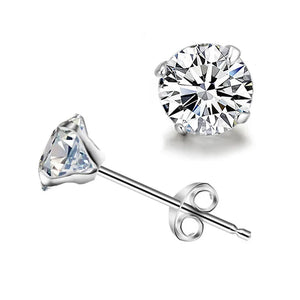
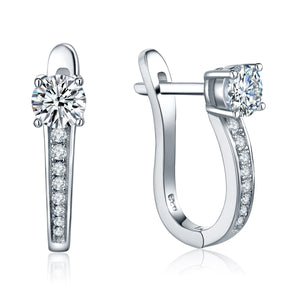
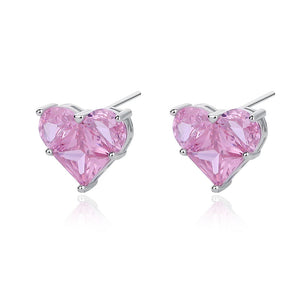
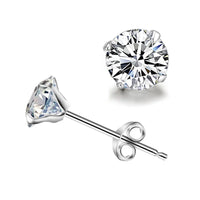
The piece they're describing → Puces d'oreilles en oxyde de zirconium pour femme — Argent sterling 925, oxyde de zirconium, hypoallergéniques
Personalize Yours


