


Aquamarine is one of the most beginner-friendly gemstones to buy — it's durable, widely available, and often priced far below its visual impact. But knowing how to buy aquamarine the right way separates a stone you'll love for decades from one that looks washed-out under your kitchen light. This guide walks you through grading, treatments, red flags, and exactly what to ask before you hand over any money. Whether you're shopping for aquamarine's meaning as a March birthstone gift or just love that cool ocean-blue color, you'll finish this guide ready to buy with confidence.
How Aquamarine Quality Is Graded
Aquamarine is a blue-to-greenish-blue variety of the mineral beryl — the same family as emerald. Unlike emerald, which is almost always included, aquamarine regularly achieves eye-clean clarity, making it a much easier gemstone to grade. Graders look at four factors:
Color
Color is by far the most important quality factor. Aquamarine's color range spans from pale icy blue all the way to a rich, medium-dark blue called "Santa Maria" (after the Brazilian mine that first produced it). The ideal hue is pure blue with a faint greenish secondary tone — this is what GIA describes as the defining characteristic. Avoid stones with a strong greenish tint unless the price reflects it. Saturation matters more than depth: a medium-saturation pure blue beats a very pale blue at the same carat weight every time.
Clarity
Aquamarine is a Type I gemstone according to GIA's gem grading standards, meaning it's expected to have few or no inclusions visible to the naked eye. Eye-clean stones are common and should be the baseline for any purchase. Visible inclusions (especially rain-like liquid inclusions or needle-like rutile) significantly reduce value. Under 10x magnification, some internal fingerprints and two-phase inclusions are normal.
Cut
Aquamarine's pleochroism — its ability to show different colors from different angles — makes cut especially important. A well-cut stone is oriented to display its best blue face-up, not the slightly greenish-yellow color you'd see from the side. Step cuts (emerald cut, Asscher, rectangular step) are traditional and flattering for aquamarine because they emphasize depth of color. Round brilliants and ovals also work well. Avoid stones with poor symmetry, windowing (a washed-out center), or extinction (large dark areas).
Carat Weight
Aquamarine forms large crystals, so large stones are available without the price spikes you'd see in sapphire or emerald. A 5-carat aquamarine is common and affordable. Stones under 1 carat are often in jewelry-quality but may appear too pale. For best color, look for stones of at least 2–3 carats where the blue can deepen noticeably.
Origin
Brazilian aquamarine (especially from Minas Gerais) is the global benchmark. The "Santa Maria" designation originally referred to stones from the Santa Maria de Itabira mine and carried a premium — but the term is now applied loosely. Pakistani aquamarine from the Karakoram Mountains at 15,000+ feet elevation is also prized. Nigerian, Zambian, and Madagascan material is abundant and often good quality at lower prices. Origin certification adds value but isn't essential for most buyers.
Aquamarine Grades and Price Guide
| Grade | Color Description | Price Range per Carat | What to Expect | Best For |
|---|---|---|---|---|
| Premium ("Santa Maria") | Deep, vivid, pure blue — no green tint visible | $300–$800+/ct | Eye-clean, fine cut, Brazilian or Pakistani origin | Investment pieces, heirloom rings |
| Fine | Medium blue, slight greenish secondary | $80–$300/ct | Eye-clean to near-eye-clean, good cut | Everyday rings, pendants, earrings |
| Good | Light to medium blue, moderate clarity | $25–$80/ct | Minor visible inclusions, standard cut | Fashion jewelry, first aquamarine purchase |
| Commercial | Very pale blue-green, often large rough | $5–$25/ct | May have visible inclusions, greenish cast | Bulk beads, raw crystals, mineral specimens |
Common Aquamarine Treatments
Most aquamarine on the market today is heat-treated — this is standard practice, widely accepted, and doesn't significantly reduce value. Here's what you need to know about each treatment type:
Heat Treatment
This is the most common treatment. Natural aquamarine is often more greenish-blue than blue. Heating to around 400–450°C drives off the yellow component, producing a purer blue color. The treatment is permanent and stable. It's so standard that most dealers and labs (including GIA) don't consider it disclosure-worthy — but you should still ask. Heat treatment does NOT reduce resale value in the aquamarine market.
Irradiation
Rare in aquamarine. Sometimes used to darken color but the result can fade with UV exposure. Always ask if your stone has been irradiated. A legitimate seller will know and disclose this.
Fracture Filling
Uncommon in quality aquamarine but possible in lower grades. Resins or oils are used to fill surface-reaching fractures, improving apparent clarity. This treatment is NOT stable — it can break down with heat or cleaning. Avoid any stone offered with "clarity enhanced" language unless the price is steep discounted for it.
Synthetic Aquamarine
Lab-grown aquamarine (hydrothermal beryl) exists but is rare in the market compared to natural stones. It's often indistinguishable without lab testing. Legitimate sellers disclose this — a stone sold as "natural" that is actually synthetic is fraud. If a price seems too good for the stated size and quality, request a gem lab report.
How to detect treatments: Ask for a certificate from GIA, AGL, or Gübelin. For heat treatment detection specifically, labs look at inclusions under strong magnification — untreated stones retain certain inclusion patterns that heat alters.
Top Aquamarine Origins and What They Mean
Where aquamarine comes from affects its color profile, rarity premium, and sometimes its price. Here's the breakdown:
Brazil (Minas Gerais)
The world's largest producer and quality benchmark. The Santa Maria de Itabira mine produced the standard for premium aquamarine color in the 1950s-1960s. Today, "Santa Maria" quality aquamarine is also found in Zambia and other locations — the term describes color quality, not strict geographic origin. Brazilian stones are widely available in all grades and sizes.
Pakistan (Karakoram Mountains)
Pakistani aquamarine, especially from Gilgit-Baltistan, is mined at extreme altitude and produces stones with exceptional transparency. These stones often have slightly more blue-green saturation compared to Brazilian material. Smaller supply means a modest price premium.
Nigeria and Zambia
"Santa Maria Africana" is the trade name for deep-blue aquamarine from Zambia's Kafubu region. These stones command a premium close to Brazilian Santa Maria material. Nigerian aquamarine tends toward more greenish hues but is abundantly available at lower prices.
Madagascar and Mozambique
Both countries produce good-quality aquamarine at competitive prices. Madagascar material often shows excellent clarity. A fine stone is a fine stone regardless of whether it comes from Brazil or Madagascar — origin matters mainly for documentation and collector value, not everyday jewelry.
5 Questions to Ask Before Buying Aquamarine
-
"Has this stone been treated, and how?"
Expected answer: "Yes, it's heat-treated" (standard and fine) or "No treatments" (premium). Red flag: evasion, "I don't know," or "naturally enhanced." -
"What's the country of origin?"
Expected answer: A specific country (Brazil, Pakistan, Nigeria, etc.). Red flag: "Unknown" without explanation, or inability to provide any sourcing information. -
"Is there a gem laboratory certificate available?"
Expected answer: GIA, AGL, or Gübelin report available or obtainable. Red flag: seller discourages independent testing, offers only an in-house certificate, or claims a lab report "isn't necessary." -
"What is the exact carat weight?"
Expected answer: Specific weight to two decimal places (e.g., "2.47 ct"). Red flag: weight given as a range or estimate, or "approximately 3 carats." -
"What is your return policy if the stone doesn't match the description after independent appraisal?"
Expected answer: A clear return window (14–30 days minimum). Red flag: "all sales final" on an unverified stone, or resistance to allowing an independent appraisal before the return window closes.
Online Aquamarine Red Flags
Buying aquamarine online expands your options dramatically — but it also opens the door to misrepresentation. Watch for these 6 warning signs:
- Color-enhanced product photos. Aquamarine is frequently over-saturated in product shots to look deeper blue than it is. Always ask for photos in natural daylight or request a video.
- "AAA grade" or "AAAA grade" labeling. These grades aren't standardized by any gem lab. They're marketing language used by sellers to justify higher prices on average material.
- No weight listed. If a listing says "large aquamarine" without a carat weight, the seller is hiding information. Always verify weight before buying.
- Suspiciously low price for stated quality. A 5-carat "Santa Maria" aquamarine listed for $40 is not Santa Maria quality. Cross-reference prices on trusted platforms like Gemval or JTV.
- Misidentified gemstones. Blue topaz, blue glass, synthetic spinel, and aqua-colored synthetic corundum are all sold as "aquamarine" by dishonest sellers. Request a GIA or AGL certificate for any stone over $200.
- Vague or missing seller credentials. Reputable dealers list their professional memberships (AGS, AGTA, IJO). An anonymous seller with no verifiable business history is a risk.
Best Aquamarine Jewelry Styles
Aquamarine's combination of Mohs hardness 7.5–8, excellent clarity, and versatile blue color makes it suitable for almost any jewelry type. Here's what works best by style:
Pendants and Necklaces
Aquamarine pendants are the most forgiving setting for the stone — they don't take the daily impact that rings do. A water-drop or teardrop cut emphasizes the gem's glassy transparency and mimics the look of the sea. Our aquamarine water drop pendant necklace in 925 sterling silver is a perfect example of this style: the elongated cut shows off aquamarine's color depth without requiring a large carat size. Pair with delicate chain lengths of 16–18 inches for everyday wear.
Rings
Aquamarine is hard enough for rings but benefits from protective settings like bezels or halos that guard the girdle from knocks. Avoid prong-only settings for active lifestyles. Step-cut stones (emerald cut, Asscher) are classic for aquamarine rings and suit both vintage and modern aesthetics.
Earrings
Studs and drops are both excellent choices. Smaller stones (0.5–1 ct each) are ideal for studs, while drops can use larger stones that benefit from the added depth of color when they catch light from multiple angles. Aquamarine pairs beautifully with white gold and platinum — yellow gold creates a warm contrast that some love and others find clashing with the cool blue.
Bracelets
Tennis-style aquamarine bracelets use calibrated small stones for a unified color effect. Raw or tumbled aquamarine bead bracelets are also popular in the crystal jewelry space — these use the stone's natural look rather than faceted precision.
How to Care for Aquamarine Jewelry
Aquamarine is one of the more durable colored gemstones, but it still needs basic care to stay brilliant.
- Cleaning: Warm water, mild dish soap, and a soft toothbrush is all you need. Rinse thoroughly. Ultrasonic cleaning is safe for untreated or heat-treated aquamarine without fracture fills — if you're unsure of treatments, stick to hand cleaning.
- What to avoid: Harsh chemicals (bleach, chlorine, acetone) can damage the surface and any metal setting. Avoid prolonged UV exposure — though aquamarine is generally stable, irradiated stones (rare) can fade. Remove rings before heavy gardening or gym work.
- Storage: Store aquamarine separately from harder stones like diamonds, sapphires, and rubies — they can scratch aquamarine's surface. A soft-lined jewelry box or individual cloth pouch works perfectly.
- Re-polishing: A scratched aquamarine can often be re-polished by a lapidary to restore its surface. This is a relatively affordable service compared to re-cutting.
Aquamarine is a blue beryl with Mohs hardness 7.5–8, making it durable enough for daily wear. Fine-quality stones range from $80–$300 per carat, while premium "Santa Maria" blue material runs $300–$800+ per carat. The single most important quality indicator is color saturation — a rich, evenly saturated pure blue outperforms a paler stone of the same size every time. For care, clean with warm water and mild soap; avoid harsh chemicals and store away from harder gems that could scratch the surface.
Frequently Asked Questions
What is the best color for aquamarine?
The best aquamarine color is a vivid, medium-dark pure blue with no strong greenish tint — trade pros call this "Santa Maria" blue. Pure blue with excellent saturation commands the highest price per carat. A slight greenish secondary hue is acceptable and actually characteristic of natural aquamarine, but strong yellow-green modifiers indicate lower-quality or untreated rough. For most buyers, a medium blue with good clarity is the sweet spot of value and beauty.
Is aquamarine expensive?
Aquamarine is moderately priced compared to other blue gemstones like sapphire. Good-quality stones start around $25–$80 per carat, fine stones run $80–$300 per carat, and top "Santa Maria" blues can reach $800+ per carat. Compare this to fine blue sapphire at $1,000–$5,000+ per carat — aquamarine offers exceptional visual impact at a fraction of the cost. Large stones (5+ carats) don't spike in price the way sapphire or emerald do, making aquamarine a genuinely affordable luxury.
How can I tell if aquamarine is real?
Real aquamarine has a specific gravity of 2.72 and a refractive index of 1.577–1.583 — a gemologist can measure both with basic equipment. At home, look for: natural inclusions (real stones have subtle fingerprints or liquid inclusions under magnification, not perfect glass-like interiors), slight color zoning, and a cool glassy feel. Blue glass and synthetic spinel are common fakes — they're often too perfectly uniform. For any stone over $100, request a GIA or AGL certificate for certainty.
What is "Santa Maria" aquamarine?
"Santa Maria" refers to deeply saturated, vivid blue aquamarine originally from the Santa Maria de Itabira mine in Brazil. Today the term is used by the trade to describe color quality — similar blues from Zambia are called "Santa Maria Africana." There's no standardized grading system, so "Santa Maria" on a listing is a seller's claim, not a certified grade. Always verify via gem lab report if a Santa Maria premium price is charged.
Does aquamarine fade in sunlight?
Standard heat-treated aquamarine is stable and does not fade in sunlight. Untreated greenish-blue aquamarine also holds its color well under UV. The rare exception is irradiated aquamarine, which can lighten with prolonged UV exposure — this is why disclosure of irradiation treatment matters. For everyday jewelry, aquamarine's color is considered permanent and stable.
What is the difference between aquamarine and blue topaz?
Aquamarine and blue topaz look similar but are completely different minerals. Aquamarine is beryl (Be₃Al₂Si₆O₁₈) with hardness 7.5–8; blue topaz is aluminum silicate with hardness 8. Blue topaz is almost always irradiated and treated (the vivid "Swiss Blue" and "London Blue" colors are not natural) while aquamarine is often only heat-treated. Aquamarine is generally more valuable than blue topaz of the same size. A gem lab can distinguish them by refractive index in seconds.
Is aquamarine good for an engagement ring?
Aquamarine is a viable engagement ring stone with Mohs hardness 7.5–8, making it more durable than most colored gemstones. It's not as hard as sapphire (9) or diamond (10), so it will accumulate surface scratches over years of daily wear — but these can be re-polished. Choose a protective setting (bezel or low-profile halo) rather than a high prong setting to minimize chipping risk at the girdle. For someone who wants a distinctive colored stone that's still durable, aquamarine is an excellent choice.
How much should I pay for aquamarine jewelry?
For aquamarine set in sterling silver, expect to pay $30–$150 for fashion-quality jewelry pieces. Fine aquamarine in gold settings ranges from $200–$1,500+ depending on stone quality and metal weight. For loose stones to set yourself: good quality runs $25–$80/ct, fine quality $80–$300/ct. Anything priced significantly below these ranges should raise questions about stone quality, treatment disclosure, or authenticity.
What clarity grade should I look for in aquamarine?
Eye-clean clarity should be your minimum standard — aquamarine is a Type I gemstone and eye-clean stones are common and expected. Any visible inclusions (needles, fractures, fingerprints visible without magnification) indicate a lower-quality stone and should be priced accordingly. Loupe-clean (no inclusions under 10x magnification) is available in fine-quality aquamarine and worth seeking for high-value pieces.
How do I clean aquamarine jewelry at home?
Warm water with a few drops of mild dish soap and a soft toothbrush is the safest and most effective home cleaning method. Soak for 5 minutes, gently scrub around the setting, rinse thoroughly under clean running water, and pat dry with a soft lint-free cloth. Avoid ultrasonic cleaners if you're unsure whether the stone has fracture fills. Never use bleach, acetone, or jewelry dips designed for diamond — they can damage both the stone's surface and any metal setting.
What is the best aquamarine size for a pendant?
For pendants, 1–3 carats is the sweet spot — enough size to show the stone's color depth without being too heavy for an everyday necklace. Water-drop and pear cuts in the 1.5–2.5 carat range deliver excellent visual impact. Smaller stones (under 0.75 ct) can look washed-out in pale aquamarine; if you're working with a smaller budget, prioritize color saturation over size and go with a higher-quality smaller stone rather than a larger pale one.
Can aquamarine go in water?
Yes — aquamarine is water-safe for short periods and occasional cleaning. Its name literally comes from the Latin for seawater, and the mineral is not water-soluble. However, don't wear aquamarine jewelry in chlorinated pools or hot tubs, as chlorine can damage metal settings and potentially surface-attack fracture-filled stones. Salt water is generally fine for the stone itself but can accelerate oxidation of silver settings. Rinse and dry after any water exposure as a habit.
Shop Aquamarine Jewelry at AJLuxe
Our aquamarine water drop pendant necklace in 925 sterling silver uses ethically sourced stones. Browse all aquamarine birthstone jewelry — hypoallergenic, gift-ready, 30-day returns.
Final Thoughts
Aquamarine is one of the best value plays in the gemstone world — a stone that looks like the ocean at its most vivid, built to last a lifetime, and priced far below what comparable blue stones cost. If you remember nothing else from this guide: color saturation is everything, heat treatment is normal and fine, and any seller who can't answer basic questions about origin and treatment history isn't worth your money.
For your first aquamarine, aim for eye-clean clarity, medium blue color (no strong green), and a protective setting if it's going in a ring. Explore our aquamarine meaning and properties guide if you want to understand the stone's history and lore before you buy. And check our March birthstone collection for jewelry that pairs aquamarine's beauty with hypoallergenic sterling silver — ideal for gifting or everyday wear.
Toutes les marques, noms de marque et noms de produits tiers sont la propriété de leurs détenteurs respectifs. AJLuxe n’est affilié à aucune marque tierce citée dans cet article, ni approuvé ou sponsorisé par celle-ci. Les noms de marque sont utilisés uniquement à des fins de comparaison factuelle, et les descriptions de matériaux reflètent les spécifications produit publiées par chaque marque au moment de la rédaction.
You Might Also Like
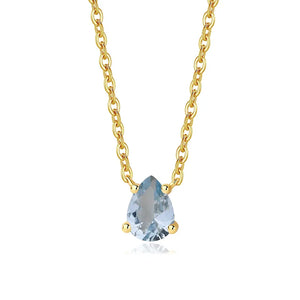
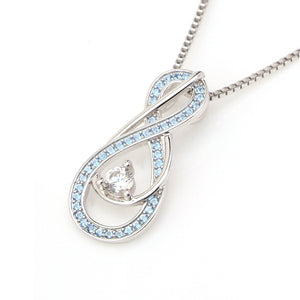
The piece they're describing → Collier pendentif aigue-marine pour femme — Pierre aigue-marine en forme de goutte, argent sterling 925
Personalize Yours


