


Last updated: June 2026
If you're putting together an amethyst buying guide checklist before your next purchase, you're doing it right. Amethyst is one of the most popular gemstones in the world, but quality varies wildly — from cheap dyed quartz to rich, deeply saturated purple stones worth serious money. This guide covers everything you need to know: color grading, natural vs. lab-created, price ranges, and red flags to avoid.

An amethyst buying guide covers how to evaluate amethyst quality by color saturation, clarity, cut, and carat weight, identify natural vs. synthetic stones, understand price tiers from raw to set jewelry, and avoid common scams like dyed quartz sold as genuine amethyst. Color is the single most important value factor.
The 4 Cs for Amethyst: What Really Drives Value
The traditional diamond 4 Cs apply to amethyst too — but the weighting is completely different. Here's what actually matters when you buy amethyst.
Color: The Most Important Factor by Far
Color accounts for roughly 70% of an amethyst's value. The ideal shade is a deep, saturated reddish-purple — often called "Siberian" or "Deep Siberian" after the Russian mines that originally produced it. Today, most top-grade stones come from Brazil and Uruguay, but the name stuck.
Color grades range from:
- AAA (Deep Siberian): Rich, dark reddish-purple with strong secondary red or blue flashes. The top 1-2% of stones.
- AA: Medium-dark purple, good saturation, minor color zoning. Most fine jewelry uses this grade.
- A: Medium purple, lighter areas visible, still genuine amethyst.
- B / commercial grade: Pale lilac, heavy color zoning, or brownish tones. Inexpensive and widely used in fashion jewelry.
Pale lilac amethyst isn't "bad" — it's just priced differently. A deep Siberian stone in a premium cut can cost 10-20× more per carat than pale lilac of the same size.
Clarity
Amethyst is a Type II gemstone according to GIA's gemstone quality factors, meaning inclusions are common and expected. Eye-clean stones (no visible inclusions without magnification) are ideal for faceted gems. Small inclusions in raw crystals are completely normal and don't affect value much.
Watch for: liquid inclusions (fine for collectors), fingerprint inclusions (natural), and brown/cloudy patches (reduce value significantly).
Cut
A well-cut amethyst maximizes color and minimizes color zoning — the uneven purple patches you often see in lower-grade stones. Look for even color distribution face-up. Oval and cushion cuts tend to show color best. Poorly cut stones look washed out even if the rough material was high quality.
Carat Weight
Unlike diamonds, amethyst doesn't jump dramatically in per-carat price as size increases. A 10-carat deep Siberian amethyst costs more per carat than a 1-carat stone, but the difference is modest compared to precious stones. Large amethysts (10ct+) in top color are genuinely rare and priced accordingly.
Shop Genuine Amethyst Crystal Necklaces at AJLuxe — Shop Our Amethyst Pendant Necklace → →
Ready to shop? Browse all amethyst necklaces and birthstone jewelry in 925 sterling silver — every piece hypoallergenic, gift-ready, and backed by our 30-day returns.
Natural vs. Synthetic vs. Lab-Created Amethyst
These three terms aren't interchangeable, and knowing the difference could save you money.
Natural Amethyst
Formed in the earth over millions of years. Comes with minor inclusions, slight color zoning, and natural variation — all signs of authenticity. Most jewelry-grade amethyst on the market is natural and mined in Brazil, Uruguay, Zambia, or India. Natural amethyst is affordable: a genuine 5-carat AA-grade faceted stone might retail for $15-40, which is why "natural" doesn't automatically mean expensive.
Lab-Created (Synthetic) Amethyst
Chemically identical to natural amethyst, grown in a lab using a hydrothermal process. Lab amethyst is often more intensely colored and inclusion-free than natural stones of the same price. It's not fake — it's real amethyst grown faster. The issue is when sellers charge natural-stone prices for lab-grown material without disclosing it. Always ask for disclosure.
Simulants: The Real Problem
Glass, dyed quartz, or synthetic corundum can all be sold as "amethyst" by dishonest sellers. Purple glass is the most common simulant — it's too perfect, has no inclusions, and often feels lighter than real quartz. Dyed quartz shows color concentrated along fractures under magnification. A simple test: real amethyst feels cool to the touch and stays cool longer than glass.
According to the Jewelers of America consumer guide, always ask for written disclosure of whether a stone is natural, lab-created, or treated before purchasing.
Amethyst Price Guide: Raw to Set in Jewelry
Prices vary based on color grade, origin, and form. Here's a realistic range for 2026:
| Form | Grade | Price Range |
|---|---|---|
| Raw cluster (per lb) | Commercial | $5–$20 |
| Tumbled stone | A–AA | $2–$15 each |
| Faceted loose stone (1–3ct) | AA | $10–$50/ct |
| Faceted loose stone (1–3ct) | AAA Deep Siberian | $40–$150/ct |
| Set in silver pendant | A–AA | $25–$120 |
| Set in gold ring | AA–AAA | $150–$800+ |
A 2023 industry report from the International Colored Gemstone Association found that amethyst consistently ranks in the top 5 most-purchased colored gemstones globally, with annual retail sales exceeding $1 billion USD — driven largely by its wide price accessibility compared to other purple stones like tanzanite or sapphire.
Where Amethyst Comes From: Origin and Quality
Origin affects color character, availability, and sometimes price. Here's a breakdown:
- Brazil (Minas Gerais): The world's largest source. Produces a wide range from pale commercial-grade to deep violet. Most mass-market amethyst jewelry uses Brazilian stones.
- Uruguay: Known for darker, more intensely saturated purple. Uruguayan amethyst is often preferred by collectors and commands a premium over Brazilian stones at the same carat weight.
- Zambia: Produces deep, slightly bluish-purple stones with good clarity. Rising in prestige and price.
- Russia (Ural Mountains): The original "Siberian" amethyst. True Russian amethyst is rare and expensive today — most stones marketed as "Siberian" are just using the color grade name, not actual Russian origin.
- India & Sri Lanka: Typically lighter color, used in fashion and costume jewelry markets.
For jewelry purchases, origin matters less than color grade. A deep Siberian-grade Brazilian stone is more valuable than a pale Uruguayan one. Ask for color grade first, origin second.
Red Flags When Buying Amethyst
These warning signs mean you should walk away or ask hard questions:
- Too-perfect color: Natural amethyst has slight color zoning. Absolutely uniform, flawless purple is a sign of glass or synthetic material.
- Suspiciously cheap "AAA" labels: True Deep Siberian amethyst costs real money. A $3 "AAA amethyst" bracelet is using the term loosely.
- Color concentrated in cracks: Under a loupe, dyed quartz shows dye pooling along fracture lines. Natural color in amethyst is distributed through the crystal structure.
- No disclosure on treatment: Heat treatment changes amethyst to yellow citrine or green prasiolite. Irradiation enhances purple color. Treatments must be disclosed. Ask directly.
- Plastic feel or light weight: Genuine quartz feels dense and stays cool. Plastic or glass feels lighter and warms up quickly in your hand.
- "Rare purple amethyst" marketing: Amethyst is not rare. If a seller is pitching rarity to justify a high price on a small stone, that's a red flag.
What to Look for in Amethyst Jewelry Specifically
Buying amethyst set in jewelry adds another layer of evaluation beyond the stone itself.
Setting Quality
Prong settings let light through the stone, which enhances color. Bezel settings protect the stone better but can dull color slightly. For pendants, open-back settings are ideal — they allow light to pass through the amethyst and bring out its depth. Closed-back settings can hide lower-quality stones by preventing you from seeing through the back.
Metal Type
Sterling silver (925) is the most common and cost-effective pairing for amethyst. The cool tones of silver complement purple well. Yellow gold creates a warmer, vintage look and works with all amethyst grades. Rose gold is trending but can clash with strongly red-purple stones. For everyday wear pieces, look for rhodium plating on silver to prevent tarnish.
Stone Security
Check that prongs are evenly spaced and fully cover the girdle of the stone. A prong that's bent or missing means the stone can fall out. Bezel settings should have a clean, smooth edge all the way around with no gaps.
For more on amethyst symbolism and history, see our guide to amethyst meaning. If you want to know what amethyst does energetically, read our amethyst healing properties guide.
Frequently Asked Questions
What color amethyst is most valuable?
Deep Siberian purple — a rich, saturated reddish-purple — is the most valuable color grade. The ideal stone shows strong purple with secondary red and blue flashes depending on the light angle. Pale lilac amethyst is common and inexpensive. The deeper and more uniform the color, the higher the value per carat.
How do I tell if amethyst is real or fake?
Real amethyst stays cool to the touch longer than glass because quartz is a poor heat conductor. Look for slight color zoning — perfectly uniform color is a red flag for glass or synthetic material. Under magnification, natural amethyst often shows needle-like inclusions or fine fingerprint patterns. Dyed quartz shows color concentrated in fractures. When in doubt, ask for a gem lab certificate.
What's the difference between natural and lab-created amethyst?
Natural amethyst forms in the earth over millions of years with natural inclusions and color variation. Lab-created amethyst has the same chemical structure (silicon dioxide with iron impurities) but is grown in a controlled environment in weeks. Lab-created stones are often more perfectly colored and inclusion-free. Neither is "fake" — the distinction is origin. The problem arises only when lab-created stones are sold as natural without disclosure.
Is AAA grade amethyst worth the price?
True AAA or Deep Siberian grade amethyst is worth the premium if color is important to you. The saturation and beauty difference between AAA and AA is visible to the naked eye. However, many sellers use "AAA" loosely as a marketing term without any standardized grading behind it. Buy from sellers who can explain exactly what their grading means — ideally with a GIA or AGL certificate for higher-value stones.
How much should I pay for amethyst?
Commercial-grade amethyst (pale lilac) in silver jewelry runs $15–$50 retail. AA-grade stones in silver pendants typically cost $30–$120. AAA-grade set in gold can reach $300–$800+ for quality pieces. Raw clusters for home décor cost $5–$20 per pound. If a price seems too good for the color quality claimed, it probably is — check the grade, origin, and treatment disclosure.
Does heat treatment affect amethyst value?
Heat treatment to enhance color is common and accepted in the trade when disclosed. Amethyst that's been irradiated to deepen purple is less common but also acceptable with disclosure. What matters is that treatment is disclosed so you're paying the right price for the right stone. Undisclosed treatment — especially turning pale amethyst dark artificially — is fraud. Always ask about heat or irradiation treatment before buying.
What's the best amethyst origin to buy?
Uruguayan amethyst is generally preferred for deep, intense color and good clarity. Brazilian amethyst covers a wide range from pale to deep and is the most available. Zambian amethyst offers a distinctive bluish-purple character at a slight premium. True Russian (Siberian) amethyst is rare and expensive. For jewelry, focus on color grade rather than origin — a deep Siberian-grade Brazilian stone beats a pale Uruguayan stone every time.
Can amethyst fade over time?
Yes — amethyst can fade with prolonged exposure to direct sunlight or strong artificial UV light. This is a property of iron-based color centers in quartz. Store amethyst away from windows and avoid leaving pieces in direct sunlight for extended periods. Fading is gradual and most noticeable in paler stones. Deep Siberian grade stones are more stable but not completely immune to long-term UV exposure.
What size amethyst is best for a pendant necklace?
For a pendant, 6mm–12mm faceted stones or 3–8 carat oval/cushion cuts are the most wearable range. Smaller stones (under 5mm) can lose their color impact in a pendant setting. Larger stones (15mm+) make a statement but can feel heavy for everyday wear. A 10mm oval or round in AA grade hits the sweet spot between presence and wearability for most necklace designs.
Is amethyst a good stone for everyday jewelry?
Amethyst rates 7 on the Mohs hardness scale, which makes it suitable for pendants and earrings worn daily. Rings see more abrasion and may scratch over time with everyday tasks. Avoid exposing amethyst jewelry to harsh chemicals, chlorine, or ultrasonic cleaners, which can damage both the stone and setting. Clean with mild soap and a soft brush. With reasonable care, amethyst jewelry in a quality setting lasts for decades.
Final Thoughts
Buying amethyst doesn't have to be complicated. Focus on color first — deep, saturated purple beats pale lilac every time for lasting satisfaction. Ask about treatment disclosure, check for the red flags listed above, and match the grade to your budget. Natural amethyst is genuinely accessible at every price point, which is why it's stayed one of the world's most popular gemstones for centuries. Whether you want a raw crystal cluster or a polished pendant, knowing what you're looking for puts you in control of the purchase.
Ready to wear one? Shop Genuine Amethyst Crystal Necklaces at AJLuxe →
Toutes les marques, noms de marque et noms de produits tiers sont la propriété de leurs détenteurs respectifs. AJLuxe n’est affilié à aucune marque tierce citée dans cet article, ni approuvé ou sponsorisé par celle-ci. Les noms de marque sont utilisés uniquement à des fins de comparaison factuelle, et les descriptions de matériaux reflètent les spécifications produit publiées par chaque marque au moment de la rédaction.
You Might Also Like
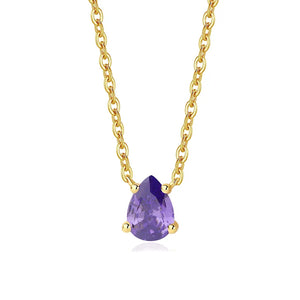
The piece they're describing → Collier pendentif améthyste pour femme — Pierre d'améthyste en forme de goutte, Argent sterling 925
Personalize Yours


