Sapphire is September's birthstone, and its deep blue is one of the most universally recognized and admired colors in all of gemology. But sapphire is far more than one color — it comes in pink, yell…
Sapphire is September's birthstone, and its deep blue is one of the most universally recognized and admired colors in all of gemology. But sapphire is far more than one color — it comes in pink, yellow, orange, purple, green, white, and the extraordinary padparadscha (a rare salmon-pink-orange variety named after the lotus flower). What blue sapphire, pink sapphire, yellow sapphire, and padparadscha all share is their mineral identity: corundum, the same aluminum oxide that produces ruby. In the gem world, all corundum is sapphire except red corundum, which is ruby.
New to sapphire? Read our complete Sapphire meaning guide to learn the stone's symbolism, healing properties, and how to choose a quality piece before you buy.
September's sapphire has been the gem of royalty and divine favor for centuries. Ancient Persians believed the earth rested on a giant sapphire whose reflection colored the sky. Medieval clergy wore sapphire to represent heaven's blue. The British Crown Jewels contain numerous historic sapphires. The engagement ring that Princess Diana wore — and that Kate Middleton wears today — is a 12-carat oval Ceylon (Sri Lankan) blue sapphire set in white gold, the most famous single piece of sapphire jewelry in the world. September birthdays carry this extraordinary heritage in their birthstone.
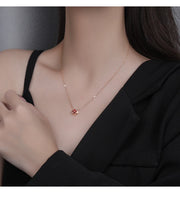
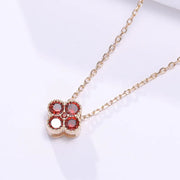
AJLuxe September birthstone jewelry features sapphire-inspired blue pieces in 925 sterling silver. Our collection captures the classic deep blue of September's birthstone in everyday-wearable designs — pendants and earrings that bring the stone's nobility and versatility to accessible, beautifully crafted pieces. Whether you are shopping for a September birthday, a back-to-school celebration, or a gift for the sophisticated jewelry lover in your life, sapphire blue is universally flattering and timelessly elegant.
| Property | Details |
|---|---|
| Hardness | 9 Mohs (same as ruby — second hardest natural material; excellent for all jewelry styles) |
| Color Range | Blue (most famous), pink, yellow, green, white, purple, padparadscha (pink-orange) |
| Meaning | Wisdom, loyalty, nobility, divine favor, truth, and sincerity |
| Primary Origins | Kashmir (rarest/finest blue), Sri Lanka/Ceylon, Myanmar, Madagascar, Montana (USA) |
| Care Difficulty | Low — excellent durability; heat-treated stones safe for all care methods except steam |
The key decision when choosing sapphire jewelry is which color of sapphire. Classic blue sapphire is the September birthstone — universally recognized, immediately beautiful, and appropriate for any age and style. Within blue sapphire, the color range runs from pale cornflower blue (lighter, more delicate, associated with Ceylon origin) to deep royal blue to the extraordinary velvety "Kashmir blue" (a distinctive soft, velvety blue with no greenish overtone that commands the highest prices in the gem world). For gift purposes, medium royal blue or bright cornflower blue sapphire delivers the most immediate visual impact at the most accessible prices.
Pink sapphire has become one of the most popular colored stones in contemporary jewelry. Its relationship to ruby (same mineral, different color grade) gives it an interesting gemological story; its color range from pale blush to vivid hot pink makes it one of the most versatile stones available. Yellow sapphire is the traditional stone for wisdom and communication in multiple Asian jewelry traditions. Montana sapphires, mined in the Yogo Gulch and Rock Creek areas of Montana, are distinctive for their steel blue to teal blue color — uniquely American and increasingly sought after. For any September birthday, the range of sapphire colors means there is a choice suited to every personality and style.
September birthdays arrive at the start of fall — back-to-school energy, new beginnings, cooler air, and the visual shift from summer's warm palette to autumn's cooler tones. Deep blue sapphire is perfectly seasonal: it mirrors the September sky, the deepening blue of autumn afternoons, and the clarity that comes with the season's transition. A sapphire pendant or earrings in sterling silver is the classic September birthday gift — elegant, meaningful, and immediately wearable.
For a Virgo birthday (before September 22), sapphire's association with wisdom and analytical clarity aligns beautifully with Virgo's intellectual precision. For a Libra birthday (from September 23), sapphire's reputation for justice and truth connects with Libra's value of balance and fairness. For a milestone birthday (30th, 40th, 50th), sapphire's royal history makes it a suitably special gift for a major year. Lab-grown sapphire is also worth considering as a gift choice — it is chemically and physically identical to natural sapphire, typically with better clarity, and a fraction of the cost. For a September birthday recipient who appreciates both quality and value, lab-grown sapphire in sterling silver offers an excellent combination.
Kashmir sapphire is the rarest and most prestigious origin designation in the colored gemstone world. The Kashmir deposits — located in the Zanskar Range of the Himalayas, at altitudes over 15,000 feet — produced exceptional sapphires for only a brief period between roughly 1881 and 1887, with sporadic additional finds into the early 20th century. The mines have been essentially exhausted since. Kashmir sapphire's defining characteristic is its "velvety" blue — a soft, internally scattered quality that gives the color a depth and saturation not found in sapphires from other origins. This quality is caused by tiny included particles within the crystal that scatter light rather than letting it transmit cleanly through, creating the distinctive cornflower-to-royal blue without any visible green undertone. A GIA-certified Kashmir sapphire commands 5–20× the price of an equivalent-looking Ceylon sapphire.
Pink sapphire and ruby are the same mineral (corundum, aluminum oxide) but different gemological classifications based on color. GIA's definition: corundum where red is the dominant color = ruby; corundum where pink is the dominant color = pink sapphire. In practice, the line between "vivid pink sapphire" and "light ruby" is contested and varies between gemological laboratories. "Pink ruby" as a term has no scientific validity — a stone is either red enough to be ruby or pink enough to be pink sapphire. Practically speaking, ruby is more expensive per carat than pink sapphire of equivalent quality, so the classification matters financially when purchasing fine stones.
Padparadscha is the rarest and most valuable variety of sapphire: a delicate salmon-pink to orange-pink color that must contain both pink and orange in roughly equal measure. The name comes from the Sinhalese word for "lotus blossom" — the stone's color resembles the coral-pink of a fresh lotus flower. True padparadscha must have both pink and orange tones simultaneously; a stone that is purely pink is pink sapphire, and one that is purely orange is "orange sapphire." Sri Lanka (Ceylon) is the primary source of padparadscha, with smaller quantities from Madagascar and Tanzania. Fine padparadscha commands prices comparable to fine blue sapphire or higher — it is considered by many gemologists to be the most beautiful variety of the entire sapphire family.
No. Sapphire occurs in nearly every color except red (which is ruby). Blue is the most famous and commercially dominant color, but pink sapphire, yellow sapphire, purple sapphire, green sapphire, white sapphire, and padparadscha (pink-orange) are all true sapphires. Non-blue sapphires are sometimes called "fancy sapphires" to distinguish them from the blue standard. Blue sapphire's color comes from iron and titanium trace elements; pink from chromium; yellow from iron in a different state; padparadscha from a combination of chromium and iron. The assumption that all sapphires are blue is one of the most common misconceptions in gemology — September birthdays have access to the full rainbow of sapphire color.
Lab-grown sapphire is chemically and physically identical to natural sapphire — same aluminum oxide composition, same crystal structure, same Mohs 9 hardness, same optical properties. The only difference is origin: natural sapphire formed in the earth over millions of years; lab-grown sapphire was produced in a reactor in a matter of weeks. GIA and other major labs certify lab-grown sapphire as sapphire with a "laboratory-grown" qualifier. Lab-grown sapphire typically shows better clarity than natural sapphire (fewer inclusions from the controlled growth environment) and is available at a fraction of natural sapphire's price. It is not a simulant, not glass, not CZ — it is genuine sapphire crystal.
At comparable fine quality, ruby is generally more expensive than sapphire — especially at larger sizes. Fine unheated Burmese ruby at 2–5 carats routinely exceeds fine Kashmir sapphire of comparable weight at auction. However, the comparison becomes murkier at less-than-finest quality: fine Kashmir sapphire significantly exceeds average quality ruby in price. Montana sapphire, Ceylon sapphire, and Madagascar sapphire are generally less expensive per carat than fine Burmese ruby of similar quality. For everyday jewelry purposes, both ruby and sapphire are available across a wide price range, with commercial quality of both stones accessible at prices appropriate for birthday gift jewelry.
Sapphire's association with royalty spans multiple cultures and millennia. In ancient Persia, sapphire was believed to make the sky blue — a cosmic significance that elevated it above all other gems. In medieval Europe, clergy wore sapphire as a symbol of heaven, wisdom, and divine favor; kings adopted it to signal their connection to divine authority. The British Crown Jewels contain numerous historic sapphires, including the Stuart Sapphire (104 carats) in the Imperial State Crown. The engagement ring tradition of sapphire for royals — exemplified most famously by the ring Princess Diana chose in 1981 (now Kate Middleton's) — reflects sapphire's historic status as the stone of faithful love and noble commitment. Blue, as the color of truth and loyalty, makes sapphire the symbolic ideal for both royal authority and enduring love.
Sapphire is one of the best colored gemstones for everyday wear. At Mohs 9, it is the second hardest natural material after diamond — resistant to scratching from all common surfaces including steel, quartz, and household abrasives. It has no cleavage planes, making it chip-resistant as well as scratch-resistant. Most commercial sapphire is heat-treated (an accepted, stable treatment) — avoid steam cleaning for heat-treated stones, but otherwise standard care applies. For pendants, earrings, and even rings, sapphire requires minimal special handling. It is significantly more durable than emerald, opal, turquoise, or peridot, and equivalent in durability to ruby for daily wear purposes.