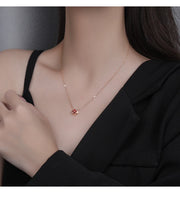
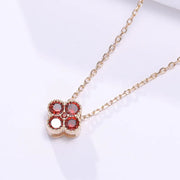
June is one of the rare months with three officially recognized birthstones: pearl, alexandrite, and moonstone. Each stone is so different from the others that June birthday shoppers have the widest …
June is one of the rare months with three officially recognized birthstones: pearl, alexandrite, and moonstone. Each stone is so different from the others that June birthday shoppers have the widest selection of any birth month — a classic choice, a rare collector's gem, and a mystical, ethereal alternative that has quietly become one of the most sought-after stones in contemporary jewelry. If you were born in June, your birthstone represents not just one gem but an entire palette of possibilities.
Pearl has been the traditional June birthstone for centuries. Unlike every other birthstone, pearl is the only gem produced by a living organism — the oyster or mollusk that builds layers of nacre around an irritant inside its shell. Natural pearls are extraordinarily rare today (most ocean pearl oyster beds were over-harvested centuries ago), so virtually all commercial pearls are cultured: a technician inserts a nucleus and the mollusk does the rest. Cultured pearl is still real pearl — the nacre is biologically identical to natural pearl nacre. Freshwater pearls (grown in mussels in Chinese lakes) are the most affordable and widely available. Akoya pearls (Japanese saltwater) are the classic white round pearl. South Sea and Tahitian pearls are the luxury tier: large, lustrous, and expensive.
AJLuxe June birthstone jewelry features pearl and moonstone pieces set in 925 sterling silver. Our collection is designed for everyday elegance — the quiet beauty of pearl and the ethereal blue glow of moonstone in settings that work for any occasion, from casual to formal. Whether you are celebrating a June birthday, looking for a summer birthday gift, or simply drawn to the way pearl or moonstone catches light, our June collection offers meaningful, beautiful options across all three birthstone traditions.
| Property | Details |
|---|---|
| Pearl Hardness | 2.5–3 Mohs (very soft — handle with care; last on, first off) |
| Alexandrite Hardness | 8.5 Mohs (excellent — color-change from green to red; very rare) |
| Moonstone Hardness | 6–6.5 Mohs (moderate — beautiful but requires gentle handling) |
| Meaning | Purity and wisdom (pearl); magical transformation (alexandrite); lunar feminine energy (moonstone) |
| Care Difficulty | Pearl: high (no chemicals, no swimming, last on first off). Moonstone: moderate. Alexandrite: low. |
The choice between pearl, moonstone, and alexandrite for a June birthday gift depends entirely on the recipient's personality and lifestyle. Pearl is the classic, universally recognized June birthstone — timeless, elegant, and appropriate for any age. A pearl pendant or pearl stud earrings in sterling silver are the go-to gift for someone who appreciates tradition and understated sophistication. The main care consideration: pearl is very soft (Mohs 2.5–3) and must be protected from chemicals, perfumes, hairspray, and sweat. Put pearl jewelry on last and take it off first. Never clean pearl with ultrasonic cleaners or harsh chemicals.
Moonstone is the artsy, celestial alternative — beloved in bohemian and minimalist jewelry aesthetics. Its most prized feature is adularescence: a blue-white floating glow that moves beneath the stone's surface as the viewing angle changes, like light on water. The best moonstone comes from Sri Lanka and India and shows a vivid blue sheen on a colorless to white body. Moonstone rates Mohs 6–6.5 — softer than sapphire or topaz, but suitable for pendants and earrings with reasonable care. For a June birthday gift that feels personal and slightly magical, moonstone is the most emotionally resonant choice in the three-stone range.
June birthdays arrive at the start of summer — warm, celebratory, and energetically open. The three June birthstones each suggest a different kind of gift relationship. Pearl says "classic and timeless" — it is the gift for mothers, grandmothers, brides-to-be, or anyone who appreciates enduring elegance. Moonstone says "individual and artistic" — it is the gift for the friend who gravitates toward celestial jewelry, crystal collections, or spiritual aesthetics. Alexandrite (rare, color-changing, and fascinating) says "collector's gem" — it is the gift for the person who already has everything and wants something genuinely unusual.
For a June birthday that falls near summer solstice, consider moonstone as the most seasonally symbolic choice — its association with lunar energy and light-play mirrors the long summer days and the fullness of the season. For a general June birthday gift, a pearl pendant or small freshwater pearl drop earrings in sterling silver are the safest and most universally appreciated option. For a bolder gift with a great story, a lab-created alexandrite piece is striking, educational, and genuinely rare in feel even in lab-created form. Whatever you choose, pair the gift with a note about which of the three June birthstones it represents and why — context transforms beautiful jewelry into a meaningful gift.
June has three officially recognized birthstones: pearl (the traditional June birthstone for centuries), alexandrite (added to the modern birthstone list in 1952), and moonstone (an alternative birthstone recognized in various international lists). This makes June one of only three months with three official birthstones — the others are August (peridot, spinel, sardonyx) and December (turquoise, tanzanite, blue topaz, zircon). Having three birthstones gives June birthday shoppers the most flexibility of any birth month: a classic choice (pearl), a rare collector's gem (alexandrite), and an ethereal alternative (moonstone).
Yes. Moonstone is recognized as an official alternative birthstone for June by multiple gemological and retail jeweler associations. It was included in the updated birthstone list adopted in 1912 by the National Association of Jewelers (now Jewelers of America) and has appeared in international birthstone lists including those of the United Kingdom and Australia. Moonstone is feldspar mineral (orthoclase/albite) that produces adularescence — a floating blue-white optical phenomenon caused by thin layers of feldspar within the stone scattering light. It is a naturally occurring gemstone, not a synthetic or simulant.
Alexandrite is the only gem with a dramatic, visible color change between different light sources. In daylight or fluorescent light, fine alexandrite appears green (sometimes teal or blue-green). Under incandescent light or candlelight, the same stone appears red or purplish-red. This shift is caused by the way chrysoberyl (alexandrite's mineral base) absorbs light — it transmits both green and red wavelengths, and which one dominates depends on the light source's spectrum. Fine alexandrite is extraordinarily rare and expensive; a 1-carat natural alexandrite with strong color change can easily cost more than a comparable diamond. Lab-created alexandrite shows the same color change at a fraction of the cost and is how most modern alexandrite jewelry is made.
Yes. Pearl is one of the most fragile gemstones used in jewelry at Mohs 2.5–3 — softer than a copper coin. Pearl can be scratched by almost any surface contact, dissolved or dulled by acids (including perspiration), and damaged by perfumes, hairspray, lotions, and cleaning products. The care rules are simple but strict: put pearl jewelry on last after applying any cosmetics or fragrance; take it off first before swimming, showering, or exercising; wipe with a soft damp cloth after wearing; never use ultrasonic or steam cleaners; store in a soft pouch away from harder jewelry. With proper care, pearl's organic luster lasts for generations. Without care, pearl can dull and crack within years.
Freshwater pearls grow in mussels in lakes and rivers (primarily in China). Saltwater pearls grow in oysters in the ocean (Japan for Akoya, Australia/Indonesia for South Sea, French Polynesia for Tahitian). The key differences: Freshwater pearls are almost entirely nacre (the lustrous coating), while saltwater pearls grow around a nucleus bead with a thinner nacre coating. This means freshwater pearl nacre is thicker and arguably more durable long-term, but saltwater pearls are typically more perfectly round and show brighter, more mirror-like luster. For price: freshwater pearls are significantly more affordable. For luxury: South Sea golden pearls and Tahitian black pearls represent the pinnacle of saltwater pearl quality and price.
With appropriate care — yes for occasional daily wear; with reservations for all-day every-day use. Pearl's softness means it will develop micro-scratches from contact with clothing, bags, and surfaces over time. The solution is not to stop wearing pearl jewelry but to be intentional about it: pearl pendants that rest against clothing are fine for regular wear if the clothing is soft; pearl earrings are excellent for everyday use as they face less direct contact. Avoid wearing pearl to the gym, the pool, the kitchen (cooking oils and acids), or any high-activity context. Pearl necklaces that lie against your neck benefit from being wiped clean after wearing to remove sweat and skin oils that can deteriorate nacre over time.
Moonstone carries deep associations with lunar energy, feminine intuition, emotional balance, and new beginnings across multiple spiritual traditions. In Hindu mythology, moonstone is made from solidified moonbeams and was considered a sacred gem. In Roman tradition, moonstone was believed to be formed from moonlight itself and was associated with the goddess Diana. In modern crystal healing, moonstone is associated with the divine feminine, emotional clarity, psychic intuition, and the cycles of the moon. It is commonly recommended for those going through transitions — new relationships, new jobs, new beginnings — which also connects with June's position at the start of summer and a new season. The adularescent blue glow is visually unique among gemstones and immediately mystical in appearance.
Natural alexandrite with strong, vivid color change is among the most expensive gemstones per carat in the world — often exceeding fine ruby, emerald, or Kashmir sapphire at comparable sizes. A 1-carat natural alexandrite with 70–80% color change from fine green to strong red can sell for $5,000–$30,000+ per carat from established dealers. Alexandrite is so rare that most jewelry sold as "alexandrite" today is lab-created — which is real alexandrite (same chemistry, same color change) grown in a laboratory. Lab-created alexandrite is affordable, beautiful, and shows the same color-change phenomenon as natural alexandrite. For a June birthday gift of alexandrite, lab-created is the practical choice; natural alexandrite is a major collector's investment.