Ruby is July's birthstone, and its reputation precedes it: the "king of gems," the stone of passion and power, the most prized colored gemstone in recorded human history. For centuries, fine ruby com…
Ruby is July's birthstone, and its reputation precedes it: the "king of gems," the stone of passion and power, the most prized colored gemstone in recorded human history. For centuries, fine ruby commanded higher prices per carat than even diamond, and in many historical markets it still does. Burma's Mogok Valley produced rubies of such exceptional "pigeon's blood" red — pure, slightly bluish red with no brown undertone — that the name of that specific origin became a quality grade used worldwide. July, the hottest month of summer, could not have a more fitting birthstone than the most fiery of all gems.
New to ruby? Read our complete Ruby meaning guide to learn the stone's symbolism, healing properties, and how to choose a quality piece before you buy.
Ruby is red corundum — the same aluminum oxide mineral as sapphire, just colored by chromium instead of iron/titanium. This shared mineral identity matters for two reasons. First, ruby is Mohs 9, the same hardness as sapphire — making it the second hardest natural mineral after diamond, and one of the most durable gemstones for everyday jewelry wear. Second, and this causes real consumer confusion: the boundary between "pink sapphire" and "ruby" is not always clear. GIA defines ruby as red corundum where the dominant color is red; pink corundum is pink sapphire. "Pink ruby" is a marketing term, not a gemological classification. Always verify the color designation if you are purchasing fine ruby.
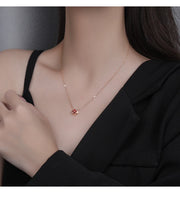
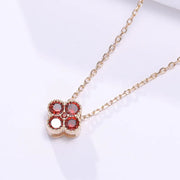
AJLuxe July birthstone jewelry brings ruby's iconic red to 925 sterling silver settings designed for everyday wear. Our collection includes pendant necklaces and earrings featuring ruby-inspired red stones that capture the warmth and passion associated with this legendary July gem. Whether you are shopping for a July birthday, a summer anniversary, or a gift for someone born under Cancer or Leo, our July collection delivers the emotional resonance of ruby at an accessible price point.
| Property | Details |
|---|---|
| Hardness | 9 Mohs (sapphire-level — excellent for daily wear in any setting) |
| Color Range | Pink-red to deep red; pigeon's blood (pure vivid red with slight blue) = most prized |
| Meaning | Passion, protection, power, prosperity, vitality — the "king of gems" |
| Primary Origins | Myanmar/Mogok (finest pigeon's blood), Thailand, India, Mozambique, Madagascar |
| Care Difficulty | Low — excellent durability; heat-treated stones avoid steam cleaning; generally safe for daily wear |
Ruby is one of the most straightforward colored gemstones to choose for a July birthday gift because its red color communicates universally — passion, warmth, love, summer. The primary considerations when selecting ruby jewelry are: color quality (pigeon's blood red is premium; brownish red is less desirable), treatment (virtually all commercial ruby is heat-treated, which is accepted; glass-filled/composite ruby is a different and problematic category), and origin (Burmese origin commands premium prices; Thai, Indian, and Mozambique rubies are beautiful and more accessible).
For everyday wear, ruby's Mohs 9 hardness makes it genuinely one of the best choices. Unlike emerald (which chips from fractures) or opal (which crazes from dehydration), ruby can be worn daily in any setting style without concern. Sterling silver settings suit ruby beautifully — the contrast between cool silver and warm red is immediate and striking. Yellow gold plating over sterling creates a more traditional, royal feel that suits the "king of gems" aesthetic. For a July birthday gift that will be worn and appreciated daily rather than reserved for special occasions, a simple ruby pendant or drop earrings in sterling silver are the ideal choice.
July birthdays arrive in peak summer — the height of the season, Leo energy, fireworks, heat, and celebration. Ruby is the perfect birthstone for this moment: bold, warm, red, and unapologetically dramatic. A ruby gift for a July birthday does not need to be subtle. The color itself is the statement. For a Cancer birthday (before July 22), ruby's protective and nurturing symbolism aligns well; for a Leo birthday (from July 23), ruby's royal, powerful energy is a natural fit.
Ruby pairs magnificently with sterling silver for a modern, high-contrast look, or with gold-plated sterling for a more traditional, regal presentation. For someone who loves layering, a simple ruby pendant that can be worn alone or stacked with gold chains is the most versatile gift. For a maximalist, ruby drop earrings make an immediate visual impact. For a personalized touch, consider pairing ruby jewelry with a note about the stone's meaning — the "king of gems" history, the pigeon's blood color grade, Mogok Valley provenance — context that turns a beautiful piece into a gem education moment. Ruby jewelry for July birthdays rarely goes unappreciated: the stone's reputation and visual power do the gifting work for you.
Ruby value is determined by four factors: color, clarity, cut, and carat weight — with color being overwhelmingly dominant. The most valuable ruby color is "pigeon's blood" — a pure, vivid red with a slight blue undertone and no brown or orange murkiness. This color grade is associated primarily with Mogok Valley, Myanmar stones but can occur elsewhere. Clarity matters less in ruby than in diamond or sapphire — some inclusions are expected and acceptable as long as they do not disrupt the stone's beauty. Cut affects how brilliantly the color displays. Origin is a significant value factor: a Burmese "pigeon's blood" ruby can sell for 2–5× the price of a Mozambique ruby of equal apparent quality. Treatment status (heated vs. unheated) also affects price — unheated ruby at fine quality is exceptionally rare and commands major premiums.
Ruby and pink sapphire are both red/pink corundum (aluminum oxide), but the GIA definition draws a color boundary: ruby is corundum where the dominant color is red (including purplish-red and orangish-red, as long as red is primary). Pink sapphire is corundum where the dominant color is pink, with red being a secondary tone. In practice, this boundary is contested — different gemological laboratories draw the line differently, and stones that GIA calls "pink sapphire" might be called "ruby" by another lab. "Pink ruby" as a marketing term has no gemological validity. Buyers should be aware that a stone sold as "ruby" should be verified as truly red, not merely pink.
Glass-filled ruby (also called composite ruby or lead glass-filled ruby) is a heavily treated stone where surface fractures and internal cavities are filled with lead glass to improve clarity and transparency. The result looks like a fine ruby at fraction of the cost but is fundamentally different from a heat-treated natural ruby. Problems: lead glass filling can be damaged by household chemicals (including lemon juice and cleaning products), extreme heat, and even hard impacts. The treatment is not stable over time. Glass-filled ruby is worth a fraction of natural ruby. Always ask for disclosure of treatments when purchasing ruby, and look for GIA or AGL laboratory reports that disclose treatment type. "Fracture-filled" or "heavily treated" in a lab report means glass-filled.
Ruby has been the symbol of passion, power, and protection across virtually every culture that encountered it. In ancient Hindu texts, ruby was called ratnaraj — "king of precious stones" — and was believed to protect its owner from evil. Burmese warriors inserted rubies beneath their skin before battle, believing the stone would make them invincible. In medieval European tradition, ruby symbolized love, health, and wisdom — it was said to grow darker when danger was near and return to its original color when the danger passed. Today, ruby represents passionate love (making it an alternative to diamond for romantic gifts), courage, and vitality. As July's birthstone, it aligns with the season's peak energy and the full heat of summer.
Yes. Ruby and sapphire are both corundum (aluminum oxide) and share the same Mohs 9 hardness — the second hardest natural material after diamond. This makes both ruby and sapphire exceptionally durable for jewelry. Unlike emerald (which chips from fractures despite its Mohs 7.5–8 hardness) or pearl (Mohs 2.5–3, very soft), ruby can be worn daily in any setting style with minimal wear concern. The Mohs 9 rating means ruby resists scratching from all common materials including steel knives, quartz-based abrasives, and household surfaces. Only diamond (Mohs 10) can scratch ruby under normal conditions.
Pigeon's blood is a color grade describing the most valuable ruby color: a pure, vivid red with a slight blue fluorescence and no brown, orange, or pink undertone. The name supposedly comes from the idea that the color matches the red of a freshly killed pigeon's eye — vivid red with a slightly darker, deeper quality. The grade is associated primarily with rubies from Mogok Valley, Myanmar (Burma), where the unique geological conditions and the presence of chromium without iron produce this distinctive pure red. The blue fluorescence in pigeon's blood ruby actually makes the stone appear even redder in sunlight (UV causes the stone to fluoresce red, adding to the perceived color). GIA and other major labs now formally grade rubies as "pigeon's blood" or "vivid red" when the color meets the standard.
Fine ruby can be more expensive per carat than fine diamond — and often is at the top of the market. A 5-carat unheated Burmese pigeon's blood ruby with a GIA certificate can easily exceed $1 million at auction (the current record for ruby is over $30 million for a single stone). The reason is simple supply and demand: while diamonds are rare, quality fine ruby at larger sizes is genuinely scarcer. Diamond production is in the millions of carats annually; gem-quality Burmese pigeon's blood ruby production is measured in hundreds of carats per year. For commercial-quality ruby (1–2 carats, heated, good color, eye-clean), prices are much more accessible — but for fine quality at meaningful size, ruby surpasses diamond in cost per carat.
Yes — ruby is one of the best colored gemstones for daily wear. At Mohs 9 with no cleavage planes, ruby is highly resistant to scratching and chipping. Most commercial ruby is heat-treated (a stable, accepted treatment), which does not reduce its durability. The only care consideration for heat-treated ruby is avoiding steam cleaning, which can affect the treatment. Ultrasonic cleaning is generally safe for non-fracture-filled ruby. For pendants and earrings, ruby requires essentially no special care beyond regular gentle cleaning. For rings, ruby is an excellent choice for daily wear — far more durable in this context than emerald, opal, turquoise, or even some sapphires with heavy fracture filling.