If earrings make your ears itch, swell, or develop a rash within hours of wearing them, you are not alone and you are not uniquely sensitive. Approximately 15% of women have developed nickel contact …
If earrings make your ears itch, swell, or develop a rash within hours of wearing them, you are not alone and you are not uniquely sensitive. Approximately 15% of women have developed nickel contact dermatitis — a sensitivity to nickel that causes exactly those symptoms. The cause is almost never the design, the brand, or bad luck. It's the post material. And once you understand what causes earring reactions, choosing earrings that don't react is simple.
Nickel is the primary culprit in earring reactions. It's a common trace element in metal alloys used in affordable jewelry — particularly brass, which frequently contains zinc and nickel; white gold alloys, which often use nickel to achieve the white color; and some grades of surgical steel. Nickel ions leach from the metal into skin under the warmth, moisture, and friction of a piercing environment. The immune system identifies nickel ions as foreign and mounts a reaction: inflammation, redness, itching, sometimes blistering and weeping in severe cases. This is contact dermatitis, not an allergy in the traditional IgE-mediated sense, which means it develops over time with repeated exposure and worsens with continued contact. The more often you wear nickel-containing earrings, the more sensitized your skin becomes.
What materials are genuinely hypoallergenic for earrings: 925 sterling silver is the most widely used hypoallergenic earring material in fine jewelry. It contains no nickel — the alloy is 92.5% pure silver and 7.5% copper. Titanium is the most hypoallergenic earring material available, with essentially zero reactivity for all but the most extreme sensitivities. Niobium is similar to titanium in hypoallergenicity and is used in implant-grade body jewelry. Solid 14K or higher gold contains very low nickel (white gold may still contain some) — yellow gold at 14K+ is generally nickel-free. Solid platinum is nickel-free. Medical-grade PTFE (plastic) is completely inert and used in healing piercings.
What materials look safe but often aren't: "surgical steel" is the most commonly misunderstood earring material for sensitive ears. 316L surgical steel, the standard in body jewelry, is low-nickel but not nickel-free — the European Union's Nickel Directive limits nickel release to 0.2 μg/cm²/week for items in prolonged contact with skin, and some surgical steel grades do not meet this threshold for the most sensitive individuals. "Gold-plated" earrings are safe only if the base metal under the plating is safe — gold plating over brass exposes skin to brass (potentially nickel-containing) as the plating wears on post surfaces. "Rhodium-plated" earrings are safe while the rhodium is intact, but rhodium plating wears faster than gold plating, and what's beneath matters. "Hypoallergenic" as a marketing claim has no legal definition — any product can call itself hypoallergenic without proof.
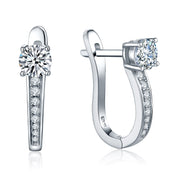
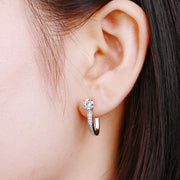
AJLuxe earrings use 925 sterling silver posts and bodies with 18K gold plating over the visible portions. The post — the thin shaft that passes through the piercing and contacts the interior of the piercing canal — is sterling silver, not brass. When the gold plating on the visible front of the earring wears over time, the sterling beneath remains. The piece never becomes a reactive piece because the base metal is sterling silver at every stage of wear. This is the critical distinction that makes AJLuxe earrings genuinely safe for sensitive ears rather than safe only when new.
Gold vermeil and gold-filled earrings fall between plated and solid gold on the safety spectrum. Gold vermeil is a thicker gold layer (at least 2.5 microns, per FTC standard) over sterling silver, the same nickel-free base AJLuxe uses, so vermeil is safe for sensitive ears by the same logic: the sterling silver underneath never exposes a reactive metal. Gold-filled jewelry uses a much thicker, mechanically bonded gold layer over a brass core, so it lasts longer than plating but is only truly hypoallergenic if the core is nickel-free. Ask the seller to confirm, since the term "gold-filled" alone does not guarantee this. For anyone healing a new piercing or managing severe sensitivity, medical-grade titanium or medical-grade PTFE remain the safest starting materials, ahead of any gold-layered option.
| Material | Nickel Content | Safe for Sensitive Ears | Notes |
|---|---|---|---|
| 925 Sterling Silver | None | Yes | Global standard for hypoallergenic fine jewelry |
| Titanium (implant-grade) | None | Yes — most hypoallergenic option | Best for new piercings and extreme sensitivity |
| Solid 14K+ Yellow Gold | None / trace | Yes | White gold may contain nickel — specify yellow |
| 316L Surgical Steel | Trace (2-3%) | Usually, not for extreme sensitivity | Low-nickel, not nickel-free |
| Brass | Often present | No | Most common cause of earring reactions |
| Gold-Plated Brass | In base metal | Only while plating is intact | Becomes reactive as plating wears on posts |
| Gold Vermeil (over Sterling) | None | Yes | Thicker plating over nickel-free sterling base |
| Gold-Filled | Depends on core | Verify core metal | Thicker bonded layer, but core may still contain nickel |
Newly pierced ears are the most vulnerable to reactions because the piercing is an open wound healing around a foreign object. The standards for healing piercings are more stringent than for healed lobe piercings. For a healing piercing (first 6–12 weeks for lobes, 6–12 months for cartilage): use implant-grade titanium, implant-grade niobium, or solid 14K+ gold starter jewelry as recommended by the Association of Professional Piercers (APP). Do not rotate the earring — the old advice about rotating piercings to prevent sticking was debunked; rotation introduces bacteria and disrupts healing tissue. Clean twice daily with sterile saline wound spray (not alcohol, not hydrogen peroxide, not antibacterial soap — these damage healing tissue). Do not touch with unwashed hands.
Once a lobe piercing is fully healed (typically 6–12 weeks for a clean, uncomplicated piercing), 925 sterling silver earrings are safe and appropriate. If you've previously experienced reactions to earrings in healed piercings, switch to sterling silver or titanium posts specifically and observe. In most cases, the reaction disappears completely because it was caused by nickel in the previous posts, not by the act of wearing earrings. The majority of people who believe they "can't wear earrings" actually have a nickel sensitivity that is fully resolved by switching post material.
Dimethylglyoxime (DMG) test kits are available from chemistry supply stores and some online retailers for under $10. A DMG kit tests whether a metal releases nickel at a detectable level: apply the test solution to the metal surface and observe. A pink color indicates nickel release. No color change indicates no detectable nickel. This test is useful when the base metal of earrings is unknown or claimed but not verifiable by hallmark. For 925 sterling silver, which never contains nickel, a DMG test will always show negative. If a piece claimed to be sterling shows positive on a DMG test, the piece is mislabeled. The presence or absence of a 925 hallmark is the most practical indicator for most shoppers.
Earring reactions are almost always caused by nickel — a metal commonly present in brass, some stainless steel alloys, and white gold alloys. Nickel ions leach from the metal into the skin of the piercing canal, triggering an immune response called nickel contact dermatitis. Symptoms include redness, itching, swelling, and sometimes blistering around the piercing site. The reaction typically appears within hours of wearing nickel-containing earrings. Important: this is a sensitivity that develops and worsens with repeated exposure — the more often you wear nickel-containing earrings, the more severe the reaction becomes. The fix is removing the source of nickel (the earring) and switching to nickel-free materials: 925 sterling silver, titanium, or solid 14K+ gold.
Yes — 925 sterling silver is hypoallergenic for the vast majority of people. It contains no nickel (the primary jewelry allergen) and is 92.5% pure silver with 7.5% copper. True silver allergy is extremely rare — significantly rarer than nickel sensitivity. If someone tells you they're "allergic to silver," they most likely reacted to a base metal under silver plating (usually brass), not to silver itself. Certified 925 sterling silver earrings from a reputable source with a visible 925 hallmark are a safe choice for sensitive ears in nearly all cases.
Surgical steel is lower-nickel than most brass alloys but is not nickel-free. 316L surgical steel, the most common grade in body jewelry, contains 2–3% nickel by composition. For most people with mild nickel sensitivity, surgical steel is wearable. For people with pronounced nickel contact dermatitis, even the trace nickel in surgical steel can trigger reactions, particularly in fresh or healing piercings where the skin is more permeable. If you've had reactions to surgical steel earrings, the trace nickel is the likely cause. Switch to titanium (implant-grade ASTM F136) or 925 sterling silver — both are truly nickel-free.
Gold-plated earrings are safe only if the base metal under the gold plating is hypoallergenic. Gold plating itself (the actual gold layer) is safe — pure gold is biocompatible and non-reactive. The question is always: what's beneath the plating? Gold-plated brass earrings are not safe for sensitive ears because brass may contain nickel, and gold plating wears off the earring post — the thin, high-friction part inside the piercing — before it wears off anywhere else. Once the plating is gone from the post surface, brass touches your piercing directly. Gold-plated 925 sterling silver is safe for sensitive ears at every stage because when the gold plating wears, the sterling silver beneath is hypoallergenic.
Use a dimethylglyoxime (DMG) nickel test kit — available online for under $10. Apply the test solution to the metal surface (particularly the post, which is what contacts the piercing). A pink color indicates nickel release; no color change means no detectable nickel. This is the same test used by professional piercers to verify jewelry safety. Alternatively: look for the 925 hallmark. If a piece is genuine 925 sterling silver, it contains no nickel and a DMG test will be negative. If there is no hallmark and you can't verify the material, a DMG test before wearing is a $10 investment that prevents a potentially days-long reaction.
The Association of Professional Piercers (APP) recommends implant-grade titanium (ASTM F136), implant-grade niobium, or solid 14K+ yellow gold for healing piercings. These materials have the cleanest safety record for open wound environments. Sterling silver is generally not recommended for healing piercings (the first 6–12 weeks for lobes) because the copper in sterling can slow the healing of raw tissue in some cases — but sterling is perfectly safe for healed piercings. Once your lobe piercing is fully healed, 925 sterling silver earrings are an excellent everyday choice. For cartilage piercings, healing time is longer (6–12 months) and implant-grade materials should be used throughout.
Titanium is theoretically more hypoallergenic than sterling silver — it has essentially zero nickel content and near-zero reactivity for all human tissue. Implant-grade titanium (ASTM F136) is the most biocompatible earring material available and is the gold standard for healing piercings and extreme nickel sensitivities. In practice, for healed piercings and standard nickel sensitivities, 925 sterling silver is equally safe and more widely available in the styles and designs people want to wear. Titanium earring selection is more limited and often more utilitarian in design. Choose titanium for healing piercings and extreme sensitivities; choose sterling silver for the best combination of safety and style range for healed everyday piercings.
True silver allergy is extremely rare — estimated to affect well under 1% of the population. If you've had a reaction to earrings sold as sterling silver, the most likely explanations are: the piece was mislabeled (not actually 925 sterling silver — check for the hallmark), the piece was sterling silver-plated over a brass base (not solid sterling), or you reacted to the copper in the sterling alloy (very uncommon, but possible in extreme cases). Before concluding you're allergic to silver, verify that the piece causing the reaction was genuine 925 sterling silver with a visible hallmark. If you're reacting to confirmed 925 sterling, titanium earrings are the next step and are effective for essentially everyone, including those with the rare genuine silver sensitivity.