


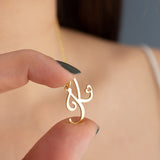
- A Morse code necklace spells a hidden word or phrase in dots and dashes, engraved or beaded onto a pendant.
- “I LOVE YOU” in Morse code is: .. / .-.. --- ...- . / -.-- --- ..-
- Dots are short signals, dashes are long signals, and a space separates each letter.
- Morse code stopped being the international standard for maritime distress signals by the late 1990s, replaced by satellite-based systems — but it lives on in ham radio, aviation identifiers, and jewelry.
- When buying one, check the metal (nickel-free/hypoallergenic matters for sensitive ears and skin), the personalization method, and whether it comes gift-boxed.
- AJLuxe doesn't currently carry a dedicated Morse code necklace; the closest piece in our catalogue for a personalized hidden-message gift is the Heart Initial Necklace ($34.39).
Morse code necklaces have become a quiet staple of personalized jewelry — the appeal is that the message only reveals itself to whoever bothers to decode it, which makes the same pendant read as minimalist to a stranger and deeply specific to the person who gave it. Below is how to read one, the phrases people actually request, what separates a well-made piece from a cheap one, and where a Morse code necklace fits next to other personalized styles like initial and nameplate necklaces.
What Is a Morse Code Necklace?
A Morse code necklace is a pendant — usually a bar, disc, or small charm — engraved or beaded with a pattern of dots and dashes that translates letter-by-letter into a word or short phrase. The format itself is the point: unlike a nameplate necklace that spells a name in visible script, a Morse code piece hides the message in a code, so it reads as a simple line of texture or beads to anyone who doesn't know to decode it. That's why it's a popular choice for anniversaries, sobriety dates, a child's name, or a private phrase between two people.
How Do You Read a Morse Code Necklace?
You read a Morse code necklace by grouping the dots and dashes back into letters using the standard International Morse Code alphabet, where each letter is a unique short/long signal pattern. A dot (·) is a short signal, a dash (—) is a long signal, and a gap in spacing marks where one letter ends and the next begins — on a pendant, that gap is usually a slightly wider space or a small divider mark between engraved groups.

As a worked example, “I LOVE YOU” breaks down like this:
- I = ..
- L O V E = .-.. --- ...- .
- Y O U = -.-- --- ..-
Most people buying a Morse code necklace don't memorize the alphabet — they either look it up once to confirm their chosen word encodes correctly, or they trust the maker's translation and treat the code itself as the design.
Popular Morse Code Necklace Phrases and What They Spell
The most requested Morse code necklace phrases are short — one word or a compact phrase — because longer messages get visually crowded on a small pendant. Here's how some of the most common ones translate:
| Phrase | Morse Code |
|---|---|
| I LOVE YOU | .. / .-.. --- ...- . / -.-- --- ..- |
| MOM | -- --- -- |
| DAD | -.. .- -.. |
| FOREVER | ..-. --- .-. . ...- . .-. |
| FAITH | ..-. .- .. - .... |
| BRAVE | -... .-. .- ...- . |
| SISTER | ... .. ... - . .-. |
| BEST FRIEND | -... . ... - / ..-. .-. .. . -. -.. |
Initials and single letters are just as common as full words — a single letter keeps the pendant especially subtle, since even the decoded result is just one character.
What Should You Look for When Buying a Morse Code Necklace?
Look for the base metal, the personalization method, and whether sizing and gifting are handled before you check out. The pendant's dots and dashes are usually the smallest, most delicate feature on the piece, so cheap plating or thin stamping tends to wear illegible fastest — a solid, hypoallergenic metal like 925 sterling silver holds fine engraving better over daily wear than base-metal alloys that flake or tarnish.
A few practical checks:
- Metal and skin sensitivity — nickel-free, hypoallergenic metal matters if you or the recipient has sensitive skin or ears; sterling silver with 18K gold plating is a common safe combination.
- How the code is applied — stamped/engraved dashes hold up to daily wear better than printed or painted ones, which can rub off.
- Verification — if you're encoding a custom word, double-check the translation before ordering; a single wrong letter changes the whole hidden message.
- Presentation — since these are almost always gifted, a piece that arrives gift-boxed saves an extra step.
Morse Code Necklace vs. Initial Necklace vs. Nameplate Necklace
The three styles differ mainly in how visible the personalization is: a Morse code necklace hides the message in code, an initial necklace shows one letter plainly, and a nameplate necklace spells a full name or word in open script.
| Necklace Type | What the Pendant Shows | Best For | Personalization Style |
|---|---|---|---|
| Morse Code Necklace | A private phrase spelled in dots and dashes | Buyers who want a hidden, decodable message | Custom phrase encoded as symbols |
| Initial Necklace | A single letter or monogram | Everyday minimalist wear, easy gifting | One letter, often with a charm |
| Nameplate Necklace | A full name or word in script | Bold, statement-style personalization | Full name or word, clearly legible |
18K gold plating option
Nickel-free, safe for daily wear
Boxed, no extra charge
Insured shipping, easy returns
Which Personalized Necklace Should You Choose?
Choose a Morse code necklace only if you specifically want the message hidden — if you'd rather the personalization be visible at a glance, an initial or nameplate piece delivers the same sentimental weight without requiring anyone to decode it. AJLuxe doesn't currently stock a dedicated Morse code necklace, so if that exact hidden-code format is non-negotiable, a specialty jeweler is the honest answer.
But if what you're really after is a personalized, gift-ready piece that carries a private meaning — a name, a letter, someone's initial — the closest match in our own catalogue is the Heart Initial Necklace ($34.39), 18K gold plated with a personalized letter and heart pendant. It's built on the same 925 sterling silver base, hypoallergenic, and arrives gift-boxed like the rest of the AJLuxe line, so it makes an easy substitute when the sentiment matters more than the exact format.
Frequently Asked Questions
Where can I buy a Morse code necklace?
Morse code necklaces are sold mainly by independent and personalized-jewelry specialists who make each pendant to order, since the dots and dashes have to be custom-set for your specific word or phrase. AJLuxe doesn't currently carry a dedicated Morse code necklace — if you want a personalized piece from our own catalogue instead, the Heart Initial Necklace is the closest match.
Why is Morse code no longer used?
Morse code stopped being the required international standard for maritime and emergency distress signals by the late 1990s, when satellite-based systems took over that role, and it was gradually phased out of most commercial telecommunications as digital radio and data networks became faster and more reliable. It never fully disappeared, though — it's still taught and used in amateur (ham) radio, some aviation navigation beacons, and, informally, in jewelry and tattoos as a compact way to encode a private message.
What is “I love you” in Morse code?
“I love you” in Morse code is written as: .. / .-.. --- ...- . / -.-- --- ..- — each group of dots and dashes represents one word (I / LOVE / YOU), with the letters run together and a slightly wider gap marking the space between words.
What is the F word in Morse code?
The letter F in Morse code is ..-. (dot dot dash dot). It's one of the more common single-letter requests for personalized jewelry, since a lone initial keeps the pendant subtle even after it's decoded.
Is a Morse code necklace a good gift?
Yes, a Morse code necklace works well as a gift specifically because the message is private — it lets you encode something meaningful (a name, a date, a phrase) that only the recipient knows how to read, which gives it more sentimental weight than jewelry with an obviously visible message.
What chain length works best for a pendant necklace?
An 16 to 18 inch chain is the most common choice for a pendant necklace, since it sits at or just below the collarbone where the pendant stays visible without competing with a neckline. Longer chains (20 inches and up) let the pendant sit lower, which some buyers prefer for a more understated look.
For the full International Morse Code reference chart, the American Radio Relay League (ARRL) — the U.S. national association for amateur radio — maintains one: https://www.arrl.org
All third-party trademarks, brand names and product names are the property of their respective owners. AJLuxe is not affiliated with, endorsed by, sponsored by, or otherwise connected to any third-party brand referenced in this article. Brand names are used solely for accurate comparative reference, and material descriptions reflect each brand's own published product specifications at the time of writing.
You Might Also Like
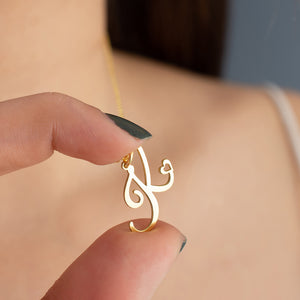

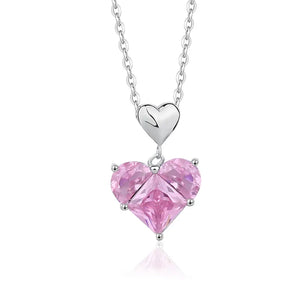
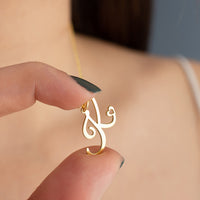
The piece they're describing → Heart Initial Necklace for Women — 18K Gold Plated, Personalized Letter + Heart Pendant
Personalize Yours


