


- First jewelry should be implant-grade titanium, surgical steel, or solid 14K/18K gold — not sterling silver, which is too soft and porous for a fresh wound.
- A standard helix piercing generally takes several months to fully heal, and the jewelry should stay in the entire time — don't downsize or swap early.
- The “2-3 rule” is piercer shorthand for keeping new piercings to 2-3 at a time and spacing out additional ones in the same ear so healing capacity isn't overwhelmed.
- Avoid touching it with unwashed hands, submerging it in pools/hot tubs/open water, sleeping on it, and using alcohol or peroxide to clean it.
- There's no medical or traditional rule for which ear — pick whichever suits your lifestyle (which side you sleep on, which ear you hold your phone to).
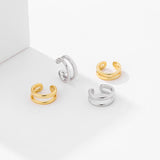
- Once healed, sterling silver and gold-plated studs and hoops are a safe, affordable way to build a curated ear — and if you're not ready to commit to a piercing at all, a no-piercing ear cuff gives the same look.
A helix piercing — the outer upper cartilage of the ear — is one of the most popular cartilage piercings precisely because it's so easy to style around: single studs, stacked hoops, chains connecting to a lobe piercing, the options are close to endless. But it's also cartilage, which heals slower and less forgivingly than a soft-tissue lobe piercing, so the jewelry you choose in the first few months matters more than it would for a standard earring. This guide covers what actually qualifies as safe first jewelry, how the “2-3 rule” works, what to avoid during healing, which ear to choose, how gauge and sizing work, and what your options look like once the piercing is fully healed — including a no-piercing alternative if you want the look without the commitment. For where the helix sits relative to every other ear placement, see our full ear piercing chart.
What Is the 2-3 Rule for Piercings?
The 2-3 rule is a piercer's guideline for pacing new piercings so your body isn't fighting multiple wounds at once: get no more than 2-3 new piercings in a single sitting, and if you want more in the same ear, wait roughly 2-3 months between sessions before adding another. The logic is straightforward — each new piercing pulls on the same healing resources (blood supply, immune response, your ability to keep every site properly cleaned), and stacking too many at once raises the odds that one of them migrates, gets irritated, or gets neglected because you're juggling aftercare for several sites simultaneously. It's not a hard medical law, but it's the pacing most professional piercers recommend, especially for cartilage piercings like the helix that already heal slower than lobes.
What Should You Avoid After Getting a Helix Piercing?
Avoid touching the piercing with unwashed hands, submerging it in pools, hot tubs, lakes, or the ocean, sleeping directly on it, and cleaning it with alcohol, peroxide, or antibacterial soap — all of these either introduce bacteria or dry out and irritate healing tissue. A few specifics worth calling out:
- Don't change the jewelry early. Swapping studs before the piercing is fully healed is one of the most common causes of irritation bumps and prolonged healing.
- Don't sleep on the pierced side if you can help it — pressure from a pillow is a leading cause of irritated, slow-healing helix piercings.
- Don't use headphones or over-ear devices that press directly on the site until it's healed.
- Don't rotate or twist the jewelry — that's outdated advice that actually reintroduces bacteria into the healing channel.
- Don't apply makeup, hairspray, or lotion directly to the area, and let hair dry before it touches a fresh piercing.
Stick to a saline soak or spray a couple of times a day, and keep the original jewelry in until your piercer confirms it's healed.
Which Ear Should You Pierce Your Helix?
There's no medical or traditional rule dictating which ear to choose for a helix piercing — pick whichever side fits your life. Older superstitions about a specific ear signaling something socially are outdated and not something piercers or the industry treat as meaningful today. The more practical factors are which side you sleep on (pierce the ear you sleep on less), which ear you hold your phone to, and whether you wear over-ear headphones more on one side, since all of those put pressure on the piercing during healing. Plenty of people eventually get both helixes pierced anyway, so the “which ear” decision is really just about which one to do first.
Helix Jewelry Materials Compared: Titanium vs Steel vs Gold vs Silver
Not every metal that's safe for a healed earlobe is a good fit for a fresh cartilage piercing — biocompatibility and initial-healing safety matter more than looks for the first few months.
| Material | Good for a new piercing? | Good for a healed piercing? | Notes |
|---|---|---|---|
| Implant-grade titanium | Yes — the top pick | Yes | Highly biocompatible, nickel-free, won't corrode; the standard most professional piercers use for initial jewelry. |
| Surgical steel (316L/ASTM F138) | Yes, if implant-grade | Yes | Widely used, but trace nickel content can bother very sensitive skin — titanium is the safer bet for known allergies. |
| Solid 14K/18K gold | Yes, if nickel-free | Yes | Non-porous and biocompatible; confirm it's solid gold and nickel-free, not gold-plated, for a first piercing. |
| 925 sterling silver | No | Yes, worn occasionally | Too soft and slightly porous for a fresh wound, and it can tarnish in the healing channel; fine as a swap-in stud once fully healed. |
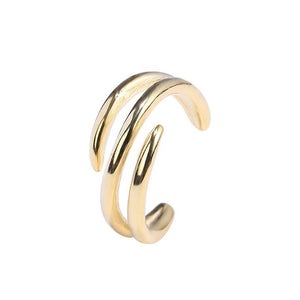
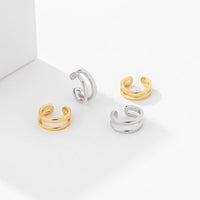
| No-piercing ear cuffs | N/A — doesn't require a piercing | Yes, anytime | Clips onto the outer ear to mimic a helix piercing's look with zero healing time; AJLuxe's 925 Sterling Silver Ear Cuff Earrings ($27.99) are hypoallergenic and gift-ready out of the box. |
Stud, Hoop, or Cuff: Which Helix Jewelry Style Fits You?
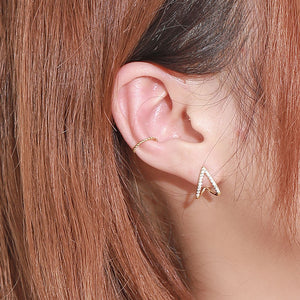
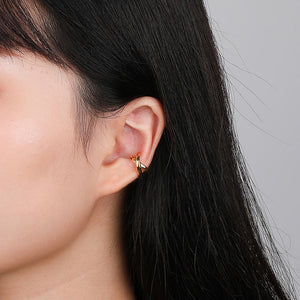
For a brand-new helix piercing, a flat-back stud is the safest starting style because it sits flush and doesn't catch on hair, clothing, or pillows the way a hoop can during the vulnerable early weeks. Once healed, a fixed or clicker-style hoop is the classic helix look and works well for stacking with a second or third cartilage piercing. If you don't have (or don't want) a piercing at all, an ear cuff wraps around the cartilage's outer edge and mimics the visual line of a helix stud or hoop without needing a needle — the trade-off is that it sits on top of the ear rather than through it, so it can shift slightly with movement, but for many people that's an easy compromise for the look with none of the healing time.
What Gauge and Size Do You Need for a Helix Piercing?
Most professional piercers use a 16-18 gauge (thinner) needle for an initial helix piercing, since thinner-gauge cartilage jewelry heals with less trauma than the thicker gauges sometimes seen in older or DIY piercings. Bar or hoop diameter depends on your individual ear anatomy — a piercer measures for enough room to accommodate initial swelling without so much room that the jewelry migrates, which is exactly why over-the-counter “universal size” cartilage jewelry is a common cause of poor healing. Your piercer is the right source for your exact gauge and diameter; it isn't something to guess from a size chart.
Don't Want to Commit to a Piercing? The No-Piercing Alternative
If you like the look of a stacked or single helix piece but aren't ready for the needle, downtime, or aftercare routine, a clip-on ear cuff gets you the same silhouette with none of it. AJLuxe doesn't make jewelry for pierced cartilage, but the catalog does include several 925 sterling silver, 18K gold-plated ear cuffs designed to sit on the helix or upper ear without a piercing — including options like the Cross Ear Cuff Earrings ($27.99) and the Twisted Cuff Earrings ($25.99). They're hypoallergenic, take seconds to put on or remove, and are a genuinely useful option for anyone testing whether they like the helix look before booking an appointment.
Which Helix Jewelry Should You Choose?
If your piercing is fresh, stay with the implant-grade titanium, surgical steel, or solid gold your piercer put in until it's fully healed — that decision isn't really optional, it's the difference between a smooth heal and months of irritation. Once it's healed, switching to a sterling silver or gold-plated stud is a safe, affordable way to expand your ear stack, since the tissue is no longer an open wound. And if you're not pierced yet and just want to see how the look suits you first, AJLuxe's 925 Sterling Silver Ear Cuff Earrings ($27.99) — 18K gold plated, no piercing needed — give you the same visual line at the top of the ear with zero healing time and zero commitment.
Frequently Asked Questions
What is the best jewelry for a helix piercing?
The best jewelry for a new helix piercing is a flat-back stud or fixed-bead ring in implant-grade titanium, surgical steel, or solid nickel-free 14K/18K gold, since these materials are the most biocompatible during healing. Sterling silver and gold-plated pieces are better suited to a fully healed helix rather than the initial piercing.
What is the 2-3 rule for piercings?
The 2-3 rule means limiting yourself to 2-3 new piercings per sitting and waiting roughly 2-3 months before adding another piercing to the same ear, so your body isn't healing too many wounds at once. It's a pacing guideline from professional piercers, not a strict medical requirement.
What should I avoid after getting a helix piercing?
Avoid touching it with unwashed hands, submerging it in pools or open water, sleeping directly on it, changing the jewelry early, and cleaning it with alcohol or peroxide. Stick to a saline rinse and leave the original jewelry in until your piercer confirms full healing.
Which ear should you pierce your helix?
There's no meaningful rule for which ear — choose based on which side you sleep on, hold your phone to, or wear headphones on less, since those habits affect healing more than which ear you pick. Many people eventually pierce both.
How long does a helix piercing take to heal?
A helix piercing generally takes several months to heal fully because it's cartilage, which has less blood flow than a lobe piercing and heals more slowly as a result. Exact healing time varies by person, so follow your piercer's specific guidance rather than a fixed calendar date before changing the jewelry.
Can you wear sterling silver in a helix piercing?
Sterling silver isn't recommended for a fresh helix piercing because it's softer and slightly more porous than implant-grade metals, which can slow healing or irritate the wound. Once the piercing is fully healed, a nickel-free sterling silver stud is a safe, everyday option to rotate in.
Source: Association of Professional Piercers
All third-party trademarks, brand names and product names are the property of their respective owners. AJLuxe is not affiliated with, endorsed by, sponsored by, or otherwise connected to any third-party brand referenced in this article. Brand names are used solely for accurate comparative reference, and material descriptions reflect each brand's own published product specifications at the time of writing.
You Might Also Like
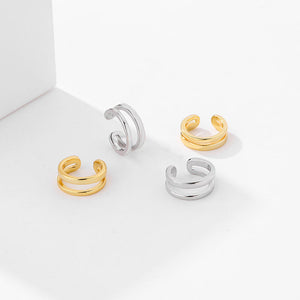
The piece they're describing → Ear Cuff Earrings for Women — 925 Sterling Silver, No Piercing Needed, Gold Plated
Personalize Yours


