


TL;DR
- Titanium wins on hypoallergenic safety — implant-grade titanium (Ti-6Al-4V ELI or CP titanium) contains zero nickel, so it's the gold standard for fresh or sensitive piercings.
- Stainless steel wins on price — genuine 316L surgical steel earrings typically run five to twenty dollars, versus fifteen to sixty dollars or more for titanium.
- Titanium is noticeably lighter — roughly forty percent lighter than stainless steel by volume, which matters for cartilage, daith, or multiple piercings worn all day.
- Stainless steel still contains nickel — 316L binds it inside a passive chromium-oxide layer, so most people tolerate it fine, but true nickel allergies can still flare, especially in a healing piercing.
- Neither is what AJLuxe sells — AJLuxe's earrings are 925 sterling silver and 18K gold-plated, a fashion-jewelry alternative for healed ears, not surgical-grade body jewelry for new piercings.
- Both resist tarnish and corrosion well — titanium edges out steel here too, since it forms a more stable oxide layer and never rusts, even in salt water or chlorine.
If you've ever stood at a piercing counter or scrolled a jewelry site at midnight trying to decide between titanium vs stainless steel earrings, you've probably run into a wall of conflicting claims. Both get marketed as "hypoallergenic." Both show up in piercing studios. Both look nearly identical once they're polished and set. But they're different metals with different compositions, different price points, and — this is the part most product pages skip — different levels of allergy protection. This guide breaks down what each metal actually is, how they compare on hypoallergenic rating, weight, and cost, and where a 925 silver or 18K gold-plated alternative like AJLuxe's fits in if titanium and stainless steel aren't quite what you're after.
Titanium vs Stainless Steel Earrings: Quick Comparison
| Factor | Titanium | Surgical Stainless Steel (316L) |
|---|---|---|
| Hypoallergenic rating | Excellent — zero nickel in implant-grade titanium | Very good — nickel present but bound in the alloy |
| Weight | Light — about forty percent lighter than steel | Noticeably heavier per piece |
| Typical cost | Fifteen to sixty dollars and up | Five to twenty dollars |
| Best for | New or healing piercings, very sensitive skin, daily long-term wear | Healed piercings, budget shoppers, everyday durability |
| Tarnish resistance | Never tarnishes or rusts | Very good, occasional light dulling over years |
| Availability | Common at piercing studios, less common in fashion jewelry | Widely available everywhere, from studios to fast fashion |
What Is Titanium, and Why Does It Cost More?
Titanium is a naturally occurring transition metal, mined as an oxide and refined into the lightweight, corrosion-resistant material used in aircraft frames, surgical implants, and — increasingly — jewelry. Two grades matter for earrings. Implant-grade titanium (usually Ti-6Al-4V ELI, or "grade 23") is the standard used by reputable piercers, biocompatible enough to be surgically implanted in the body. Commercially pure titanium (grade 1 or 2) is softer and used for some fashion pieces. Both are essentially nickel-free.
The titanium price premium comes down to extraction and machining cost. Titanium ore requires energy-intensive processing to separate from oxygen, and the metal itself is harder to cut, cast, and polish than steel or silver, which drives up manufacturing cost. That's why a pair of titanium studs typically runs fifteen to sixty dollars, compared to five to twenty for stainless steel — you're paying for a metal that's genuinely harder to work with, not just a marketing premium.
What Is Surgical Stainless Steel, and Where Does the Nickel Come In?
Surgical stainless steel — properly labeled 316L — is an iron alloy blended with chromium, nickel, and molybdenum. The chromium reacts with oxygen to form a thin, self-repairing oxide layer on the surface, which is what makes the metal resist rust and corrosion. That same layer is why 316L is generally tolerated by people with mild metal sensitivities: the nickel is chemically bound within the alloy rather than sitting loose on the surface.
But "bound" isn't the same as "absent." 316L still contains roughly ten to fourteen percent nickel by weight. For most people, that nickel never reaches the skin in a meaningful amount. For the estimated five to ten percent of people with a true, diagnosed nickel allergy, it can still trigger a reaction — especially in a fresh piercing channel, where broken skin and moisture make even trace nickel release more likely to cause irritation.

Hypoallergenic Comparison: Which Is Actually Safer?
This is the gap most product listings gloss over. Both metals are marketed as "hypoallergenic," but they earn that label differently:
- Titanium is hypoallergenic because implant-grade titanium contains no nickel at all — there's nothing to react to, full stop. It's the metal dermatologists and piercers recommend most often for people with a confirmed nickel allergy, and it's the standard choice for initial piercing jewelry at reputable studios.
- Stainless steel is hypoallergenic in the sense that the nickel it contains is locked into the alloy and rarely leaches onto skin in measurable amounts for most wearers. It's a genuinely good option for the large majority of people — but it's not a guarantee for someone with an established nickel allergy, and it's a riskier choice than titanium during the healing window of a new piercing.
If you have a documented, severe nickel allergy, or you're choosing jewelry for a fresh piercing, titanium is the more conservative, medically backed choice. If your skin tolerates most jewelry fine and you've never had a reaction, 316L stainless steel is a safe, budget-friendly option for healed ears.
Weight and Comfort: Does It Actually Matter?
Titanium has a density of about 4.5 grams per cubic centimeter; stainless steel runs closer to 8 grams per cubic centimeter — nearly double. In a single stud earring, that difference is barely noticeable. But for anyone with multiple piercings (a stacked lobe, a cartilage cluster, several helix piercings at once), the cumulative weight adds up over a full day of wear, and lighter titanium tends to feel less noticeable and pull less on the earlobe or cartilage over time.
Titanium Price vs Stainless Steel: What You're Actually Paying For
Comparing titanium price to stainless steel side by side, the gap is real but proportional to what each metal delivers:
- Stainless steel studs: five to twenty dollars for a standard pair, reflecting cheap raw material and fast, easy machining.
- Titanium studs: fifteen to sixty dollars, sometimes more for internally threaded or anodized pieces, reflecting harder machining and a genuinely nickel-free guarantee.
- Anodized titanium (colored): often the priciest of the three, since color comes from controlled oxide-layer thickness rather than plating, and that process adds labor.
Neither is inherently "overpriced" — the cost difference tracks the material and manufacturing reality, not just branding.
Where AJLuxe's Earrings Fit In
To be upfront: AJLuxe doesn't sell titanium, and we don't make stainless steel earrings — our earrings are 925 sterling silver and 18K gold-plated over sterling silver, built for everyday fashion wear on healed ears, not as surgical-grade body jewelry for fresh piercings. (We do carry 316L stainless steel in a few other pieces, such as a men's cross necklace.) If you're actively healing a new piercing, titanium is still the safer, piercer-recommended choice, and we'd say so even though it's not what we sell.
Where we do fit is the "I want hypoallergenic without surgical-grade metal" lane. Genuine 925 sterling silver is nickel-free by definition, not just nickel-bound like 316L steel, and it reads as noticeably finer than either titanium or stainless steel — better for the elevated, everyday-luxury look most people want once a piercing has fully healed. If you like the low-reactivity promise of titanium and stainless steel but want jewelry that looks like fine jewelry rather than body jewelry, a flat-back sterling silver or gold-plated stud is the honest middle ground.

Which Should You Choose?
- Choose titanium if: you have a fresh or healing piercing, a diagnosed nickel allergy, or you want the lightest possible daily-wear option and don't mind paying more.
- Choose stainless steel if: your ears are fully healed, you tolerate most metals fine, and you want a durable, budget-friendly option that resists tarnish.
- Choose sterling silver or gold-plated if: your piercings are healed and you want hypoallergenic comfort in jewelry that looks and feels like fine jewelry rather than body jewelry — this is the AJLuxe lane.
For more on how sterling silver stacks up against stainless steel specifically, see our sterling silver vs stainless steel comparison. And if you're wondering whether stainless steel itself lives up to its hypoallergenic reputation, we cover that in detail in is stainless steel jewelry hypoallergenic? If you're weighing titanium against medical-grade surgical steel specifically rather than earrings alone, our titanium vs surgical steel jewelry guide covers grading, price, and body jewelry beyond earrings in more depth.
How to Tell What Metal Your Earrings Actually Are
Labels lie more often than you'd think. "Titanium steel," "surgical steel," and "hypoallergenic" are used loosely across fashion jewelry, and none of those phrases are legally regulated the way "sterling silver" or "14K gold" are. A few ways to check what you're actually buying:
- Look for a grade number. Legitimate titanium is usually marked "Ti," "G23," or "6AL4V." Legitimate surgical steel is marked "316L." A vague "steel" or "titanium-plated" with no grade is a red flag.
- Check the price against the material. A pair of "titanium" studs priced under five dollars is almost certainly base metal with a titanium-colored coating, not solid titanium.
- Use a magnet. Genuine 316L stainless steel is only weakly magnetic; a strongly magnetic piece marked "surgical steel" is more likely a cheaper 304-grade or plated alloy.
- Watch for discoloration. If a "hypoallergenic" earring turns skin green or causes itching within days, it's very likely plated brass or a lower steel grade, not genuine titanium or 316L steel.
This matters because the entire hypoallergenic case for both metals rests on getting the genuine, correctly graded material — not a lookalike coating over a cheaper, more reactive base metal underneath.
Caring for Titanium and Stainless Steel Earrings
Both metals are low-maintenance compared to precious metals, but they're not identical to care for:
- Titanium can be rinsed with warm water and mild soap, dried with a soft cloth, and worn in the shower, pool, or ocean without any risk of rust. Anodized (colored) titanium should avoid abrasive cleaners, which can scratch the thin oxide layer that produces the color.
- Stainless steel tolerates the same basic soap-and-water cleaning and can also handle water exposure well, though very hard water or prolonged chlorine exposure can very gradually dull the surface finish over years of daily wear.
- 925 sterling silver, by comparison, benefits from a dedicated polishing cloth every few weeks and is best kept dry when possible, since silver — unlike titanium or steel — can tarnish with prolonged air and moisture exposure. It's a small trade-off for the finer, dressier look many people prefer once a piercing is fully healed.
Titanium and Stainless Steel for Different Piercing Types
The "better" metal can also depend on where the piercing sits, not just how sensitive your skin is:
See also: Surgical Steel vs Sterling Silver: Which Is Actually Hypoallergenic?.
See also: Copper vs Brass Jewelry: Composition, Tarnish, and Skin Reactions Compared. If you're also curious how a colorful hypoallergenic option compares, see our niobium vs titanium earrings comparison. For the bigger-picture verdict on durability, cost, and whether it holds up long-term, see Is Stainless Steel Jewelry Good Quality? Honest 2026 Review.
- Cartilage (helix, tragus, conch, daith, rook): Titanium is strongly preferred here. Cartilage takes longer to heal than lobes — often six months to a year — and the lighter weight reduces pressure on healing tissue.
- Lobes: Either metal works well once healed. Stainless steel's lower cost makes it practical for lobe stacks, where you might want several pairs.
- Fresh or new piercings of any placement: Titanium is the industry-standard recommendation from the Association of Professional Piercers for initial jewelry, specifically because it minimizes the chance of an allergic reaction during the vulnerable healing window.
- Healed piercings, fashion wear: This is where the metal choice opens up — titanium, stainless steel, sterling silver, and 18K gold-plated pieces are all reasonable options, and the decision comes down to look, budget, and how nickel-sensitive you are.
Keep Reading
Related reading: Is Surgical Steel Hypoallergenic? The Honest Answer (2026).
Related reading: Is Stainless Steel Hypoallergenic? What 304, 316L, and “Surgical Steel” Actually Mean for Your Skin (2026).
Related reading: How to clean stainless steel jewelry.
Frequently Asked Questions
Is titanium or stainless steel better for earrings?
Titanium is generally better for fresh piercings and sensitive skin because implant-grade titanium contains no nickel at all. Stainless steel is a solid, budget-friendly choice for healed ears on people without a diagnosed nickel allergy.
Is titanium hypoallergenic?
Yes. Implant-grade titanium is one of the most hypoallergenic metals used in jewelry — it contains no nickel and is biocompatible enough to be used in surgical implants.
Is surgical stainless steel hypoallergenic?
Mostly, yes. Genuine 316L surgical steel binds its nickel content inside the alloy, so most people tolerate it well. It's not a guarantee for people with a severe, diagnosed nickel allergy.
Does titanium earrings contain nickel?
Implant-grade titanium (Ti-6Al-4V ELI or commercially pure titanium) contains no nickel. Always confirm the grade with a seller, since some "titanium-coated" or "titanium alloy" pieces are actually base metal with a thin titanium finish.
Is titanium more expensive than stainless steel?
Yes, typically. Titanium studs usually cost fifteen to sixty dollars, versus five to twenty dollars for stainless steel, reflecting the harder machining process and nickel-free guarantee.
What is the average titanium price for earrings?
Most titanium stud earrings fall between fifteen and sixty dollars, with anodized or internally threaded pieces sometimes running higher.
Can you shower with titanium earrings?
Yes. Titanium never rusts or corrodes, so it holds up well to water, sweat, and chlorine, making it one of the most low-maintenance metals for daily wear.
Which is heavier, titanium or stainless steel?
Stainless steel is roughly seventy to eighty percent heavier than titanium by volume, which is noticeable if you wear multiple piercings at once.
Is titanium good for new piercings?
Yes, it's the metal most piercers recommend for initial jewelry, since implant-grade titanium is nickel-free and biocompatible, reducing the risk of irritation while the piercing heals.
Does stainless steel jewelry turn green?
Genuine 316L surgical stainless steel does not turn skin green. Greening is usually a sign of lower-grade steel, plated base metal, or a piece mislabeled as steel.
Can you wear titanium and stainless steel earrings together?
Yes, there's no chemical reaction between the two metals when worn in different piercings or even side by side in the same ear.
Is 925 sterling silver a good alternative to titanium or stainless steel?
For healed piercings, yes. Genuine 925 sterling silver is nickel-free and reads as finer jewelry than either titanium or stainless steel, though titanium remains the better choice for fresh or actively healing piercings.
Final Thoughts
Titanium and stainless steel are both legitimate, widely used metals for earrings, and the "better" choice depends on what your ears actually need. If you're healing a new piercing or managing a real nickel allergy, titanium's zero-nickel composition makes it the safer bet, even at a higher price. If your ears are fully healed and you tolerate most metals without issue, 316L stainless steel is a durable, affordable option that holds up well to daily wear. And if what you're really after is hypoallergenic comfort in jewelry that looks like fine jewelry rather than piercing hardware, that's where a nickel-free 925 sterling silver or 18K gold-plated stud comes in — not a replacement for surgical-grade titanium, but an honest, elevated option for the life your earrings live after the piercing has healed.
Related Guides
- Is Titanium Jewelry Good? An Honest Review
- The Complete Guide to CZ Stud Earrings
- How to Style CZ Stud Earrings
- How Long Do CZ Earrings Last?
Comparing metals more broadly? See our guide on gold plated vs stainless steel.
Shop This Guide
Looking for a hypoallergenic alternative for healed ears? Our flat-back stud earrings are crafted in nickel-free 925 sterling silver and 18K gold plating — not titanium or surgical steel, but a genuinely hypoallergenic option for everyday wear once your piercing has healed.
Browse the full hypoallergenic earrings collection for more nickel-free styles.
Written by AJLuxe Team. Last updated: July 2026.
Sources: Jewelers of America — Education
Alle Marken, Markennamen und Produktnamen Dritter sind Eigentum ihrer jeweiligen Inhaber. AJLuxe steht in keiner Verbindung zu den in diesem Artikel genannten Marken Dritter und wird von diesen weder unterstützt noch gesponsert. Markennamen werden ausschließlich zur sachlichen vergleichenden Bezugnahme verwendet; Materialangaben entsprechen den eigenen veröffentlichten Produktangaben der jeweiligen Marke zum Zeitpunkt der Erstellung.
You Might Also Like
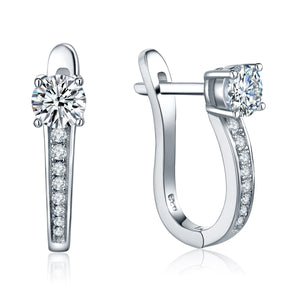
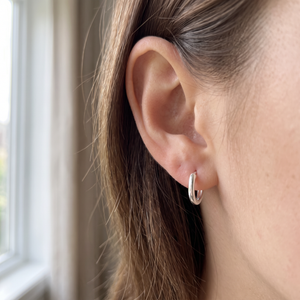
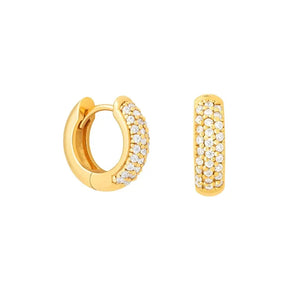
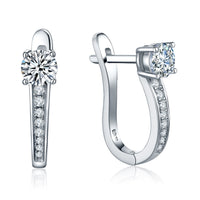
The piece they're describing → Moissanit-Creolen für Damen — 925er Sterlingsilber, Brillantschliff, hypoallergen
Personalize Yours


