


Ist Zirkonia echt? Wenn Sie ein Paar funkelnde Ohrstecker gesehen haben, die weit unter Diamantpreisen liegen, haben Sie sich vermutlich gefragt, ob der Stein ein tatsächliches Material oder eine Art Glastrick ist. Die kurze Antwort: Zirkonia ist ein echter, physischer Kristall, im Labor aus Zirkoniumdioxid gezüchtet, und seit 1976 ein legitimer Bestandteil der Schmuckindustrie.
Dieser Leitfaden erklärt, was Zirkonia tatsächlich ist, wie es hergestellt wird, und warum „kein Diamant“ nicht „nicht echt“ bedeutet. Wir behandeln auch, wie sich Zirkonia von Glas, Kunststoff und Strasssteinen unterscheidet, was es haltbar genug für Alltagsschmuck macht, und wie Sie echtes Zirkonia von einer billigen Imitation unterscheiden.

Was Zirkonia tatsächlich ist
Zirkonia ist die kubische Kristallform von Zirkoniumdioxid (ZrO2), einer Verbindung aus dem Element Zirkonium und Sauerstoff. Es ist eine echte mineralische Kristallstruktur — kein Synonym für „unechter Edelstein“ oder ein Marketingbegriff für Glas.
Hersteller fügen während der Produktion eine kleine Menge Yttriumoxid hinzu, um den Kristall zu stabilisieren, damit er seine kubische Struktur bei Raumtemperatur behält. Ohne diesen Stabilisator würde Zirkonia beim Abkühlen in eine andere, weniger nützliche Kristallform übergehen.
Der Name sorgt für einen Teil der Verwirrung. Manchmal sieht man die Schreibweise „kubisches Zirkonium“, aber das ist ein falscher Begriff — eine solche Verbindung gibt es nicht. Der korrekte Name ist immer Zirkonia (Cubic Zirconia), und es ist ein eigenständiges Material, verschieden von Zirkon (Zirkoniumsilikat), einem natürlich vorkommenden Edelstein mit einer völlig anderen chemischen Formel.
Wie Zirkonia hergestellt wird
Zirkonia wird nicht abgebaut — es wird gezüchtet. Zirkoniumdioxid hat einen extrem hohen Schmelzpunkt (2750 °C), heiß genug, um jeden Standardbehälter zu durchschmelzen. Deshalb verwenden Hersteller eine Technik namens Skull-Melting (Schädelschmelzverfahren) oder Kalttiegelmethode.
Der Prozess funktioniert so: Zirkonia-Pulver und ein Stabilisator liegen in einem wassergekühlten Kupfergefäß. Ein Hochfrequenzfeld erhitzt das Pulver von innen und schmilzt den Kern, während sich an den gekühlten Kupferwänden eine dünne feste „Schädel“-Schicht aus ungeschmolzenem Pulver bildet, die als eigener Behälter dient. Sobald die Schmelze stabil ist, kühlt sie langsam ab, und säulenförmige Kristalle wachsen von unten nach oben, bis die gesamte Charge zu Rohkristall erstarrt.
Diese Methode wurde Anfang der 1970er-Jahre am Lebedew-Institut für Physik in der Sowjetunion entwickelt, ursprünglich für optische und Laseranwendungen. Die kommerzielle Zirkonia-Produktion für Schmuck begann 1976, und der Prozess hat sich seitdem kaum verändert — er ist bis heute der Industriestandard.
Sobald der Rohkristall abgekühlt ist, wird er mit denselben Geräten und Techniken, die auch für Diamanten und andere Edelsteine verwendet werden, zu facettierten Steinen geschliffen und poliert. Dieser Schritt unterscheidet sich in nichts vom Schleifen eines natürlichen Steins.
Ist Zirkonia „unecht“ oder Betrug?
Nein. Hier entsteht der größte Teil der Verwirrung, und es lohnt sich, zwei verschiedene Fragen zu trennen: „Ist das eine echte Substanz?“ und „Ist das ein echter Diamant?“
Zirkonia ist eine echte Substanz — ein echter, im Labor gezüchteter Kristall mit eigener definierter chemischer Formel, Härte und optischen Eigenschaften. Er existiert. Sie können ihn in der Hand halten, messen und im Labor testen. In diesem Sinne ist er genauso „echt“ wie ein im Labor gezüchteter Diamant oder eine Zuchtperle.
Es ist kein echter Diamant. Diamanten sind kristallisierter Kohlenstoff. Zirkonia ist kristallisiertes Zirkoniumdioxid. Sie sind chemisch nicht miteinander verwandt, und kein seriöser Juwelier oder Händler behauptet etwas anderes. Das Gemological Institute of America (GIA) klassifiziert Zirkonia als Diamant-Simulant — einen Stein, der optisch einem Diamanten ähneln soll, ohne dessen Zusammensetzung zu teilen.
Betrug würde bedeuten, dass Ihnen jemand Zirkonia verkauft und dabei behauptet, es sei ein Diamant. Das ist Betrug, und bei seriösen Händlern selten, weil Zirkonia fast immer genau als das verkauft und gekennzeichnet wird, was es ist. Zirkonia-Schmuck zu kaufen, der als Zirkonia beworben wird, ist kein Betrug — es ist der Kauf eines echten, bewusst erschwinglichen Steins für das, was er ist.
Zirkonia vs. Glas, Kunststoff und Strasssteine
Zirkonia wird oft mit Glas- und Kunststoff-„unechten Edelsteinen“ in einen Topf geworfen, aber die Materialien sind nicht dasselbe, und der Unterschied zeigt sich, sobald man sie trägt.
Glas- und Kristallsteine (wie sie in Modeschmuck verwendet werden) bestehen größtenteils aus Siliziumdioxid (SiO2), manchmal mit zugesetztem Bleioxid für zusätzlichen Glanz. Sie liegen bei einer weichen 5–6 auf der Mohshärteskala, was bedeutet, dass sie leicht zerkratzen und bei normalem Tragen matt werden. Kunststoff-„Strasssteine“ sind noch weicher und können mit einem Fingernagel zerkratzt werden.
Zirkonia liegt bei 8 bis 8,5 auf der Mohsskala — näher am Saphir als am Glas. Es hat außerdem einen höheren Brechungsindex und mehr Dispersion (das „Feuer“, das Licht in regenbogenfarbene Blitze zerlegt), weshalb gut geschliffenes Zirkonia deutlich mehr Glanz wirft als ein gleich großer und gleich geschliffener Glasstein.
Zirkonia vs. Glas vs. Diamant vs. Moissanit auf einen Blick
| Material | Besteht aus | Mohshärte | Preisklasse |
|---|---|---|---|
| Zirkonia | Zirkoniumdioxid (ZrO2), im Labor gezüchtet | 8 - 8,5 | Günstig |
| Glas / Kristall | Siliziumdioxid (SiO2), oft mit Bleioxid | 5 - 6 | Am günstigsten |
| Moissanit | Siliziumkarbid (SiC), im Labor gezüchtet | 9,25 | Mittelklasse |
| Diamant | Kristallisierter Kohlenstoff | 10 | Hochpreisig |
Das ist ein grober Überblick. Wenn Sie die vollständige Aufschlüsselung möchten, wie Zirkonia speziell im Vergleich zu Diamanten abschneidet — Haltbarkeit, Kosten, Wiederverkaufswert und wie man sie unterscheidet — sehen Sie unseren eigenen Vergleich Zirkonia vs. Diamant. Den Moissanit-Vergleich behandeln wir ausführlich in Moissanit vs. Zirkonia.

So unterscheiden Sie echtes Zirkonia von billigem Glas
Ein paar schnelle Prüfungen zeigen, ob Sie tatsächlich Zirkonia oder einen Glasersatz in der Hand halten, der unter einem vagen Label wie „Kristall“ oder „Strass“ verkauft wird.
Das Gewicht ist der schnellste Hinweis. Zirkonia ist dicht — schwerer als gleich großes Glas —, sodass ein Stein, der für seine Größe überraschend leicht wirkt, eher Glas ist. Die Reinheit ist ein weiterer Hinweis: Echtes Zirkonia wird so hergestellt, dass es extrem klar ist, mit wenigen bis keinen sichtbaren Einschlüssen, während billiges Glas unter Vergrößerung oft winzige Bläschen oder Schlieren zeigt.
Auch die Glanzqualität zählt. Zirkonia wirft zusätzlich zu seinem weißen Glanz deutliche regenbogenfarbene Blitze (Feuer), während Glas selbst bei ähnlichem Facettenschliff eher flacher und eindimensionaler wirkt. Und wenn Sie online kaufen, achten Sie darauf, dass das Material explizit genannt wird — „Zirkonia“ oder „Cubic Zirconia (CZ)“ im Angebot, nicht nur „Kristall“, „Strass“ oder „diamantähnlicher Stein“, was vagere Begriffe sind, die manchmal Glas bedeuten.
Haltbarkeits- und Qualitätsmerkmale, auf die Sie achten sollten
Echtes Zirkonia hält täglichem Tragen gut stand. Mit 8 bis 8,5 auf der Mohsskala widersteht es alltäglichen Kratzern von den meisten Oberflächen, mit denen Sie in Berührung kommen, auch wenn es zerkratzt, wenn es direkt an einem Diamanten oder einem anderen lose im selben Beutel aufbewahrten Zirkonia-Stein reibt.
Die Qualität variiert mehr durch Schliff und Fassung als durch das Zirkonia selbst. Ein gut geschliffener, symmetrischer Stein, sicher in einer 4-Krallen-Fassung gefasst, bleibt jahrelang brillant. Ein schlecht geschliffener Stein oder einer in einer wackligen Kralle, die ihn wackeln lässt, wirkt eher matt oder fällt eher heraus — unabhängig davon, wie „echt“ das darunterliegende Material ist.
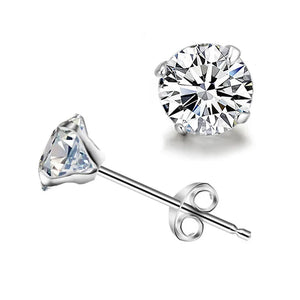
Die Fassung beeinflusst auch, wie lange der Glanz im Alltag hält. AJLuxes Sterlingsilber-Zirkonia-Ohrstecker verwenden echtes 925er Sterlingsilber mit Wahl zwischen Rhodium- oder 18-Karat-Goldplattierung, eine 4-Krallen-Fassung und einen 6-mm-klaren brillantgeschliffenen Zirkonia-Stein — eine Kombination, die sowohl auf einen legitimen Stein als auch auf eine sichere Fassung ausgelegt ist.
Beeinflusst „echt zu sein“ die Hautverträglichkeit?
Da Zirkonia ein echter, chemisch inerter Kristall ist, reagiert er nicht mit der Haut wie manche Metalle. Wenn Sie sich konkret fragen, ob Zirkonia Allergien oder Hautreaktionen auslösen kann, behandeln wir das ausführlich — einschließlich der Unterscheidung zwischen Stein und Fassung — in unserem Leitfaden zu Zirkonia und Hypoallergenität.
Manche Käufer bemerken auch grüne Verfärbungen auf ihrer Haut nach dem Tragen von Zirkonia-Schmuck und geben dem Stein die Schuld. Das ist fast immer eine Metallreaktion, nicht das Zirkonia selbst — unser Leitfaden zu Zirkonia und grünen Hautflecken schlüsselt die tatsächliche Ursache auf.
Fragen Sie sich, wie Zirkonia im Vergleich zu einer weiteren beliebten Diamant-Alternative abschneidet? Unser Vergleich Zirkonia vs. weißer Saphir bietet eine vollständige Aufschlüsselung von Härte, Preis und Glanz.
Häufig gestellte Fragen
Ist Zirkonia echt?
Ja. Zirkonia ist ein echter, im Labor hergestellter Kristall aus Zirkoniumdioxid. Es ist eine echte Substanz mit eigener definierter chemischer Formel und physikalischen Eigenschaften — es ist nur kein Diamant.
Ist Zirkonia unecht?
Nein, nicht im Sinne von gefälscht oder betrügerisch. Als Material ist es echt, und seriöse Verkäufer kennzeichnen es klar als Zirkonia, nicht als Diamant. „Unecht“ trifft nur zu, wenn jemand Zirkonia fälschlich als echten Diamanten darstellt.
Ist Zirkonia dasselbe wie Zirkonium?
Nein — „kubisches Zirkonium“ ist kein echter Begriff, sondern eine gängige Falschbezeichnung. Der korrekte Name ist Zirkonia (Cubic Zirconia), bezogen auf die kubische Kristallform von Zirkoniumdioxid.
Ist Zirkonia ein echter Diamant?
Nein. Diamanten sind kristallisierter Kohlenstoff, während Zirkonia Zirkoniumdioxid ist — eine völlig andere Verbindung. Das GIA klassifiziert Zirkonia als Diamant-Simulant, das heißt, es soll wie ein Diamant aussehen, ohne dessen Zusammensetzung zu teilen.
Ist Zirkonia einfach nur Glas?
Nein. Glas besteht größtenteils aus Siliziumdioxid und liegt bei einer weichen 5–6 auf der Mohshärteskala, während Zirkonia Zirkoniumdioxid ist und bei 8 bis 8,5 liegt. Zirkonia ist härter, dichter und wirft mehr Glanz als gleich großes und gleich geschliffenes Glas.
Wie wird Zirkonia hergestellt?
Es wird mit einer Technik namens Skull-Melting gezüchtet, bei der Zirkoniumdioxid-Pulver bei extremer Hitze in einem wassergekühlten Kupfergefäß geschmolzen und dann langsam abgekühlt wird, sodass sich Kristalle in der Schmelze bilden. Der Rohkristall wird anschließend wie jeder andere Edelstein geschliffen und poliert.
Kommt Zirkonia natürlich vor?
Natürliches Zirkonia ist in der Natur extrem selten. Fast das gesamte für Schmuck verwendete Zirkonia wird speziell zu diesem Zweck im Labor mittels Skull-Melting-Verfahren hergestellt.
Lohnt sich der Kauf von Zirkonia?
Ja, für das, was es ist. Zirkonia bietet Ihnen einen echten, haltbaren, brillanten Stein zu einem Bruchteil der Diamantpreise, was es zu einer soliden Wahl für Alltagsschmuck, Modeschmuck und alle macht, die Glanz ohne den Diamantpreis wollen.
Kann ein Juwelier Zirkonia von einem Diamanten unterscheiden?
Ja, leicht. Ein thermischer Diamanttester erkennt Zirkonia korrekt als Nicht-Diamant, da es Wärme anders leitet. Die vollständige Aufschlüsselung, wie sich Zirkonia und Diamanten unterscheiden und wie man sie erkennt, finden Sie in unserem eigenen Vergleichsleitfaden.
Fazit
Zirkonia ist in jeder relevanten Hinsicht echt: Es ist ein echter Kristall, hergestellt durch einen realen und gut dokumentierten Laborprozess, mit messbarer Härte und optischen Eigenschaften. Das Einzige, was es nicht ist, ist ein Diamant — und kein ehrlicher Verkäufer behauptet etwas anderes.
Genau diese Unterscheidung ist der Grund, warum Zirkonia seit 1976 ein legitimes Schmuckmaterial geblieben ist und kein vorübergehender Trend war. AJLuxes Sterlingsilber-Zirkonia-Ohrstecker kombinieren einen echten 6-mm-brillantgeschliffenen Zirkonia-Stein mit echtem 925er Sterlingsilber, sodass sowohl der Stein als auch die Fassung genau das sind, als was sie verkauft werden.
Verfasst vom AJLuxe-Team — Spezialisten für personalisierten Sterlingsilberschmuck. Zuletzt aktualisiert: Juli 2026.
Das könnte Sie auch interessieren: Wie man echte von unechten Perlen unterscheidet
Alle Marken, Markennamen und Produktnamen Dritter sind Eigentum ihrer jeweiligen Inhaber. AJLuxe steht in keiner Verbindung zu den in diesem Artikel genannten Marken Dritter und wird von diesen weder unterstützt noch gesponsert. Markennamen werden ausschließlich zur sachlichen vergleichenden Bezugnahme verwendet; Materialangaben entsprechen den eigenen veröffentlichten Produktangaben der jeweiligen Marke zum Zeitpunkt der Erstellung.
You Might Also Like
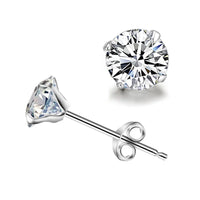
The piece they're describing → CZ Ohrstecker für Damen — 925 Sterling Silber, Zirkonia, Hypoallergen
Personalize Yours


