


Is cubic zirconia hypoallergenic? If your ears have ever turned red, itchy, or swollen after wearing "diamond-look" studs, you've probably asked this question while staring at a pair you want to buy. The short answer is yes — cubic zirconia itself is one of the safest stones you can put next to your skin. But the stone is only half the story, and the other half is what actually causes most reactions.
This guide breaks down the actual chemistry of CZ, why it doesn't trigger allergic reactions, and — more importantly — what does. We'll cover the difference between a hypoallergenic stone and a hypoallergenic setting, how to spot the real culprit if you've reacted to jewelry before, and what to look for so your next pair of CZ studs is one you can wear worry-free.

What is cubic zirconia, chemically speaking?
Cubic zirconia is zirconium dioxide (ZrO2), grown in a lab and cut to mimic a diamond's sparkle. Manufacturers add a small amount of yttrium oxide during the growing process to stabilize the crystal structure so it holds its shape and clarity.
Both zirconium dioxide and yttrium oxide are chemically inert. That means they don't react with oxygen, moisture, or the natural oils and sweat on your skin. Nothing leaches out of the stone and nothing binds to your skin cells — the two things that have to happen for a substance to trigger an allergic reaction.
Compare that to nickel, which oxidizes when it touches sweat and forms nickel ions. Those ions are what your immune system reacts to. CZ has no equivalent process. It just sits there, inert, doing its job as a diamond stand-in.
Why cubic zirconia doesn't cause skin reactions
Skin reactions to jewelry are almost always a type of contact dermatitis — an immune response triggered when a metal ion binds to proteins in your skin. This requires two things: a reactive metal (like nickel) and enough moisture or sweat to start the oxidation process.
Cubic zirconia fails both requirements. It's not a metal, and it doesn't oxidize. Dermatologists classify materials like CZ, glass, and cut stones as biologically inert — they can sit against broken or sensitive skin for weeks without triggering an immune response.
The American Academy of Dermatology notes that more than 18% of people in North America are allergic to nickel, including an estimated 11 million children in the US. That's the number driving most "hypoallergenic jewelry" searches — and it's a metal problem, not a stone problem.
The stone-vs-setting distinction (this is what actually matters)
Here's the part most articles skip. A pair of CZ earrings has two separate materials touching your skin: the stone and the setting that holds it. Each has its own allergy risk, and they are not the same risk.
The stone — clear, lab-grown CZ — is inert. The setting is where the danger lives, because settings are usually metal alloys, and metal alloys can contain nickel. If you've ever reacted to "diamond-look" studs before, the stone almost certainly wasn't the problem. The post, the prongs, or the back was.
This is why two pairs of CZ earrings can have wildly different safety profiles. A $5 pair with a nickel-alloy post will irritate sensitive ears. A pair set in solid 925 sterling silver with a rhodium or gold finish won't — because the metal touching your skin is different, even though the stone is identical.
| Material touching your skin | Allergy risk | Why |
|---|---|---|
| Clear cubic zirconia (the stone) | Very low | Chemically inert ZrO2, doesn't oxidize or react with skin |
| Nickel or nickel-alloy posts | High | Oxidizes with sweat, releases ions that trigger immune response |
| 925 sterling silver (92.5% silver, 7.5% copper) | Low | Copper alloy rarely triggers reactions; no nickel in genuine sterling |
| Rhodium-plated setting | Low (while plating lasts) | Rhodium is inert and acts as a barrier over the base metal |
| 316L surgical steel | Very low | Nickel content is locked in a stable alloy structure, rarely leaches |
| Titanium | Very low | Naturally hypoallergenic, no nickel content |
Once you separate the stone from the setting, the question changes from "is CZ safe?" to "is this specific setting safe?" That's the question worth asking before you buy.
Is sterling silver cubic zirconia hypoallergenic?
Genuine 925 sterling silver is 92.5% pure silver and 7.5% copper. Copper isn't a common allergen, and reputable 925 silver contains no nickel, so a stamped .925 piece paired with clear CZ is one of the safer combinations you can buy.
The catch is the stamp. Some jewelry labeled "silver-tone" or "silver-plated" is actually a nickel-based alloy with a thin silver wash on top — and that wash wears off fast. Always look for an actual 925 or .925 stamp, not just a silver color.
We cover the full breakdown of silver purity, alloys, and what "hypoallergenic" really means for sterling silver in our sterling silver hypoallergenic guide — worth reading if you want the metal side explained in full.
Does rhodium plating make CZ earrings safer?
Rhodium plating adds a thin, inert metal layer over sterling silver or white gold. It acts as a physical barrier between your skin and whatever's underneath, which is genuinely useful if the base metal isn't pure.
But plating isn't permanent. Regular wear — showering, sweating, swimming — wears rhodium plating down over roughly 6 to 18 months. Once it thins out, whatever's underneath starts touching your skin again.
That's why the base metal matters more than the plating. Rhodium over genuine 925 sterling silver stays safe even after the plating fades, because the silver underneath is nickel-free. Rhodium over a cheap nickel alloy stops protecting you the moment the plating wears through.

Can colored cubic zirconia cause allergies?
This is the one real exception worth knowing, and almost nobody explains it. Clear, white CZ goes through a straightforward growing process with zirconium dioxide and yttrium oxide — no other metals involved.
Colored CZ — the yellow, brown, champagne, or smoky tones — gets its color from a doping process, where trace metal oxides are added to shift the crystal's color. Depending on the manufacturer, that doping process can introduce trace nickel into the stone itself.
If you're nickel-sensitive, this means colored CZ carries a small stone-level risk that clear CZ doesn't. Standard clear or white CZ — the kind used in classic diamond-look studs — skips this risk entirely, because there's no doping involved.
How to figure out what you're actually reacting to
If you've had a reaction to jewelry before and want to know whether it was the stone or the metal, a simple patch test settles it. Wear a small piece of clear CZ (a loose stone or a stud with a known-safe post) against clean skin for 48 hours and watch for redness or itching.
Then test the metal separately — wear a plain sterling silver or titanium item with no stone for the same window. If the metal test reacts and the stone test doesn't, you've confirmed it's a metal allergy, not a stone allergy.
If you get a reaction with both, or you want a formal diagnosis, a dermatologist can run a standardized nickel patch test. This is the same test the American Academy of Dermatology references when tracking nickel allergy rates.
Hypoallergenic vs. nickel-free: what's the actual difference?
"Hypoallergenic" is a marketing term with no legal definition — it just means a product is less likely to cause a reaction than average. "Nickel-free" is a specific, checkable claim about one ingredient.
A piece can be marketed as hypoallergenic and still contain trace nickel, especially in cheaper alloys. A piece that's genuinely nickel-free — like solid 925 sterling silver, 316L surgical steel, or titanium — gives you a concrete standard to check for instead of trusting a label.
When you're shopping, "nickel-free" backed by a real material (925 stamp, surgical steel marking, titanium) tells you more than "hypoallergenic" printed on a tag with no explanation behind it.
Setting details that actually reduce your risk
Beyond the base metal, a few construction choices affect how much metal touches your skin and how securely your stone sits.
A 4-prong setting holds the CZ stone with four small metal points instead of a solid metal bezel wrapping the whole stone. Less metal-to-skin contact means less surface area for any reaction to start, and it's the standard setting style for round brilliant-cut CZ studs.
Butterfly or friction backs — the small clutch that holds a stud in place from behind your ear — are usually made from the same metal as the earring post. If the post is nickel-free sterling silver, check that the back is too; mismatched backs are a common, overlooked source of reactions.
What metals are safest for sensitive ears with CZ stones?
If you've reacted to jewelry before, a few metal options consistently perform well alongside CZ stones: 925 sterling silver, 316L surgical steel, titanium, and 18K gold (plated or solid).
316L surgical steel does contain some nickel, but it's locked into a stable alloy structure that rarely releases ions, which is why hospitals use it for body piercings. Titanium contains no nickel at all and is the safest option for the most reactive skin.
AJLuxe's sterling silver cubic zirconia stud earrings use genuine 925 sterling silver with a choice of rhodium or 18K gold plating, a 4-prong setting, and a 6mm clear brilliant-cut CZ stone — the combination this guide identifies as lowest-risk. If you want the full metal-allergy breakdown beyond CZ, our guide to earrings for sensitive ears covers other stud styles and metals in depth.
Wondering how cubic zirconia compares to another popular diamond alternative? See our cubic zirconia vs. white sapphire guide for a full breakdown of hardness, price, and sparkle.
Frequently asked questions
Is cubic zirconia hypoallergenic?
Yes. Cubic zirconia is made from zirconium dioxide, a lab-grown crystal that's chemically inert and doesn't react with skin. It contains no nickel and doesn't oxidize, which are the two things needed to trigger a skin allergy.
Can cubic zirconia cause a skin reaction?
The stone itself almost never causes a reaction on its own. When people react to CZ earrings, the cause is nearly always the metal setting, post, or back — not the stone sitting in the center.
Is cubic zirconia safe for sensitive skin?
Yes, clear cubic zirconia is one of the safest stones for sensitive skin because it's biologically inert. Pair it with a nickel-free setting like 925 sterling silver, surgical steel, or titanium for the lowest overall risk.
Does cubic zirconia contain nickel?
Standard clear or white cubic zirconia does not contain nickel. Colored CZ — yellow, brown, or champagne tones — can contain trace nickel from the doping process used to add color.
Is sterling silver cubic zirconia hypoallergenic?
Yes. Genuine 925 sterling silver (92.5% silver, 7.5% copper) contains no nickel, and clear CZ is chemically inert, making the combination one of the lowest-risk options for sensitive ears.
What's the difference between hypoallergenic and nickel-free?
"Hypoallergenic" is an unregulated marketing term meaning a product is less likely to cause reactions. "Nickel-free" is a specific, verifiable claim about one ingredient — look for nickel-free backed by a real material standard like a 925 stamp.
Can colored cubic zirconia cause allergies?
It can, in rare cases. The doping process used to create yellow, brown, or smoky CZ can introduce trace nickel into the stone, which clear CZ doesn't carry since it skips that process entirely.
How do I know if I'm allergic to nickel or the stone itself?
Patch test each material separately: wear a plain metal item with no stone for 48 hours, then a loose stone or stone-only piece for 48 hours. Whichever one causes redness or itching identifies your actual trigger.
Is rhodium-plated cubic zirconia hypoallergenic?
Rhodium plating over a nickel-free base metal like genuine 925 sterling silver stays hypoallergenic even after the plating wears down. Rhodium plating typically lasts 6 to 18 months before it thins from regular wear.
What metals are safest for sensitive ears with CZ stones?
925 sterling silver, 316L surgical steel, titanium, and 18K gold are the safest options to pair with CZ stones. Titanium contains no nickel at all, making it the top choice for the most reactive skin.
Is cubic zirconia good for sensitive ears?
Yes. Cubic zirconia (zirconium dioxide) is chemically inert and does not itself trigger ear sensitivity. The reactions people blame on "CZ earrings" almost always come from the metal post, back, or setting touching the ear — not the stone. Pair CZ with a nickel-free setting like genuine 925 sterling silver, titanium, or 316L surgical steel and it's one of the safest, most affordable stones for sensitive ears.
Final thoughts
Cubic zirconia earns its hypoallergenic reputation honestly — zirconium dioxide is inert, stable, and won't trigger the reaction that nickel does. The real work is choosing a setting that matches that safety, since the metal touching your skin decides most of the outcome.
Clear 6mm CZ set in genuine 925 sterling silver, with a 4-prong setting and your choice of rhodium or 18K gold plating, checks every box this guide covers. That's exactly how AJLuxe builds its sterling silver cubic zirconia stud earrings — designed for people who want the sparkle without worrying about their ears afterward.
Written by the AJLuxe team — specialists in personalized sterling silver jewelry. Last updated: July 2026.
Alle Marken, Markennamen und Produktnamen Dritter sind Eigentum ihrer jeweiligen Inhaber. AJLuxe steht in keiner Verbindung zu den in diesem Artikel genannten Marken Dritter und wird von diesen weder unterstützt noch gesponsert. Markennamen werden ausschließlich zur sachlichen vergleichenden Bezugnahme verwendet; Materialangaben entsprechen den eigenen veröffentlichten Produktangaben der jeweiligen Marke zum Zeitpunkt der Erstellung.
You Might Also Like
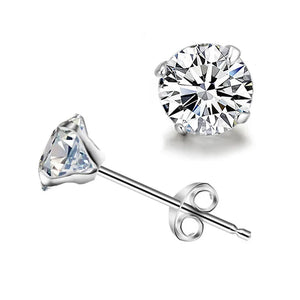
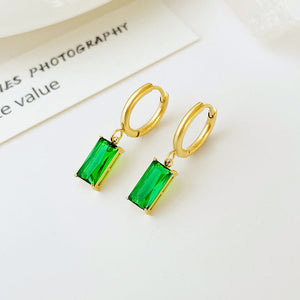
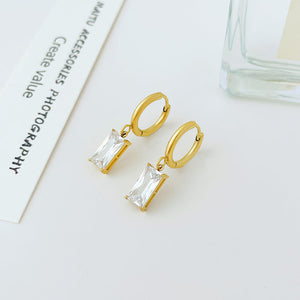
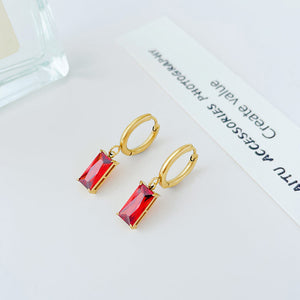
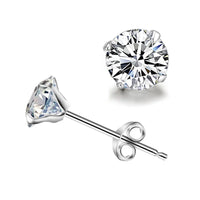
The piece they're describing → CZ Ohrstecker für Damen — 925 Sterling Silber, Zirkonia, Hypoallergen
Personalize Yours


