


Hypoallergenic Body Jewelry: What This Guide Covers
A quick note on scope before we start: most searches for “hypoallergenic body jewelry” are really about piercing jewelry in general -- nose rings, septum rings, belly bars, nipple jewelry -- and that's a category AJLuxe doesn't sell or specialize in. This guide focuses specifically on ear-based body jewelry: cartilage, helix, tragus, and standard lobe piercings, which is real body-jewelry territory with its own gauge, post, and material rules. If you're shopping for a nose, navel, or nipple piercing, the metal safety principles below still apply, but sizing, gauge, and jewelry style are different for those areas and outside what we cover here -- a specialist body-jewelry retailer or your piercer is the better resource for that.
“Hypoallergenic” gets stamped on a lot of jewelry that isn't actually nickel-free, and “body jewelry” covers a wider range of metals, gauges, and post styles than most buying guides admit. If you've had a reaction to earrings before -- itching, redness, a rash that shows up a day or two after you put them in -- the material underneath any plating is what decides whether it happens again, not the word “hypoallergenic” on the listing.
What “Hypoallergenic” Actually Means, Materially
“Hypoallergenic” isn't a regulated or standardized term in the U.S. -- any seller can put it on a listing regardless of what the metal actually contains. What's real is the underlying material and whether it releases nickel, the metal behind the vast majority of jewelry-related skin reactions. A handful of actual material standards exist and are worth knowing by name:
- ASTM F136 -- the implant-grade titanium alloy standard used in surgical implants and body-piercing jewelry; genuinely nickel-free.
- ASTM F1295 -- the equivalent standard for niobium, another genuinely nickel-free option used in piercing jewelry.
- 925 sterling silver -- regulated under FTC jewelry guidelines (16 CFR §23.6) as 92.5% pure silver alloyed with other metals (traditionally copper); reputable 925 silver is nickel-free, though quality control on the remaining 7.5% varies by manufacturer.
- 316L surgical stainless steel -- the steel used in most “surgical steel” jewelry; it does contain roughly 10–14% nickel, held in a stable alloy that releases slowly. Most nickel-sensitive people tolerate it fine; people with a severe, diagnosed nickel allergy sometimes still react.
Anything not on that list -- “gold tone,” unmarked “alloy,” generic “nickel-free*” claims with no standard cited -- is a guess, not a guarantee.
Materials at a Glance for Sensitive Ears
This is a compact summary, not the full breakdown -- for a deeper pros-and-cons comparison of each material (price, weight, color options, longevity), see our full Best Materials for Earrings guide. The short version:
- Implant-grade titanium (ASTM F136): the safest option for the most sensitive skin and fresh piercings; lightweight; typically the most expensive of the group.
- Niobium: essentially as safe as titanium, less common to find, similar price range.
- 925 sterling silver (and 18K gold over 925 sterling silver): a reliable, affordable choice for healed piercings and everyday wear when sourced from a reputable seller; this is AJLuxe's base metal.
- Surgical steel (316L): fine for most people, not truly nickel-free; skip it if you have a diagnosed nickel allergy.
- Everything else (costume alloys, unmarked “gold tone,” cheap gold plating over brass): the highest reaction risk, regardless of what the listing claims.
Body Jewelry Terms Worth Knowing for Ears
“Body jewelry” as a category has its own vocabulary, and it applies to ear piercings too, especially cartilage:
- Gauge: the thickness of the post, measured in a reverse scale where a smaller number means a thicker post. Standard ear piercings (lobe and most cartilage) in the U.S. are usually 20G or 18G; a piercer sizes this at the time of piercing.
- Flat-back (labret-style) post: a straight post with a flat disc that sits against the back of the ear instead of a butterfly clutch. This is the standard for cartilage, helix, and tragus piercings because it doesn't dig into the ear when you sleep on it, and it's why “flat-back” and “sleep-in” earrings are often the same product.
- Butterfly-back (push-back) post: the traditional stud-and-clutch style most common for standard lobe piercings; simple to put in and take out, less ideal for cartilage or side-sleepers.
- Threadless / push-pin post: common in professional piercing studios for initial jewelry; the decorative end tension-fits into a bent post rather than screwing on.
Fresh Piercing vs. Healed Piercing: Different Rules
This is the part most general “best earrings” guides skip, and it matters more than the metal alone: a fresh piercing and a healed piercing have different material requirements.
For a brand-new piercing -- especially cartilage, which has a notably longer and pickier healing window than a standard lobe (often 6–12 months versus 6–10 weeks) -- most professional piercers will only use implant-grade titanium or niobium for the initial jewelry. That's a piercing-studio standard, not just a marketing preference: freshly pierced tissue is more reactive, and a genuinely nickel-free, biocompatible metal reduces the chance of irritation while it heals. This isn't a category AJLuxe carries -- for initial piercing jewelry, a licensed piercer is the right source, not an online jewelry retailer.
Once a piercing is fully healed -- and cartilage healing should be judged conservatively, since it can look healed on the surface well before the tissue actually is -- well-made 925 sterling silver becomes a genuinely good option for everyday wear, second piercings, or swapping out initial jewelry for something you'll actually enjoy wearing day to day. That's the stage this guide, and AJLuxe's earring line, is built for.
Where AJLuxe Fits: Flat-Back Studs for Healed Ears
AJLuxe's flat-back stud earrings are 925 sterling silver with a labret-style flat-back post -- built for exactly the healed-piercing, sleep-in use case above, including helix, tragus, and other cartilage placements once they've fully healed. They're a genuinely good fit for anyone with nickel-sensitive skin who wants a reliable everyday stud without the higher price tag of titanium or niobium. What they're not is initial piercing jewelry -- if you're getting pierced for the first time, get titanium or niobium from your piercer, heal fully, then consider a switch.
Frequently Asked Questions
What body jewelry is hypoallergenic?
Within ear jewelry specifically, implant-grade titanium (ASTM F136) and niobium (ASTM F1295) are the most reliably hypoallergenic options because they're genuinely nickel-free. Reputable 925 sterling silver is a good, more affordable option once a piercing is fully healed. Surgical steel (316L) works for most people but does contain trace nickel, and anything sold only as “hypoallergenic” with no material or standard named should be treated with skepticism.
Can I wear 14K gold if I'm allergic to nickel?
It depends on the alloy. Pure 24K gold is naturally hypoallergenic, but jewelry-grade gold is always alloyed with other metals for durability, and some 14K gold blends -- particularly some white gold, which is often alloyed with nickel for its color and rhodium-plated over the top -- can contain enough nickel to trigger a reaction once the plating wears. Yellow and rose 14K gold are less likely to use nickel in the alloy, but it isn't guaranteed across brands. 18K gold plated over 925 sterling silver (gold vermeil) sidesteps the question entirely, since the base metal underneath is nickel-free sterling silver rather than a mixed gold alloy.
Is hypoallergenic jewelry actually hypoallergenic?
Sometimes, and sometimes it's just a word on a listing. Because “hypoallergenic” isn't a regulated term, the only way to know for sure is to check what material is actually named -- implant-grade titanium, niobium, or 925 sterling silver from a seller who states it plainly are trustworthy claims. A listing that says “hypoallergenic” without naming a material or standard is the one to be cautious about.
What are the best cartilage earrings for sensitive ears?
For a fresh cartilage piercing, implant-grade titanium or niobium in a flat-back (labret-style) post, fitted by a professional piercer. Once fully healed -- which for cartilage can take 6 to 12 months -- a well-made 925 sterling silver flat-back stud is a solid, more affordable everyday option. We cover placement-by-placement picks in more depth in our Best Cartilage Earrings guide.
Can you be allergic to cartilage earring material?
Yes, and cartilage piercings are actually more prone to irritation than standard lobes because they heal slower and involve piercing through denser tissue with less blood flow. Nickel is the most common trigger; symptoms include redness, itching, swelling, or a rash around the piercing, sometimes appearing days after the piece goes in rather than immediately. Switching to implant-grade titanium, niobium, or well-made sterling silver resolves most cases.
What is the healthiest metal for piercings?
Implant-grade titanium (ASTM F136) is generally considered the safest all-around option for piercings -- it's the same material standard used in surgical and orthopedic implants, it's genuinely nickel-free, lightweight, and biocompatible enough that most professional piercers use it as their default for new piercings, including cartilage. Our hypoallergenic infant earrings guide covers why this same standard matters even more for a baby's ears.
Do piercings heal better with titanium?
For most people, yes, particularly for cartilage and other slower-healing placements. Titanium doesn't introduce the nickel exposure that can cause low-grade irritation and slow healing in sensitive skin, and it's lightweight enough not to put extra strain on freshly pierced tissue. This is why it's the standard starter jewelry at most professional piercing studios rather than a premium upsell.
Can I get an MRI with a titanium earring?
Generally yes -- titanium is non-ferromagnetic and is the reason it's used in surgical implants that regularly go through MRI machines. That said, always tell the MRI technician about any jewelry or piercings beforehand rather than assuming; some facilities ask you to remove all metal regardless of material as a blanket safety policy.
For the deeper material-by-material comparison (price, weight, longevity, care), see Best Materials for Earrings. For a closer look at titanium specifically, see Titanium vs. Surgical Steel. And for placement-specific picks, see Best Cartilage Earrings.
Related reading: Hypoallergenic Nose Piercing Jewelry: The Materials That Actually Prevent Reactions (2026).
Related reading: Hypoallergenic Earrings for Pierced Ears: What Actually Works (2026).
Alle Marken, Markennamen und Produktnamen Dritter sind Eigentum ihrer jeweiligen Inhaber. AJLuxe steht in keiner Verbindung zu den in diesem Artikel genannten Marken Dritter und wird von diesen weder unterstützt noch gesponsert. Markennamen werden ausschließlich zur sachlichen vergleichenden Bezugnahme verwendet; Materialangaben entsprechen den eigenen veröffentlichten Produktangaben der jeweiligen Marke zum Zeitpunkt der Erstellung.
You Might Also Like
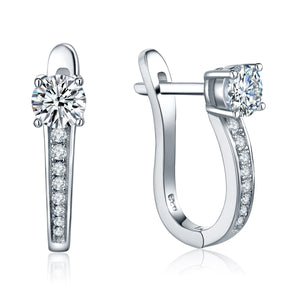

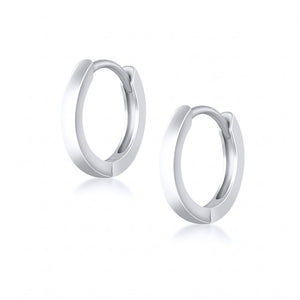
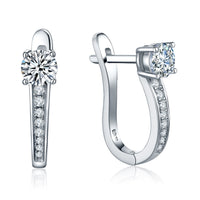
The piece they're describing → Moissanit-Creolen für Damen — 925er Sterlingsilber, Brillantschliff, hypoallergen
Personalize Yours


