


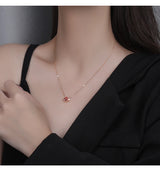
- Van Cleef & Arpels is genuine, ultra-high-end fine jewelry — solid 18K gold construction, often with real gemstone or mother-of-pearl inlay, made by one of the handful of maisons with an internal high-jewelry atelier.
- Current-production Alhambra pieces hold value well on resale (historically 70-90% of retail) but rarely appreciate — the piece you buy today is competing with unlimited future supply of the same piece.
- Real appreciation is concentrated in discontinued colorways (malachite, lapis, letterwood) and vintage 1970s-80s pieces, some of which now resell for 2-3x their original price.
- The craftsmanship case is real and well documented: Van Cleef's patented "mystery setting," where gemstones are slid into gold rails with no visible prongs, can take a single jeweler over 300 hours per piece.
- Genuine durability concerns exist at this price tier too — plating and finish issues on some pieces have been reported by buyers, which we cover in full separately in does Van Cleef tarnish — worth reading before you buy, not a reason on its own to skip the brand.
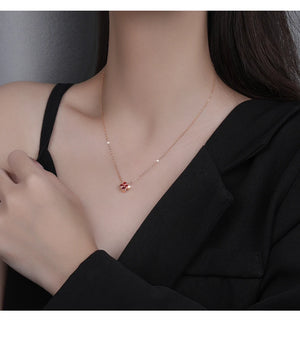
- If Van Cleef's four-figure-and-up entry point isn't where your budget lives, AJLuxe's clover pendant necklace borrows the same four-leaf motif at $33.99 — an homage to the design language, not a claim to Van Cleef's materials or construction.
"Is Van Cleef worth it" is a fair question precisely because the honest answer isn't a flat yes or no — it depends entirely on what you're buying it for. If you want a well-made, design-significant piece you'll wear and pass down, the case is strong. If you're buying it expecting the resale market to hand you a profit the way people talk about certain watches, the real data is more mixed than the marketing (and the reseller blogs) let on. This review sticks to the value question specifically — what the piece is actually made of, what real resale numbers say, and who genuinely gets their money's worth — without getting into Van Cleef's separate, real durability complaints, which we cover in full in a dedicated piece linked below.
What Is Van Cleef & Arpels, Actually?
Van Cleef & Arpels is a French haute joaillerie house founded in Paris in 1906, part of the Richemont group since 1999, and one of a small number of maisons (alongside Cartier and Bulgari) that design, engineer, and finish nearly everything in-house rather than sourcing from third-party jewelry manufacturers. Its most recognizable line, Alhambra, debuted in 1968 as a long gold chain of quatrefoil (four-leaf clover) motifs, and it remains the brand's best-selling and most widely counterfeited design decades later.
Every current Alhambra piece is built on solid 18K gold — yellow, white, or rose — not gold plating or vermeil over a base metal. Motifs are set with genuine materials: mother-of-pearl, malachite, carnelian, onyx, tiger's eye, or diamonds, depending on the piece. That solid-precious-metal construction is the baseline fact that separates Van Cleef from nearly everything in demi-fine and fashion jewelry, AJLuxe's own gold-plated sterling silver catalog included — it's a genuinely different manufacturing tier, not a marketing distinction.
How Much Does Van Cleef & Arpels Actually Cost?
Entry pricing is more accessible than the brand's reputation suggests, though it climbs fast:
| Piece | Approx. Price |
|---|---|
| Single-motif Vintage Alhambra pendant | From about $1,299 |
| Alhambra rings | About $2,200-$11,400 |
| Alhambra long necklaces (multi-motif) | Roughly $10,000-$50,000+, depending on motif count and stone |
| High jewelry / one-of-a-kind pieces | Six figures and up |
Prices have also been moving up: Van Cleef raised Alhambra prices roughly 4.8% in the US and 5.1% in Europe in a single 2025 adjustment, with some malachite pieces seeing increases closer to 14%. That matters for the value conversation two ways — it makes older purchases look better in hindsight, and it's a reminder that "worth it" has to be judged against current pricing, not last year's.

Is the Craftsmanship Actually Different? What Sets Van Cleef Apart
Yes, in ways that are documented and not just brand storytelling. Van Cleef's most cited technical achievement is the "mystery setting" (Serti Mystérieux), a technique the house patented in 1933 in which calibré-cut gemstones are individually carved and slid into a nearly invisible network of gold rails, so the finished piece shows an unbroken mosaic of color with no visible prongs or metal between stones. It's extraordinarily labor-intensive — a single mystery-set piece can take a master jeweler over 300 hours, and the technique remains exclusive enough that only a handful of ateliers worldwide can execute it reliably.
Beyond that signature technique, reviewers and industry sources consistently point to internal finishing quality on Van Cleef's articulated and mid-century pieces — the parts of a necklace or bracelet you don't see when it's worn, like the backs of links and clasp mechanisms, finished to the same standard as the visible face. That's the kind of detail that's expensive to do and easy to skip, and it's one of the more reliable signals of genuine high-jewelry manufacturing versus a brand relying mostly on its name.
Does Van Cleef Hold Its Value? What the Resale Data Actually Shows
Mostly yes, but "holds value" and "appreciates" are different claims, and most coverage of this question blurs them together. Current-production Alhambra pieces have historically resold for roughly 70-90% of their original retail price through consignment platforms and pre-owned luxury dealers — genuinely strong retention for jewelry, where most fashion and demi-fine pieces lose the majority of their value the moment they leave the store.
What current-production pieces don't reliably do is appreciate, because supply isn't limited. If Van Cleef is still making the exact yellow-gold clover pendant you bought last year, your resale ceiling is capped by what a buyer could pay for a brand-new one instead. The pieces that do appreciate meaningfully are the ones the brand has deliberately made scarce:
- Discontinued colorways and stones — malachite, lapis lazuli, and letterwood Alhambra references that Van Cleef has pulled from production carry real collector premiums once they're gone.
- Vintage pieces — original 1970s-80s Alhambra jewelry has been reported selling for two to three times its original price at auction, reflecting both age and design-history significance.
- Limited editions and mid-tier lines — some sources report certain Magic Alhambra and Butterfly pieces appreciating over 35% since their original launch, though this varies significantly by specific reference and condition.
The Alhambra motif alone reportedly accounts for the majority of Van Cleef's secondary-market sales volume, which is a useful signal in itself: resale demand is real and deep for this specific design, not a niche collector curiosity — but it's demand for the Alhambra name and motif broadly, not proof that any specific current piece will beat what you paid for it.
Van Cleef vs. Cartier vs. Tiffany: Where It Sits on Value
All three are genuine, publicly traded (or Richemont/LVMH-backed) maisons with solid-precious-metal construction and real in-house craftsmanship — none of this is a "which one is legit" comparison, it's a positioning one:
| Factor | Van Cleef & Arpels | Cartier | Tiffany & Co. |
|---|---|---|---|
| Signature technique | Mystery setting, whimsical/nature motifs | Panthère motif, Love/Juste un Clou bold design | American design heritage, iconic settings (Tiffany Setting) |
| Entry price point | ~$1,299 (single-motif Alhambra) | ~$1,000-$2,000 (thin Love bracelet range) | ~$300-$500 (sterling silver signature pieces) |
| Resale retention (est.) | ~70-90% on current Alhambra | Generally strong, especially Love/Trinity lines | More variable; sterling silver pieces resell for far less than gold |
| Best for | Design-history buyers, mystery-setting collectors | Bold, stackable statement pieces | Entry-level fine jewelry, classic American branding |
For a deeper side-by-side, see our full Van Cleef vs. Cartier comparison.

The Honest Tradeoffs, Beyond Price
Price isn't the only factor in "worth it," and this is where we'd be doing readers a disservice to only talk about resale charts. Van Cleef & Arpels has real, buyer-reported durability and finish concerns on some pieces at this price tier too — this isn't unique to demi-fine or fast-fashion jewelry, and it's worth knowing about specifically before you spend four or five figures. We've covered that separately, in detail, in does Van Cleef jewelry tarnish — read it alongside this one rather than assuming a strong resale reputation means zero quality-control complaints, because it doesn't.
There's also a practical availability factor that doesn't show up in most "is Van Cleef worth it" content: popular Alhambra references frequently sell out or carry waitlists at boutiques, and certain colorways are allocated rather than sold on demand. That scarcity is part of what supports resale value, but it also means "worth it" sometimes has to account for how hard a specific piece is to actually buy new.
Who Should Actually Buy Van Cleef?
- Buy Van Cleef if: you want a piece built from solid 18K gold with real design and technical history behind it, you're purchasing for long-term wear and eventual heirloom value rather than short-term resale profit, and the $1,299-plus entry point genuinely fits your budget without strain.
- Think twice if: you're buying primarily expecting resale appreciation on a current-production piece — the data supports value retention, not guaranteed profit, and the pieces that do appreciate are almost always vintage or discontinued, not what's on the shelf today.
- Consider an alternative if: you love the four-leaf clover motif and minimalist Alhambra silhouette specifically, but the four-figure-and-up entry point isn't where your jewelry budget lives right now — see our full Van Cleef alternatives guide for options at every price tier, including AJLuxe's own clover-motif piece below.
Is Van Cleef worth it? For the right buyer, yes — genuine solid-gold construction, a documented and difficult signature technique, and resale retention that beats most of fine jewelry. It is not a guaranteed investment vehicle, and treating it like one on current-production pieces is the one place the marketing outruns the data. Buy it because you want to wear it and might one day pass it down, not because a resale spreadsheet promised you a return.
Frequently Asked Questions
Is Van Cleef & Arpels worth the money?
For most buyers, yes, if the purchase is about craftsmanship, design significance, and long-term wear rather than short-term investment return. Van Cleef uses solid 18K gold construction and documented techniques like the patented mystery setting, and current Alhambra pieces retain 70-90% of retail value on resale — genuinely strong for jewelry, though not proof of appreciation.
Is Van Cleef & Arpels a good investment?
Current-production pieces hold value well but rarely appreciate meaningfully, since Van Cleef can make more of the same design. Real appreciation is concentrated in discontinued colorways (malachite, lapis, letterwood) and vintage 1970s-80s pieces, some of which have resold for two to three times their original price.
What is the cheapest Van Cleef & Arpels piece?
A single-motif Vintage Alhambra pendant starts at roughly $1,299, making it the most accessible entry point into the collection. Rings start higher, around $2,200.
Does Van Cleef jewelry hold its resale value?
Yes, generally. Alhambra pieces have historically resold for about 70-90% of their original retail price through consignment and pre-owned luxury dealers, among the stronger resale performances in fine jewelry.
Why is Van Cleef & Arpels so expensive?
It's built from solid 18K gold (not plating) with genuine gemstone or organic-material inlay, made largely in-house by one of a small number of maisons with a true internal high-jewelry atelier. The brand's patented mystery setting alone can take a single jeweler over 300 hours per piece.
Is Van Cleef better than Cartier?
Neither is objectively "better" — they're different design languages. Van Cleef is known for the mystery setting and whimsical nature motifs like Alhambra; Cartier is known for bolder signature pieces like the Love bracelet and Panthère line. See our full Van Cleef vs. Cartier comparison.
Does Van Cleef jewelry have quality issues?
Some buyers have reported finish and durability concerns on specific pieces, which is worth researching before a purchase at this price point. We cover this in full, separately, in does Van Cleef jewelry tarnish.
What's a more affordable alternative to Van Cleef's clover design?
AJLuxe's clover pendant necklace borrows the four-leaf motif in 925 sterling silver at $33.99 — an homage to the design language, not a claim to match Van Cleef's solid-gold construction or resale value. See more options in our Van Cleef alternatives guide.
Shop AJLuxe's clover pendant necklace
Shop the Clover NecklaceShop This Guide
Browse our full Van Cleef alternatives guide for clover-motif pieces at every price point, or see how the brand compares directly in our Van Cleef vs. Cartier breakdown.
AJLuxe Team. Last updated: September 2026. AJLuxe is not affiliated with, endorsed by, or connected to Van Cleef & Arpels. Sources: The Luxury Closet resale guide, Konesseur Alhambra price guide, GIA, Jewelers of America.
Alle Marken, Markennamen und Produktnamen Dritter sind Eigentum ihrer jeweiligen Inhaber. AJLuxe steht in keiner Verbindung zu den in diesem Artikel genannten Marken Dritter und wird von diesen weder unterstützt noch gesponsert. Markennamen werden ausschließlich zur sachlichen vergleichenden Bezugnahme verwendet; Materialangaben entsprechen den eigenen veröffentlichten Produktangaben der jeweiligen Marke zum Zeitpunkt der Erstellung.
You Might Also Like
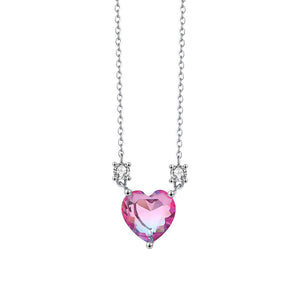
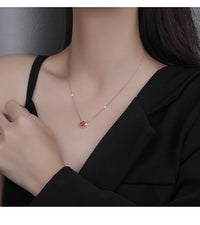
The piece they're describing → Geburtsstein-Kleeblatt-Halskette für Damen – 925er Sterlingsilber, vierblättriges Kleeblatt-Anhänger
Personalize Yours


