


The short answer
A great cross necklace comes down to three decisions: style (Latin, crucifix, sideways/east-west, Byzantine, budded, or Celtic — each reads very differently), metal (solid gold and sterling silver last longest; 18K gold plated over 925 sterling silver is the best value that stays skin-safe), and chain length, because a vertical cross pendant elongates the neckline differently than a round charm. For most people, a dainty Latin cross in a hypoallergenic metal on a 16-to-18-inch chain is the everyday sweet spot; save statement crosses and longer chains for layering or occasion wear.
Searching for the best cross necklaces for women returns a wall of near-identical product grids — and almost none of them explain why one cross reads as a quiet everyday piece while another looks ornate or overtly devotional. The difference is rarely price. It comes down to the cross style, the metal underneath any plating, and the chain length and neckline you pair it with. This guide walks through all three, adds a style-by-style comparison table most roundups skip, and shows you how to layer a cross with the rest of your jewelry without it looking cluttered.
Whether you want a barely-there dainty gold cross for daily wear, a sterling silver piece for sensitive skin, or a meaningful gift for a communion, confirmation, or milestone birthday, the goal here is to get you from "I want a cross necklace" to a specific, informed choice.

Cross necklace styles explained: Latin, crucifix, sideways & more
This is the first thing most "best cross necklace" roundups leave out entirely: they show you products without telling you the style names, so you can't search for what you actually want. A cross is not one shape — the six styles below look and feel completely different on. For a deeper visual breakdown of each shape, our companion guide to the types of cross necklaces covers the symbolism behind every design.
| Cross style | What it looks like | Best for |
|---|---|---|
| Latin (Christian) cross | The classic upright cross with a longer bottom arm; clean and simple | Everyday wear, first cross necklace, all ages |
| Crucifix | A Latin cross with the figure of Christ (corpus) on it | Devotional wear, Catholic tradition, meaningful gifts |
| Sideways / east-west cross | A cross turned horizontally along the chain | Modern, minimalist, subtle looks and layering |
| Budded cross | A Latin cross with three rounded "buds" at each arm tip | A softer, more decorative take on the classic shape |
| Byzantine / ornate cross | Detailed engraving, filigree, or gemstone accents | Statement pieces, heirlooms, occasion wear |
| Celtic cross | A cross with a ring (nimbus) around the intersection and knotwork | Heritage-inspired looks, Irish/Scottish tradition |
If you're brand new to cross styles, the Latin cross is the safest starting point — it's universally recognized, easy to layer, and works from casual to dressy. The sideways cross is the trendiest choice for anyone who wants the motif to read as understated jewelry first and symbol second.
Cross vs. crucifix: what's the difference, and does it matter?
Here's a distinction most product pages never spell out: a cross is the bare shape, while a crucifix is a cross that includes the figure of Christ (the corpus). The difference carries real meaning for many shoppers, so it's worth choosing deliberately rather than by accident.
- A plain cross is worn broadly — by Christians of many denominations, and also by people who wear it as a fashion or heritage piece rather than a strictly religious one. It's the more versatile, everyday-friendly option.
- A crucifix is more specifically devotional and is most associated with Catholic tradition. If you're buying for a Catholic milestone — a First Communion, Confirmation, or as a religious keepsake — a crucifix is often the more meaningful choice.
Neither is "better" — they simply signal different things. If you're unsure, a plain Latin cross is the lower-risk gift because it's welcome across a much wider range of beliefs and styles. If the recipient's faith tradition is specifically Catholic and you know the piece is meant to be devotional, a crucifix will likely mean more.
Best metals for a cross necklace (and sensitive skin)
A cross pendant sits against the skin of the neck and upper chest for hours, so the metal matters as much as the design — especially if you have any history of skin sensitivity. The single most important thing to know is that with plated pieces, it's the base metal underneath the plating, not the gold layer on top, that determines whether a necklace will irritate your skin once the plating naturally wears.
| Metal | Skin-safe? | Durability & notes |
|---|---|---|
| Solid 14K gold | Yes | The most durable and lowest-maintenance option; never needs replating, won't tarnish, best for heirloom crosses |
| 18K gold plated over 925 sterling silver | Yes | The best value that stays skin-safe, because the base metal is sterling silver, not brass; the gold look at a fraction of solid-gold cost |
| 925 sterling silver | Yes | Naturally hypoallergenic and classic for a silver cross; tarnishes slowly but polishes back to bright |
| Gold plated over brass or zinc | No — often contains nickel | The base metal irritates skin once plating wears thin; avoid if you have any metal sensitivity, regardless of a "hypoallergenic" label |
On the yellow-versus-white-versus-rose-gold question: yellow gold flatters warm and olive skin tones beautifully and is the traditional choice for a cross; white gold and sterling silver read cooler and more modern; rose gold is the softest and most romantic. None is objectively best — pick the tone you already wear most, so the cross layers naturally with your existing jewelry. For a broader look at gold options, our guide to the best gold necklaces for women compares karats and finishes in depth.

Chain length and neckline: pairing a cross pendant
This is the second gap most cross necklace roundups skip entirely: a cross is a vertical pendant, so it draws the eye down and elongates the neckline differently than a round charm or initial. Chain length changes the whole look — and it interacts with your neckline. Use the table below to match length to how you'll wear it.
| Chain length | Where the cross sits | Best neckline / use |
|---|---|---|
| 14–16 inches (choker/princess) | At or just below the collarbone | Crew necks, boat necks, high collars; a dainty, modern look |
| 18 inches (the classic) | Just below the collarbone, top of the chest | The most versatile length — works with nearly every neckline and layers easily |
| 20–24 inches (matinee) | On the chest, near the sternum | V-necks and open collars; a slightly bolder, more elongating look |
The safest single choice is an 18-inch chain — it flatters the widest range of necklines and body types and is the easiest length to layer. If you have a shorter neck or want the cross to read as delicate and modern, go 16 inches; if you're pairing it over an open collar or want a longer, drapey line, 20 inches or more works well. For the full breakdown of every chain-and-pendant style, see our guide to the types of necklaces for women.
Dainty vs. statement: which cross necklace suits your style?
Cross necklaces span a huge range from barely-there to bold, and the right pick depends on how you'll actually wear it:
- Dainty cross necklaces — thin chains, small crosses, minimal detail — are the everyday workhorses. They slip under a collar, layer effortlessly, and never overpower an outfit. This is the best category for a first cross, a gift, or anyone who wears jewelry daily.
- Statement cross necklaces — larger crosses, thicker chains, gemstone or Byzantine detailing — are meant to be the focal point. Reserve them for occasions, or wear them solo against a simple neckline so the cross does the talking.
If you're torn, start dainty. A small, well-made cross in a good metal is the piece you'll reach for most, and you can always add a statement cross later for special occasions. A dainty cross also plays best with layering, which brings us to the most-asked styling question.
How to layer a cross necklace without it looking cluttered
Layering a cross is one of the most popular ways to wear it now, but a cross is a distinctive shape, so a little restraint goes a long way. The rules that keep it looking intentional:
- Vary the lengths. Pair your cross (say, 18 inches) with one shorter piece (16 inches) and/or one longer piece (20 inches or more) so the pendants don't overlap and tangle.
- Let the cross be the anchor. Keep the other layers simpler — a plain chain, a small initial necklace, or a tiny charm — so the cross stays the visual focus rather than competing with another bold pendant.
- Match your metals (mostly). Sticking to one metal tone reads the cleanest; if you mix, repeat each metal at least twice so it looks deliberate.
- Mind the necklines. Layering shows best with open necklines — V-necks, scoops, and button-downs — that give the stack room to sit.
For a full walkthrough of building a stack that works, our guide to the best layered necklaces for women covers spacing, length combinations, and tangle-free layering in detail. If you love a meaningful pendant, our best lockets and best charm necklaces guides cover other sentimental necklace styles worth layering with a cross.
Shop This Guide
A dainty cross layers beautifully with a simple pendant. Our Dainty Heart Necklace in 18K gold plated over 925 sterling silver is a minimalist, skin-safe everyday layering piece that pairs cleanly with a cross — or browse the full necklaces collection to find your cross style.
Shop the Dainty Pendant Necklace Browse All NecklacesHow to choose the best cross necklace: a quick decision path
- Pick the style. Everyday and versatile → Latin cross. Modern and subtle → sideways cross. Devotional/Catholic → crucifix. Ornate or heirloom → Byzantine or Celtic.
- Choose the metal by budget and skin. Any skin sensitivity → solid 14K gold, sterling silver, or 18K gold plated over sterling silver only. Avoid gold plating over brass or zinc.
- Set the chain length. Default to 18 inches; go 16 for a daintier, higher sit or 20-plus for an elongated, layered look.
- Decide dainty vs. statement. Daily wear or gifting → dainty. Occasion or focal point → statement.
- Buy one versatile piece first, then add a statement cross or a longer layering chain once you know what you reach for.
Written by the AJLuxe Team. Last updated: July 2026. According to Jewelers of America, understanding a piece's metal content and care requirements before you buy is the single best way to make sure fine jewelry lasts — advice that applies directly to a cross necklace, where the base metal under any plating determines both how long the finish lasts and whether it stays comfortable against the skin.
Related reading: Custom Jewelry for Women (2026): Real Types, Best Metals, and Honest Price Ranges.
Which gold chain style pairs best with a cross pendant?
The best gold chain for a cross pendant is a slim cable, box, or rope chain in a matching metal tone — thin enough (around 1 to 2mm) that a Latin or sideways cross hangs forward and stays centered instead of twisting, but sturdy enough that the pendant doesn't slide around on the chain. If you already own a chain and are buying a cross pendant on its own to add to it, check the pendant's bail opening against your chain's link width before you buy — not every cross bail is wide enough to thread over every link style, and this is the single most common fit mistake with add-on pendants.
| Chain style | Look | Best paired with |
|---|---|---|
| Cable chain | Simple round or oval links, the most classic profile | Any cross style; the safest, most versatile default |
| Box chain | Square, tightly linked segments that catch light evenly | Dainty Latin or sideways crosses — a clean, modern base |
| Rope chain | Twisted, textured strand with more visual weight | Slightly larger or budded crosses that can stand up to more texture |
| Curb chain | Flattened, interlocking links that lie smoothly against the skin | Statement or Byzantine crosses — reads more substantial, less delicate |
| Wheat chain | Braided-look links with fine detail | Crucifix or Celtic crosses where you want texture without bulk |
The reason this matters more for a cross than for a round charm: a cross has a fixed top-to-bottom orientation, so a chain that's too thick or too textured for the pendant's bail can cause it to sit crooked instead of hanging straight down the centerline. When in doubt, match chain weight to pendant weight — a heavier statement cross wants a curb or rope chain to support it visually and physically, while a dainty cross looks (and wears) best on a fine cable or box chain. AJLuxe's cross necklaces are sold as one matched piece — pendant and chain in the same 18K gold plated over 925 sterling silver or sterling silver finish — which sidesteps the bail-fit question entirely if you'd rather not match components yourself.
Frequently Asked Questions
What is the difference between a cross and a crucifix?
A cross is the bare cross shape, while a crucifix is a cross that includes the figure of Christ (the corpus) on it. A plain cross is worn broadly across many denominations and even as a fashion or heritage piece, while a crucifix is more specifically devotional and most associated with Catholic tradition. For a widely welcome gift, a plain cross is the safer choice; for a Catholic milestone, a crucifix is often more meaningful.
What is the best metal for a cross necklace?
Solid 14K gold is the most durable and lowest-maintenance option and never needs replating. For the best value that still stays skin-safe, choose 18K gold plated over 925 sterling silver, because the base metal is sterling silver rather than brass. Pure 925 sterling silver is also naturally hypoallergenic. Avoid gold plating over brass or zinc, which often contains nickel and can irritate skin once the plating wears.
What is the best chain length for a cross necklace?
An 18-inch chain is the most versatile length for a cross necklace, sitting just below the collarbone and flattering nearly every neckline. Choose 16 inches for a daintier, higher sit or if you have a shorter neck, and 20 to 24 inches for a longer, more elongating look that pairs well with V-necks and open collars.
Is a dainty cross necklace or a statement piece better?
A dainty cross necklace is better for everyday wear, layering, and gifting because it slips under collars and never overpowers an outfit. A statement cross — larger, with a thicker chain or gemstone detail — is better as an occasional focal point worn against a simple neckline. For most people, a dainty cross is the piece they reach for most.
Is it OK to wear a cross necklace if I'm not religious?
Yes. Many people wear a plain cross necklace as a fashion, heritage, or family piece rather than a strictly religious statement, and it's widely considered acceptable to do so. If you want the piece to read as understated jewelry first, a small or sideways cross is the most subtle option. A crucifix, which includes the figure of Christ, carries a more overtly devotional meaning.
What are the different styles of cross necklaces?
The main cross necklace styles are the Latin (classic Christian) cross, the crucifix (a Latin cross with the figure of Christ), the sideways or east-west cross (turned horizontally for a modern look), the budded cross (with rounded tips), the ornate Byzantine cross (with engraving or gemstones), and the Celtic cross (with a ring around the intersection and knotwork). The Latin cross is the most versatile everyday choice.
Do cross necklaces suit all necklines?
Cross necklaces are highly versatile, but the effect depends on chain length. A 16-inch chain sits well with crew necks, boat necks, and high collars, while an 18-inch chain works with nearly every neckline. Longer 20-inch-plus chains suit V-necks and open collars best, where the vertical cross pendant can elongate the neckline without disappearing under fabric.
Which cross necklace is least likely to tarnish?
Solid 14K gold will not tarnish and is the most durable option for daily wear. 18K gold plated over sterling silver resists tarnish well and keeps its finish longer than plating over brass. Sterling silver can tarnish slowly over time but polishes back to bright with a soft cloth. Keeping any cross necklace dry and away from perfume and lotion slows tarnishing considerably.
How do I layer a cross necklace with other jewelry?
Vary the chain lengths so pendants don't overlap — for example, pair an 18-inch cross with a 16-inch chain and a 20-inch piece. Let the cross be the visual anchor and keep the other layers simple, such as a plain chain or a small initial pendant. Stick to one metal tone for the cleanest look, and wear layered crosses with open necklines that give the stack room to sit.
What is a good cross necklace to give as a gift?
A dainty Latin cross in a skin-safe metal like 14K gold or 18K gold plated over sterling silver, on an 18-inch chain, is the most universally welcome gift because it suits nearly every style and belief. For a Catholic milestone such as a First Communion or Confirmation, a crucifix is often more meaningful. Choose an 18-inch chain unless you know the recipient prefers a shorter or longer length. If you are shopping specifically for a baptism or christening, see our guide to baptism jewelry gifts for gift etiquette and personalization ideas.
What is a sideways cross necklace and what does it mean?
A sideways or east-west cross necklace is a cross turned horizontally so it lies along the chain rather than standing upright. It has a modern, minimalist look and is popular as an understated everyday piece. For some wearers the horizontal orientation carries a personal or symbolic meaning, but for many it is simply chosen as a subtle, contemporary take on the cross motif.
How do I choose between yellow, white, and rose gold for a cross necklace?
Yellow gold is the traditional choice and flatters warm and olive skin tones. White gold and sterling silver read cooler and more modern and suit cooler skin tones. Rose gold is the softest, most romantic option. The most practical approach is to match the metal tone you already wear most, so the cross layers naturally with your existing jewelry rather than clashing with it.
Alle Marken, Markennamen und Produktnamen Dritter sind Eigentum ihrer jeweiligen Inhaber. AJLuxe steht in keiner Verbindung zu den in diesem Artikel genannten Marken Dritter und wird von diesen weder unterstützt noch gesponsert. Markennamen werden ausschließlich zur sachlichen vergleichenden Bezugnahme verwendet; Materialangaben entsprechen den eigenen veröffentlichten Produktangaben der jeweiligen Marke zum Zeitpunkt der Erstellung.
You Might Also Like


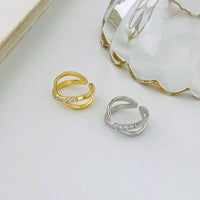
The piece they're describing → CZ Kreuzring für Damen – 925er Sterlingsilber, 18 Karat vergoldet, verstellbares Zirkonband
Personalize Yours


