


- Color beats carat every time — a vivid red 0.5ct ruby is worth more than a pale 1ct stone.
- Heat treatment is normal and acceptable; avoid rubies sold as "untreated" without a GIA or AGL cert to prove it.
- For jewelry under $300, lab-created ruby gives you better color and zero ethical concerns — don't feel bad about it.
- If a "natural ruby" online costs less than $50/ct with no certification, it's almost certainly glass or synthetic.
Most people buying ruby for the first time do one of two things: they overpay for a dull stone because it was marketed as "natural," or they underpay for junk glass and never know the difference. The ruby market is full of misrepresented stones — more so than almost any other gemstone. This guide gives you an exact framework for what to look at, what to ask, and what to walk away from.
The 4 Cs of Ruby — What Actually Matters
Ruby uses the same 4 Cs framework as diamonds, but the weighting is completely different. Here's how to think about each one:
Color is the single most important factor — it accounts for roughly 50–70% of a ruby's value. The ideal is a saturated, vivid red with a slight blue secondary hue. Too much blue and it becomes a pink sapphire. Too much brown or orange and the value drops sharply.
Clarity matters, but almost all natural rubies have inclusions. A few silk-like needle inclusions are completely normal and expected. What you want to avoid is fractures that reach the surface, which affect durability. Eye-clean rubies command a heavy premium — don't expect one under $500/ct.
Cut is often overlooked. A well-cut ruby maximizes color saturation by controlling how light moves through the stone. Shallow cuts make stones look pale; overly deep cuts make them appear dark. For oval and cushion cuts, look for symmetry and a bright window in the center.
Carat matters least — but size and price scale exponentially. A 1ct fine natural ruby costs dramatically more per carat than a 0.5ct stone of equal quality. For most jewelry, a 0.5–1ct well-colored ruby looks stunning and stays within reasonable budgets. Learn more about ruby meaning and why this stone has commanded attention for centuries.
Ruby Color Grades Explained
There's no universal color grading certificate for rubies the way GIA grades diamonds — but the industry uses consistent descriptive tiers. GIA's ruby grading standards are the closest thing to an official benchmark.
| Grade | Color Description | Where Found | Price Premium |
|---|---|---|---|
| Pigeon Blood | Pure vivid red, slight blue fluorescence, no brown | Mogok (Burma), rarely Mozambique | 3–10× above market |
| Vivid Red | Strong saturation, minimal secondary hues | Mozambique, Burma | 1.5–3× |
| Medium Red | Good red, slight orange or pink secondary | Thailand, Sri Lanka, India | Near market |
| Light Pink / Rose | Low saturation, pastel; borders pink sapphire territory | Sri Lanka mainly | Below market |
For everyday jewelry, vivid red or strong medium red hits the sweet spot between beauty and price. The Gem Society's color grading guides go deeper if you want the technical saturation percentages.
Ruby Origin — Does It Matter Where Your Stone Comes From?
Yes, origin matters — especially at higher price points. But origin alone doesn't make a good ruby. A poorly colored Burmese stone is still a poorly colored stone. Here's how the main sources compare:
| Origin | Color Character | Quality Range | Price Impact |
|---|---|---|---|
| Burma / Myanmar (Mogok) | Pure red, strong fluorescence, pigeon blood benchmark | Wide — from fine to commercial | Highest — 30–200% premium |
| Mozambique | Vivid red, slightly less fluorescence, excellent saturation | Consistently high | 15–50% premium, growing |
| Sri Lanka | Lighter, pinkish red; high clarity typical | Good to fine | Moderate premium |
| Thailand | Darker red, brownish or grayish secondary | Commercial to fine | Near or below market |
| India (Mysore) | Variable; historically significant, inconsistent quality | Commercial mostly | Below market |
For most jewelry buyers, Mozambique ruby is the sweet spot — excellent color at significantly less than Burmese prices. Understanding ruby healing properties may also inform which origin resonates most with you energetically.
Natural vs Heat-Treated vs Lab-Created Ruby — Which Should You Buy?
This is where most buyers get confused or misled. Here's a straight comparison:
| Type | How Identified | Quality | Price Range | Best For |
|---|---|---|---|---|
| Natural, untreated | GIA/AGL cert required | Highest | $800–$10,000+/ct | Investment, heirlooms |
| Natural, heat-treated | GIA cert; standard practice | High | $200–$3,000/ct | Jewelry, everyday wear |
| Lab-created | Seller disclosure; spectroscope | Consistent, excellent color | $5–$50/ct | Budget jewelry, gifts |
| Glass-filled / fracture-filled | Microscope; bubbles visible | Low — avoid | $1–$20/ct | Avoid — not durable |
On heat treatment: Over 95% of all commercial rubies are heat-treated. It's a universally accepted practice that improves color and clarity. A heat-treated ruby with a good certificate is a perfectly legitimate purchase. What's NOT acceptable is fracture-filling (injecting glass into cracks) — that's a different process that compromises durability and should be disclosed.
For a full breakdown, read our guide on lab-created vs natural ruby — it covers exactly when the price difference is worth it.
Ruby Price Guide by Quality Tier
Here's what your money actually gets you in the current market (2026 prices, set in sterling silver):
| Budget | What You Get | Typical Specs | Best Use |
|---|---|---|---|
| Under $100 | Lab ruby in silver; vivid color, no rarity value | 0.5–2ct, excellent clarity | Gifts, everyday jewelry |
| $100–$300 | Small natural, commercial quality, heat-treated | 0.25–0.5ct, medium red, inclusions visible | First natural ruby purchase |
| $300–$800 | Fine natural, good color, heat-treated, usually certified | 0.5–0.75ct, vivid-medium red | Engagement rings, fine jewelry |
| $800–$3,000 | Premium natural, excellent color, possibly untreated, Mozambique | 0.5–1ct, vivid red, GIA cert | Investment pieces, heirloom |
| $3,000+ | Burmese pigeon blood, investment grade, AGL/GIA certified | 1ct+, untreated possible | Collectors, investors |
How to Spot a Fake Ruby — Tests You Can Do at Home
You don't need lab equipment to catch the most common fakes. These three tests catch glass, garnet impostors, and synthetic stones that aren't disclosed.
UV Blacklight Test: Hold your ruby under a UV blacklight (a $10 tool on Amazon). Natural rubies from Burma fluoresce bright red under long-wave UV. Garnets show little to no fluorescence. Glass shows nothing. This isn't foolproof — some Thai rubies fluoresce weakly — but it's a fast first filter. Compare against our garnet vs ruby guide to understand the physical differences.
Hardness / Scratch Test: Ruby is a 9 on the Mohs scale — one of the hardest minerals on earth. Drag the stone across an unglazed ceramic tile (the rough back of a bathroom tile works perfectly). Ruby won't scratch the tile and won't leave a mark. Glass (hardness 5.5) will scratch easily and may leave a white powder residue. Only do this on a loose stone — not while set in a ring.
Magnification Check for Glass: Use a 10× jeweler's loupe or even your phone's macro lens. Glass impostors and fracture-filled rubies show trapped gas bubbles inside — tiny round spheres caught in the filling material. Natural rubies show natural inclusions: silk (fine needle-like rutile threads), fingerprint inclusions, or crystals. Bubbles = glass or filling. Needles = natural.
5 Questions to Ask Before Buying Ruby Jewelry
- Is this ruby natural or lab-created? Any reputable seller will answer this directly. If they're vague, walk away.
- Has this ruby been heat-treated, and has it been fracture-filled? Heat treatment is fine; fracture-filling is not. You need to know which.
- Do you have a certificate from GIA, AGL, or another independent lab? For anything over $300, a certificate isn't optional — it's proof of what you're actually buying.
- What is the ruby's country of origin? Burmese origin commands a significant premium; you need documentation to verify it, not just a seller's word.
- What is your return policy if I have the stone independently appraised? A confident seller will offer at least a 14-day return window. Hesitation here is a red flag.
Red Flags When Buying Ruby Online
- "Natural ruby" priced under $30/ct with no certification. Fine natural rubies don't exist at that price point. It's glass, synthetic, or heavily treated.
- Photos that look too perfect or too vivid. Ruby color is often digitally enhanced in product photos. Ask for a video in natural light.
- "Certified" with no lab name specified. A certificate from an unknown in-house lab means nothing. Only GIA, AGL, Gübelin, and SSEF carry real weight.
- No disclosure of treatments. FTC rules require treatment disclosure. A seller who doesn't mention treatments is either ignorant or hiding something.
- Dramatically low prices compared to comparable listings. If one seller lists a 1ct vivid Mozambique ruby for $80 and every other seller lists similar stones at $400+, you're not getting a deal — you're getting a different stone than described.
Shop Ruby Jewelry at AJLuxe
Our ruby water drop pendant necklace in 925 sterling silver uses genuine ruby in a classic water drop setting. Every piece ships with full gemstone certification details.
Ready to shop? Browse all ruby necklaces and birthstone jewelry in 925 sterling silver — every piece hypoallergenic, gift-ready, and backed by our 30-day returns.
Related reading: What Is the Gemstone for July? Ruby Meaning, Color & Buying Guide (2026).
Frequently Asked Questions About Buying Ruby
What is the best quality ruby to buy?
The best quality ruby has vivid red color with no visible brown or orange secondary hue, minimal eye-visible inclusions, and comes with a GIA or AGL certificate. "Pigeon blood" is the top tier — a pure, slightly bluish red with strong fluorescence. For most buyers, a well-colored Mozambique ruby at the vivid red tier offers the best value without paying the Burmese origin premium.
How much should a ruby cost?
It depends heavily on quality. Lab-created rubies in silver jewelry run $30–$100. Small natural commercial rubies start around $100–$300 for a piece. Fine natural rubies suitable for an engagement ring range from $500 to $3,000+. Investment-grade Burmese pigeon blood rubies can reach $10,000–$100,000 per carat at auction. For everyday jewelry buyers, the $100–$500 range gets you a real, attractive stone.
What is pigeon blood ruby?
Pigeon blood is the industry's top color designation for ruby — a pure, saturated red with a slight blue secondary hue and strong red fluorescence. The term originally came from Burmese traders describing the ideal color as matching the first two drops of blood from a freshly killed pigeon. Today it's a defined gemological standard used by GIA and AGL in their certificates. Pigeon blood certification adds 30–200% to a ruby's value.
How do I know if my ruby is real?
The most reliable way is an independent lab certificate from GIA or AGL. At home, you can use a UV blacklight (natural rubies glow red; glass and garnet don't), a scratch test on unglazed ceramic tile (ruby won't scratch), and a loupe to look for bubbles (glass) vs silk inclusions (natural ruby). If you paid a suspiciously low price and have no certificate, assume it's synthetic or glass until proven otherwise.
Is heat-treated ruby worth buying?
Yes — absolutely. Over 95% of commercial rubies are heat-treated, and it's a fully accepted industry practice that's been standard for decades. Heat treatment improves color and dissolves silk inclusions without adding foreign material to the stone. A heat-treated ruby with a GIA certificate is a legitimate, valuable gemstone. What to avoid is fracture-filling (glass injected into cracks) — that's a different process that weakens the stone and isn't always disclosed.
What is the best origin for ruby?
Burma (Mogok, Myanmar) has the historical reputation for the finest rubies — pigeon blood color and strong fluorescence. But Mozambique has emerged as a genuine rival since the early 2010s, producing vivid-red stones at 20–40% less than Burmese prices. For most buyers, Mozambique origin is the practical sweet spot. Sri Lanka produces high-clarity stones but with lighter, pinker color. Thailand and India tend toward darker, less-valued stones.
What carat size should I buy?
For a pendant or earrings, 0.25–0.5ct per stone looks great and stays under $200–$400 for a natural ruby. For a ring meant as a statement piece, 0.5–1ct is the ideal range — visible but not so large that the price becomes prohibitive. Rubies over 1ct increase exponentially in price per carat. If budget is a concern, choose a smaller, better-colored stone over a larger, duller one every time.
Is lab ruby as good as natural?
Lab ruby is chemically and physically identical to natural ruby — same hardness (9 Mohs), same refractive index, same color potential. The difference is rarity and origin story, not durability or appearance. Lab rubies actually tend to have better clarity and more vivid color than commercial natural rubies in the same price range. If you want a stunning red stone for everyday jewelry without paying the natural premium, lab ruby is a completely rational choice. It has no investment value, but as wearable jewelry it performs equally well.
What color ruby is most valuable?
The most valuable ruby color is "pigeon blood red" — a pure, vivid red with a slight blue undertone and strong red fluorescence. Secondary hues reduce value: orange or brown secondary tones lower price significantly, while slight pink can be acceptable at lower tiers. Saturation matters more than hue — a highly saturated medium red beats a pale vivid red in most market valuations.
How do I care for ruby jewelry?
Ruby is one of the most durable gemstones at Mohs 9, so daily wear is fine. Clean with warm water, mild soap, and a soft toothbrush — avoid ultrasonic cleaners if your stone is fracture-filled (the vibrations can worsen existing cracks). Store separately from other jewelry to avoid scratching softer stones. Avoid harsh chemicals like bleach or acetone. Remove ruby rings before heavy physical work. With basic care, ruby jewelry lasts generations.
Final Thoughts
Buying ruby well comes down to three things: knowing that color is everything, insisting on a certificate for any serious purchase, and understanding that heat treatment is normal and not a dealbreaker. The biggest mistakes buyers make are chasing large carat size at the expense of color, and trusting "natural" claims without documentation.
Start with your budget and work backward — at under $100, lab ruby in sterling silver gives you the best visual result. At $300+, invest in a certified natural stone and prioritize color above all else. If you're spending $1,000 or more, get a GIA or AGL certificate and check origin claims carefully.
Ruby is one of the great gemstones — used by royalty, associated with passion and protection, and genuinely beautiful when you find the right stone. Use this guide as your checklist before any purchase, and you'll buy confidently every time.
Toutes les marques, noms de marque et noms de produits tiers sont la propriété de leurs détenteurs respectifs. AJLuxe n’est affilié à aucune marque tierce citée dans cet article, ni approuvé ou sponsorisé par celle-ci. Les noms de marque sont utilisés uniquement à des fins de comparaison factuelle, et les descriptions de matériaux reflètent les spécifications produit publiées par chaque marque au moment de la rédaction.
You Might Also Like
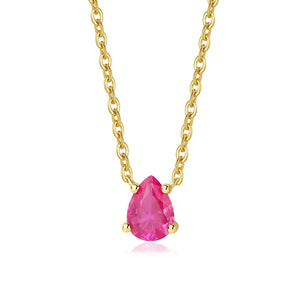

The piece they're describing → Pendentif Rubis pour Femme — Goutte de Rubis Rouge, Argent Sterling 925
Personalize Yours


