


Rainbow moonstone meaning gets confused constantly — and understandably so, since the stone sold under that name isn't technically moonstone at all. Real, orthoclase-feldspar moonstone shows a soft blue or white glow called adularescence. What jewelers call "rainbow moonstone" is a milky-white variety of labradorite that flashes blue, green, purple, and gold as it catches the light. Same feldspar family, different mineral, different optical effect, and — once you dig into the actual sourcing — a slightly different symbolic tradition too. This guide covers what rainbow moonstone actually is, what its meaning and healing properties claim, how it compares to true moonstone and plain labradorite, how to tell a real one from the glass and opalite fakes flooding the market, and how to care for it once you own one.
What Is Rainbow Moonstone? The Science Behind the Name
Rainbow moonstone is a translucent-to-milky-white variety of labradorite, a plagioclase feldspar with the chemical formula (Ca,Na)[Al(Al,Si)Si₂O₈]. What makes it "rainbow" is labradorescence — the same optical phenomenon that produces the blue-green flash in classic gray labradorite, except in this pale variety it splits into a fuller spectrum of blue, violet, gold, and occasionally pink or green as the stone turns in light.
True moonstone, by contrast, is orthoclase feldspar (KAlSi₃O₈) and produces adularescence — a soft, billowing glow, usually blue or white, that appears to float just under the surface. The two effects look similar to a casual buyer but come from different internal structures: labradorescence comes from thin, alternating layers within the crystal that cause light interference (similar to how a soap bubble splits light into colors), while adularescence comes from fine, parallel exsolution lamellae scattering light more diffusely. According to the Gemological Institute of America (GIA), adularescence is the light phenomenon that defines true moonstone, and GIA specifically notes that "other feldspar minerals can also show adularescence, including labradorite" — which is part of why the two stones get sold under overlapping names in the trade.
Rainbow moonstone is mined primarily in India (the largest commercial source), along with Madagascar, Sri Lanka, Australia, Mexico, and Poland. It rates 6–6.5 on the Mohs hardness scale — the same as true moonstone, and noticeably softer than quartz-family stones (7) or sapphire (9).
Rainbow Moonstone Meaning and Symbolism
Because rainbow moonstone is marketed and worn as a moonstone variety, it inherited most of true moonstone's symbolic tradition — lunar energy, intuition, and the divine feminine — while crystal-healing sources layer on extra meaning tied to its multicolored flash and its identity as a labradorite.
- Intuition and inner wisdom: Like classic moonstone, rainbow moonstone is associated with heightened intuition and psychic clarity. Its connection to the crown and third eye chakras is the most consistently cited meaning across crystal-healing sources.
- New beginnings and transformation: The stone is frequently recommended during life transitions — a new job, a move, a relationship change — echoing labradorite's own reputation as a "stone of transformation."
- Feminine and lunar energy: Tied to the moon and traditionally called the "women's stone," rainbow moonstone is associated with hormonal balance, fertility, and cyclical, feminine energy in crystal-healing traditions.
- Protection and energetic clearing: Because it shares labradorite's mineral identity, rainbow moonstone also picks up labradorite's reputation as a protective stone that shields against negative or draining energy — a meaning true orthoclase moonstone doesn't carry as strongly on its own.
- Full-spectrum energy flow: Some practitioners treat rainbow moonstone as activating all seven chakras at once, reasoning that its rainbow flash symbolically "touches" every color in the chakra spectrum rather than being limited to one or two.
These are traditional, cultural, and crystal-healing beliefs, not clinical or scientific claims. Rainbow moonstone is not a substitute for medical treatment or professional mental-health care.
Rainbow Moonstone Healing Properties
In crystal-healing practice, rainbow moonstone's properties split roughly into emotional and physical categories, though — as with all gemstone healing claims — none of these are supported by clinical evidence.
Emotional and Spiritual Properties
- Stress and anxiety relief: Used to calm an overactive mind and ease anxious thought spirals, particularly around uncertain or transitional periods.
- Emotional balance: Traditionally used to soften emotional overreaction and support processing feelings rather than suppressing them.
- Intuitive clarity: Recommended for meditation focused on inner guidance, decision-making, and trusting one's own instincts.
- Self-discovery: Associated with introspection and understanding one's own emotional patterns.
Physical-Wellness Associations
- Hormonal and reproductive support: Traditionally linked to the sacral chakra and feminine reproductive health, including fertility and menstrual-cycle balance.
- Sleep support: Some crystal-healing sources recommend keeping rainbow moonstone near the bed to support restful sleep, tied to its lunar symbolism.
- Digestive calm: A less common but recurring claim across crystal-healing sources, tied to its general "balancing" reputation.
Note: these physical-wellness associations are folk and metaphysical traditions only. If you have a medical concern, see a licensed healthcare provider — gemstones are not a treatment.
Rainbow Moonstone vs. Regular Moonstone vs. Labradorite
These three stones get confused constantly because they're all feldspar and all show some form of light-play. Here's how they actually differ:
| Property | Rainbow Moonstone | Regular (True) Moonstone | Labradorite (classic gray) |
|---|---|---|---|
| Mineral | Labradorite (plagioclase feldspar) | Orthoclase (potassium feldspar) | Labradorite (plagioclase feldspar) |
| Optical effect | Labradorescence — multicolor flash | Adularescence — soft billowing glow | Labradorescence — multicolor flash |
| Typical body color | Milky white, translucent | White, cream, gray, or peach | Dark gray to black, often opaque |
| Flash colors | Blue, violet, gold, occasional green/pink | Blue or white glow, no rainbow spread | Blue, green, gold, sometimes full spectrum ("spectrolite") |
| Mohs hardness | 6–6.5 | 6–6.5 | 6–6.5 |
| June birthstone status | Sold as moonstone, but not the official birthstone variety | Yes — one of three official June birthstones | No official birthstone status |
| Primary symbolism | Intuition + labradorite's protective/transformative energy | Intuition, femininity, lunar cycles | Protection, transformation, warding off negative energy |
| Typical price (per carat, commercial grade) | $1–$5 | $1–$10 (blue adularescence commands more) | $0.50–$3 |
The simplest way to remember it: if the glow is a single soft blue or white light that seems to float under the surface, it's true moonstone. If it's a milky-white stone throwing off a full rainbow of color, it's rainbow moonstone — a labradorite. If it's dark gray or black with the same rainbow flash, it's classic labradorite. For more on classic labradorite's own meaning and protective symbolism, see our full labradorite meaning guide.
How to Identify Real Rainbow Moonstone (vs. Fakes)

Rainbow moonstone is one of the more commonly faked "crystal shop" stones, mostly because dyed glass and opalite (man-made opalescent glass) are cheap to produce and can look convincing in photos. Here's how to tell the difference in person:
- Angle-dependent flash: Real rainbow moonstone only flashes color from certain angles — tilt it and the color appears and disappears. Opalite and glass imitations glow uniformly from every angle, with no "on/off" behavior.
- Weight and temperature: Genuine feldspar feels cool to the touch initially and noticeably heavier than glass of the same size, because feldspar has higher density than most glass formulations.
- Surface and inclusions: Real rainbow moonstone often shows faint internal fractures, subtle color zoning, or tiny natural inclusions under magnification. Glass and opalite are usually flawlessly uniform inside — a red flag rather than a good sign for a "natural" stone.
- Color uniformity: Opalite typically shows an even, milky blue-white glow across the entire stone. Genuine rainbow moonstone's flash is patchier and less symmetrical, following the internal feldspar layering rather than an even glass gradient.
- Price as a signal: Commercial-grade rainbow moonstone runs roughly $1–$5 per carat. If a large, flawless-looking "rainbow moonstone" pendant is priced at a few dollars, it's very likely opalite or glass rather than natural stone.
- Ask for sourcing: Reputable sellers can tell you the mine origin (usually India) and whether the stone is natural or treated. Vague or evasive answers about origin are a warning sign.
None of these checks require lab equipment — a loupe (10x jeweler's magnifier) and good daylight are enough for a confident visual check.
If you'd rather skip the detective work, our rainbow moonstone tennis bracelet is priced honestly either way — we haven't independently verified whether these particular stones are natural or lab-created, so we're not claiming “genuine” until we can confirm it. If you are weighing one for the wrist specifically, our moonstone bracelet guide covers why the setting matters more than the stone grade on a piece that takes daily impact.
Chakra and Zodiac Associations
Rainbow moonstone is most commonly linked to the upper chakras, though some crystal-healing sources extend its association across the full chakra system because of its rainbow flash:
- Crown chakra (Sahasrara): Spiritual connection and higher awareness — the most frequently cited association.
- Third eye chakra (Ajna): Intuition, inner knowing, and clarity of perception.
- Sacral chakra (Svadhisthana): Feminine energy, creativity, and emotional flow — tied to its traditional fertility and hormonal-balance symbolism.
Zodiac-wise, rainbow moonstone follows the same associations as classic moonstone: Cancer (the moon-ruled sign, considered the strongest match), Libra (balance and harmony), and Scorpio (intuition and transformation). As with any zodiac gemstone pairing, these are traditional associations rather than restrictions — anyone can wear rainbow moonstone regardless of sign.
How to Care for Rainbow Moonstone Jewelry
At 6–6.5 on the Mohs scale, rainbow moonstone is softer than quartz and needs more careful handling than harder everyday gemstones.
- Clean gently: Use a soft, damp cloth with a drop of mild dish soap. No soaking, no ultrasonic cleaners, no steam cleaners — the internal feldspar layering that produces the flash can be damaged by aggressive cleaning methods.
- Store separately: Keep it away from harder stones like quartz, sapphire, and diamond, which will scratch it on contact in a jewelry box or pouch.
- Avoid impact: Remove rainbow moonstone rings before sports, gardening, or housework — a sharp knock can chip or fracture the stone.
- Skip extreme temperatures: Sudden temperature swings (hot tubs followed by cold air, for example) can cause thermal shock and internal fracturing.
- Avoid harsh chemicals: Chlorine, bleach, and acidic cleaners will dull the surface polish and can etch the stone over time.
Frequently Asked Questions
Is rainbow moonstone real moonstone?
Not technically. Rainbow moonstone is a labradorite (plagioclase feldspar) that shows a rainbow-colored flash, while true moonstone is orthoclase feldspar that shows a soft blue or white glow. Both are feldspar minerals, which is why rainbow moonstone is sold under the moonstone name, but gemologically they're different stones.
What is the difference between rainbow moonstone and regular moonstone?
Regular moonstone shows adularescence — a single soft, billowing blue or white glow. Rainbow moonstone shows labradorescence — a flash that splits into multiple colors (blue, violet, gold) depending on the viewing angle. Regular moonstone is also the official June birthstone; rainbow moonstone is not.
How can you tell if rainbow moonstone is real?
Real rainbow moonstone only flashes color from certain angles, feels cool and noticeably heavy for its size, and often shows subtle internal inclusions or color zoning under magnification. Fakes — usually dyed glass or opalite — glow uniformly from every angle and are typically flawless and lightweight inside.
What chakra is rainbow moonstone associated with?
Primarily the crown chakra (spiritual awareness) and third eye chakra (intuition). Some traditions also connect it to the sacral chakra for its symbolic ties to feminine energy and fertility.
What zodiac sign is rainbow moonstone best for?
Cancer is considered the strongest match, since the sign is ruled by the moon. Libra and Scorpio are also traditionally associated with rainbow moonstone.
Is rainbow moonstone the same as labradorite?
Mineralogically, yes — rainbow moonstone is a pale, translucent variety of labradorite. The difference is cosmetic: classic labradorite is typically dark gray to black, while rainbow moonstone is milky white. Both show the same labradorescence optical effect.
How much does rainbow moonstone cost?
Commercial-grade rainbow moonstone typically runs $1–$5 per carat, making it one of the more affordable "moonstone family" gems. Prices rise with stronger, more vivid rainbow flash and larger, flawless material.
Can rainbow moonstone go in water?
Brief rinsing with lukewarm water is fine, but avoid soaking it or wearing it in pools, hot tubs, or the shower. Chlorine and prolonged water exposure can damage the stone's surface and internal structure over time.
Is rainbow moonstone good for anxiety?
In crystal-healing tradition, yes — it's commonly used to calm anxious thinking and support emotional balance during stressful or uncertain periods. This is a traditional/metaphysical use, not a clinically proven treatment for anxiety.
Does rainbow moonstone help with fertility?
Crystal-healing traditions associate rainbow moonstone with hormonal balance and fertility, tied to its broader "women's stone" symbolism inherited from classic moonstone. This is a folk belief, not a medical claim, and shouldn't replace professional fertility care.
What is the spiritual meaning of rainbow moonstone?
Spiritually, rainbow moonstone represents intuition, new beginnings, and the divine feminine — plus labradorite's added symbolism of protection and transformation, since it's technically a labradorite variety rather than true moonstone.
How do you clean and store rainbow moonstone jewelry?
Wipe with a soft, damp cloth and a small amount of mild soap — no soaking, ultrasonic cleaners, or steam. Store it away from harder gemstones that could scratch it, and avoid extreme temperature swings and harsh chemicals.
Final Thoughts
Rainbow moonstone's meaning borrows from two mineral traditions at once — the intuitive, feminine symbolism of true moonstone, and the protective, transformative reputation of labradorite, the mineral it actually is. That dual identity is exactly why it's worth knowing the difference before you buy: what you're looking at (and paying for) is a labradorite, not an orthoclase moonstone, even though both are sold under the same name. Once you know what to look for — the angle-dependent flash, the cool weight, the subtle natural inclusions — spotting a real one from a dyed-glass imitation gets a lot easier. For more on the mineral rainbow moonstone actually belongs to, see our labradorite meaning guide, or read about true, orthoclase moonstone and its status as a June birthstone in our moonstone meaning guide.
Written by the AJLuxe team — jewelry specialists focused on the history and symbolism behind everyday fine jewelry. Last updated: July 2026. Adularescence and moonstone-family facts referenced per the Gemological Institute of America's gem encyclopedia (gia.edu/moonstone).
Toutes les marques, noms de marque et noms de produits tiers sont la propriété de leurs détenteurs respectifs. AJLuxe n’est affilié à aucune marque tierce citée dans cet article, ni approuvé ou sponsorisé par celle-ci. Les noms de marque sont utilisés uniquement à des fins de comparaison factuelle, et les descriptions de matériaux reflètent les spécifications produit publiées par chaque marque au moment de la rédaction.
You Might Also Like
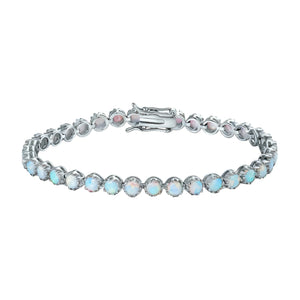
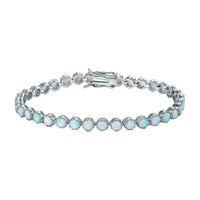
The piece they're describing → Rainbow Moonstone Tennis Bracelet for Women — Stainless Steel, Bezel Set, Gift Boxed with Message Card
Personalize Yours


